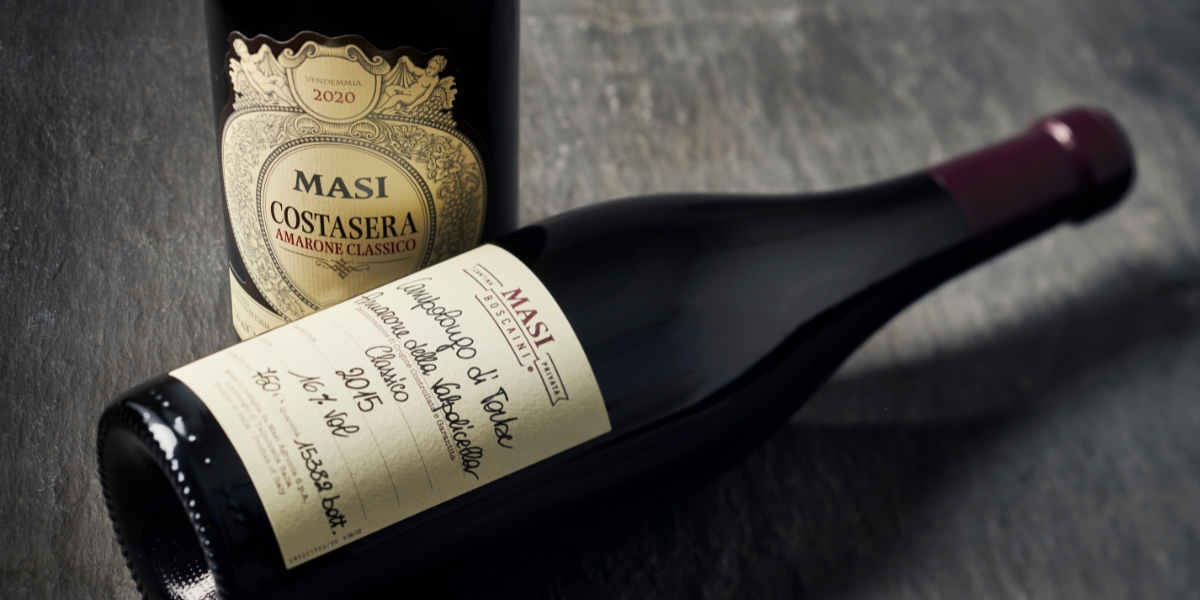
After seven decades of renown, one might expect Amarone to be settling into its status as grandee of the wine world. With its singular style and an aura at once innovative (it was ‘invented’ in the 1950s) and traditional (its hallmark appassimento process pre-dates the Romans), Amarone would seem possessed of a rather enviable niche.
However, in a decade when Brunello, Barolo and Barbaresco have finally won over international collectors, Amarone’s shine seems, if not dulled, somewhat lacklustre. Though the total value of exports is steady or even growing in certain markets (China, for one), volumes are stalling overall, and given falling global wine consumption, particularly of high-octane red wines – and contemporary Amarone rarely clocks in below 15% – those tasked with its promotion are keenly aware of potential hurdles.
Masi is a pioneer of site-specificity
Few names are as closely linked with the expression as Masi, a producer now more than 250 years old. Its indomitable patriarch Sandro Boscaini has thoroughly earned his moniker ‘Mr Amarone’, and with Masi’s flagship Costasera Amarone dominating key markets (including the US, UK, Germany, Canada and China), Amarone’s global image rests heavily on Masi’s shoulders.
Masi’s wines are unapologetically large: bold and dark-fruited, standing in marked contrast to the sheerer, more ruby-fruited Amarone that has charmed the wine cognoscenti since the mid-2010s. The company itself is also large. It seems fitting that fundamentally mercantile Valpolicella, and broader Veneto, should have a benchmark producer – widely respected by collectors if not necessarily a cult favourite – that is also among its biggest.
Born out of a coalescence of the Boscaini family’s agricultural interests and winemaking company through the 18th and 19th centuries, in 2015 Masi became the first wine producer listed on an Italian stock exchange, though majority ownership remains in Boscaini hands. It produces around six million bottles of Veronese wine annually, of which nearly a third are the cashflow-friendly Campofiorin, a forerunner of the ripasso wines that helped make many a Valpolicella producer’s fortunes. In today’s fine-wine world, which privileges the wines of small artisanal producers, this kind of scale and commercial success are undoubtedly a double-edged sword.
Read more: The Amarone Report 2025
Born out of a coalescence of the Boscaini family’s agricultural interests and winemaking company through the 18th and 19th centuries, in 2015 Masi became the first wine producer listed on an Italian stock exchange, though majority ownership remains in Boscaini hands. It produces around six million bottles of Veronese wine annually, of which nearly a third are the cashflow-friendly Campofiorin, a forerunner of the ripasso wines that helped make many a Valpolicella producer’s fortunes. In today’s fine-wine world, which privileges the wines of small artisanal producers, this kind of scale and commercial success are undoubtedly a double-edged sword
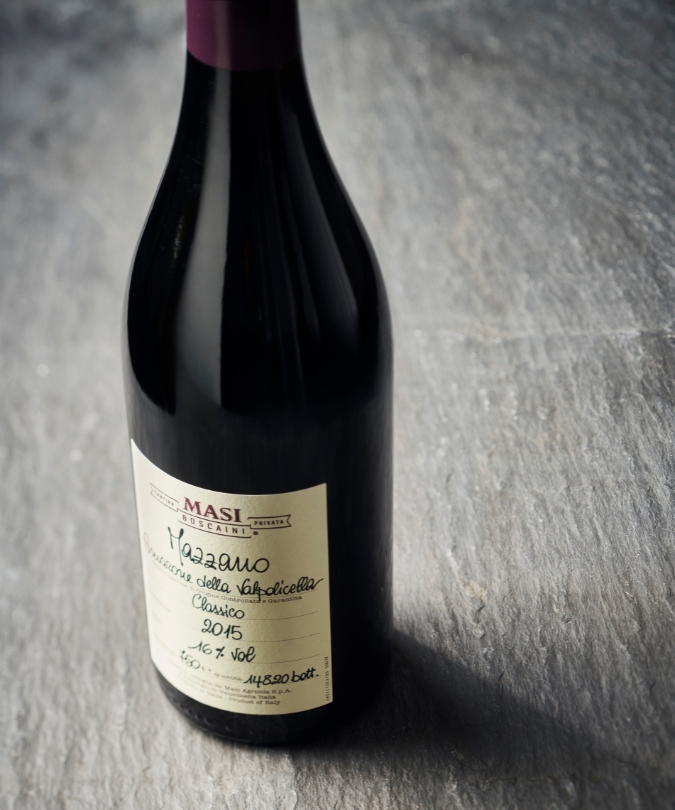
With that in mind, earlier this year I walked into a tasting organised by Masi at its Serego Alighieri estate – a partnership with the descendants of the Divine Comedy poet and an appropriate location to highlight the company’s more highbrow side – intrigued by how the winery is navigating this landscape. We were to taste the latest releases of Costasera, Costasera Riserva, Campolongo and Mazzano, followed by flights from 1999 and 1997 – four- and five-star vintages respectively that are now reaching what Masi’s technical director Andrea dal Cin considers full maturity.
In Masi’s favour, Campofiorin’s explosive success from 1964 onwards supercharged the firm’s R&D capabilities. These were formalised in the 1980s via the Masi Technical Group, helping to fine-tune their production processes, especially the botrytis-inflected appassimento that gives Masi Amarone its signature bitter-almond perfume. However, global acclaim can make it exceedingly difficult to change, and I wondered how Costasera – the one Amarone that consumers around the world are most likely to taste – has evolved, if at all, in response to shifting tastes among consumers (or at least fine-wine enthusiasts).
Masi is also a pioneer of site-specificity, a principle that defines the majority of the world’s most revered wines but one that many sceptics claim is tenuously applicable to ‘wines of process’ such as Amarone. (These misgivings conveniently dissolve when confronted with Krug Clos d’Ambonnay or Clos de Mesnil, however.) Masi’s Campolongo di Torbe bottling was born in 1958, when it was among Italy’s only ‘cru’ wines, and its stablemate Mazzano emerged six years later. Vajo dei Masi is a limited-edition bottling from the original 1772 vineyard purchase that gave the firm its name, made in almost microscopic quantities and released decades after harvest. Would I discover anything about these wines – some kind of over-engineered sameness, perhaps – that would justify discounting them?
The cru wines were strikingly distinct, both site to site and vintage to vintage
To spare you the suspense, the answer to the question of similarity over time is ‘Sort of’; and the one on finding reason to disregard the wines, ‘Not really.’ Costasera’s style remains bold, though trending slightly sheerer. How problematic that is depends on your viewpoint, given the enduring appeal of voluptuous, fruit-laden wines among many consumers in both North America and China. The cru wines, meanwhile, were strikingly distinct, both site to site and vintage to vintage, clearly illustrating the ability of natural conditions and elaborate processing to coexist and even synergise. Though both vintages shone, 1997 was luminous.
I will, however, confess that the distinctions were much more marked in the mature pairs than the latest releases. This underscores the inconvenient truth that while great Amarone becomes most compelling after 20+ years, releasing such long-aged wines at prices appealing to non-devotees is unrealistic. Fortunately, Masi is one of the few mature Amarones that can be sourced somewhat reliably (and not overly punitively) on the secondary market. For lovers of terroir and bold wines alike, I’d suggest it’s well worth the effort.
Masi Amarone: 13 wines showcasing the styles
| Producer | Name | Vintage | Region | Subregion | ||
|---|---|---|---|---|---|---|
|
Masi, Amarone della Valpolicella Classico Mazzano 1997
Veneto
, Amarone della Valpolicella Classico
|
Masi | Amarone della Valpolicella Classico Mazzano | 1997 | Veneto | Amarone della Valpolicella Classico | |
|
Masi, Amarone della Valpolicella Classico Campolongo di Torbe 2015
Veneto
, Amarone della Valpolicella Classico
|
Masi | Amarone della Valpolicella Classico Campolongo di Torbe | 2015 | Veneto | Amarone della Valpolicella Classico | |
|
Masi, Amarone della Valpolicella Classico Campolongo di Torbe 1999
Veneto
, Amarone della Valpolicella Classico
|
Masi | Amarone della Valpolicella Classico Campolongo di Torbe | 1999 | Veneto | Amarone della Valpolicella Classico | |
|
Masi, Amarone della Valpolicella Classico Campolongo di Torbe 1997
Veneto
, Amarone della Valpolicella Classico
|
Masi | Amarone della Valpolicella Classico Campolongo di Torbe | 1997 | Veneto | Amarone della Valpolicella Classico | |
|
Masi, Amarone della Valpolicella Classico Vajo dei Masi 1997
Veneto
, Amarone della Valpolicella Classico
|
Masi | Amarone della Valpolicella Classico Vajo dei Masi | 1997 | Veneto | Amarone della Valpolicella Classico | |
|
Masi, Amarone della Valpolicella Classico Riserva Costasera 2018
Veneto
, Amarone della Valpolicella Classico
|
Masi | Amarone della Valpolicella Classico Riserva Costasera | 2018 | Veneto | Amarone della Valpolicella Classico | |
|
Masi, Amarone della Valpolicella Classico Mazzano 2015
Veneto
, Amarone della Valpolicella Classico
|
Masi | Amarone della Valpolicella Classico Mazzano | 2015 | Veneto | Amarone della Valpolicella Classico | |
|
Masi, Amarone della Valpolicella Classico Mazzano 1999
Veneto
, Amarone della Valpolicella Classico
|
Masi | Amarone della Valpolicella Classico Mazzano | 1999 | Veneto | Amarone della Valpolicella Classico | |
|
Masi, Amarone della Valpolicella Classico Costasera 1997
Veneto
, Amarone della Valpolicella Classico
|
Masi | Amarone della Valpolicella Classico Costasera | 1997 | Veneto | Amarone della Valpolicella Classico | |
|
Masi, Amarone della Valpolicella Classico Costasera 2019
Veneto
, Amarone della Valpolicella Classico
|
Masi | Amarone della Valpolicella Classico Costasera | 2019 | Veneto | Amarone della Valpolicella Classico | |
|
Masi, Amarone della Valpolicella Classico Vajo dei Masi 1999
Veneto
, Amarone della Valpolicella Classico
|
Masi | Amarone della Valpolicella Classico Vajo dei Masi | 1999 | Veneto | Amarone della Valpolicella Classico | |
|
Masi, Amarone della Valpolicella Classico Costasera 2020
Veneto
, Amarone della Valpolicella Classico
|
Masi | Amarone della Valpolicella Classico Costasera | 2020 | Veneto | Amarone della Valpolicella Classico | |
|
Masi, Amarone della Valpolicella Classico Costasera 1999
Veneto
, Amarone della Valpolicella Classico
|
Masi | Amarone della Valpolicella Classico Costasera | 1999 | Veneto | Amarone della Valpolicella Classico |