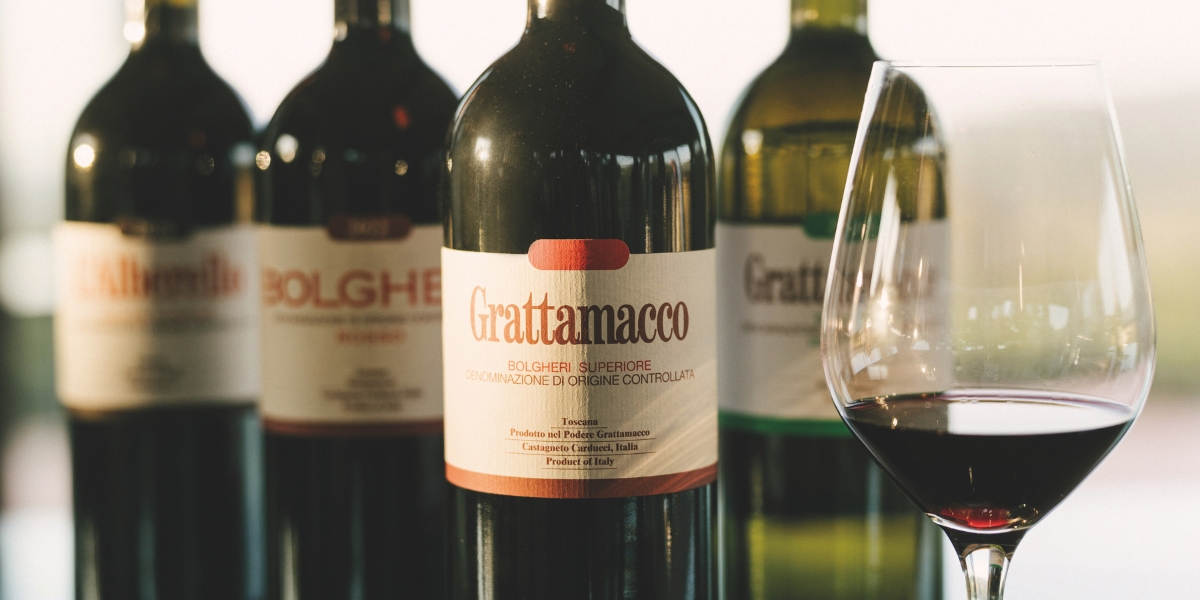
When Pier Mario Meletti Cavallari arrived at what would become Podere Grattamacco, there was little to suggest its future status as one of Bolgheri’s most prestigious wines. Meletti Cavallari was 34 when he arrived from Bergamo, swapping a career in management for the hills of coastal Tuscany. There was no electricity or running water when he began clearing the land and planting vines, and in 1977 Grattamacco became only the second winery in the region, after Tenuta San Guido itself.
The first vintage, released as a simple vino da tavola, was 1982. It was a blend of mainly Sangiovese and Cabernet Sauvignon, with the strong emphasis on Sangiovese making it closer in profile to Antinori’s Tignanello, produced further inland, than to its neighbour, Sassicaia.
Something of an outsider in the hills of Bolgheri, Sangiovese is ‘the fingerprint of Grattamacco’
Over time, the proportion of Sangiovese decreased. The planting of Merlot in 1989 would fundamentally alter the blend’s composition, but it was not until the mid-1990s that the basis of the modern blend – 65% Cabernet Sauvignon, 20% Merlot and 15% Sangiovese – took shape.
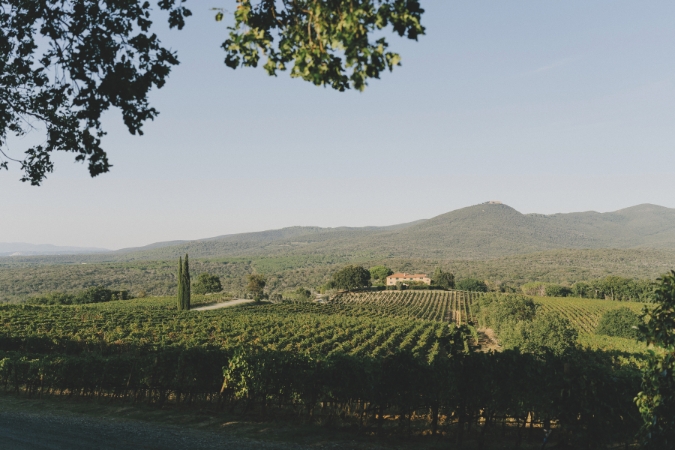
It was at Grattamacco in 1994 that the modern Bolgheri DOC was signed into being by Meletti Cavallari and the heads of Tenuta San Guido, Ornellaia and Masseto, Guado al Tasso and Michele Satta. In 2002, Meletti Cavallari chose to sell the estate to pursue other projects, and Claudio Tipa of the ColleMassari group acquired it, bringing in current chief winemaker Luca Marrone the following year.
‘My work has been to preserve and maintain the authentic expression of Grattamacco, a distinctive territory with a pioneering spirit,’ Marrone says, at a tasting in London to celebrate the release of the 40th vintage of the estate’s flagship wine. ‘We have adjusted many things to keep an elegance and freshness that was, honestly, easier to preserve in the past.’ But Marrone has not tinkered with the blend, and 15% of Sangiovese still marks Grattamacco out. Something of an outsider in the hills of Bolgheri, Sangiovese is ‘the fingerprint of Grattamacco’, according to Marrone. ‘When you have Sangiovese close to the sea with this elevation, you achieve a wild flavour, very rich in salinity.’
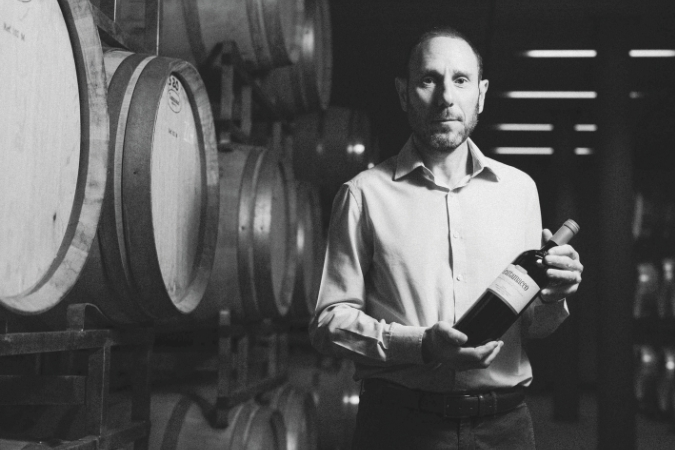
With some of the highest vineyards in Bolgheri, Grattamacco’s general style has always been distinguished by freshness. One of Marrone’s most significant contributions to maintaining it has been the purchase in 2013 of vineyard land at Casavecchia, a notably cool-climate, hilltop site north-east of the original estate that he describes as ‘Bolgheri’s new frontier’. Here, at 200 metres of elevation, surrounded by forest, Marrone has planted more Sangiovese and has initiated a replanting programme for the Bordeaux varieties. From the 2015 vintage, the Casavecchia vineyards have supplemented the original Grattamacco holdings and become a critical component in maintaining the signature freshness of the Bolgheri Superiore.
Even its rivals could not dispute Grattamacco’s pioneering importance in the story of Bolgheri as a fine-wine region
Under Marrone, the approach in the cellar has been restrained and the estate has remained true to its early principles under Meletti Cavallari. Gentle extraction of flavour and spontaneous fermentations are the order of the day, sometimes with long periods of skin contact in strong vintages to mellow the tannins. Wood is still used for ageing, but the new oak percentage is down, and overall time in oak has stabilised around 18 months under Marrone.
The Grattamacco wines are highly prized by those who know the region well. At a dinner celebrating the 30th anniversary of the Bolgheri DOC in 2024, it was a 1998 Grattamacco that stood out (and quickly ran out), rivalling a 1995 Sassicaia for both depth and complexity, and demonstrating that Grattamacco is one of the longest-lived names in the region.
As the estate marks the 40th vintage of its eponymous Bolgheri Superiore, its influence is difficult to dispute. Top producers such as Ornellaia and Le Macchiole have followed Grattamacco’s lead by acquiring land in Casavecchia. The organic viticulture that Meletti Cavallari championed in the mid-1990s is now seen as a prerequisite for modern fine wine. Even its rivals could not dispute the estate’s pioneering importance in the story of Bolgheri as a fine-wine region. Four decades on, Grattamacco continues to hold a central place in any serious assessment of the region.
Grattamacco Bolgheri Superiore: 1990-2022
| Producer | Name | Vintage | Region | Subregion | ||
|---|---|---|---|---|---|---|
|
Grattamacco, Bolgheri Superiore 2022
Tuscany
, Bolgheri
|
Grattamacco | Bolgheri Superiore | 2022 | Tuscany | Bolgheri | |
|
Grattamacco, Bolgheri Superiore 2018
Tuscany
, Bolgheri
|
Grattamacco | Bolgheri Superiore | 2018 | Tuscany | Bolgheri | |
|
Grattamacco, Bolgheri Superiore 2012
Tuscany
, Bolgheri
|
Grattamacco | Bolgheri Superiore | 2012 | Tuscany | Bolgheri | |
|
Grattamacco, Bolgheri Superiore 2009
Tuscany
, Bolgheri
|
Grattamacco | Bolgheri Superiore | 2009 | Tuscany | Bolgheri | |
|
Grattamacco, Bolgheri Superiore 2005
Tuscany
, Bolgheri
|
Grattamacco | Bolgheri Superiore | 2005 | Tuscany | Bolgheri | |
|
Grattamacco, Bolgheri Superiore 1998
Tuscany
, Bolgheri
|
Grattamacco | Bolgheri Superiore | 1998 | Tuscany | Bolgheri | |
|
Grattamacco, Bolgheri Superiore 1990
Tuscany
, Bolgheri
|
Grattamacco | Bolgheri Superiore | 1990 | Tuscany | Bolgheri |