Few have done more than Sacha Lichine to elevate the status of rosé, yet Provence is merely his adopted home and the wine that has made him famous, Whispering Angel, was initially a hard sell that briefly threatened to make him a laughing stock. Born in Bordeaux and educated in New York, Lichine’s career had already taken him from Boston to Los Angeles and the Caribbean, first as a sommelier and then importer, before he returned to France to take over the reins of the family estate, Margaux’s Château Prieuré Lichine, from his father, Alexis.
The wines of Provence might now be an A-list favourite but that was not the case two decades ago when Lichine acquired Château d’Esclans. He astonished friends and rivals by selling up in Bordeaux to build a new business producing premium rosé, a category that was yet to exist.
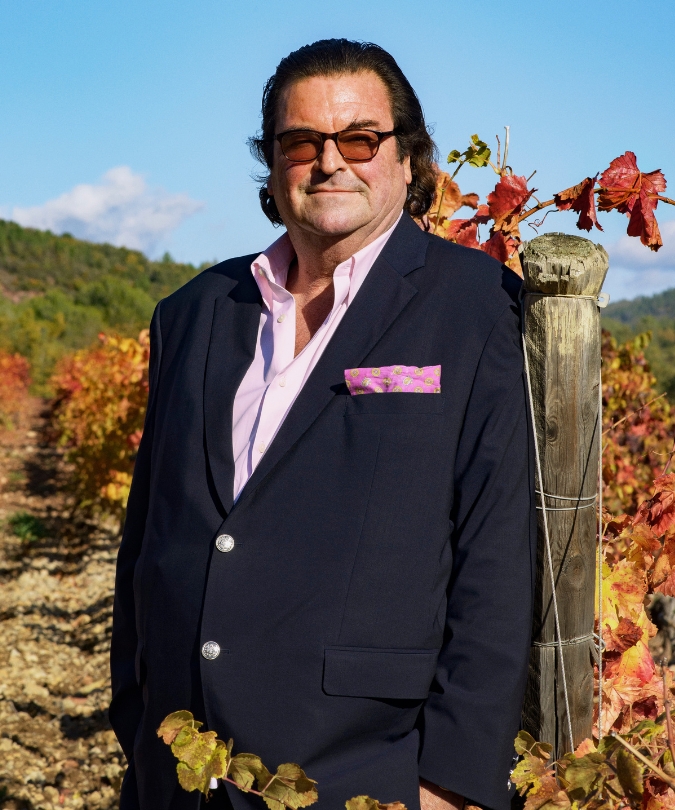
‘They told me I was off my rocker, I was absolutely crazy to leave Bordeaux and go to a place like Provence,’ he tells me. ‘I wanted a new challenge, I had visited about 32 properties in Provence and I was looking to make a bit of a difference… When I arrived here in 2006, a hectolitre of rosé was being sold on the market for around €80 and now it’s over €300, [so] we embarked on a journey to try to make rosé grand, a product that we wanted to drink in the event that we couldn’t sell it.’
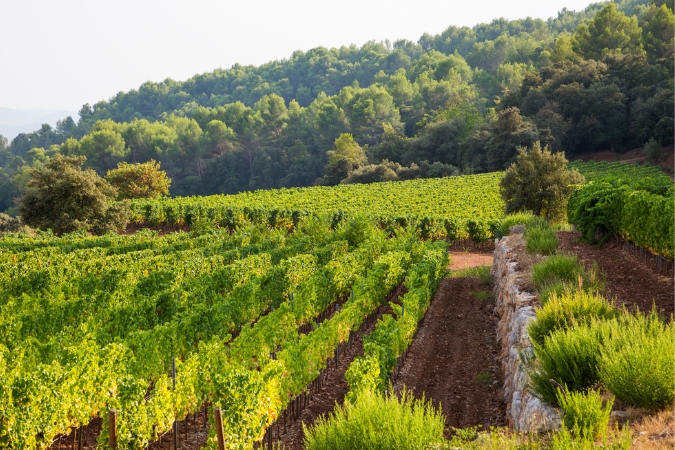
Embarking on an ambitious programme to replant the vineyards at Château d’Esclans, Lichine and his team also invested heavily in what was then relatively new temperature control technology to raise quality and rid the region of its reputation for rusticity. At the time, the use of oak for rosé was anathema but Lichine and his then winemaker, Patrick Léon, set their sights on producing a Burgundian style, taking a lead from Puligny-Montrachet, fermented and aged in large barrels, known as demi-muids, showcasing Grenache rather than Syrah.
Commercially, Lichine sought to emulate the success of rosé Champagne, adopting the use of mixed formats such as magnums and jeroboams, while also replicating the pyramid of quality offered by the major houses to encourage customers to trade up while remaining loyal to the château. These days encompassing seven wines, the rosé range was launched with four: at the entry level, Whispering Angel, made with fruit purchased from growers, plus three ‘estate’ cuvées, Château d’Esclans, Les Clans and Garrus.
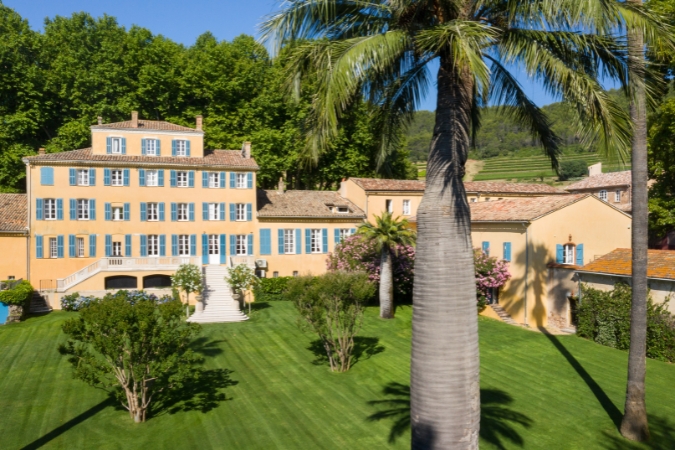
Drawing inspiration from the cherubic angels whose heads peer from above the altar of the chapel inside the château, the name Whispering Angel reflected a desire to build an anglicised brand that was easy to say and difficult to forget, with American consumers in mind. However, Lichine credits British women for the early success of the wine, citing London as the birthplace of the rosé renaissance.
Though Lichine has never claimed to be an expert in marketing, his midas touch ensured the wines were perfectly placed for the explosion of social media, harnessing the Insta-friendly, traditional salmon pink of Provençal rosé, to promote the notion that pale can be interesting, given sufficient care and attention.
‘Rosé is the easiest wine to make average and the hardest to make great. There’s a perception of the paler, the better, but the problem is the paler you go, the less you extract from the fruit, so the aim must be to achieve something elegant and precise, while retaining that beautiful colour… it is a race against time and against oxidation to capture the fruit,’ he says.
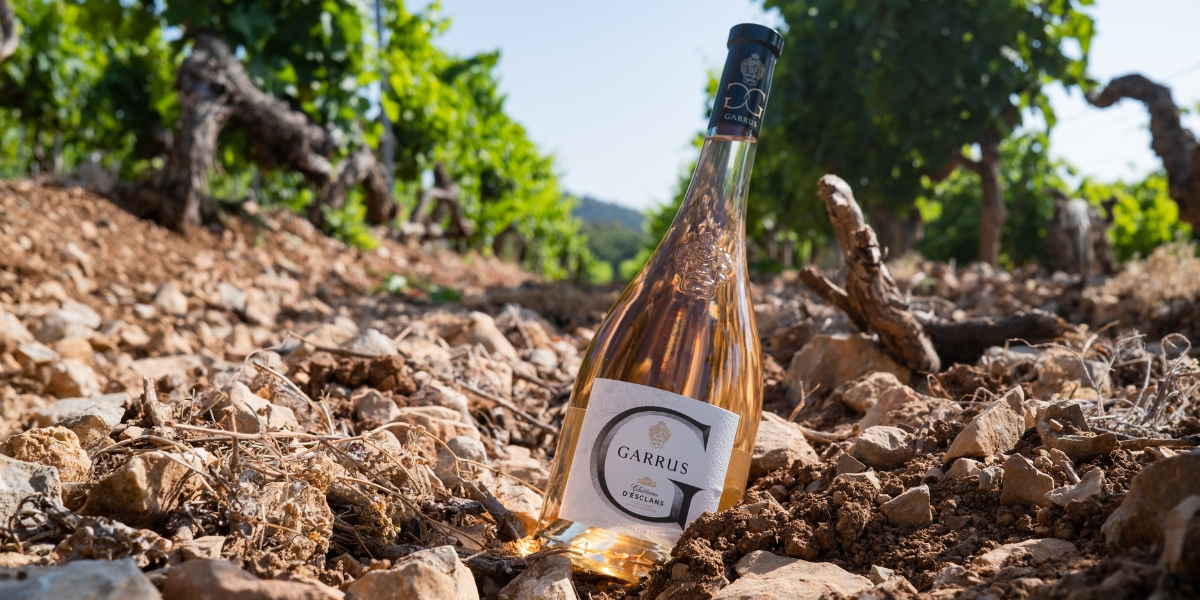
Whispering Angel’s success is the stuff of legend – from an initial run of 130,000 bottles in 2006, production is now around the 12 million mark – but Lichine seems proudest of his top wines, Les Clans and Garrus, which sit comfortably alongside top Champagne cuvées in the fridges of the world’s most glamorous bars, at the vanguard of a new category. Both Garrus and Les Clans are made predominantly from Grenache and Rolle (also known as Vermentino), with small amounts of Tibouren and Syrah used in some vintages. The biggest difference between the two wines is the plots that are used: the ‘heart’ of Garrus is a 4ha vineyard at the highest point on the estate, where vine age averages between 80 and 100 years old; the vineyards for Les Clans are slightly younger. Garrus, comfortably Château d’Esclans’ most expensive rosé, also sees a higher percentage of new oak.
Lichine still has a point to prove: that rosé can rival the world’s most famous wines when it comes to ageing potential
Rather than resting on his laurels, Lichine still has a point to prove: that rosé can rival the world’s most famous wines when it comes to ageing potential. To showcase the longevity of his top cuvées, Les Clans and Garrus, he invited select wine professionals for an exclusive double vertical tasting of five vintages, at London members’ club, Annabel’s – the first time such an event has been held.
Admitting that he ‘never thought that rosé would be so grand that we could conduct a vertical,’ he offered identical vintages of the two wines: 2023, 2022, 2021, 2020 and 2017. Both wines were showing remarkably well; the ’23 vintage of Garrus still taut and linear, suggesting it is best cellared for a little longer, while the youngest vintage of Les Clans was, by contrast, more approachable and lithe in character.
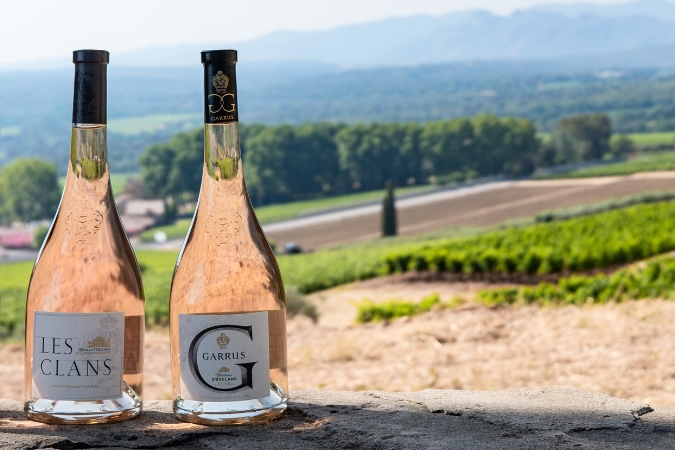
While it was a privilege to taste the wines from 2017, with Garrus still in great shape, the muscular 2020 vintage of that cuvée impressed the most, with its structural breadth and depth, and ethereal tension. The 2022 vintage of Les Clans was the standout for me, with its harmonious balance of freshness, intensity, salinity and, of course, charm.
Despite Lichine’s best efforts, there remains some silly snobbery surrounding rosé but the top cuvées from Château d’Esclans, Les Clans and Garrus, emphatically deserve their respective places in the pantheon of the world’s greatest wines.
Two mini-verticals showcasing the ageability of Château d’Esclans premium rosé
| Producer | Name | Vintage | Region | Subregion | ||
|---|---|---|---|---|---|---|
|
Château d'Esclans, Garrus 2023
Provence-Côte d'Azur
, Côtes de Provence AOP
|
Château d'Esclans | Garrus | 2023 | Provence-Côte d'Azur | Côtes de Provence AOP | |
|
Château d'Esclans, Garrus 2022
Provence-Côte d'Azur
, Côtes de Provence AOP
|
Château d'Esclans | Garrus | 2022 | Provence-Côte d'Azur | Côtes de Provence AOP | |
|
Château d'Esclans, Garrus 2021
Provence-Côte d'Azur
, Côtes de Provence AOP
|
Château d'Esclans | Garrus | 2021 | Provence-Côte d'Azur | Côtes de Provence AOP | |
|
Château d'Esclans, Garrus 2020
Provence-Côte d'Azur
, Côtes de Provence AOP
|
Château d'Esclans | Garrus | 2020 | Provence-Côte d'Azur | Côtes de Provence AOP | |
|
Chateau d’Esclans, Garrus 2017
Provence-Côte d'Azur
, Côtes de Provence AOP
|
Chateau d’Esclans | Garrus | 2017 | Provence-Côte d'Azur | Côtes de Provence AOP | |
|
Château d’Esclans, Les Clans 2023
Provence-Côte d'Azur
, Côtes de Provence AOP
|
Château d’Esclans | Les Clans | 2023 | Provence-Côte d'Azur | Côtes de Provence AOP | |
|
Château d'Esclans, Les Clans 2022
Provence-Côte d'Azur
, Côtes de Provence AOP
|
Château d'Esclans | Les Clans | 2022 | Provence-Côte d'Azur | Côtes de Provence AOP | |
|
Château d'Esclans, Les Clans 2021
Provence-Côte d'Azur
, Côtes de Provence AOP
|
Château d'Esclans | Les Clans | 2021 | Provence-Côte d'Azur | Côtes de Provence AOP | |
|
Château d'Esclans, Les Clans 2020
Provence-Côte d'Azur
, Côtes de Provence AOP
|
Château d'Esclans | Les Clans | 2020 | Provence-Côte d'Azur | Côtes de Provence AOP | |
|
Château d'Esclans, Les Clans 2017
Provence-Côte d'Azur
, Côtes de Provence AOP
|
Château d'Esclans | Les Clans | 2017 | Provence-Côte d'Azur | Côtes de Provence AOP |