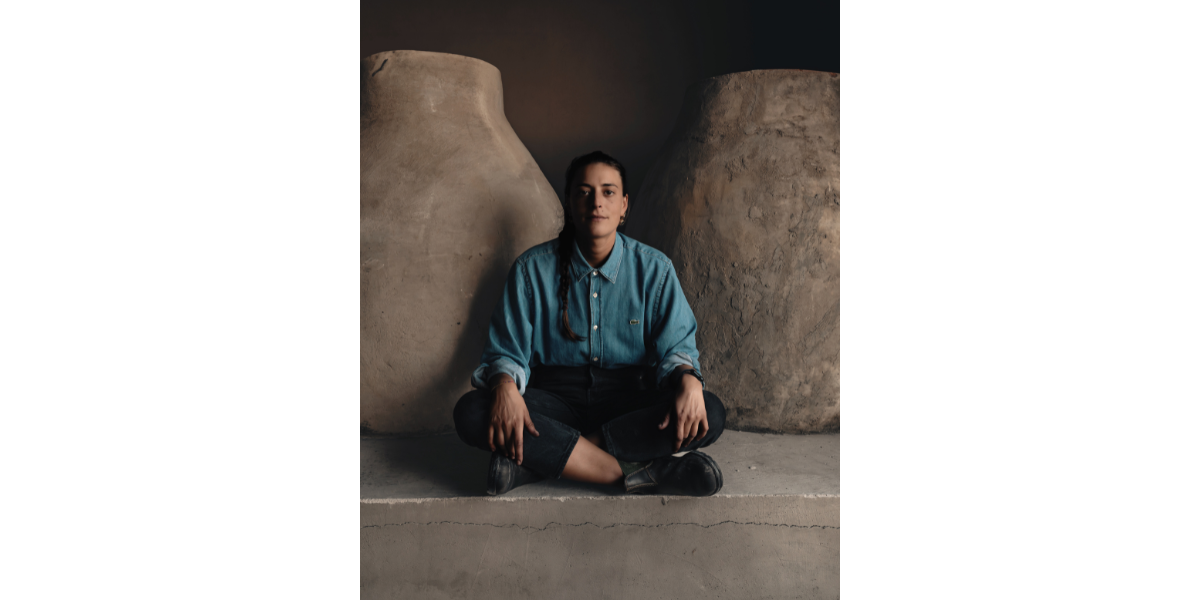
I catch up with Elena Casadei on Zoom one May morning. We’d met a week before at a tasting lunch in a cramped upstairs room in London, where there had been little time to get into the detail of her interesting project. Today she’s at Olianas, her family’s estate in Sardinia. Coverage is patchy and she’s dodging in and out of the winery buildings, holding her phone at arm’s length to catch a signal.
She is a young winemaker who has found her element and is exploring it with the enthusiasm of a convert. She’s fully engaged and patient with my questions but I get the impression there are a dozen other things she’d rather be doing. Spending half an hour with a journalist on a scratchy signal is necessary but not ideal. And that’s absolutely fine by me – I don’t want to distract her.
Her mission is to understand amphorae in all their eccentric complexity, and she arrived at it by a roundabout route. She was destined to join the family firm – she comes from an eminent Tuscan winemaking family, Famiglia Casadei – but she had other ideas. ‘When I was eighteen, I didn’t want to go into the wine business. I felt that it wasn’t my path.’ She laughs. ‘That’s who I am.’ Her parents understood. ‘They gave me total freedom. They wanted me to be happy.’ Her biography on her website notes that she left Tuscany ‘to study abroad’, and that’s a version of what actually happened. She went to London for a bit. There she broke up with a boyfriend, and her mother found her a job as a secretary in a fashion house in Hong Kong. ‘So I went there, just to have a job, but mainly to have fun.’ She laughs again. ‘Then I ran out of money.’ In 2014 she came back to Italy, with no intention of sticking around. ‘But my father said I needed to work if I wanted to travel.’
This is where her wine story begins. Famiglia Casadei, founded by her parents, Stefano and Anna Casadei, is headquartered at Castello del Trebbio in Chianti Rufina. Since the early 1990s they have built the company into a group of four estates – three in Tuscany (in Chianti Rufina, in the eastern Casentino valley north of Arezzo, and in Alta Maremma) and a fourth in Sardinia. There is also a consultancy called Tecnovite which works to promote biodiversity and sustainability in farming. They produce about 700,000 bottles a year; all the estates are run on strict biodynamic and regenerative lines (this is Stefano’s ‘Biointegrale Decalogue’ – the ten principles essential for creating a complete ecological system, from soil management to employment practices).
Casadei talks about amphorae as a musician might her violin. This isn’t simply something for fermenting and ageing; it’s an intrinsic part of the interpretation of the terroir.
Elena had left an enology course unfinished when she took off around the world. She decided that if she was going to work in the winery, she needed to understand fermentation: she was sensitive to the fact that as the owner’s daughter she should know something about wine. Stefano, who had come across amphorae in Georgia and installed around thirty in each of the estates, suggested she make a study of these enigmatic vessels.
Our connection dies and Elena freezes. Five minutes later she’s back, wedged in an outside corner of the winery in a shaft of sunlight. Stay there, I tell her, don’t move. She’s talking fast in her nearly fluent English. Her idea, she says, was to understand ‘the wine process’. At this stage she wasn’t interested in vessels, whether cement or clay or stainless steel, but ‘to understand fermentation, the flavour of the wine, the grapes, the simple things that I really didn’t know everything about.’
Stefano told her to look at amphorae because they are ‘instruments that do not add any flavour’; they are small enough to be able to follow the fermentation moment by moment, and allow micro-vinifications ‘so I could understand the purity of the variety.’ She tapped an evangelical streak in her nature – she wanted to spread the word. ‘I fell in love with the amphora. It wasn’t just that I’m young and I wanted to improve my knowledge, I wanted people to see they could learn more from amphora wine, they can understand the grape and the region.’ Other vessels have too much influence, she thought. ‘If you taste a Chianti that’s been aged in oak for two years, you’re also getting flavour from the tannins.’
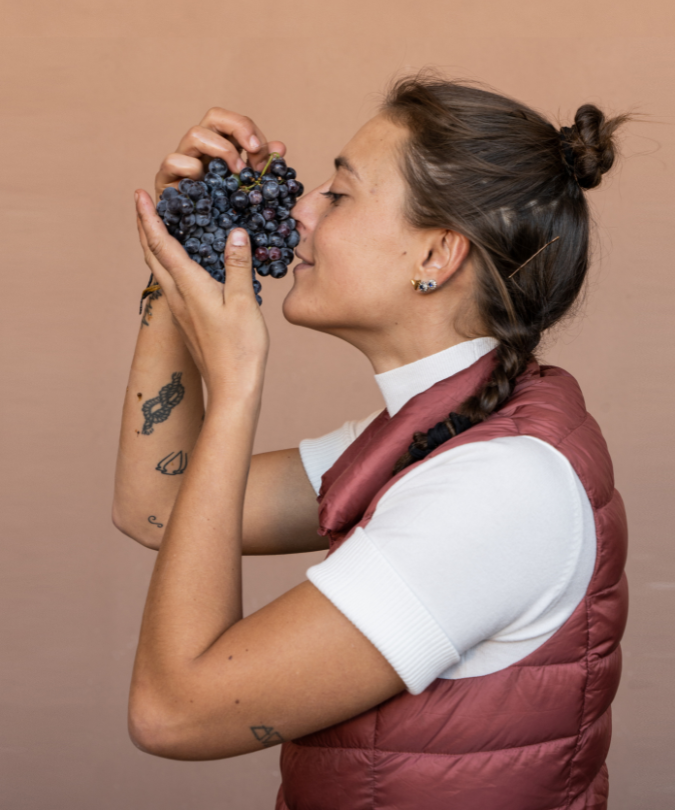
She talks about amphorae as a musician might her violin. This isn’t simply something for fermenting and ageing; it’s an intrinsic part of the interpretation of the terroir. ‘I love it that the instrument is so ancient [qvevri, as they are called in Georgia, have been in use for at least 6,000 years], and I can link the story of wine with amphorae. But I also love their porosity, I love the idea that you can feel the soil and the vintage, that wine isn’t just a beverage but something with a story.’
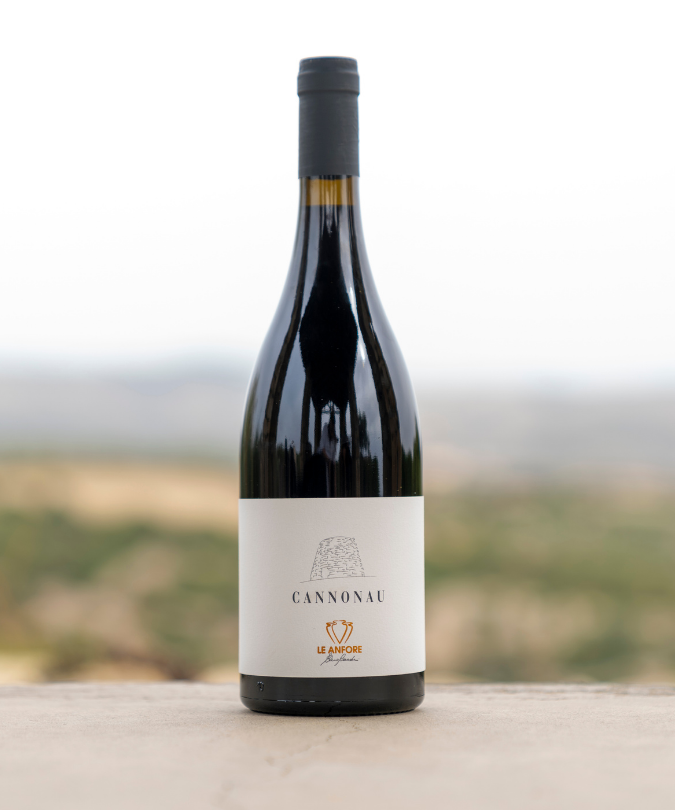
Elena is winemaker across the whole portfolio, but she has a particular project, Le Anfore di Elena Casadei, nine wines (six from the Tuscan estates and three from Sardinia). The wines are made exclusively in amphorae both imported from Georgia and made in Tuscany. After selection (which is rigorous) she decides on which amphora to choose for fermentation and for ageing. There are important differences between the Georgian and Tuscan versions. The former – wood-fired and entirely handmade – are more porous than the kiln-fired Tuscan amphorae. For example, Cannonau (the Sardinian name for Grenache) from the island-wide Cannonau di Sardegna DOC, is fermented in Georgian vessels and aged in Tuscan. ‘Cannonau is reductive so I want the wines to be able to breathe more during fermentation.’ Then there is the sound practical reason that the buried Georgian amphorae have loose-fitting wooden lids, while the Tuscan vessels’ lids are airtight stainless steel, which is more suitable for a reductive grape variety.
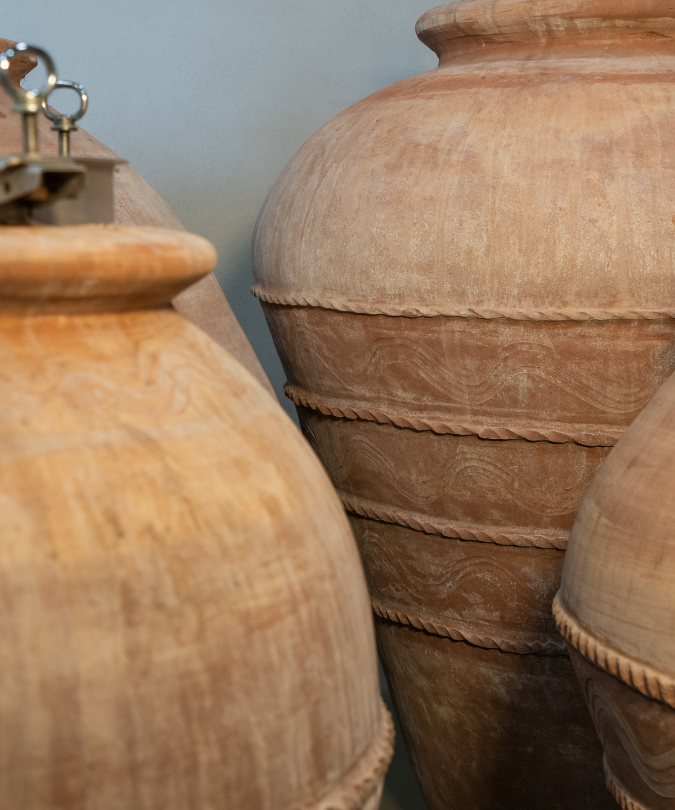
The wines are as interesting and original as Elena herself. The Cannonau 2023 has lovely bright strawberry fruit and that smooth, mid-palate friction that always seems to me the hallmark of an accomplished winemaker, teetering on the edge of dryness but mitigated by a squeeze of juice. I love the whites, especially an orange wine called Migiu, made from the Sardinian grape Semidano, for its tannic heft and bitter orange zing, which the Ansonica (the grape known as Inzolia in Sicily) also hints at. I love the Syrah from a blend of Tuscan fruit, for its precision. Elena favours long maceration times (100 days for the Migiu and Ansonica, thirty to forty days for the Cannonau); she makes small quantities, typically 2,000-3,000 bottles from plots of a hectare or less.
These are accomplished wines; they are edgy and angular, and exhilarating, in the way a performer (a great actor, say) will grip you by taking risks at the same time as reassuring you that they’re not going to fail. It’s not an easy thing to pull off. I should also make clear that these are not curiosities: they are wines made by someone who understands their market. The number of serious sommeliers around the table at the London tasting would attest to that.
Elena says she’s still learning, that her earlier wines (her first, unreleased, vintage was 2013) are very different – ‘still good, for me, but now I know more, or maybe as I learn more and can make different decisions, I have a different style.’ One way of defining the difference between art and craft is that the latter is something you repeat over and over and gradually get better at, while an artist, constantly experimenting, does something new every time. It’s clear that Elena Casadei is attracted to amphorae for many reasons, and one of them might well be that she still doesn’t fully understand how they achieve their effects.