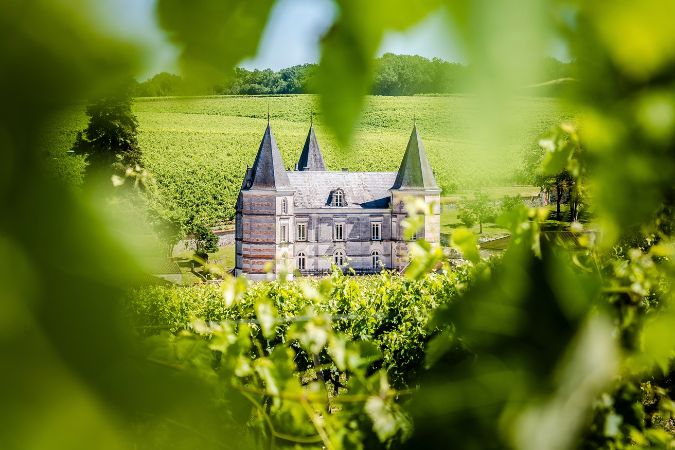
In the heritage-laden and highly diverse world of Cognac, it takes a lot to stand out from the crowd. But Cognac Frapin occupies a position in the region that is perhaps unique, and not just because of the family-owned house’s long history: more than 20 generations have farmed here since the Frapins first planted vines back in 1270. Many landmarks have followed, from the completion of Frapin’s home, Château Fontpinot, in 1872, to the inauguration of the Segonzac cellar, designed by Gustav Eiffel, in 1892. More recently, Frapin’s XO VIP Cognac was served on supersonic air liner Concorde.
But there’s much more to Frapin than a long and rich history. Most Cognac houses are négociants – buying in grapes, wine and/or eaux-de-vie to create their products. Not so Frapin. Every drop of the house’s Cognacs is sourced from the 240 hectares of vines that surround Fontpinot, and all of the winemaking, distillation and maturation takes place in-house.
‘We are very special in this area because all our grapes come from our vineyard,’ explains Frapin cellar master Patrice Piveteau. ‘It’s a key for us. We have one of the bigger vineyards in the Cognac area, and all of this vineyard is in the heart of Grande Champagne. It’s a good beginning.’ The location is important: Grande Champagne is the premier cru of Cognac, its bleached chalky soils the source of the region’s finest and longest-lived eaux-de-vie.
‘The quality of Cognac Frapin starts in the terroir,’ says Piveteau. ‘Like a grand cru in Bordeaux, we pay attention to the vineyard and the terroir. But the key to Frapin is that we have our hand on the ball – we control everything.’
From the vineyard, every step of production is geared towards quality, and the signature character that pervades each of Frapin’s Cognacs, from 1270 through VSOP to XO and beyond, including an array of single-property Château Fontpinot bottlings.
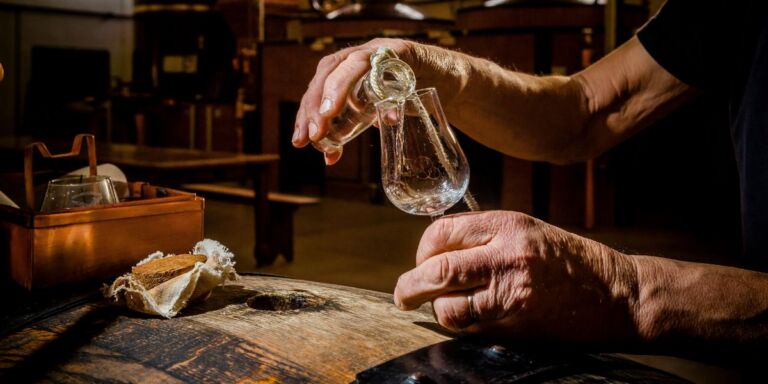
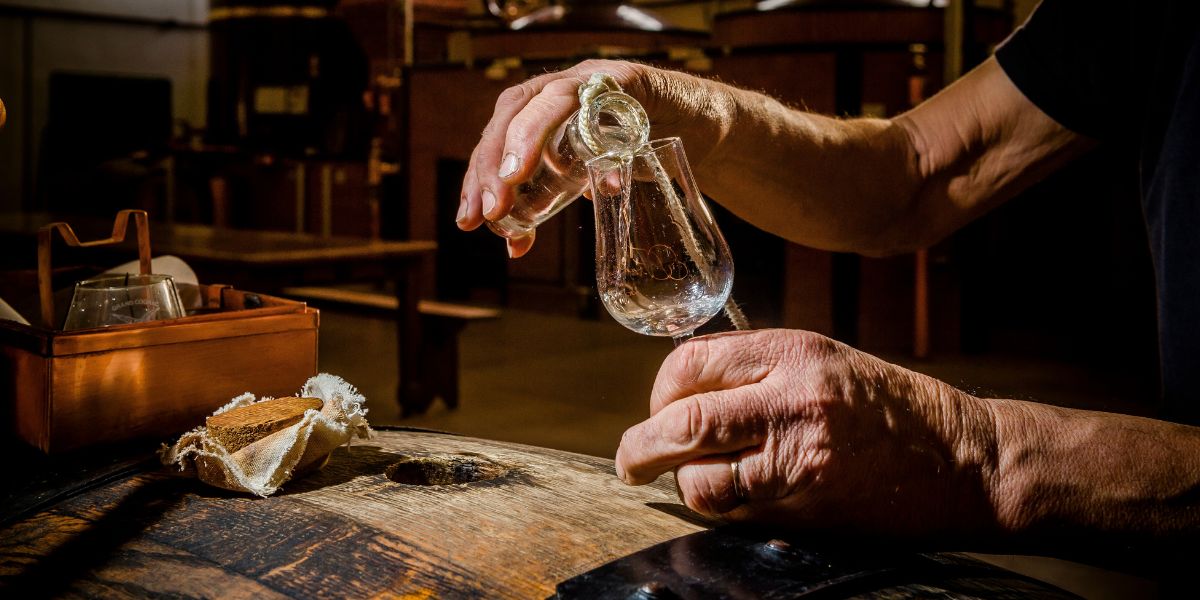
Cognac needs acidity, but Piveteau doesn’t want to overdo this, seeking a little extra maturity in the grapes to tease out more flavours that will persist after distillation. And distillation is truly hands-on: no automation, but instead relying on human expertise; Piveteau’s ‘computers’ in the stillhouse, he says, are Rémy, Jérémy and Matthieu, the distillers. ‘A lot of people speak about artisanal ways, but for Frapin it’s true,’ he adds. ‘This is hand-made – or nose-made – distillation.’
One of the keys to the longevity, quality and character of Frapin’s Cognacs is distillation on the lees – the dead yeast cells and pulp that are a by-product of winemaking. This, says Piveteau, increases the amount of fatty acids in the eaux-de-vie, which helps to create a mouth-filling texture and, after long ageing, the basis of ‘rancio’, the elusive, tangy flavour you only find in the oldest and finest Cognacs.
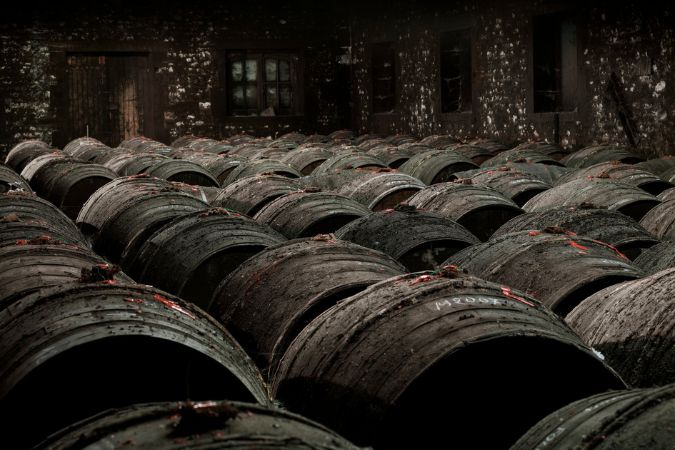
But the painstaking work doesn’t stop at distillation. Maturation is a complex business at Frapin, involving casks of different types – younger, more influential oak for the freshest eaux-de-vie, older casks for the mid-range (aged 5-15 years), and the oldest wood possible for longer ageing, where the cask gives nothing but slow evaporation and oxidation, layering on mellow complexity.
Maturation location matters too. Piveteau draws on a range of dry or humid cellars – in the former, water evaporates more quickly; in the latter, it’s the alcohol. ‘It’s a key for me, because the way to produce different qualities in my range is through different kinds of ageing,’ he explains. ‘But it’s important to have a very long ageing – the difference comes not after one year, but after 20 years. To produce a good Cognac, I need time.’ For this reason, Frapin’s Cognacs are aged well beyond the norm: XO VIP, for instance, matures for triple the legal minimum period of 10 years.
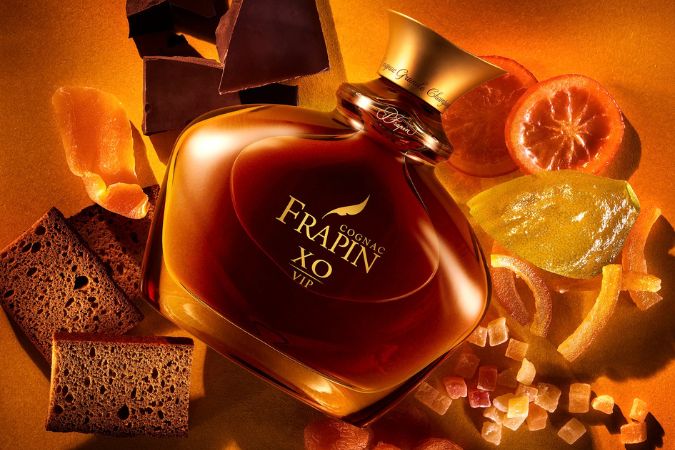
This philosophy runs through the entire Frapin range, including the multi-award-winning VSOP, which this year has been released in a new collector’s edition, featuring a bold design referencing Frapin’s long history and the annual Cognac Blues music festival, of which the house has been a partner for the past decade.
The approach is one that always prioritises quality over quantity: Frapin is not a large Cognac house, but one that has a clear vision: ‘Our only aim is the quality of the Cognac in the glass,’ says Piveteau. ‘Everything good for the quality is good for Frapin. What is important for me, for you, for the market, it’s the result. It’s not what I say; it’s the quality in the glass.’
To find out more about Cognac Frapin, the house offers visitors a range of guided tours and tastings, with further information available at cognac-frapin.com/en/visits