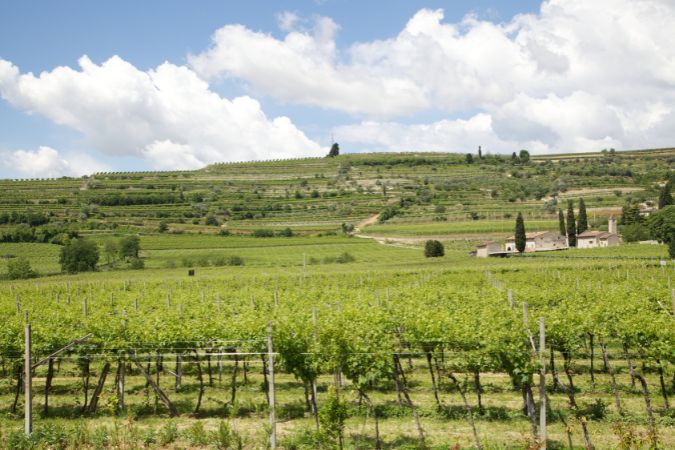
Classicism is often interpreted as something static, frozen in time. Yet a real classic endures solely by continuously adapting, striking a balance between retaining identity and embracing contemporary relevance. This philosophy has been central to Masi’s approach since the Boscaini family’s first grape harvest in the Valpolicella Classica area, in the Veneto region, in the late 1700s. Like a classic Vivaldi concerto, whose timeless notes are continually reinterpreted by new performers, Masi sees classic wine styles as living entities: they must retain a distinct sense of tradition and origin while remaining open to coherent evolution.
The creation of Campofiorin in 1964 marked a historical milestone of Masi’s creative philosophy. It was a revolutionary, long-lived liquid of great depth and nuance that offered a new interpretation of the region’s winemaking tradition by combining native Venetian varieties with the appassimento method. The Campofiorin style did not fit any of Veneto’s existing denominations, so it was – and still is – bottled as a simple Rosso del Veronese IGT. For this reason, it has been dubbed the original ‘Super Venetian’, having pioneered the very idea of stepping outside established appellation rules (as popularised years later by the Super Tuscans).
A forgotten variety
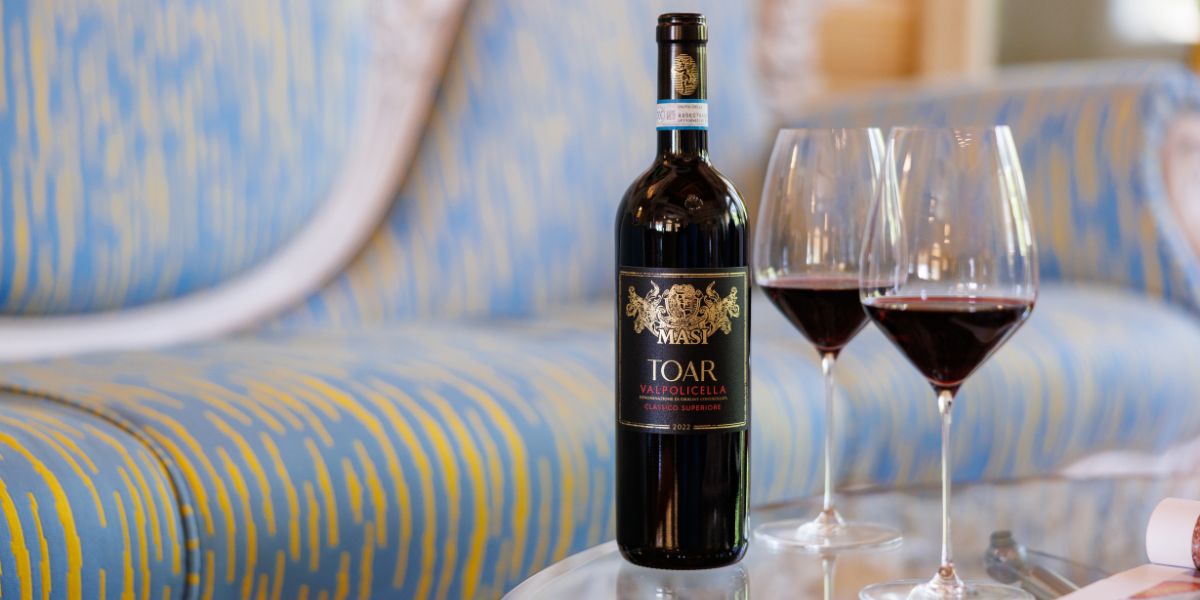
Efforts to rediscover the native red grape Oseleta, which began in the 1980s, are the clearest demonstration of Masi’s understanding of classicism in winemaking as a balance between tradition, experimentation and forward thinking. Once common across the Veneto, the grape all but disappeared in modern times. Reviving it required not only reintroducing it to the vineyard but also developing new ways to leverage its potential in the bottle, which Masi first achieved with Toar.
Created in 1985, Toar was explicitly conceived as the first attempt to rediscover the grape. At the time, Oseleta was not permitted in any DOC, meaning that, like Campofiorin, the wine had to be declassified as a simple IGT. ‘It took decades of effort on our part to get Oseleta officially recognised in the denomination rules in 2010,’ says Giacomo Boscaini, a seventh-generation member of the Boscaini family. ‘This allowed us to turn Toar from an IGT experiment into a true Valpolicella Classico Superiore.’
The creation of a second expression of Campofiorin – named Brolo – in the mid-1990s further cemented Oseleta’s status as a key local variety. ‘If Campofiorin pioneered our approach and established the Super Venetian category,’ Boscaini continues, ‘Brolo added complexity and depth to the style through the inclusion of this rare indigenous grape, which we were so instrumental in reviving.’
Taking classicism into the future
The same pursuit of classicism with research and experimentation at its roots has shaped Masi’s white wines too. Masi’s single-vineyard wine Colbaraca, for instance, retains the almondy character and sapid finish that have long defined Soave. Yet rather than the modesty that characterises many commercial examples, it delivers mid-palate density, richness and serious ageing potential. Partial fermentation in oak contributes complexity and mouthfeel, while the wine’s heft and depth of flavour come from grapes grown in a north-west-facing volcanic vineyard, whose cooler aspect helps preserve acidity and structure in the fruit as the climate warms.
We wanted to show how a grape of international renown like Pinot Noir can be interpreted through a distinctly local lens
Masi’s latest ambitious project is a wholly new application of the Boscaini philosophy. In 2023, the family acquired Tenuta Casa Re in Oltrepò Pavese, an area in neighbouring Lombardy particularly well suited to growing Pinot Noir. ‘Moving into Oltrepò Pavese was what we like to call a “coherent crossing of borders”,’ Boscaini explains. ‘We wanted to show how a grape of international renown like Pinot Noir can be interpreted through a distinctly local lens.’ The resulting Pinot Noir del Re focuses on the variety’s natural, unvarnished character. Lower in alcohol and lighter in body, it is matured in larger wooden barrels to minimise the aromatic influence of oak, resulting in a genuine, accessible expression of Pinot Noir that reflects the character of the land.
Like Pinot Noir del Re, all Masi wines are born of the distinct landscapes from which they originate and the traditions that come with them, yet they are interpreted through the personal understanding of classicism that has characterised the Boscaini family’s work for centuries. They retain their historical relevance by respecting and building on heritage while refusing to stand still. As Boscaini puts it: ‘For us, a classic is not something set in stone. It must remain relevant by projecting a very clear sense of place and identity into the future.’