Still a relatively new name in the wine lovers’ lexicon, Cap Classique is now South Africa’s fastest growing wine category, winning fans for its impressive ratio of quality to price while slowly gaining recognition for top tier examples that have enjoyed years of patient bottle ageing. So what’s behind its success and what are the best examples?
Known as ‘Methode Cap Classique’ until a few years ago when the moniker was shortened, the Cape’s signature sparkling wine has earned itself an enviable reputation for over-delivery, offering – quite literally – more bang for your buck. Made in the same way as Champagne, with secondary fermentation in bottle, the category is subject to strict, self-imposed rules, including a minimum lees ageing of 12 months (though many producers choose far longer), which have helped maintain consistent quality.
The UK is by some measure the biggest export market for Cap Classique, accounting for more than a third of shipments, with sales more than doubling over the past five years. One producer, Graham Beck, dominates the UK, with in excess of 80% market share, while membership of the Cap Classique Producer Association (CCPA) has ballooned from 14 wineries at its inception in 1992 to more than 100 today.
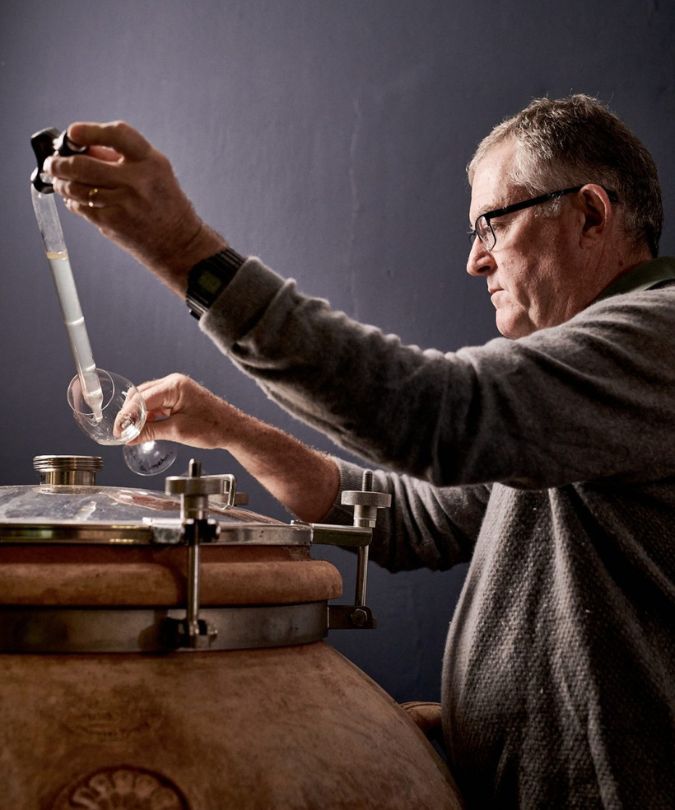
Cap Classique’s birthplace was Simonsig Estate in Stellenbosch where, 55 years ago, winemaker Frans Malan, inspired by a visit to Champagne, attempted a South African traditional method version using Chenin Blanc. He called it Kaapse Vonkel, meaning ‘Cape Sparkle’. His son, Johan Malan, successfully took on the mantle, his Cuvée Royale 2020 winning a prestigious gold medal at the IWSC Global Judging in South Africa last year.
‘The Cape with its mild maritime climate is ideal for the cultivation of the main Cap Classique varieties (Chardonnay and Pinot Noir), which are harvested early in January before the heat of February to preserve natural acidity and keep pH levels very low,’ says Malan. ‘The abundance of sunshine in the Cape [means] vintages are very consistent so do not require the use of older reserve wines to maintain house style or consistency. You can taste the sunshine in our Cap Classique due to the beautiful aromatic fruit expression.’
Malan maintains that the right region, site and soil is imperative as a starting point to making award-winning Cap Classique wine. ‘Over time, all our experience gives us an in-depth understanding of each vineyard block to know which sites deliver the best quality,’ he says. But Malan also claims that it requires complete attention to every step of the process, which for them includes whole bunch pressing, juice separation and blending.
Cap Classique’s success also owes much to another pioneer of the category, former Graham Beck chief winemaker Pieter Feirrera, who recently retired after 35 years to focus on the eponymous brand he was permitted to establish with wife, Ann. On becoming Beck’s cellar master in 1990, Ferreira crafted the winery’s first vintage under the night-time sky, as the fledgling winery building was yet to be fitted with a roof. Four years later the same cuvée earned a place among the stars when it was served for the inauguration of Nelson Mandela as South Africa’s first democratically-elected president.
A relentless cheerleader for Cap Classique, Feirrera presided over an extraordinary period of growth for Graham Beck, earning himself the epithet ‘Mr Bubbles’ for his determination to carve out new territory in the sparkling sector: ‘We are not trying to be like Champagne, we understand and respect it, but we are seeking to be uniquely South African. We are still in pursuit of the perfect bubble, and long may we not find it,’ he tells me, with a wink.
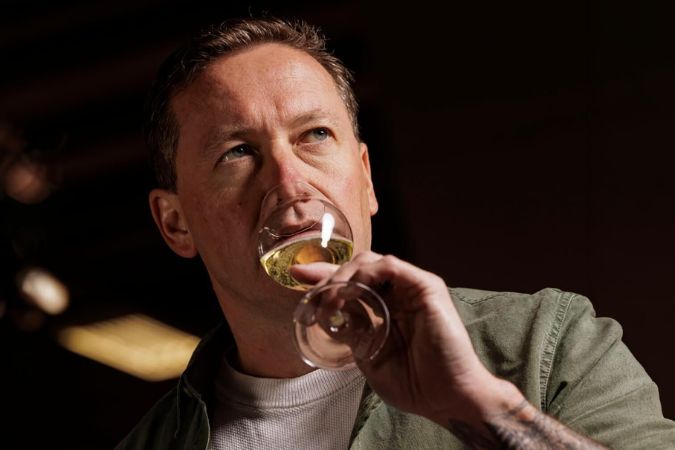
Groomed to be Ferreira’s successor, Pierre de Klerk is now in charge at Graham Beck, where he continues the restless innovation that has defined his predecessor’s tenure and arguably helped maintain the brand’s success, crowned last year with the award of the IWSC’s South Africa Producer Trophy.
‘Technology has allowed us to gain a deeper understanding of, and respect for, the whole cycle of creating beautiful Cap Classique,’ he says, citing investment in evaluating soil health, optimal vineyard aspect, precise irrigation, gentler handling of grapes and even types of bottle closure. ‘Experimentation during each of the steps in the process that leads to the final product has helped us understand the pitfalls and upswings of decisions taken at every juncture. They say variety is the spice of life, but surely experimentation must be the spark of life,’ says de Klerk.
What does de Klerk make of Cap Classique’s general rise in quality? ‘Over the last decade we’ve seen more and more producers willing to utilise their better, or even best, sites to produce Cap Classique, as opposed to just trying to make some bubbles because the vineyard is too old or virus-ridden to ripen for still wines,’ he says. De Klerk claims that enhanced approaches to viticulture have also helped promote further complexity from grapes while maintaining incredible freshness and natural acidity. ‘We’ve seen an increase in the diversity of styles, innovation, and a flurry of interest from the younger generation, which has perhaps been lacking in the past,’ he adds.
The next challenge for Cap Classique is to entice consumers to trade up to premium examples, such as Graham Beck’s IWSC-gold-medal-winning Cuvée Clive, but that’s no mean feat for a category that has successfully built a reputation based on value for money. ‘I think in today’s economic climate this is a real conundrum as Cap Classique offers incredible intrinsic value… considering you can enjoy three to five-year-aged products at much more competitive prices than regular non-vintage from other countries,’ says de Klerk. But it shouldn’t be hard to convince those already clued in on Cap Classique’s virtues – and that’s certainly a growing number. ‘Are more people recognising the upward quality trend in premium Cap Classique? Yes, especially with liquid over lips,’ agrees de Klerk.
Read on for Gold medal-winning wines from the IWSC’s Global Judging programme in 2025, with the IWSC experts heading out to taste and rate in South Africa again in July 2026.
Four top Cap Classique wines to try
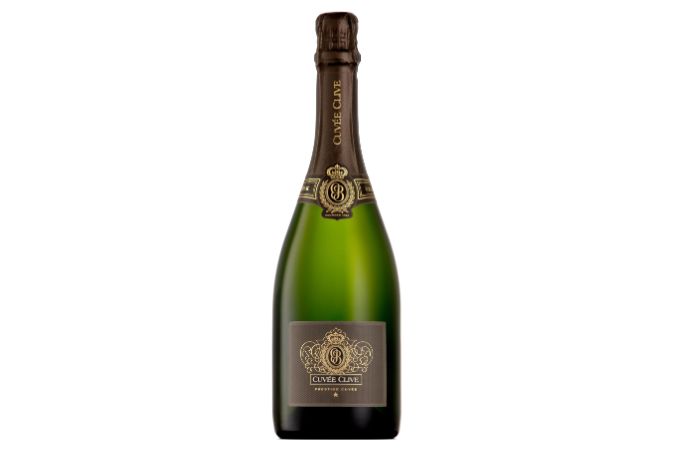
Graham Beck, Cuvée Clive 2019
IWSC judges praised this Cap Classique wine for its immediate ‘delicate, nuanced bouquet of subtle white truffle and biscuit’ as well as its ‘long, gentle finish of soft spice and sweet oak.’
‘On the palate, ripe orchard fruits and creamy lemon curd intertwine beautifully, while hints of warm pastry add complexity,’ they said. 97 points
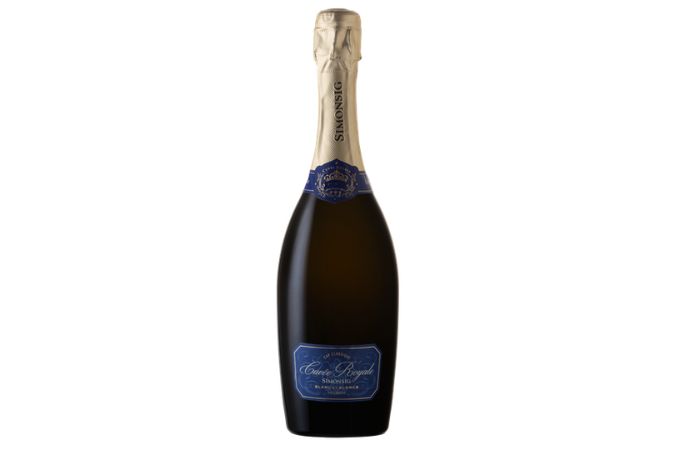
Simonsig Family Vineyards, Cuvée Royale 2020
Tasting notes from the judges touched on aromas of baked apple, marzipan, lemon posset and orchard fruits, the latter continuing on the mouth. ‘The palate reveals rounded, creamy layers of savoury baked apple, soft minerality and a persistent mousse. Spiced orange and quince add depth, leading to a balanced finish and vibrant limey acidity with detailed earthy nuances,’ they said. 96 points
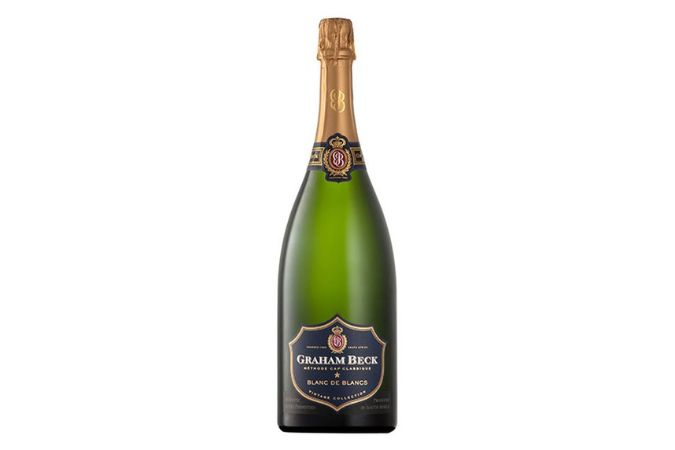
Graham Beck, Blanc de Blancs 2019
White truffle emerged once again on the nose from Graham Beck’s Cap Classique wines when judged blind, along with ‘delicate stone fruits and orchard notes’. According to IWSC judges, this blanc de blancs features a ‘beautifully intense palate with a vibrant mix of jasmine, marzipan and cream-swirled spiced apple pie,’ and finishes with lingering lemon curd and a smooth, persistent mousse. 96 points
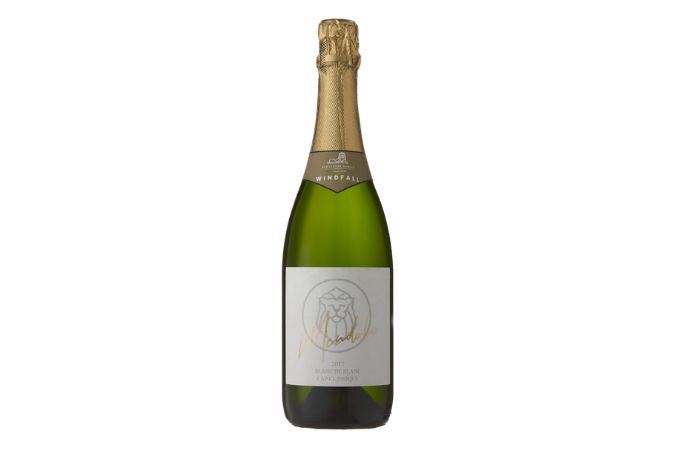
Windfall Wine Farm, Mendola Blanc de Blancs 2017
This Cap Classique wine is all about white truffle, yellow plum and citrussy dessert aromas, according to IWSC judges. ‘On the palate, rich baked apple and lemon curd harmonise with a creamy mousse, while gentle bubbles add vibrancy,’ they said. ‘The lengthy finish showcases expressive fruit alongside a savoury complexity, with nuances of honeycomb and a subtle nuttiness.’ 95 points