If you have to choose just one grape in the Cape,’ Eben Sadie says to me, as we approach the new releases of his trilogy of Chenin Blancs, ‘it would have to be Chenin.’ While we shouldn’t take this too literally – Sadie is a passionate advocate for expanding South Africa’s varietal diversity – his comment speaks to a simple truth: Chenin Blanc has a longstanding and deep affinity with the country’s ancient soils. When a country’s plantings are overwhelmingly dominated by one variety, ‘you are bound to plant a couple of vineyards in the right place’, Sadie says. ‘The fact that so much Chenin was planted between the 1940s and 60s meant that some amazing sites were established – something that would not necessarily happen today.’
Sadie’s matter-of-fact statement – right variety, right place – is integral to a 21st-century wine revolution that has been called the South African new wave. The dynamism of today’s fine-wine landscape in the Cape is closely linked to the desire and drive to get the variety/place relationship right. Chenin is at the centre of the new wave; and because it is so widely planted, we now know where it produces exceptional, mesmerising wines.
Read more: The South Africa Report
In my tastings for Club O’s South Africa Report last year, Chenin excelled, showing itself to be ‘a hell of an honest grape’, to borrow the words of one of the Cape’s most accomplished Chenin makers, Chris Alheit, who describes Chenin as ‘super-transparent’ in articulating both site and vintage. Alheit makes his Chenin by taking the same approach on each site – wild fermentation in neutral vessels with around 12 months’ lees ageing – enabling collectors to directly compare the wine’s terroir differences side by side. ‘Our winemaking philosophy is really, really simple and, I’d like to say, quite pure,’ Alheit says. ‘There’s nothing added or taken away, there are no clever tricks; it’s just the vineyard and a little bit of sulphur.’
Alheit works with Chenin grown in four districts, sourcing variously from parcels in Stellenbosch (Bottelary and False Bay), the Swartland (Malmesbury and the Paardeberg), Citrusdal Mountain (Piekenierskloof and Skurfberg) and Cape Town (Tygerberg). The range of guises Chenin wears on these various terroirs (and, additionally, Bot River, Cederberg, Paarl, Polkadraai Hills, Slanghoek and Wellington), with their different soil types, climates and elevations, is incredibly exciting for lovers of wines with a distinct sense of place. ‘Chenin is a tremendous vehicle for expressing the land if you are […] trying to transmit the character of the vineyard and nothing else,’ Alheit says.
The Cape’s present-day Chenin story is intimately entwined with its old-vine story. The rediscovery, restoration and subsequent preservation of old Chenin vineyards has brought us an exhilarating roll call of limited-production, highly collectable gems, many available on allocation only. This movement has two pillars. The first is the tireless work of viticulturist Rosa Kruger in tracking down promising old plots of vines and connecting the growers with winemakers she trusted to care for the vineyards, which led to the launch of South Africa’s Old Vine Project (OVP) in 2016. The second is the vision and determination of the new-wave producers to express South Africa’s landscape.
Duncan Savage’s Never Been Asked to Dance is from a tiny bush-vine vineyard on the border of Paarl and Stellenbosch, planted in 1956 on granitic soils. This Chenin had never been bottled on its own and given the chance to shine until Savage stepped in. ‘This beautiful old block had been earmarked for being pulled out,’ Savage says. ‘Our plan was to resurrect it, and now it’s going from strength to strength. We knew it was old when we took it on, but we didn’t know it was the fourth-oldest Chenin vineyard in South Africa.
Alheit describes Chenin as ‘super-transparent’ in articulating both site and vintage
Standing between the vine rows in the early evening as the setting winter sun blazes in the sky, I can feel why this vineyard grabbed Savage; it has a quiet yet powerful aura of its own. This one hectare yielded a mere 349kg of grapes when Savage first picked it in 2017. With attentive farming – hand-weeding, mulching, interplanting with young vines – Savage and his team (which includes viticultural consultant and old-vine expert Jaco Engelbrecht) have increased the output to 3-5 tons per harvest. The metaphor of never having been asked to dance resonates; the Cape’s contemporary wine producers, with their ambition for and curiosity about terroir transmission, have invited previously anonymous old Chenin vineyards to dance, and to express their own vinous identity.
All about site
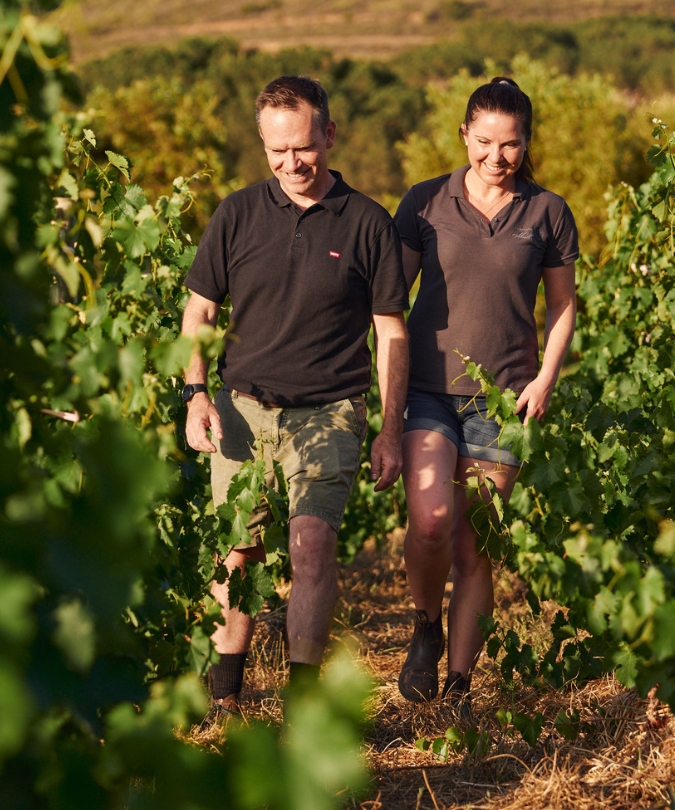
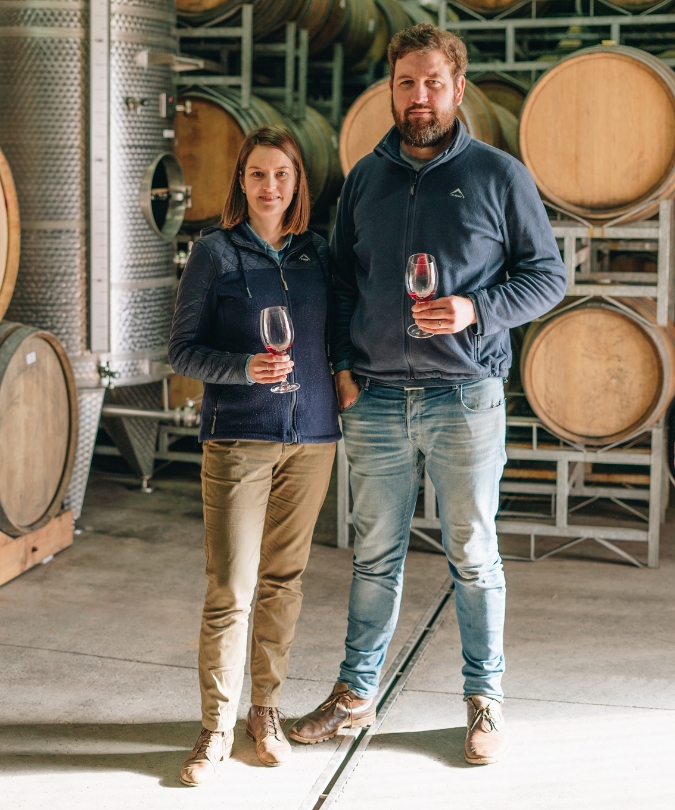
David and Nadia Sadie make four Swartland Chenins from registered single vineyards, all of which carry the Old Vine Project’s Certified Heritage Vineyards seal, despite having originally intended to make just two wines (one white and one red). The first pair of single vineyards, Hoë-Steen and Skaliekop, debuted with the 2014 vintage. David says that Nadia took ‘a lot of convincing’ that they should go down the single-vineyard route, ‘but obviously I won the fight. There’s a beauty to celebrating a single vineyard.’
The couple’s two original single-vineyard wines brought different soil types into their repertoire, David says, which produced different styles of Chenin. ‘We weren’t working with any clay or shale vineyards before 2014. Our Chenin vineyards were based on the Paardeberg’s granite and were quite mineral, tense wines. Suddenly, we had these wines with a broader palate and more structure. The clay-rich soils of Hoë-Steen brought texture and power, while the shallow shale of Skaliekop has a different mid-palate profile, with a lot of lateral tension. They stood out and justified being bottled on their own.’
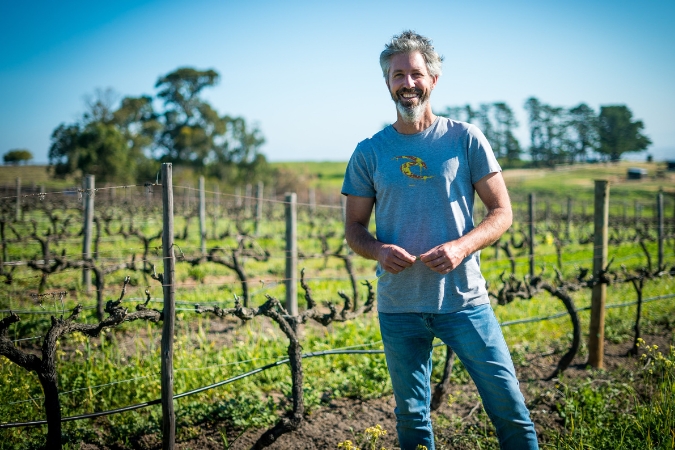
David is quick to acknowledge that ‘he was not a pioneer in his own region’, referencing the Mullineux and their Single Terroir Chenins. Adi Badenhorst, one of the original Swartland Revolutionaries alongside Andrea and Chris Mullineux, Callie Louw, Eben Sadie and Marc Kent, was specifically the inspiration for the Sadies to start bottling their Paardeberg Plat’bos plot as a single vineyard in 2018, to better comprehend its granitic profile. Badenhorst’s different granite Chenin bottlings, David says, ‘gave us the confidence to bottle another granite Chenin that was distinctly different from our main Chenin’. The husband-and-wife team visibly relish the intellectuality of being immersed in a specific site; they work with a Burgundian attention to detail, only bottling a vineyard on its own when they have farmed it themselves and understood its nuances – and, crucially, when they believe it has something to say. David explains how important it is ‘to have farming control’; learning ‘which parts of the soil have wetter pockets and ripen later’ is crucial to their tailored viticultural approach, affecting their choice of cover crops or mulching regime and, ultimately, having an impact on grape and wine quality.
The Citrusdal Mountain district, north of the Swartland, is home to some of the Cape’s most thrilling Chenins
Chenin’s capacity to convey place can be understood with even the most cursory of summaries of South Africa’s must-know Chenin terroirs. On the decomposed granite of the Swartland’s Paardeberg, Chenin articulates itself as steely, nervy and linear (as evidenced in Mullineux Granite and Sadie Family Rotsbank) – even austere in its youth. Similarly, on the granite-rich soils of the Polkadraai Hills in Stellenbosch, with their False Bay cooling influence, Chenin shows tension and vivid acidity, as well as a bright, luminous energy, achieving surprising intensity at modest alcohol levels. Raats Family Eden High Density and Reyneke are benchmarks. On schist sites in the Swartland, Chenin can offer more generosity, texture and breadth than on granite – and often a tactile tannin presence; textbook examples include Mullineux Schist and Rall Ava.
Remote and unique
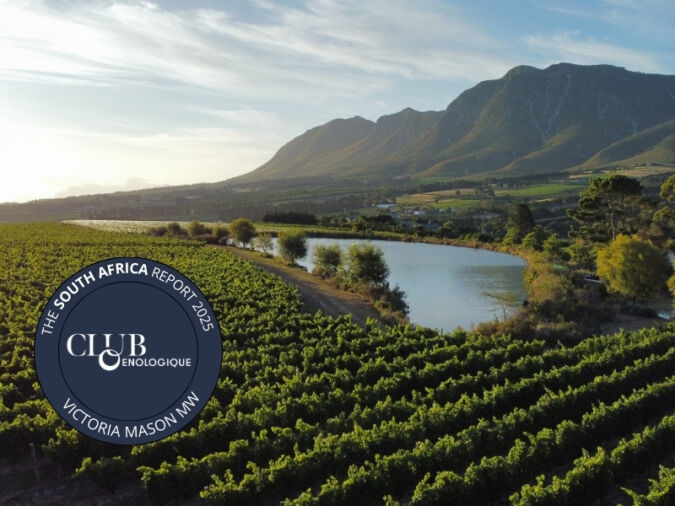
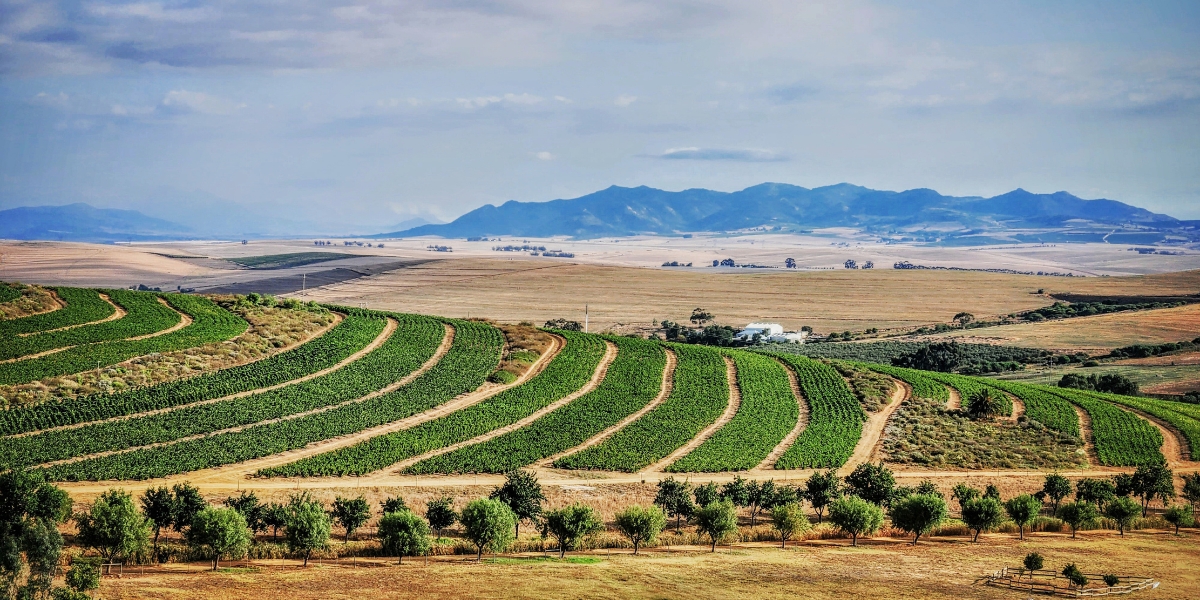
The wild and remote terrain of the Citrusdal Mountain district, north of the Swartland, is home to the undisputed, if unofficial, grand cru of Skurfberg and to some of the Cape’s most thrilling Chenins. At 450m and higher, on farms that principally grow rooibos tea and citrus, the soils are predominantly decomposed Table Mountain sandstone, and the wines born from this rugged landscape often have a wild-herb perfume (fynbos– a native shrub – is the more accurate descriptor), an earthy minerality, and significant structure; the best emit a raw, reverberating power.
Skurfberg yields fewer than 50,000 bottles across the different producers but has achieved a near-mythical status for South African wine lovers, partly on account of scarcity but mostly thanks to its formidable wines. In his 35 years of reviewing South Africa, wine critic Tim Atkin MW has awarded three whites 100 points, all three Chenin and two from Skurfberg.
This unrepeatable identity, multidimensional and chameleonic, is South African Chenin’s most compelling quality
Then there is the Mev Kirsten vineyard in Stellenbosch, which sits on heavier soil than both the Paardeberg and Citrusdal Mountain, with sandstone and granite formations over a deep clay subsoil. First employed by Eben Sadie in the 2006 vintage, this is a small standalone site – but as South Africa’s oldest recorded Chenin block it demands inclusion in this whistle-stop tour of the Cape’s Chenin terroirs. Now being carefully interplanted with young vines, replacing the dead and dying, this vineyard still has an old soul and is arguably gaining in complexity. Always the last of their vineyards to be picked, it has the longest growing season of Sadie’s Chenins and, he says, the biggest differential between the ripeness of the berries. ‘The significance of the site lies in its ability to produce wines of immense power and concentration, without becoming too weighty or flabby,’ Sadie says. ‘We have worked with many Chenin vineyards across the winelands, and it is an absolute anomaly in terms of its ability to pack suspended weight and elegance in one liquid.’
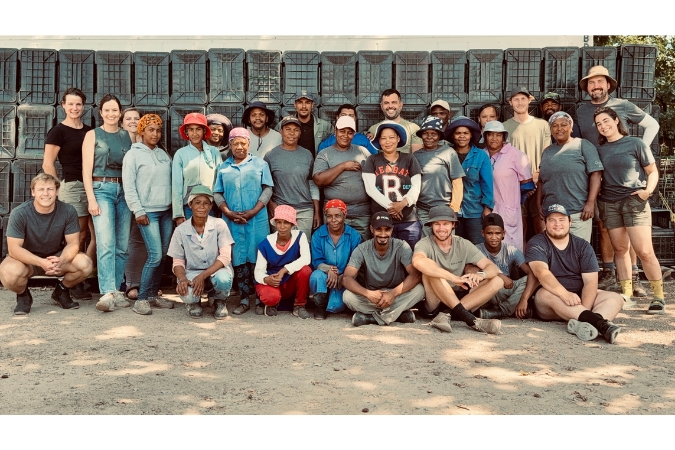
Chenin’s Cape identity can also be explored at the multiregional level. Alheit Cartology (which includes a splash of Semillon, another important heritage variety in South Africa) flies the flag for blending, with fruit sourced from nine 40- to 60-year-old sites. Year in, year out, since its 2011 maiden vintage, Cartology is a wine of many dimensions, balancing richness and concentration with energy and tautness, and capable of long ageing; the 2013 was on fire and still so youthful when I drank it this May. When Alheit established the business in 2010 with his wife Suzaan, the couple deliberately chose old, unirrigated, bush-vine Chenin as their route to bottling what he calls ‘uniquely South African wines that can’t be repeated in another place’.
It is this unrepeatable identity, multidimensional and chameleonic, that is South African Chenin’s most compelling quality; in contrast to many New World Chardonnays, Pinots and Cabernet-based blends that often gaze France-wards, it isn’t trying to imitate another region. In a wine world of increasing homogeneity and international styles, the best of South African Chenin is fiercely and authentically itself.
Five South African Chenin Blancs to try
| Producer | Name | Vintage | Region | Subregion | ||
|---|---|---|---|---|---|---|
|
Sadie Family, Rotsbank 2024
Coastal Region
, Voor Paardeberg
|
Sadie Family | Rotsbank | 2024 | Coastal Region | Voor Paardeberg | |
|
Alheit Vineyards, Magnetic North 2024
Olifants River
, Citrusdal Mountain
|
Alheit Vineyards | Magnetic North | 2024 | Olifants River | Citrusdal Mountain | |
|
Mullineux, Schist Roundstone Chenin Blanc 2024
Coastal Region
, Swartland
|
Mullineux | Schist Roundstone Chenin Blanc | 2024 | Coastal Region | Swartland | |
|
David & Nadia, OVP Chenin Blanc 2024
Coastal Region
, Swartland
|
David & Nadia | OVP Chenin Blanc | 2024 | Coastal Region | Swartland | |
|
Reyneke, Chenin Blanc 2024
Coastal Region
, Polkadraai Hills
|
Reyneke | Chenin Blanc | 2024 | Coastal Region | Polkadraai Hills |