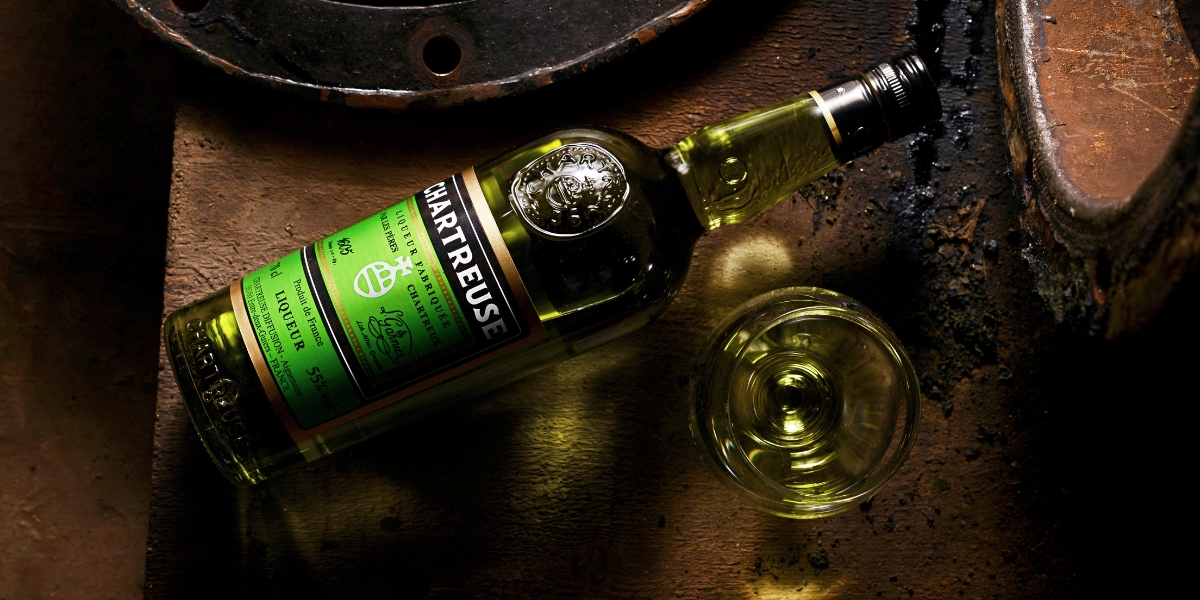
The first time you taste Chartreuse, it smacks you round the face like nothing else. A formidable liqueur, at times you might taste anise, clove, liquorice, cumin, even curry; at others, lemon balm and orange peel, menthol, saffron and honey. Whether the wildly herbaceous green version or the somewhat milder yellow, Chartreuse is distinct and divisive. Some hate it, others instantly fall in love.
Anyone visiting cocktail bars and wine-forward restaurants lately may have noticed an increase in Chartreuse on show. At Parisian restaurants like Les Arlots or at Noble Rot in London, there’s often a magnum or jeroboam of it on the counter, while new Italian spot Burro in Covent Garden serves a Donkey Kick, featuring whisky, Chartreuse, lime juice and poitín. Like the New York original, the new Buvette in London serves a number of Chartreuse-based cocktails, including a Gimlet Jaune, a punchy mix of Tequila, lemon, yellow Chartreuse and elderflower. American bars, including Zig Zag Café in Seattle and Chicago’s Remedy, have been credited with spearheading a Chartreuse revival in the cocktail world.
Outside France, Chartreuse was once the preserve of sophisticated Francophiles but now it’s going mainstream
Speaking at the recent CASK Showcase in London, Valérie Gamond, who has worked for Chartreuse for 32 years, told the audience that annual sales are now at two million bottles, which is their highest since the late 19th century, when it was especially popular among French soldiers. The pandemic saw the vivid green spirit go viral, particularly in the US, when home bartending was all the rage: between 2020 and 2024, sales doubled in America. Outside France, Chartreuse was once the preserve of sophisticated Francophiles but now it’s going mainstream.
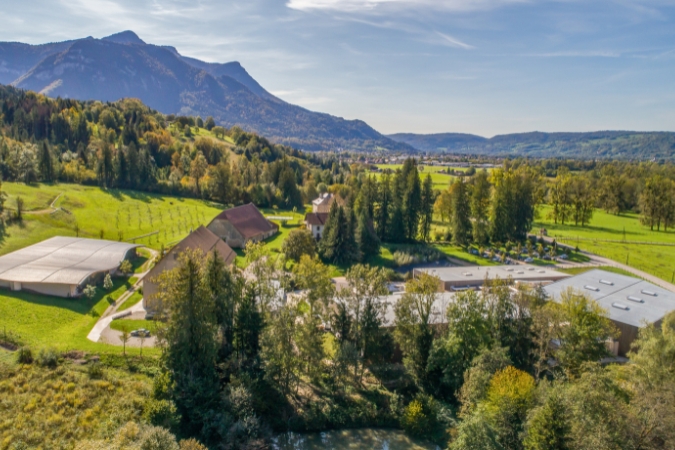
The increasing demand resulted in a shortage in 2023, primarily because the monks that make it refused to up volumes. ‘They are limiting production to focus on their primary goal: protect their monastic life and devote their time to solitude and prayer,’ said a statement at the time. ‘The monks are not looking to grow the liquor beyond what they need to sustain their order. Making millions of cases does not make sense in today’s environmental context and will have a negative impact on the planet in the very short term.’
Scarcity has only fuelled the historic mythology around Chartreuse. The Carthusian order that make it was formed in 1084, its monks seeking a life of hermitry and spirituality in the Chartreuse mountains of southeastern France. Needing income to sustain themselves, by the 17th century they were making liqueur and by the 1700s were producing what, despite subsequent tweaks, we’d now recognise as Chartreuse. The secret recipe containing around 130 plants was initially medicinal but quickly became recreational. In 1903, the monks were kicked out of France, relocating to Tarragona, where Chartreuse was distilled until 1989. Production then resumed at Voiron in France before a move to a new distillery in nearby Aiguenoire, which opened in 2018.
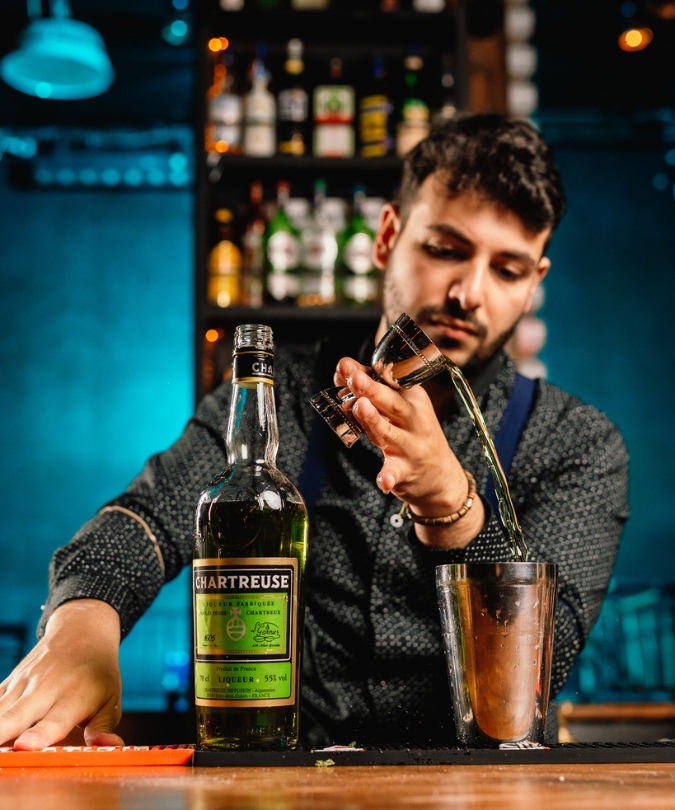
There have been periodic peaks and troughs but, inspired by this century’s cocktail revolution, Chartreuse has now cemented its place on back bars. In 2003, a bartender at Zig Zag Café rediscovered the Last Word, a potent mix of gin, green Chartreuse, cherry liqueur and lime, and ushered in a new era of Chartreuse fandom.
In London, you’ll find Chartreuse at Pepperbird, a speakeasy that opened at Kensington Olympia’s Pillar Hall in March. ‘I’ve always been a big fan,’ says bar manager Davide Mangiamele. ‘Classic cocktails like the Bijou and the Tipperary have long been part of my repertoire, and showcase how timeless and versatile Chartreuse can be.’ He uses yellow Chartreuse alongside mezcal, strawberry Aperol, white guava and agave cordial, and lime juice in a cocktail called Smoke on the Water, where the smoky mezcal marries beautifully with the herbaceous quality of Chartreuse. Mangiamele has noticed a sharp rise in interest in recent years, spearheaded by cocktails like the Naked and Famous (equal parts mezcal, yellow Chartreuse, Aperol and lime) and a growing appreciation of heritage spirits.
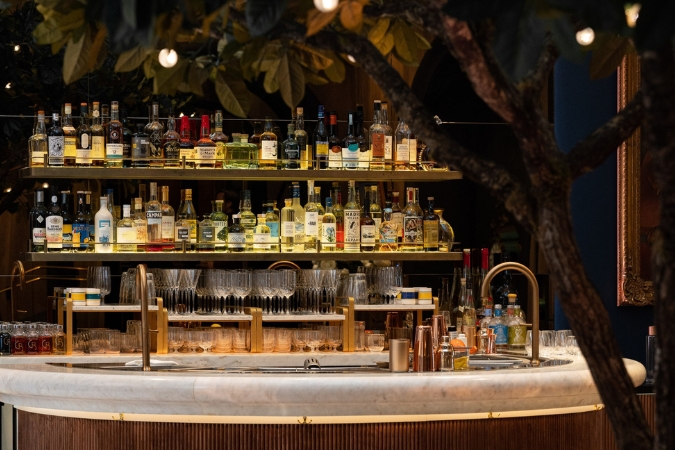
In Paris, where Chartreuse is primarily consumed as a digestif, mixologists are increasingly experimenting too. At CopperBay Lancaster, Aurélie Panhelleux likes to use it in classic cocktails and highballs. ‘It’s complex enough to add extra herbal notes to any dark-spirit cocktail,’ she says.
The wine world has also taken a shine to Chartreuse. According to Noble Rot’s Dan Keeling, it has a cult following in French wine-growing regions and the CASK event was called ‘Why do sommeliers love Chartreuse?’. At the talk, Dawn Davies, head buyer at Speciality Drinks Group, tells the audience that terroir is a crucial aspect for sommeliers. ‘Most spirits do not have terroir. They have sense of place but not terroir,’ she says. Chartreuse, however, reflects the stunning mountains in which it’s produced. ‘There is no other liqueur in the world that can replicate that,’ Davies adds.
Inspired by this century’s cocktail revolution, Chartreuse has now cemented its place on back bars
At Le Saint Sebastien in Paris’s 11th arrondissement, a Chartreuse trolley is the first thing most guests see as they walk in. It includes special bottles, such as a jeroboam of Chartreuse MOF Liqueur, a special edition first developed in 2008 with sommeliers in mind (it’s a little less sweet than standard yellow Chartreuse). Mostly served as a digestif, sommelier Alberto Rabachin says the theatrical pour from large bottles appeals to guests, adding that French and American customers are the most likely to order. ‘I love the green for its complexity and uniqueness of flavour,’ says Rabachin. ‘The colour is hypnotising and you basically have every flavour: flowers, plants, fruits, spices.’

But the current boom has made sourcing tricky. According to Rabachin, he can only buy a small number of bottles at a time. This prevents him setting bottles aside for the future (another reason for its popularity among wine buffs is its ability to develop in bottle). ‘I have to sell it [now] but at four to five years old – wow, it’s amazing.’
In London, the clamour isn’t as developed as in France or the US. Mark Gurney, co-owner of Levan and Bar Levan, both strongly influenced by France, says it is mostly ‘industry folk and a smattering of French folk visiting,’ that order Chartreuse, which he offers as a digestif and in cocktails. ‘It’s not well known here, it’s very much a hospitality thing,’ he says. But in cocktails it is beginning to turn heads. The Naked & Famous ‘goes down a storm,’ says Gurney, leaving guests intrigued about the mystical liqueur.
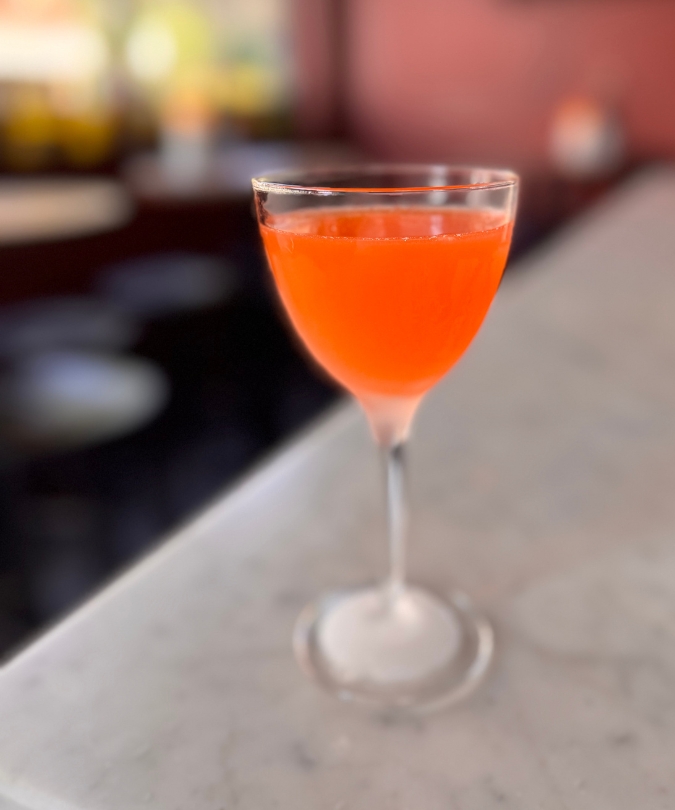
And it’s the mythology that forms much of the appeal. Only three monks know how to make it – ‘they never drive together,’ jokes Gamond – and very few people are allowed to visit the distillery, where phones and cameras are locked away. Most of those who make the drink don’t know what botanicals they’re adding.
Rarely for a liqueur, Chartreuse improves over time which, added to its limited production, makes it highly collectible. Since the 1990s, codes on the bottle caps have allowed buyers to identify when they were released. But for Rabachin, its appeal is manifold. ‘You have the legend behind it. The complexity, the ageing, the mythical, religious thing around it. Also, there’s a bit of status. When you order a glass of Chartreuse, people know you’re from the industry, that you know what you’re doing.’ But the most important factor, he says, is more prosaic. ‘Honestly, it’s super good.’