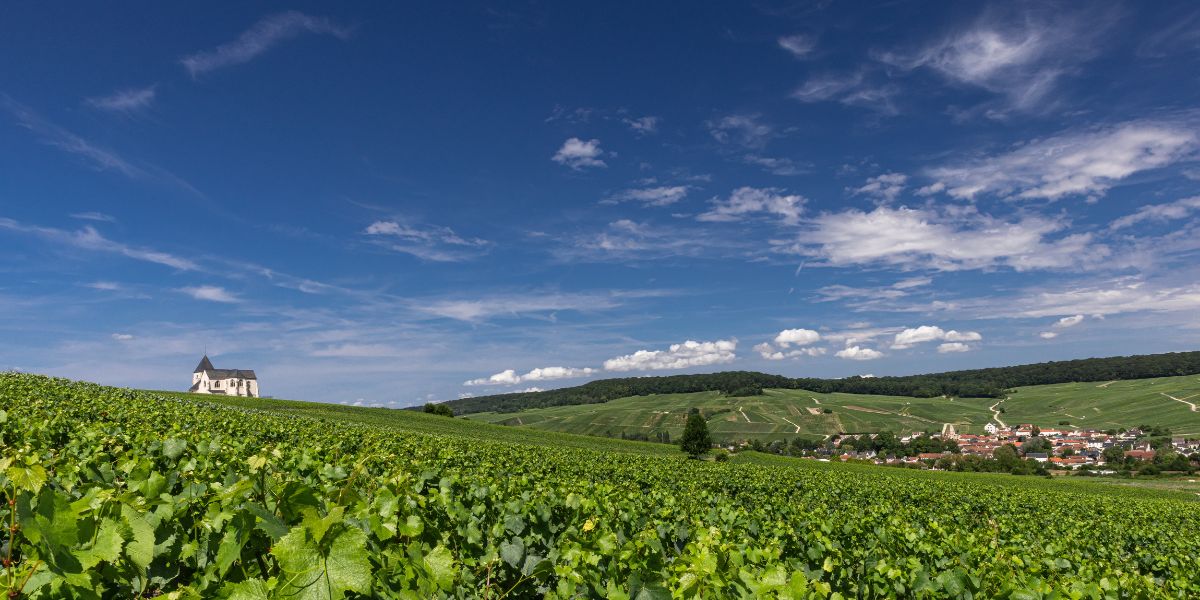
Because of the technical demands of its wines, Champagne has often been associated more with the skill of the people and technology behind the bottles than with the land itself. Yet in the 1980s, amid a period in the wine world dominated by industrialisation, a handful of quality-focused grower-producers began championing terroir-driven Champagne, laying the foundation for the nuanced, expressive wines we celebrate today.
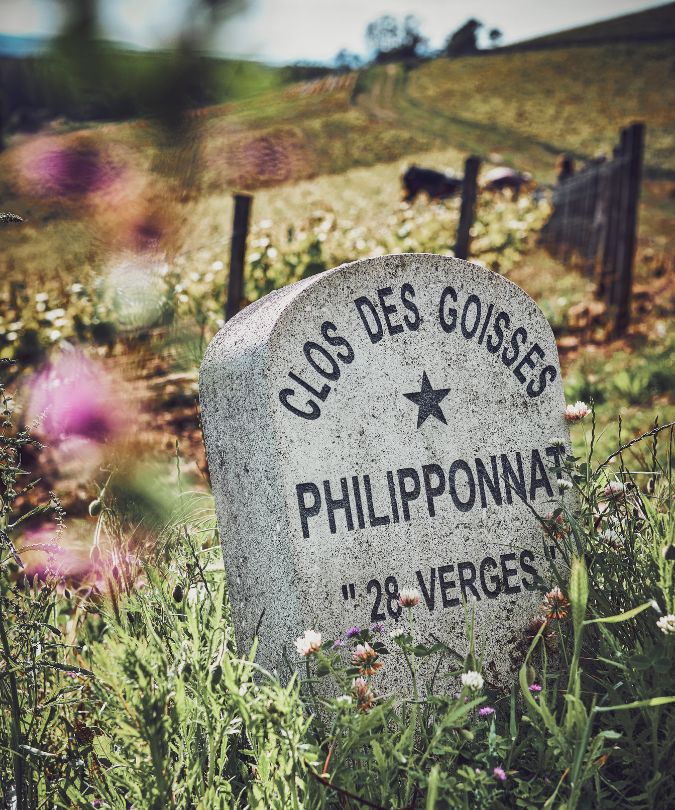
Thanks to them, the names of Champagne’s grands crus are firmly etched in the minds of today’s connoisseurs. We can now delve even deeper into individual lieux-dits through an ever-expanding array of single-vineyard Champagnes. For decades, Philipponnat’s 1935-initiated Clos des Goisses from Aÿ’s monumental slope stood alone. The modern single-vineyard boom began in 1979 with Krug’s Clos du Mesnil, and the growth since the 1990s has been exponential. Through site-specific Champagnes, we have learned to thirst for such terroirs as Ambonnay Les Crayères, Cramant Le Bâteau, and Le Mesnil-sur-Oger Les Chétillons.
The modern single-vineyard boom began in 1979, and the growth since the 1990s has been exponential
Elevating the ‘autres crus’
Equally significant is the rise of Champagne’s autres crus, the once-overlooked villages without premier cru or grand cru designation. Montgueux and the Côte des Bar in the south have become particularly dynamic regions. Thanks to vigneron Emmanuel Lassaigne’s work at Jacques Lassaigne, Montgueux’s majestic Chardonnays are in high demand – not only by the major houses, which prize their structured elegance, but by discerning consumers seeking unique expressions. Another quickly rising village is Les Riceys – Champagne’s largest cru, with well over 800ha (1,980 acres) – where Olivier Horiot and Domaine Alexandre Bonnet showcase Pinot Noir’s distinctive power. If the classification were reassessed today, neither of these villages would remain autres crus.
Following in the footsteps of the consistently magnificent Cédric Bouchard Roses de Jeanne Champagnes, the list of exciting producers in the Côte des Bar continues to expand, reflecting the subregion’s dynamism. Recently, I’ve been impressed by the bright, transparent non-interventionist style of Domaine de Bichery (Neuville-sur-Seine) and the sheer expressiveness of Clandestin (Landreville).
The Champagne septet
Chardonnay always remains in fashion in Champagne, but it is thrilling to see more regional expressions emerging. Among the most striking are Ulysse Collin’s single-vineyard wines from the up-and-coming Coteaux du Petit Morin, just south of the Côte des Blancs. The Sézannais and Vitryat regions are establishing themselves strongly, as is Montagne de Reims, which offers a wealth of exceptional Chardonnay sites. One of my personal favourites is Rilly-la-Montagne’s chalky Les Blanches Voies terroir, where both Vilmart & Cie and Huré Frères craft magnificent wines.
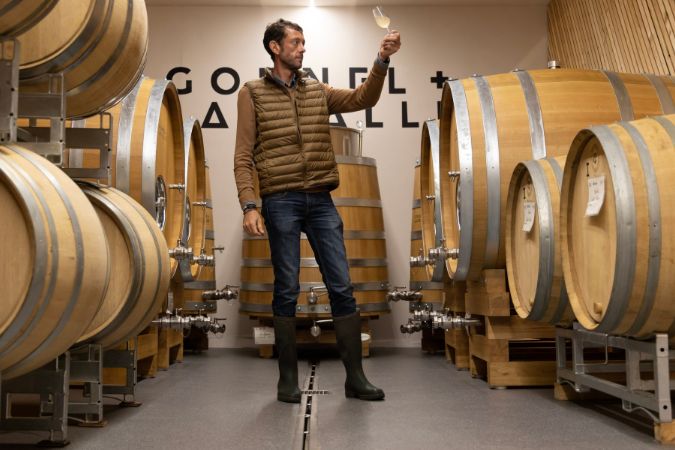
Meunier, long out of fashion, has enjoyed a remarkable resurgence thanks to the passionate growers of the Vallée de la Marne. Once again in the spotlight through the work of, for example, Tarlant, Jérôme Prévost and Egly-Ouriet, today producers such as Nicolas Maillart, Gounel-Lassalle and Laherte Frères are elevating Meunier to unprecedented heights. Despite this progress, I believe Meunier still has vast untapped potential to reveal.
In Champagne’s Pinot Noir heartland of the Grande Vallée de la Marne, houses such as Bollinger and Philipponnat are cementing their authority with a string of pure Pinot Noir releases. But what’s notable today is that the new wave of blancs de noirs is no longer chasing cult benchmarks like Bollinger’s Vieilles Vignes Françaises and Krug’s Clos d’Ambonnay – bottlings famed for their unapologetic richness. Instead, the spotlight is shifting to a fresher, more contemporary interpretation of Pinot Noir. Consider the precision of Nicolas Maillart’s Montchenot or the electric verve of Domaine La Borderie’s De Quoi Te Mêles-Tu?; these are wines embodying a new aesthetic that privileges finesse over power.
In a nod to its past, Champagne is tentatively reviving its forgotten heritage grapes Arbane, Petit Meslier, Pinot Blanc and Pinot Gris. Let’s not overstate the trend – plantings of these cépages still account for just 0.4% of the region’s vineyard area, up only a fraction from 0.3% a few years ago – but the trajectory is undeniable: over the past two decades, these varieties have expanded by 45ha, now covering 136ha in total. The south of Champagne has quietly kept the flame alive, where Arbane, Petit Meslier, Pinot Blanc and Pinot Gris continue to offer an unmistakable local accent. Domaine Alexandre Bonnet’s Blanc de Blancs, for instance, is half Pinot Blanc, half Chardonnay. Arbane may remain an infamously meagre producer, yet vignerons such as Laherte Frères see real promise in Petit Meslier, particularly in the era of climate change, thanks to the piercing freshness it brings to the glass.
Evolution, not revolution
Freshness, rather than ripeness, has become Champagne’s new obsession. With harvests creeping into August and fruit coming in under a blazing sun, the challenge now is to preserve acidity, not to coax maturity. The old orthodoxy of 100% malolactic fermentation is giving way as more producers choose to let a streak of crisp malic acid sharpen their blends. Even the sacred formulas of brut Non-Vintage cuvées are being rewritten. Previously, reserve wines were prized for softening edges and adding richness, but today they are reimagined as a safeguard for vitality.
Louis Roederer has gone so far as to reinvent its flagship Non-Vintage, now called Collection, introducing a perpetual reserve stored in gigantic vats – a safeguard of freshness that now defines the wine’s very DNA. Simultaneously, it has evolved from an ‘ageless’ Non-Vintage, with no reference to its base year or disgorgement, into a collectable, complete with edition numbering, like the Jacquesson 700 series or Lanson Création. The moment has finally arrived in Champagne to stop concealing the base year and other technical details and instead to celebrate them with pride.
Falling sugar levels and minimal intervention
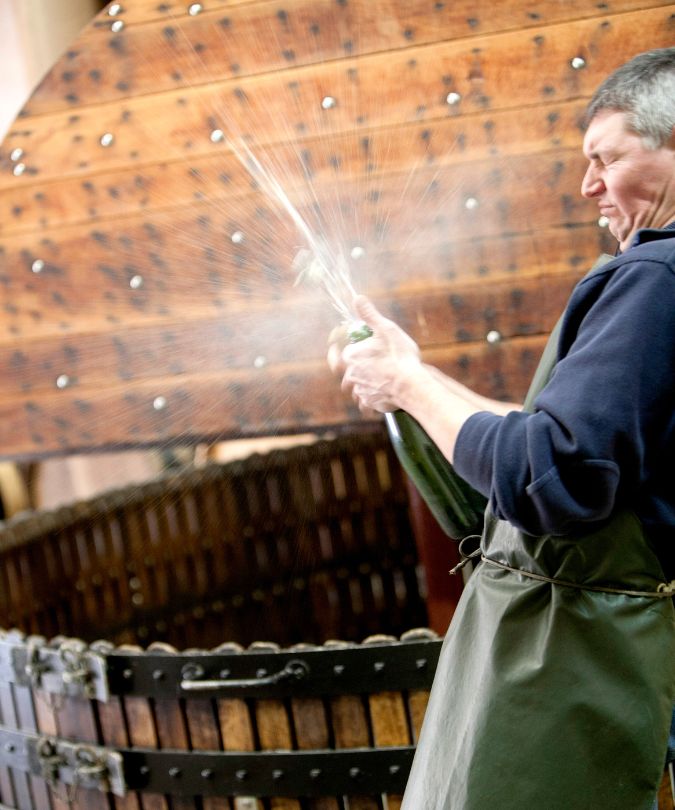
The shift in Champagne’s taste profile goes hand in hand with a steady trimming of dosage. Despite the buzz in sommelier circles and wine-press headlines, the ultra-dry styles remain a statistical footnote: barely 3.6% of exported Champagnes carry less than 6g/l (extra-brut or brut nature). Yet the broader reality is unmistakable: sugar levels are falling fast. Dom Pérignon’s 2015 Vintage, for example, sits at just 4.5g/l. It’s not only prestige cuvées chasing purity; the entire region is recalibrating as even the world’s most popular Champagne, Moët & Chandon Impérial, is dropped down to a record low dosage of 6g/l. The old rationale of softening searing acidity with sugar has lost its purpose. In today’s warmer vintages, the dash of sugar is ‘seasoning’, tempering phenolic bite and extending the wine’s length and deliciousness.
Few regions have leaned on sugar as heavily as Champagne. Traditionally, it has been added three times: first to enrich the must for higher alcohol (chaptalisation), then to spark the second fermentation in bottle, and finally as the sweetening dosage. Today, however, the pendulum is swinging towards authenticity, and sugar is a villain there. In a move pioneered by Agrapart in 2007, some vignerons are replacing industrial sugar with preserved grape must from the previous harvest to ignite the second fermentation (or, if bottling later, with the juice of the new season). Since the 2019 vintage, Fabrice Pouillon of Champagne R Pouillon & Fils has gone a step further, crafting his Champagnes entirely without external sugar. Even when dosage is applied, it comes from grape juice itself. It’s a small revolution – one that redefines purity in a region that was once synonymous with sweetness.
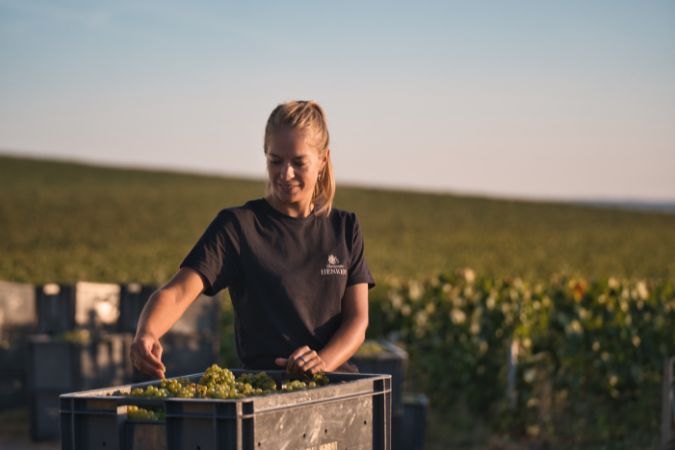
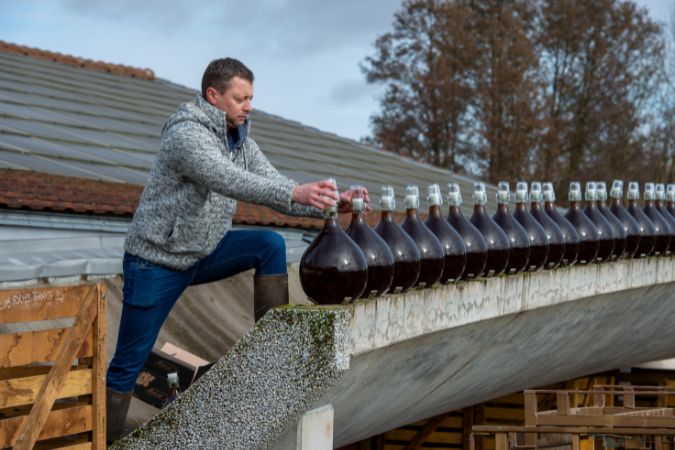
If the first wave of Champagne’s game-changers sometimes veered into excess with bone-dry bottlings, overpowering oak, and (too) low sulphites, the next generation has found its stride with impressively sound and exciting wines, often achieved through minimal-intervention techniques. With offerings that are precise, vibrant and true to site, producers such as Jules Brochet and Domaine de Bichery exemplify this new, confident minimalism. For those chasing innovation, Famille Moussé is a must-visit. Cédric Moussé, a true inventive force, equips his ultra-sustainable winery with every tool and gadget imaginable. In the village of Cuisles, he has even launched Champagne’s first cooperative to cultivate vineyards with the aid of robots.
For a greener future
At the same time, Champagne is getting greener. Comité Champagne is pushing for a collective effort, while the grandes maisons are turning corporate ambition into vineyard action. The EPI Group trio (Piper-Heidsieck, Charles Heidsieck and Rare Champagne) were the first in the region to achieve B Corp certification. Pernod Ricard’s houses – GH Mumm and Perrier-Jouët – are championing regenerative viticulture. Ruinart, the sustainability flagship of LVMH’s Champagne empire, houses a landmark vitiforestry project across its vast Taissy holdings. But the movement is not confined to big brands – for example, Aurélien Lurquin and Domaine La Borderie are doing impressive work. And while small houses remain Champagne’s most visible champions of organics and biodynamics, it is Louis Roederer that has rewritten the scale: with 130ha now certified organic, it alone represents almost 6% of Champagne’s total organically certified vineyard area (2,240ha as of the end of 2024). As transportation makes up the lion’s share of Champagne’s carbon footprint, producers are finally looking at rationalising their packaging. Cédric Moussé recently developed the lightest bottle so far, which will enter the market in two years’ time. He also transitioned from traditional metal capsules to recyclable paper ones, which reportedly have a carbon footprint just 20% of that of aluminium.
Ruinart deserves high praise for its Second Skin bottle cover, moulded to the contours of the bottle. Fully recyclable and made from 99% paper, the case is marketed as nine times lighter than its predecessor. Beyond the sustainability gains, it elegantly addresses a quality concern: Ruinart’s hugely popular Non-Vintage Blanc de Blancs in clear glass is now protected from light-strike – a phenomenon that can rapidly degrade Champagne yet is overlooked by consumers and the trade alike. Moving away from clear glass is not just a matter of quality, it is also a sustainability imperative, as these bottles require new, rather than recycled, glass for production.
The Champagne landscape has never been more thrilling. Beyond the classic offerings, you’ll find late-disgorged gems, rosé de macération, clos and other site-specific expressions; perpetual reserves; and cuvées aged in a multitude of vessels from oak and sandstone to glass and clay amphorae, each promising a fresh take on the region’s tradition. Today’s younger buyers crave brands that marry luxury with ethics, and Champagne is responding. The rules are changing, the classics are evolving, and the next sip could redefine everything you thought you knew.
Seven Champagnes that are excelling
| Producer | Name | Vintage | Region | Subregion | ||
|---|---|---|---|---|---|---|
|
Louis Roederer, Cristal (in magnum) 2013
Champagne
, Champagne AOP
|
Louis Roederer | Cristal (in magnum) | 2013 | Champagne | Champagne AOP | |
|
Ruinart, Dom Ruinart Blanc de Blancs 2013
Champagne
, Champagne AOP
|
Ruinart | Dom Ruinart Blanc de Blancs | 2013 | Champagne | Champagne AOP | |
|
Perrier-Jouët, Belle Epoque Rosé (in magnum) 2012
Champagne
, Champagne AOP
|
Perrier-Jouët | Belle Epoque Rosé (in magnum) | 2012 | Champagne | Champagne AOP | |
|
Philipponnat, Clos des Goisses 2016
Champagne
, Champagne AOP
|
Philipponnat | Clos des Goisses | 2016 | Champagne | Champagne AOP | |
|
Henriot, Cuve 38 (in magnum) NV
Champagne
, Champagne AOP
|
Henriot | Cuve 38 (in magnum) | NV | Champagne | Champagne AOP | |
|
Jacques Lassaigne, Clos Sainte-Sophie 2018
Champagne
, Champagne AOP
|
Jacques Lassaigne | Clos Sainte-Sophie | 2018 | Champagne | Champagne AOP | |
|
Domaine de Bichery, Les Terres Melées NV
Champagne
, Champagne AOP
|
Domaine de Bichery | Les Terres Melées | NV | Champagne | Champagne AOP |