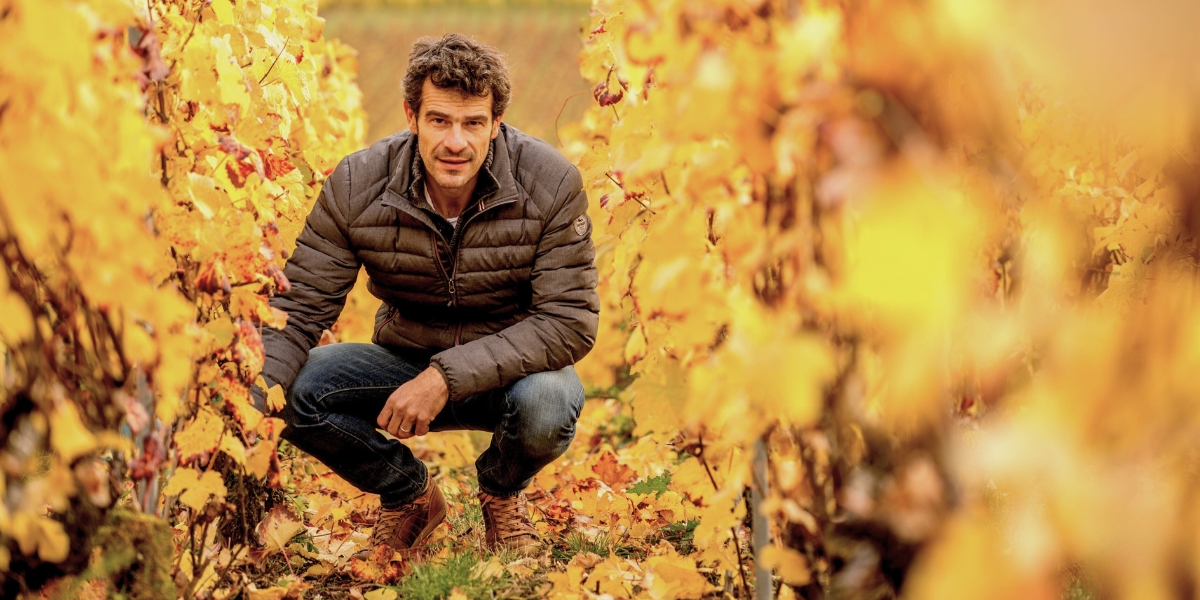
I first met Nicolas Maillart early in his vigneron career through a mutual friend. Having taken over his family domaine in 2003, he moved away from the village’s cooperative press to vinify his own wines, eventually releasing his first bottlings. He struck me then as a promising young grower. Today, it is a joy to see how fully he has delivered on that promise. Indeed, he has gone far beyond what I ever imagined.
Back then, the highlights were the ever-reliable cuvée Platine – a non-vintage bottling of remarkable value – and an intriguing single-vintage Champagne born of rare ungrafted vines. The Les Coupés parcel in Écueil, its sandy soils naturally resistant to phylloxera, was replanted in 1973 by Nicolas Maillart’s father, Michel, without American rootstock. To this day, Platine continues to deliver far above its price, while Les Coupés endures as one of Champagne’s vanishingly few francs de pied vineyards, a living relic and a true rarity.
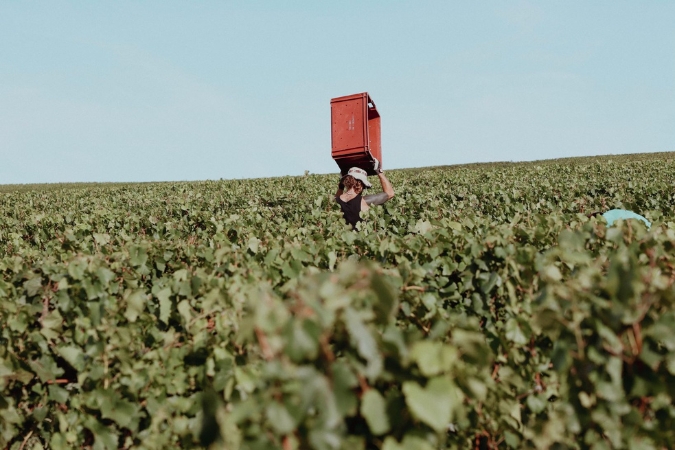
Since then, the portfolio has steadily expanded – and continues to do so. Today, it encompasses 12 cuvées of which only two are blends, the rest being single-vineyard expressions, as Nicolas wants to let every terroir express itself. This has been made possible by Nicolas Maillart’s access to a substantial 17 hectares of vines, all in Premier Cru and Grand Cru villages on the Montagne de Reims. The holdings are a combination of his own family vineyards and those of his cousins, which he also tends personally. Thus, the business model is technically one of négociant-manipulant, not récoltant-manipulant.
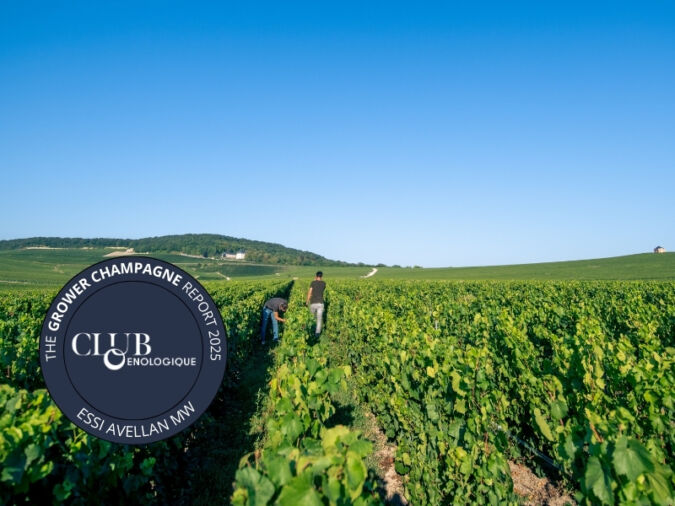
Read more: The Grower Champagne Report 2025
Nicolas Maillart has inherited vineyards from both his mother’s and father’s side. The majority of them lie in Villers-Allerand, a 132-hectare north-facing terroir that has long remained under the radar for lovers of site-specific Champagne. For those wishing to explore its qualities, Nicolas offers a remarkable set of six single-vineyard wines: three Pinot Noirs, two Meuniers and a rare pure Petit Meslier. In addition to the varietal cuvée, Maillart also increasingly uses small amounts of Petit Meslier to bring freshness to his non-vintage blends: ‘In the face of climate change, Petit Meslier is interesting. It retains great acidity even if it would get picked two weeks after Meunier’.
From his mother’s side, Maillart has also great sourcing in Grand Cru Bouzy on the southern side of the Montagne de Reims. And from this iconic village we can savour, for example, a blanc de noirs and a blanc de blancs from Ronsures plot, as well as Maillart’s arguably very finest site-specific Champagne, Jolivettes.
At the core of Nicolas Maillart’s deeply fruity, soulful style is ripe fruit, largely drawn from massal-selection vineyards. In the vineyards, he relies on organic fertilisers and avoids herbicides, working in a way that is close to organic practice. Yet he deliberately forgoes certification, preferring a pragmatic, non-dogmatic approach that mirrors his philosophy across the cellar and the estate.
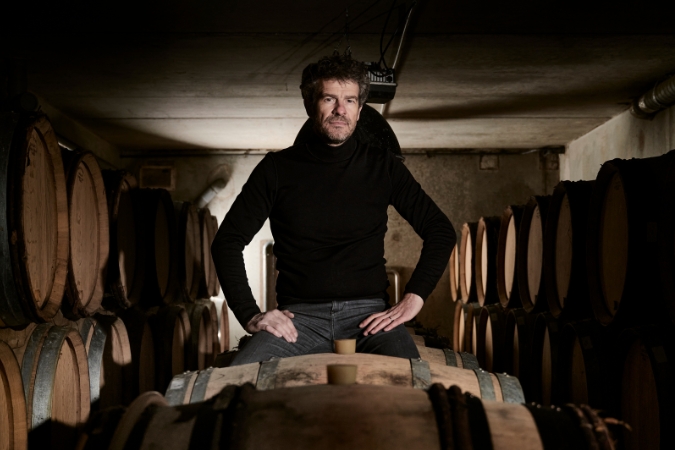
One of the most notable advances in his winemaking has been the use of oak. While the early wines sometimes revealed their élevage a little too overtly, today the integration is perfected, the oak lending complexity without overshadowing fruit or tipping into oxidative notes: ‘All my wines are born in oak but I am not looking for oakiness or fattiness from them. I feel that new barrels can give a brightness that I am after, while the lees in the barrel contribute to the wine’s texture.’ That brightness is also amplified by not encouraging the softening malolactic fermentation in the wines.
Twenty-two years on, Nicolas Maillart is unmistakably at the top of his game. What began as a slow, carefully built success has matured into a portfolio that consistently impresses, earning him recognition in the Club Oenologique Grower Champagne Report. Today, as a representative of the family’s ninth generation of grape growers, he embodies both tradition and modernity in a way that would make his ancestors proud.
Nicolas Maillart: nine Champagnes to seek out
| Producer | Name | Vintage | Region | Subregion | ||
|---|---|---|---|---|---|---|
|
Nicolas Maillart, Montchenot 2019
Champagne
, Champagne AOP
|
Nicolas Maillart | Montchenot | 2019 | Champagne | Champagne AOP | |
|
Nicolas Maillart, Jolivettes Bouzy Grand Cru 2020
Champagne
, Champagne AOP
|
Nicolas Maillart | Jolivettes Bouzy Grand Cru | 2020 | Champagne | Champagne AOP | |
|
Nicolas Maillart, Mont Martin 2019
Champagne
, Champagne AOP
|
Nicolas Maillart | Mont Martin | 2019 | Champagne | Champagne AOP | |
|
Nicolas Maillart, Les Coupés Franc de Pied 2020
Champagne
, Champagne AOP
|
Nicolas Maillart | Les Coupés Franc de Pied | 2020 | Champagne | Champagne AOP | |
|
Nicolas Maillart, Mont Martin Rosé 2020
Champagne
, Champagne AOP
|
Nicolas Maillart | Mont Martin Rosé | 2020 | Champagne | Champagne AOP | |
|
Nicolas Maillart, Les Ronsures Chardonnay Grand Cru 2020
Champagne
, Champagne AOP
|
Nicolas Maillart | Les Ronsures Chardonnay Grand Cru | 2020 | Champagne | Champagne AOP | |
|
Nicolas Maillart, Les Courzy 2019
Champagne
, Champagne AOP
|
Nicolas Maillart | Les Courzy | 2019 | Champagne | Champagne AOP | |
|
Nicolas Maillart, Platine Premier Cru NV
Champagne
, Champagne AOP
|
Nicolas Maillart | Platine Premier Cru | NV | Champagne | Champagne AOP | |
|
Nicolas Maillart, Rosé Premier Cru NV
Champagne
, Champagne AOP
|
Nicolas Maillart | Rosé Premier Cru | NV | Champagne | Champagne AOP |