As Chianti Classico’s new UGA system is gradually digested and absorbed by the international fine-wine world, the individual identities of some of the eight (soon to be 11) UGAs are starting to coalesce. Panzano, Castellina and Castelnuovo Berardenga, areas whose strong producer associations and established identities originally spurred the development of the system, continue to bask in its glow but the biggest beneficiary may be the isolated, once near-forsaken commune of Radda.
For this, Radda can thank the cool-climate finesse of its wines, which make it, in some ways, the Sangiovese-est of Sangiovese. Chilly circulating air masses and sandier soils, especially in historic sites like Volpaia, confer tendentially paler colour and elevated acidity with red-toned, vibrant fruit, catnip for the current fine-wine market (as the success of Le Pergole Torte, one of the earliest Sangiovese Super-Tuscans and a representative Radda wine, can attest).
Read more: The Chianti Classico Report 2024
However, as many a Radda producer will tell you, whether from the picturesque embrace of an 11th century loggia, or the equally picturesque disarray of a ramshackle casa colonica, it was not always so. Through the end of the 20th century the once-proud leader of the medieval Lega del Chianti had devolved into something of a rural backwater. In his Atlas of Chianti Classico and its UGAs, mapping expert Alessandro Masnaghetti describes the hollowing out of Radda during the rural exodus of the 1960s, worse even than in its neighbouring communes. The collapse of mezzadria – the traditional sharecropping system – and relative dearth of noble Florentine or Sienese families here who might invest in their home commune compounded the hardships of Radda’s inhabitants (wonderfully captured in 1985’s ‘Veglie a Porcignano’ by Professor Reginaldo Cianferoni, father of Caparsa’s Paolo Cianferoni and originally of mezzadro stock).
Out of despair blossomed opportunity, with an opening created for what are now some of the commune’s most vaunted estates
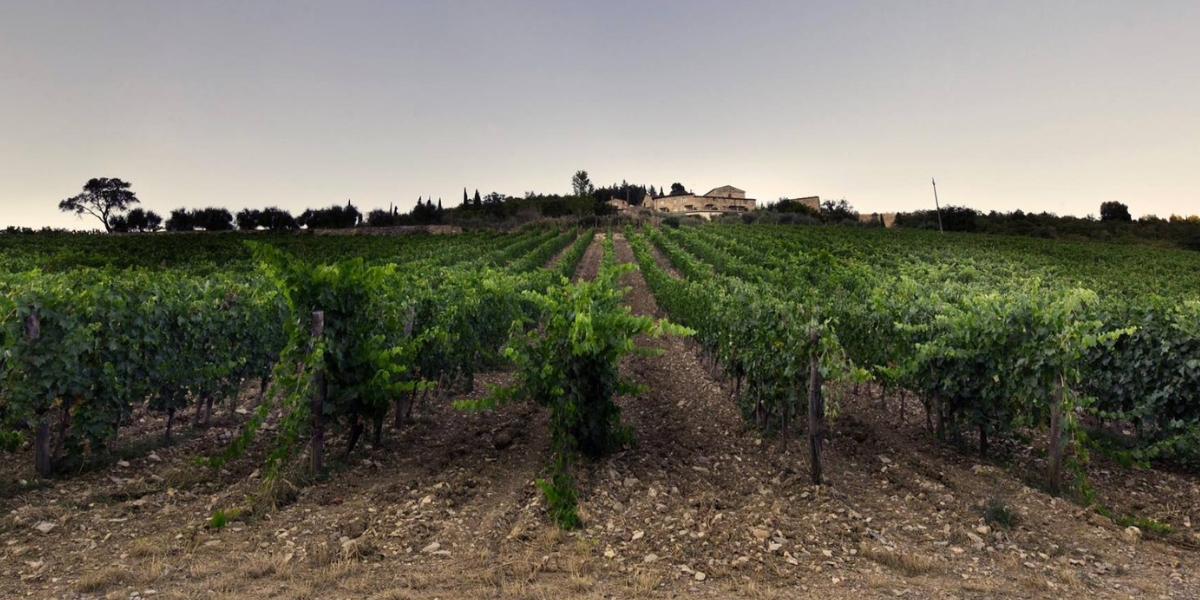
The natural conditions were far from favourable: isolated, steeply terraced and densely forested with punishing soils and a thermically-challenged microclimate that produced tart, austere wines of an unfashionably pallid hue. Telling of his family’s arrival here in the 1970s, Roberto Bianchi of Val delle Corti describes a Radda on the verge of returning to nature, with only a few large producers still active on its slopes.
However, out of despair blossomed opportunity, with an opening created for what are now some of the commune’s most vaunted estates: Montevertine, Val delle Corti, Caparsa, Monteraponi and Brancaia. Since the turn of the century, shifts in both climate and consumer tastes have made the once-depopulated subzone into a veritable hotspot. Meanwhile, the large, historical estates were purchased in the middle and late 20th century: Castello di Volpaia by the entrepreneurial Mascheroni-Stianti family and Albola by the winemaking Zonin family of Veneto, both of whom invested heavily in their estates, raising the international profile of the area.
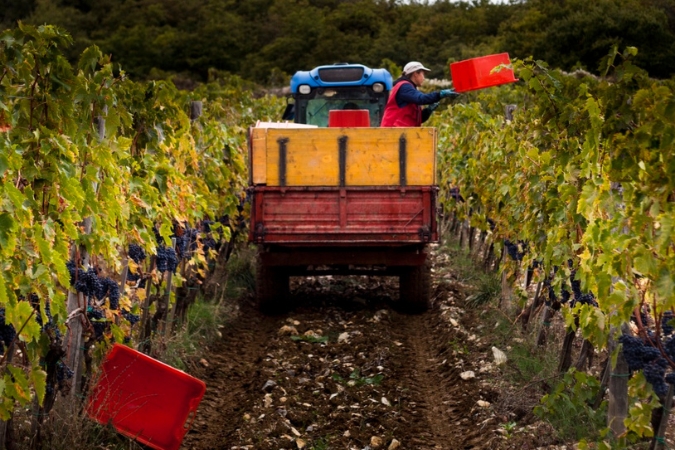
What is the secret? Altitude – the factor often considered key to Radda’s ‘brand identity’ – may be less important than many believe, according to Masnaghetti. He notes instead the relative uniformity of the cool climate here thanks to the nearby Monti del Chianti and cooling forestlands. Meanwhile the tight clustering of vineyards in only a few areas along the banks of the Pesa River and surrounding the township of Radda has helped create a consistent style, largely shared by the few isolated outposts to the north and south (e.g. Monteraponi, whose forest-encircled vineyards soar up to 570m above sea level). Because so many of the producers born of Radda’s renaissance are small- and medium-sized concerns, many always used exclusively Radda-grown grapes instead of practicing traditional inter-regional blending. Many were also early adopters of single-vineyard bottling, helping cement a clear Radda identity even before UGA labelling made it trendy.
Many are practicing or certified organic, and the level of care in the vineyards, unruly as some at first appear, is palpable. Cianferoni at Caparsa is a tinkerer of training systems; especially evocative are his ‘hippy’ vines, where the curtains of shoots flowing off high-standing trunks give the vineyard the aspect of a swaying crowd at Woodstock. Maurizio Castelli, one-time consulting enologist at icons like Badia a Coltibuono, Col d’Orcia, Le Ragnaie and Mastrojanni, and currently enologist at Castello di Radda, touts the work of their Piemontese viticulturalist Marco Mascarello, who tends even the 40ha of the Castello as he might manage a smallholding, with careful manual labour.
Since the turn of the century, shifts in both climate and consumer tastes have made the once-depopulated subzone into a veritable hotspot
There is a similar spirit of experimentation and boundary-pushing in Radda’s winemaking, starting with the push toward pure Sangiovese in the 1960s and ‘70s, with Le Pergole Torte and Volpaia’s Coltassala among the first in the region. The experiments haven’t stopped: much closer to the present day, Bianchi cites Sean O’Callaghan at Carleone as inspiration for what he calls a ‘Piemontesina’ – a month’s long anaerobic post-fermentation maceration with some whole berries that softens both acidity and tannins, used as part of the blend. The rebellion continues in other ways too, with producers like Val delle Corti and Caparsa refraining from producing a Gran Selezione, even though (as the rules stand now) they are forbidden from putting the Radda UGA on the labels of their (Gran Selezione-level) Riservas. The iconic Montevertine, meanwhile, remains outside the Chianti Classico denomination entirely.
Nevertheless, the producers here work unusually well together, exemplified by the Vignaioli di Radda’s annual blend. Each of the 24 members contributes a few litres, which are then bottled in magnum and ultimately served at their annual celebration. Roberto Bianchi, president of the Vignaioli, describes the wine as ‘fresh’ and ‘authentic’ – terms that perhaps capture the current moment in Radda as well as anything.
Five top Radda wines
| Producer | Name | Vintage | Region | Subregion | ||
|---|---|---|---|---|---|---|
|
Monteraponi, Chianti Classico Gran Selezione Bragantino 2020
Tuscany
, Chianti Classico DOCG
|
Monteraponi | Chianti Classico Gran Selezione Bragantino | 2020 | Tuscany | Chianti Classico DOCG | |
|
Castello di Radda, Chianti Classico Gran Selezione Radda Vigna Il Corno 2018
Tuscany
, Chianti Classico DOCG
|
Castello di Radda | Chianti Classico Gran Selezione Radda Vigna Il Corno | 2018 | Tuscany | Chianti Classico DOCG | |
|
Castello di Volpaia, Chianti Classico Gran Selezione Coltassala 2020
Tuscany
, Chianti Classico DOCG
|
Castello di Volpaia | Chianti Classico Gran Selezione Coltassala | 2020 | Tuscany | Chianti Classico DOCG | |
|
Val delle Corti, Chianti Classico 2020
Tuscany
, Chianti Classico DOCG
|
Val delle Corti | Chianti Classico | 2020 | Tuscany | Chianti Classico DOCG | |
|
Caparsa, Chianti Classico Riserva Doccio a Matteo 2020
Tuscany
, Chianti Classico DOCG
|
Caparsa | Chianti Classico Riserva Doccio a Matteo | 2020 | Tuscany | Chianti Classico DOCG |