Still a well-kept secret up until a few years ago, dry Loire Chenin Blanc has become, within a decade, an indisputable reference on the wine lists of gourmet and bistro restaurants as well as in the cellars of passionate collectors. This inclusion in the pantheon of the world’s great whites did not seem a given at the beginning of the 1990s, and, although obvious to people-in-the-know, it can still surprise, including in its region of origin. After years of uprooting, the area of Chenin planted in the Loire has stabilised at around 9,800 hectares, which is half as much as the 18,600 hectares planted in South Africa (from a global area of around 35,000 hectares). How is it that its capacity to produce superb terroir-driven wines with fantastic ageing ability has taken so long to gain rightful recognition?
How is it that its capacity to produce superb terroir-driven wines with fantastic ageing ability has taken so long to gain rightful recognition?
Chenin is an old grape variety that has been cultivated since the ninth century in the heart of the Loire Valley between Anjou and Touraine, where Mont Chenin is located and from which it takes its name. It was undoubtedly appreciated very early on for its robustness, high-yielding ability, versatility and sensitivity to botrytis, which made it a preferred grape variety for sweet wines produced from passerillage and noble rot. These sweet wines contributed to the reputation of the Loire vineyard for centuries. But everything changed in the 20th century: with replanting after phylloxera, chaptalisation, the use of chemical fertilisers and over-productive clones, the quality of the liquid gold faded and prices fell.
The crisis was severe from the 1970s onwards. And during all this time, while the focus was still on sweet wine – with the exception of Savennières and a few Vouvray producers – dry Chenin was an afterthought, the wine produced once the bunches intended for sugar had been picked, often leaving just the green and rotten grey grapes. Hence its terrible reputation, and so many misconceptions.
It was not until the 1990s that things really changed – with the arrival of pioneers, often from outside the region, initially lured to the Loire by a passion for its sweet wines. In search of the alchemy of botrytis, winemakers such as Jo Pithon, Pascal Baudouin, Joël Ménard, then Mark Angeli and Richard Leroy reintroduced a viticultural style based on quality and not quantity, which included the championing of organic and biodynamic production, plus tries (multiple picking sweeps) and grape sorting. In vintages that did not allow the production of sweet wines, they made dry wines with the same attention as they gave their moelleux, using the best grapes at their peak of ripeness. It was a revelation.
While botrytis is invariably synonymous with a certain oxidation, requiring a lot of protective So2 in its making, these pioneers also tried to limit sulphur additions, decreasing some of the aromatic defaults, enhancing the bouquet, and also allowing malolactic reactions to occur. A new world opened up, revealing dry Chenin wines as an extraordinary incarnation of terroir.
The region’s winemakers, from the neo-vigneron to the historic families, can play it their way
Behind the current profusion of Loire Chenin in a style that seems ill-defined, wine history is being written before our eyes: there’s energy, experimentation and diversity behind the bottles one can find. Since we are not talking of an historic paragon – like those established for decades in Burgundy or Alsace for decades – the region’s winemakers, from the neo-vigneron to the historic families, can play it their way. From schist, sand or tuffeaux (limestone) soils, electing for or against malolactic conversion, experimenting with maturation in wood or in vats, making their wine dry or with a few grams of sugar, AOC or Vin de France… the choices are endless. The contemporary landscape of Loire Chenin is very exciting, driven by convinced winemakers, pioneers or newcomers – and the result is an exceptional level of quality and ageing for the price. Here are a few key examples among dozens of others – and this is just the beginning…
20 stars from the Loire
| Producer | Name | Vintage | Region | Subregion | ||
|---|---|---|---|---|---|---|
|
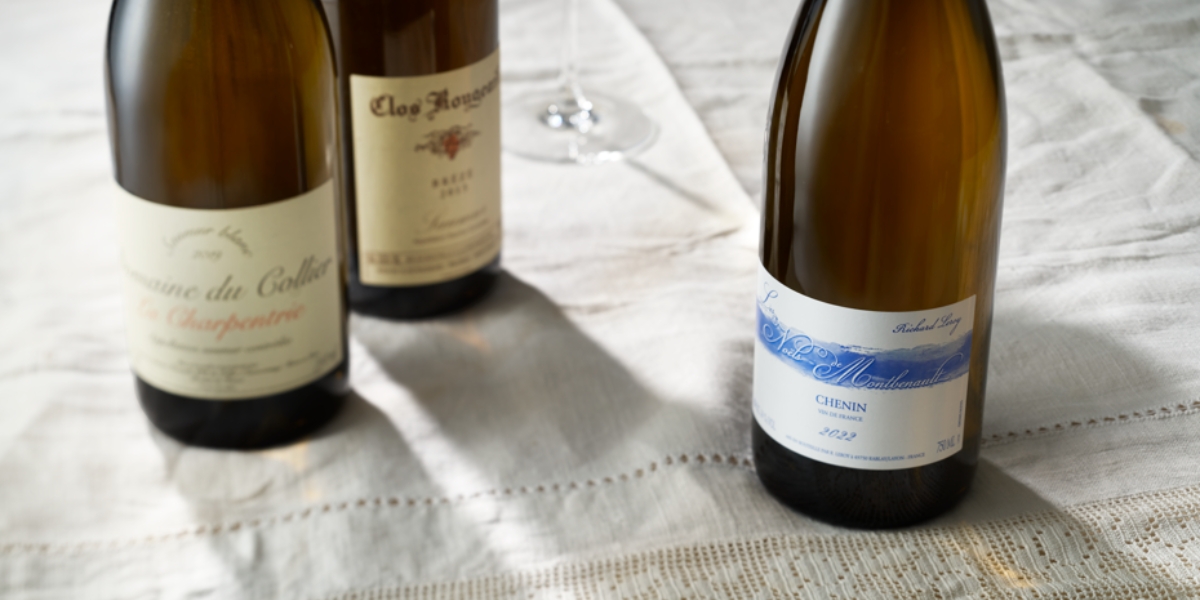
Richard Leroy, Les Noëls de Montbenault Vin de France 2022
Loire
, Anjou-Saumur
|
Richard Leroy | Les Noëls de Montbenault Vin de France | 2022 | Loire | Anjou-Saumur | |
|
Domaine Andrée, Les Faraunières 2020
Loire
, Anjou-Saumur
|
Domaine Andrée | Les Faraunières | 2020 | Loire | Anjou-Saumur | |
|
Domaine aux Moines, Savennières-Roche aux Moines 2022
Loire
, Anjou-Saumur
|
Domaine aux Moines | Savennières-Roche aux Moines | 2022 | Loire | Anjou-Saumur | |
|
Ferme de la Sansonnière, Les Vieilles Vignes des Blanderies Vin de France 2022
Loire
, Anjou-Saumur
|
Ferme de la Sansonnière | Les Vieilles Vignes des Blanderies Vin de France | 2022 | Loire | Anjou-Saumur | |
|
Domaine Belargus, Treilles 2020
Loire
, Anjou-Saumur
|
Domaine Belargus | Treilles | 2020 | Loire | Anjou-Saumur | |
|
Benoit Courault, Gilbourg Vin de France 2022
Loire
, Anjou-Saumur
|
Benoit Courault | Gilbourg Vin de France | 2022 | Loire | Anjou-Saumur | |
|
Clau de Nell, Chenin Blanc Val de Loire IGP 2022
Loire
, Anjou-Saumur
|
Clau de Nell | Chenin Blanc Val de Loire IGP | 2022 | Loire | Anjou-Saumur | |
|
Clos de la Coulée de Serrant, Savennières-Coulée de Serrant 2023
Loire
, Anjou-Saumur
|
Clos de la Coulée de Serrant | Savennières-Coulée de Serrant | 2023 | Loire | Anjou-Saumur | |
|
Le Clos des Plantes, Poïèsis Vin de France 2022
Loire
, Anjou-Saumur
|
Le Clos des Plantes | Poïèsis Vin de France | 2022 | Loire | Anjou-Saumur | |
|
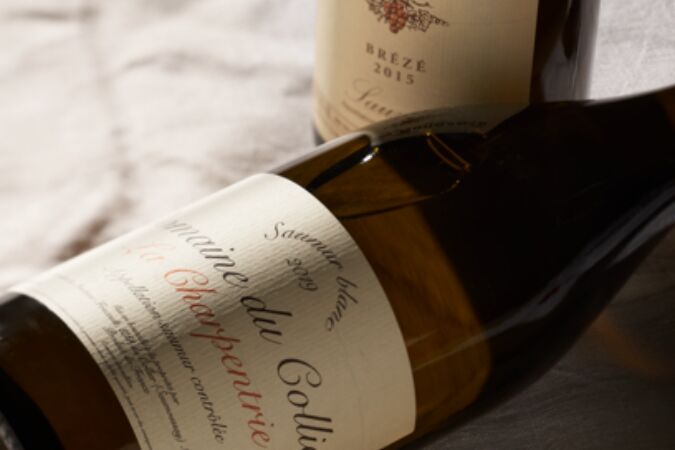
Domaine du Collier, La Charpenterie 2020
Loire
, Anjou-Saumur
|
Domaine du Collier | La Charpenterie | 2020 | Loire | Anjou-Saumur | |
|
Château Yvonne, Le Gory 2022
Loire
, Anjou-Saumur
|
Château Yvonne | Le Gory | 2022 | Loire | Anjou-Saumur | |
|
La Porte St-Jean, Les Pouches Vin de France 2021
Loire
, Anjou-Saumur
|
La Porte St-Jean | Les Pouches Vin de France | 2021 | Loire | Anjou-Saumur | |
|
Clos Rougeard, Brézé 2019
Loire
, Anjou-Saumur
|
Clos Rougeard | Brézé | 2019 | Loire | Anjou-Saumur | |
|
Mélaric, Billes de Roche 2022
Loire
, Anjou-Saumur
|
Mélaric | Billes de Roche | 2022 | Loire | Anjou-Saumur | |
|
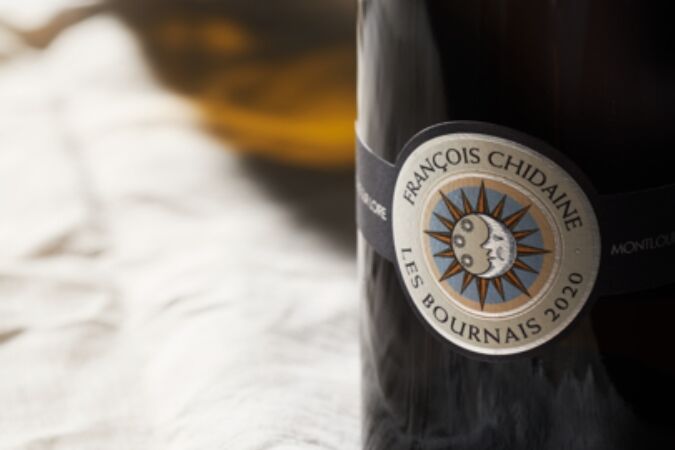
Domaine François Chidaine, Les Bournais Montlouis-sur-Loire 2023
Loire
, Anjou-Saumur
|
Domaine François Chidaine | Les Bournais Montlouis-sur-Loire | 2023 | Loire | Anjou-Saumur | |
|
La Grange Tiphaine, Les Epinays Montlouis-sur-Loire 2022
Loire
, Anjou-Saumur
|
La Grange Tiphaine | Les Epinays Montlouis-sur-Loire | 2022 | Loire | Anjou-Saumur | |
|
Bernard Baudry, La Croix Boissée Chinon Blanc 2020
Loire
, Anjou-Saumur
|
Bernard Baudry | La Croix Boissée Chinon Blanc | 2020 | Loire | Anjou-Saumur | |
|
Domaine Huet, Le Mont Sec Vouvray 2023
Loire
, Anjou-Saumur
|
Domaine Huet | Le Mont Sec Vouvray | 2023 | Loire | Anjou-Saumur | |
|
Michel Autran, Ciel Rouge Vin de France Vouvray 2021
Loire
, Anjou-Saumur
|
Michel Autran | Ciel Rouge Vin de France Vouvray | 2021 | Loire | Anjou-Saumur | |
|
Domaine de Bellivière, Vieilles Vignes Eparses Coteaux du Loir 2021
Loire
, Anjou-Saumur
|
Domaine de Bellivière | Vieilles Vignes Eparses Coteaux du Loir | 2021 | Loire | Anjou-Saumur |