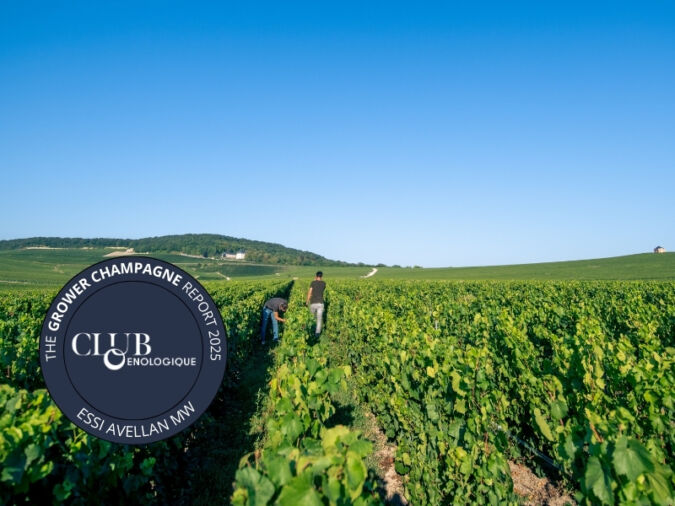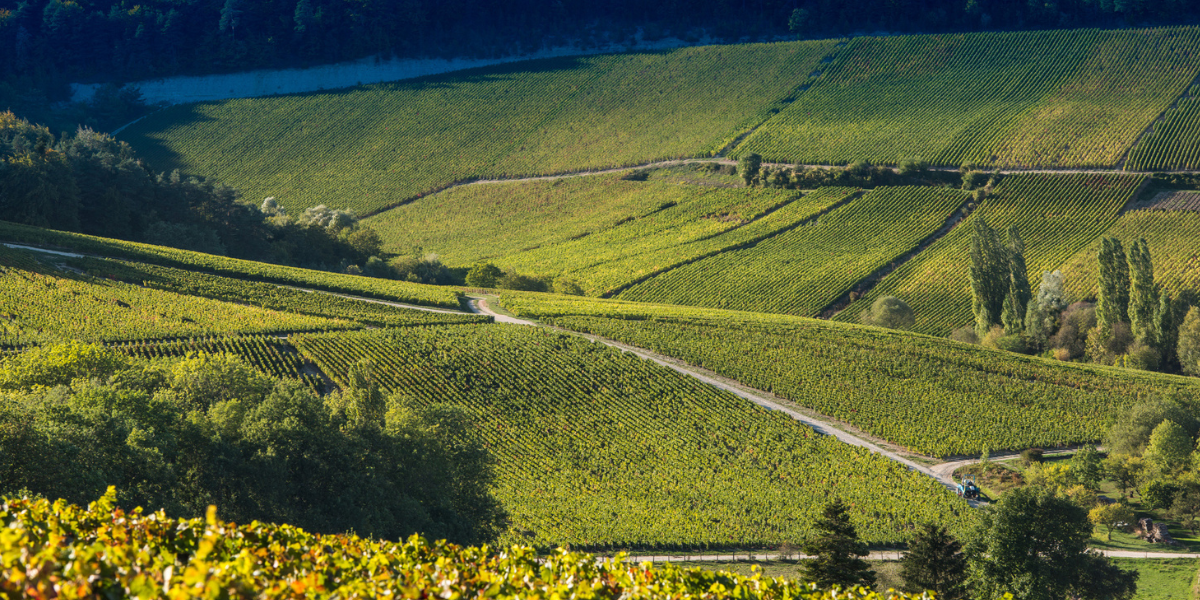
The Côte des Bar, Champagne’s southern frontier in the Aube department, has long flown under the radar compared with the storied vineyards of the Montagne de Reims and Côte des Blancs. My recent trips to the region and tastings for The Grower Champagne Report 2025 revealed why it demands attention. Refined, expressive, and most often Pinot Noir-driven, the Champagnes of this region are marked by a sense of place that feels unmistakably rooted in its chalky marl and limestone soils.
Located some 150km southeast of Champagne’s historic heart, Épernay, the Côte des Bar was only officially recognised as part of the Champagne appellation in 1927. Yet long before that, its vineyards routinely supplied large volumes of grapes for the blends of the grandes maisons. Today, the region is thriving, with a surge of dynamic grower domaines elevating its reputation at an accelerating pace, producing Champagnes that are increasingly recognised for their vitality, precision and terroir-driven character.
Read more: The Grower Champagne Report 2025
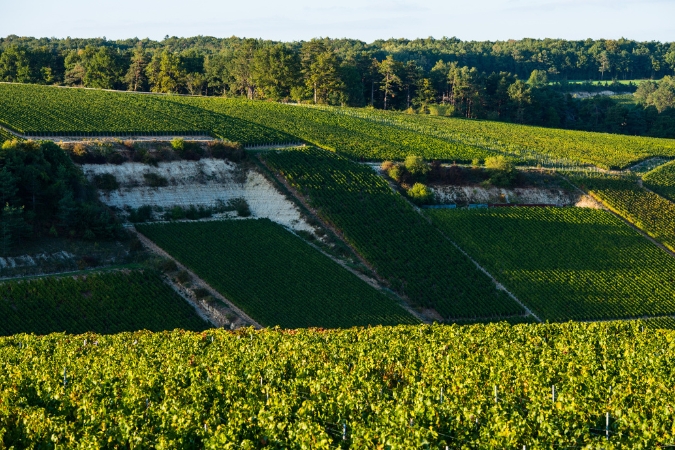
Make the journey south and you will discover a wholly different Champagne. The atmosphere is tranquil, the undulating hills lush and the climate distinctly more continental. The soils, formed during the Kimmeridgian period, bear a striking resemblance to the renowned Grand Cru vineyards of nearby Chablis in Burgundy. Layers of marly and argillaceous limestone give the region’s wines both elegance and refined fruitiness.
The two Bars
The Côte des Bar is divided into two sub-regions: Bar-sur-Aubois and the Barséquanais. The town of Bar-sur-Aube, situated on the River Aube, lends its name to the cooler and smaller of the two sub-regions, Bar-sur-Aubois. Although vines have been cultivated here since Roman times, it was in 1116 that Saint Bernard, a monk from Cîteaux Abbey near Clos Vougeot, revitalised the vineyards and initiated significant wine production at Clairvaux Abbey. Saint Bernard’s impact on Champagne was profound; he was the one to introduce the Morillon Noir grape, an ancestor of Pinot Noir. Again today, Pinot Noir dominates the Côte des Bar, accounting for around 84% of plantings.
Larger of the two sub-regions, the Barséquanais stretches along the Seine River and takes its name from the town of Bar-sur-Seine. The terrain here is notably hillier, encompassing some of Champagne’s highest altitudes, exceeding 300 meters above sea level. The slopes, too, are unusually steep for the region, as while the average vineyard inclination in Champagne is around 12%, many plots here surpass 40 degrees. The tributaries of the Seine, the Arce, Laignes, Ource, and Sarce play a crucial role in shaping the landscape, creating a complex puzzle of microclimates that profoundly influence the character and diversity of the wines.
Three villages in one
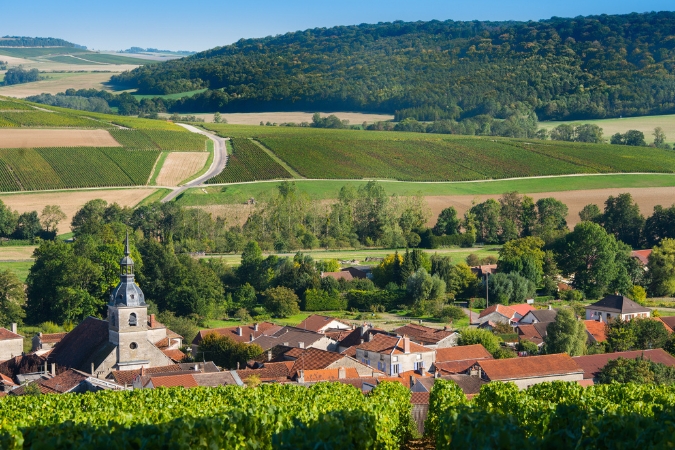
The grandest village of the Côte des Bar, both in size and, many would argue, in quality, is Les Riceys. Covering a remarkable 838 hectares of Champagne’s total 34,500, it is renowned for the excellence of its Pinot Noir. Its size reflects the unification of the three Riceys villages (Ricey-Bas, Ricey-Haute-Rive and Ricey-Haut) in 1790. Located just a few kilometres from the border with Burgundy, the region historically alternated between Champagne and Burgundy, eventually becoming part of Champagne. This dual heritage is vividly reflected in the wines of the entire Côte des Bar, being notably inspired by Burgundy in style.
For example, Simon Normand of Domaine de la Borderie studied viticulture and oenology in Burgundy rather than Champagne. Reflecting his Burgundian training, his newly founded estate is called a ‘domaine’, and he emphasises single-site Champagnes – referred to locally as côntrées rather than the more common term lieu-dit used elsewhere in Champagne.
Another regional specialty of the Côte des Bar is its preservation of Champagne’s heritage grape varieties
Jérôme Coessens cultivates only one large vineyard, Largillier, approximately six hectares in size. This monopole vineyard in Ville-sur-Arce is planted exclusively with Pinot Noir. From it, Coessens produces eight distinct wines, including two Coteaux Champenois still reds; one made from de-stemmed grapes and the other from whole clusters. Still-wine production is indeed more prevalent in the Aube than in the Marne, reflecting both the region’s more continental climate and local winemaking traditions. Another notable chapter comes from Cédric Bouchard, a cult producer in the area, who ventured a few kilometres over to the Burgundy side to craft a red wine, La Haie de Brune, in Molesme, further highlighting the crossover of terroirs and styles.
Natural ways
Away from the hustle and bustle of the Marne, viticulture in the Côte des Bar has historically remained more natural, with early pioneers like Fleury embracing organic and biodynamic practices. Since then, the biodynamic movement has been successfully championed by estates such as Vouette et Sorbée, Piollot and Marie-Courtin. In recent years, I have been particularly impressed by the work of the novel estate of Raphaël and Hannah Piconnet, Domaine de Bichery, in Neuville-sur-Seine, where their pristinely ecological, low-intervention approach yields remarkable results. Domaine La Borderie then again stands out as the subregion’s pioneer in agroforestry, fostering biodiversity within the vineyards.
Another regional specialty of the Côte des Bar is its preservation of Champagne’s heritage grape varieties, many of which have all but disappeared in the Marne. The region contains the lion’s share of the Champagne’s minuscule plantings (summing up to 0.04% of the total) of Pinot Blanc (locally called Blanc Vrai), Pinot Gris (Fromenteau), Arbane and Petit Meslier. Thanks to this legacy, Domaine Alexandre Bonnet (a former négociant-manipulant within the Lanson-BCC group, now downsized to a récoltant-manipulant focused on terroir in Les Riceys) incorporates 50% Pinot Blanc in its Blanc de Blancs and produces a seven-grape blend in its portfolio, showcasing the remarkable diversity and historical depth of the Côte des Bar.
A surge of dynamic grower domaines is elevating the reputation of the Côte des Bar at an accelerating pace
Domaine Alexandre Bonnet is also the leading producer of Rosé des Riceys, a historic still-wine style that was highly prized at the court of Louis XIV in the 17th century. Unlike a typical rosé, Rosé des Riceys is rather a pale red wine, that is granted its own appellation and produced by roughly 20 wineries using a semi-carbonic maceration process. Historically known as Pinot de Riceys, the wine arguably would gain greater renown under that name, as its style does not fit neatly into the often belittled rosé category.
As you can see, in the Côte des Bar, growers seamlessly blend tradition and innovation, championing organic, biodynamic and low-intervention practices, preserving rare heritage grapes, and crafting wines that reflect the unique character of each site. Below, I have highlighted some of the region’s most exciting wines to savour.
10 top bottles from the Côte des Bar
| Producer | Name | Vintage | Region | Subregion | ||
|---|---|---|---|---|---|---|
|
Domaine de Bichery, La Source NV
Champagne
, Champagne AOP
|
Domaine de Bichery | La Source | NV | Champagne | Champagne AOP | |
|
Domaine la Borderie, De Quoi Te Meles-Tu? NV
Champagne
, Champagne AOP
|
Domaine la Borderie | De Quoi Te Meles-Tu? | NV | Champagne | Champagne AOP | |
|
Clandestin, Les Semblables (Boréal) Blanc de Noirs NV
Champagne
, Champagne AOP
|
Clandestin | Les Semblables (Boréal) Blanc de Noirs | NV | Champagne | Champagne AOP | |
|
Domaine Alexandre Bonnet, Les Contrées – 7 Cépages 2019
Champagne
, Champagne AOP
|
Domaine Alexandre Bonnet | Les Contrées – 7 Cépages | 2019 | Champagne | Champagne AOP | |
|
Coessens, Largillier Brut Nature NV
Champagne
, Champagne AOP
|
Coessens | Largillier Brut Nature | NV | Champagne | Champagne AOP | |
|
Marie-Courtin, Résonance NV
Champagne
, Champagne AOP
|
Marie-Courtin | Résonance | NV | Champagne | Champagne AOP | |
|
Petit Clergeot, Chevry Cuvée Cuve NV
Champagne
, Champagne AOP
|
Petit Clergeot | Chevry Cuvée Cuve | NV | Champagne | Champagne AOP | |
|
Coessens, Coteaux Champenois Rouge Vendange Entière 2020
Champagne
, Champagne AOP
|
Coessens | Coteaux Champenois Rouge Vendange Entière | 2020 | Champagne | Champagne AOP | |
|
Marie Copinet, Nos Pas Dans la Pierre NV
Champagne
, Champagne AOP
|
Marie Copinet | Nos Pas Dans la Pierre | NV | Champagne | Champagne AOP | |
|
Domaine Alexandre Bonnet, Rosé des Riceys La Forêt 2021
Champagne
, Champagne AOP
|
Domaine Alexandre Bonnet | Rosé des Riceys La Forêt | 2021 | Champagne | Champagne AOP |