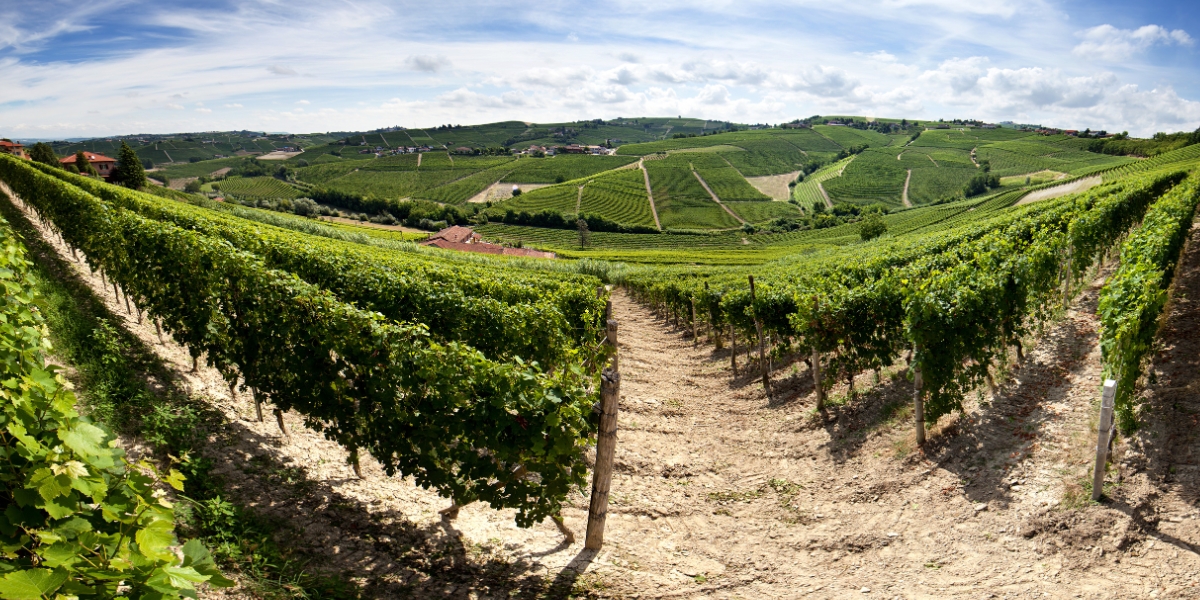
Now that the wider world has fully awoken to the charms of Barbaresco, longstanding devotees in search of undervalued treasures are starting to look beyond the borders of the Barbaresco commune, for, as with Barolo, Barbaresco does not just cover a single eponymous commune – it includes an additional three. Barbaresco’s lack of commune-level MGAs (e.g. ‘Barolo del Comune di La Morra’) does mean, however, that the other communes of Neive, Treiso and San Rocco Seno d’Elvio are hardly household names. Certainly, many of the region’s brightest stars belong to Barbaresco itself: producers Gaja, Roagna and the Produttori, plus crus Asili, Rabajà and Montestefano. However, Neive – known foremost as the home of Bruno Giacosa — and more recently, Treiso, are building distinct identities that should entice the Barbaresco lover wanting to look beyond the obvious.
Neive and Treiso’s vineyards, at least, are hardly Johnny-come-latelies: in the southerly lying, depopulated commune of Treiso (once a mere frazione of Barbaresco), sites like Rombone and Gresy (now part of Marcarini) have been recognised for their quality since the earliest classifications were drawn up by Domizio Cavazza of the original Barbaresco cooperative in the late 1800s.
Read more: The Barbaresco Report 2024
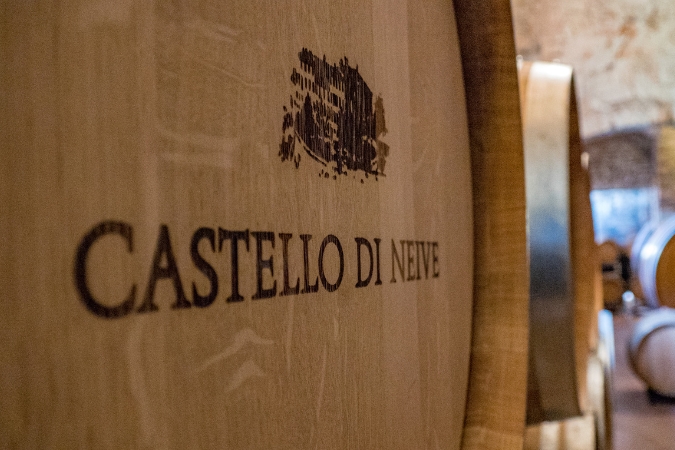
Neive’s equally fine sites were excluded from the above and the 1879 Fantini map only because it was not, at the time, considered part of Barbaresco. In fact, late-1800s Neive was arguably a more prominent township than Barbaresco itself, with its own bona fide castle (the Castello di Neive, owned since 1964 by the Stupino family) and bustling agricultural economy, while the now iconic Torre del Barbaresco was never more than a defensive structure. Neive had a wine culture but one heavily driven by grape varieties like Barbera, which has halved in hectarage since 1985, and Moscato, which remains prominent. It was primarily through Cavazza’s influence that Barbaresco came to focus on the Nebbiolo-based wine called Barbaresco and developed a reputation as a fine-wine hub.
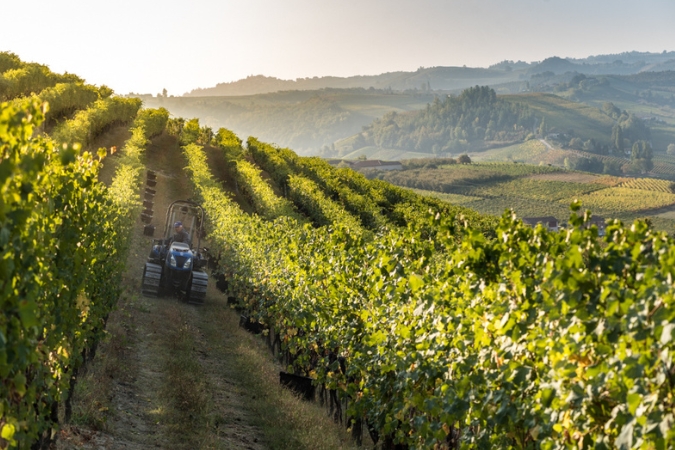
However, by the time Luigi Veronelli created a ranking of the area’s best vineyards in 1969, Neive’s Cottà and Gallina (along the western border with Barbaresco commune) were among them. Unexpectedly absent is Albesani – home of Santo Stefano, which Claudio Roggero, director of enology of the Castello di Neive, calls ‘one of the most beautiful vineyards in Italy and among the most well-known in the world,’ a characterization seconded by Luca Pasquera-Elia of Paitin, even though Bruno Giacosa had already started making his iconic Santo Stefano bottling. It was only in 1984, when Renato Ratti created a map for Barbaresco following the success of his Barolo version, that they were joined by Chirrà (now Currà) and Albesani.
Treiso’s naturally leaner, tendentially austere style is the result of its higher elevations and ancient Formazione di Lequio-derived soils
In fact, Neive’s main challenge is that, despite boasting some of the region’s top sites, the commune is so large and heterogenous it lacks a cohesive identity, unlike Barbaresco and Treiso where geology and soils are more internally consistent. The areas named above, lying roughly adjacent to Barbaresco and hence geologically similar, also produce similar wines, though often slightly fuller. However, there are other pockets whose wines bear little resemblance to these bolder styles: around the town of Neive, elevated sites on ancient sands (both Lequio formation and sandy Sant’Agata Marl-derived) like Serraboella and Bricco di Neive produce more vertical styles, albeit with some heft from their warm exposures. The lower hills of Bordini and Starderi in the north produce easy-going, softer wines but, as Guido Martinetti of Mura Mura adds, have an unexpectedly deep colour, traits he attributes to the abundance of Sant’Agata Fossili, which are less calcareous than the soils of Barbaresco and Treiso. Pasquera-Elia says that most Neive wines show depth and structure and thus ageing potential (certainly the wines from the most historic sites bear this out); however, these don’t necessarily fit the contemporary taste for lighter, fruit-driven wines with smooth tannins.
The reception of Treiso and its neighbour San Rocco Seno d’Elvio (covering a sliver of land along the southwestern edge of Treiso) has been quite the opposite. Jole Dellapiana of the ascendant Rizzi (the name of an estate and also one of their most representative crus) explains that Treiso’s naturally leaner, tendentially austere style is the result of its higher elevations and ancient Formazione di Lequio-derived soils. Relatively abundant forest land adds to the effect, though it is nothing like, say, Chianti Classico or Montalcino – this is still the Langhe.
Meanwhile, the Seno d’Elvio valley’s cooler, windier conditions produce tense, elegant, floral wines – especially in the aptly named MGA Nervo, which Rizzi also produces. Monica Rocca of Albino Rocca says her family has purchased more land in Treiso and San Rocco in recent years, a diversification that has permitted them to keep their wines in balance even in hotter and drier years. They are not the only producers drawn to these two areas, she says, though she suggests the communes don’t necessarily have the same name recognition among consumers.
Unfortunately, until and unless Barbaresco decides to adopt commune-level MGAs – unlikely given the glacial pace at which change typically occurs in this denomination – it seems anyone keen to experience Barbaresco in all its varied facets (or to use the tastier Italian term, sfumature) may simply have to learn which MGAs come from where, a daunting prospect even if Barbaresco only has a third as many as Barolo. Monica Rocca recommends simply dividing Barbaresco between north and south, the former represented by key sites of Barbaresco and Neive like Ronchi, Ovello and Cottà and the latter by Treiso and San Rocco sites like Montersino and Meruzzano, as well as the Bricco di Neive. Pasquera-Elia says that while Neive has not, to date, had problems of recognition, there is still room to study its crus in-depth. Thus, for the truly curious, it appears there is much study ahead – there is undoubtedly enough intricacy to reward their diligence.
Five top bottles from Neive and Treiso
| Producer | Name | Vintage | Region | Subregion | ||
|---|---|---|---|---|---|---|
|
Rizzi, Barbaresco Rizzi 2021
Piedmont
, Barbaresco DOCG
|
Rizzi | Barbaresco Rizzi | 2021 | Piedmont | Barbaresco DOCG | |
|
Castello di Neive, Barbaresco Santo Stefano Riserva 2019
Piedmont
, Barbaresco DOCG
|
Castello di Neive | Barbaresco Santo Stefano Riserva | 2019 | Piedmont | Barbaresco DOCG | |
|
Paitin, Barbaresco Sorì Paitin Serraboella 2021
Piedmont
, Barbaresco DOCG
|
Paitin | Barbaresco Sorì Paitin Serraboella | 2021 | Piedmont | Barbaresco DOCG | |
|
Albino Rocca, Barbaresco Montersino 2021
Piedmont
, Barbaresco DOCG
|
Albino Rocca | Barbaresco Montersino | 2021 | Piedmont | Barbaresco DOCG | |
|
Mura Mura, Barbaresco Starderi 2021
Piedmont
, Barbaresco DOCG
|
Mura Mura | Barbaresco Starderi | 2021 | Piedmont | Barbaresco DOCG |