At a time when the whisky market is in a somewhat febrile state, what is the role of extra-aged (40-year-old and older) whiskies? The question is prompted by the recent announcements of a 100-year-old and a 70-year-old expression in the same week.
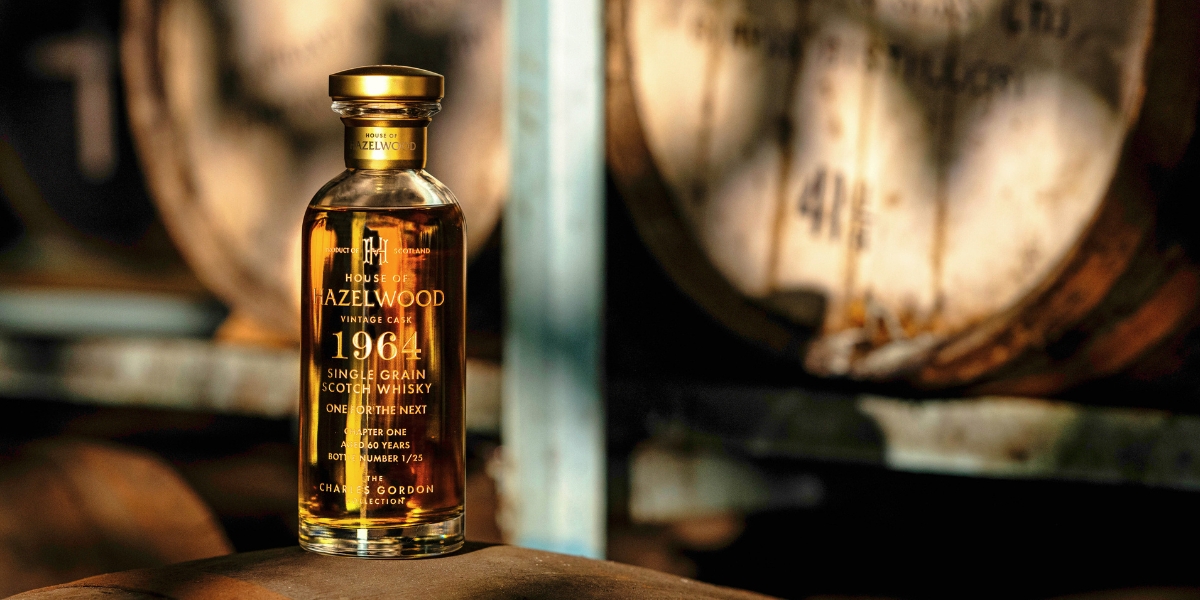
House of Hazelwood’s release One For The Next consists of 25 bottles of 60-year-old Girvan grain whisky and heralds the start of an ambitious project to release a whisky with a century on the clock. Every decade for another 40 years, an ever-older (and mature) expression of the same whisky will be released, with the 100-year-old Girvan finally emerging in 2065.
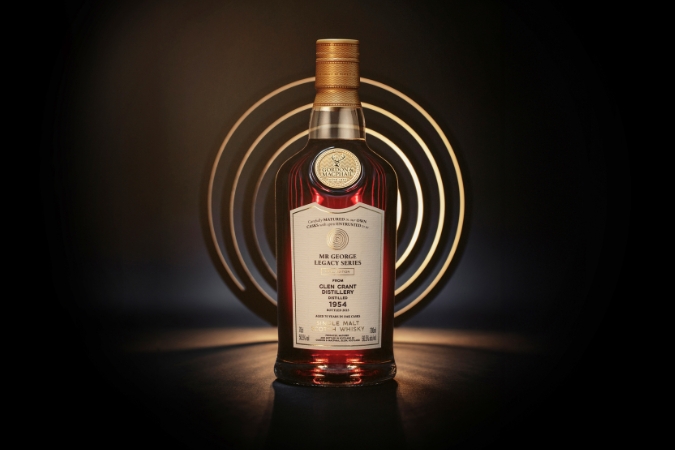
At the same time, Gordon & MacPhail (G&M) launched the fifth and final whisky in its Mr. George Legacy series, a 70-year-old 1954 Glen Grant. It’s a tribute to G&M’s George Urquhart, ‘the father of single malt Scotch whisky’, the second generation of the family that owns the firm and started to lay down casks of whisky in the 1930s. Although Gordon & MacPhail is the undoubted leader in this category, other long-established independent bottlers (Signatory Vintage, Adelphi, Cadenheads, Duncan Taylor etc.) also helped to establish the extra-aged sector.
While those independent bottlers have long played around with extra-aged whisky, it began to be explored further by bigger distilleries from the early 2000s, generally as a way of creating ‘halo’ whiskies. (House of Hazelwood occupies a half-way position between the two as it draws from the private stocks of the Grant Gordon family, which owns William Grant & Sons.)
‘Our business model involves releasing single malts at younger ages – under 30 years – but also a few releases of extra-aged ones,’ says Stephen Rankin, G&M’s director of prestige and George Urquhart’s grandson. ‘It’s this careful nurturing of a wide breadth and depth of stock that makes the release of whiskies over 40 years old core to our business, rather than as a halo strategy – one of our unique attributes as a business.
‘Since the early days, we decided to mature whiskies from the new-make stage and in our own casks for longer periods than was the norm. As a result, we retain large stocks from almost 100 distilleries. It’s arguably the world’s most extensive stock of extra-aged single malts.’
Extra-aged whisky began to be explored further by bigger distilleries from the early 2000s, generally as a way of creating ‘halo’ whiskies
Edrington has become the key distiller within the extra-aged sector. There have been releases from Highland Park and Glenrothes but most of the activity has come from Macallan. It started the trend of collaborations – photographers, chefs, car manufacturers – as well as exploring the possibilities of packaging in terms of decanters, bottle design and display.
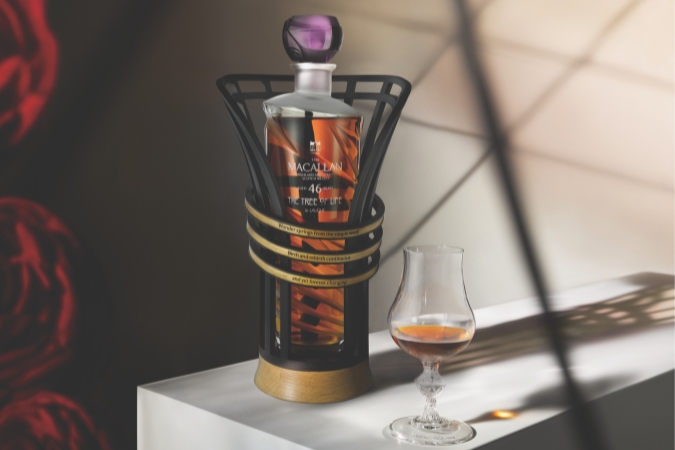
The Reach 81-year-old was held within a sculpture of three hands, Time:Space 84-year-old, (called ‘an elegantly balanced thing of excess’ by Forbes) was housed in a heavy, red-spiked catafalque. Its most recent foray, The Tree of Life 46-year-old, comprises a Lalique decanter held in a sculpture inspired by Charles Rennie Mackintosh.
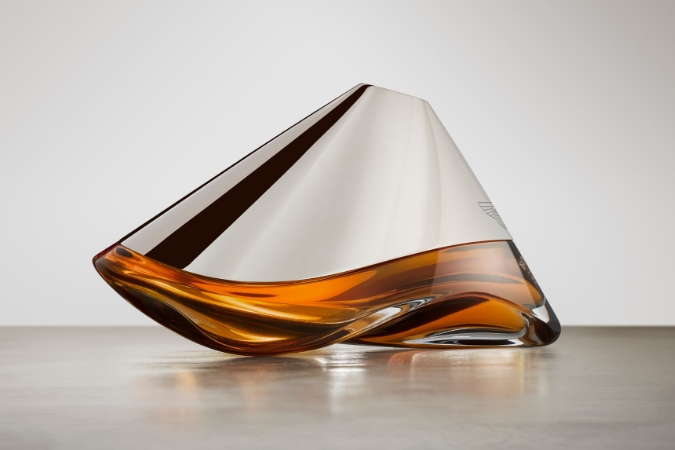
Dalmore and Bowmore also play in the area. The former’s third release in its Luminary: The Rare series is a 52-year-old expression sitting in a one-off bespoke sculpture. Bowmore’s Arc-52 and Arc-54 were bespoke bottles made in collaboration with Aston Martin. It’s whisky as luxury product.
All of this begs the question as to whether the branding and aesthetics are now more important than the liquid, and whether the creation of whisky as a piece of art is driven by a shift in the target consumer. ‘Having something with a huge price point that is just a whisky plus something else of value isn’t a new thing,’ says House of Hazelwood’s director, Jonathan Gibson. ‘I think it’s a way to raise the price ceiling of your brand – but it’s not helpful. We’ve got to the point where so many brands are doing it that people have begun to see through it.’
While extra-aged releases continue, there is evidence that the sector is slowing
Extra-aged whiskies used to be bought by genuine collectors (i.e. those who would buy a bottle and open it or buy one to keep and one to drink). Then they were targeted at those who saw it as an object to collect (hence the need for lavish packaging). The boom in whisky as investment resulted in an active secondary market. Prices of the top-end whiskies rose, as did the number of releases. The result has been that most of the ‘old’ collectors have been priced out of the market by investors and flippers.
Gibson feels that the House of Hazelwood releases still appeal to those in the diminishing former camp. ‘The clients we have the best relationships with drink or gift the bottles, not people who are into whisky as a side hustle,’ he says. ‘It would be weird if it were to end up as a commodity.’
In time, the secondary market boom encouraged distillers to start increasing their prices across the board, sometimes dramatically. Rather than being a small and profitable sub-section of the category, the top end was becoming the focus of attention – and dictating strategy.
While many of the extra-aged releases are expensive (The House of Hazelwood 60-year-old Girvan is £10,000; the G&M Glen Grant 70-year-old is £8,000), a look at The Whisky Exchange list shows a far more mixed, even confusing, sector price-wise. Of the 220 whiskies between 40 and 80 years old, the bulk are between 40 and 49 years, where prices start at £879 (a 40-year-old Bunnahabhain from Gleann Mòr), with the majority of the age bracket coming from G&M and Signatory Vintage, priced between £1,000 and £2,000. Prices change significantly at the top end. Macallan’s 40-year-old is £30,000, Black Bowmore’s is £37,500, and the Port Ellen 44-year-old Gemini/Remnant Cask costs £45,000 (10 times as expensive as Hunter Laing’s 40-year-old bottling).
This pattern is repeated in the 50-59-year-old bracket, with whiskies from independent bottlers starting at £2,000 and elaborately packaged distillery bottlings costing considerably more. The Glenrothes 51-year-old is £37,000 and Bowmore’s Arc-54 is £71,000. Dalmore 50-year-old is £85,000, and Macallan’s Six Pillars 55-year-old is £150,000. Macallan’s eight-decade duo Time:Space and The Reach cost £150,000 and £200,000 respectively.
Is extra-aged whisky a category worth exploring? If you have the money, yes, but choose carefully
While extra-aged releases continue, there is growing evidence that the sector is slowing significantly. Hammer prices at auction are down and sales to the Asian market – driven mostly by China – have declined significantly. ‘At the moment, these bottlings do not sell; even the rich are holding back,’ one buyer told me. ‘These days we will not buy until we have a guaranteed sale. The overwhelming feedback is “it’s not worth the money”. The emphasis on packaging and less on liquid doesn’t help.’
There are parallels with the fine-art market. The 2024 Art Basel/UBS art market report reveals a drop in overall sales at the top end with the greatest falls coming from China (down 31%). ‘After a strong post-pandemic recovery up to 2022, this marked the second year of slowing sales,’ wrote the report’s author Dr Kate McAndrew, ‘with the main drag on growth being the high end of the market, which thinned out significantly in 2023 and 2024.’
While Macallan’s Time:Space was praised for its design, it wasn’t considered a wise short-term investment. The Dalmore’s Luminary No.3 The Rare 52-year-old sold at Sotheby’s Hong Kong for a reported HK400k (£38k), around 60% below the lowest end of its estimate. In art, as with whisky, the only resilient sector is that defined as ‘lower-priced, more affordable.’ This chimes with retailers’ reports that the only whisky sector that is holding up is the £50-£75 price bracket.
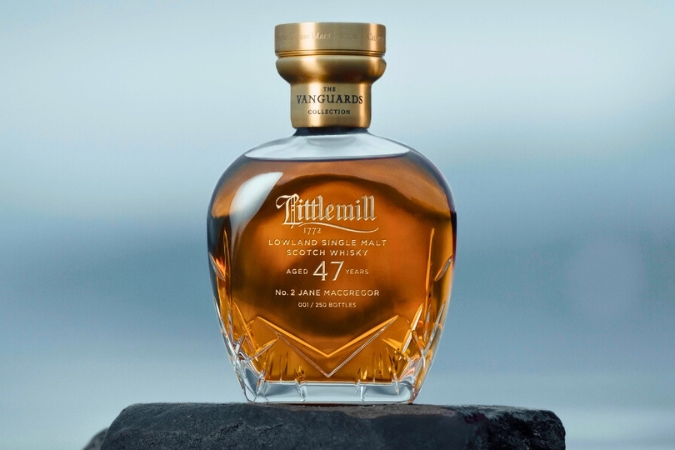
Is extra-aged whisky a category worth exploring? If you have the money, yes, but choose carefully. There appears to be a split between the package-orientated releases and those that are, simply, extra-old; compare the most expensive, elaborately designed bottlings to the Gordon & MacPhail, House of Hazelwood or Littlemill releases. These whiskies are, in my opinion, released with the old ‘true collector’ consumer in mind; those interested in the whisky itself and not the outré packaging, which has increasingly come to define the ‘investment’ whiskies.
A question to be answered is whether distillers locked into the investment side of the extra-aged sector can change course or if, instead, they are left dangling while the market recalibrates. The extraordinary rise in prices for the oldest of the extra-aged whiskies was primarily driven by the speculation frenzy; as this subsides, auction prices will continue to fall and, hopefully, reach a sensible level. And as mentioned, there are a range of 40-year-old whiskies and older that are available to savvy buyers for around £1,000, rather than six-figure prices.