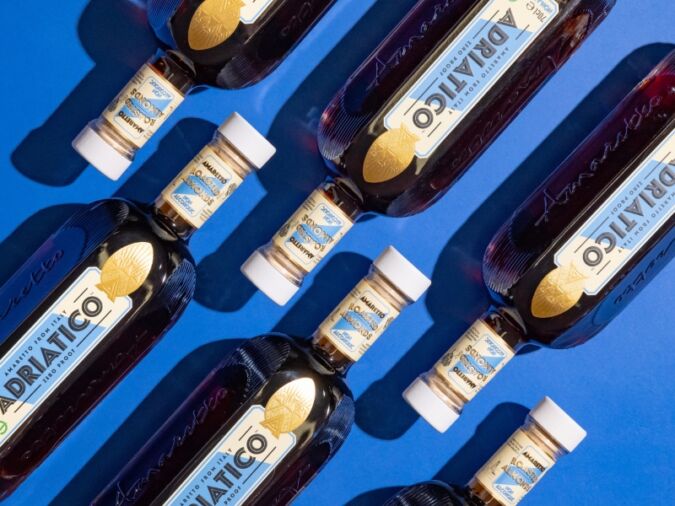
It’s January and if that alone wasn’t bleak enough, there are many who have chosen to forgo alcohol this month. The hunt for the perfect alcohol-free drink continues in a market that’s booming (even Elton’s got in on the game) but there’s a relatively new section of the drinks aisle that’s now making its mark: mid-strength drinks.
As a Drinkaware report highlighted last year, 44% of UK adults are using no-and-low options to moderate their drinking (up from 31% in 2018). Alongside the trend for ‘zebra-striping’ (alternating alcoholic and alcohol-free drinks), ‘coasting’ (choosing mid-strength drinks) is a new favoured tactic for reducing alcohol consumption.
But what are mid-strength drinks? The category is so new that a firm definition doesn’t exist but generally it refers to drinks that are around half the ABV of their full-strength siblings – think 20% gin, 2-3% beer and wine that sits at 5-8%. They are, in short, drinks that champion moderation over abstinence.
There are several different ways to remove alcohol from wine (reverse osmosis, spinning cone and vacuum distillation) but an unwanted side effect of the process is the loss of flavour compounds along with the booze. Alcohol brings much more to wine than its intoxicating effect, lending body and sucrosity, so its absence leaves ‘a hole’ that needs to be filled. Typically, that hole is filled with sugar, which explains why many non-alcoholic wines are cloyingly sweet. As the balance of the wine is disturbed, producers often need to de-acidify as well. In short, dealcoholisation is a messy process and one that rarely seems to result in a truly wine-like product.
Mid-strength drinks champion moderation over abstinence
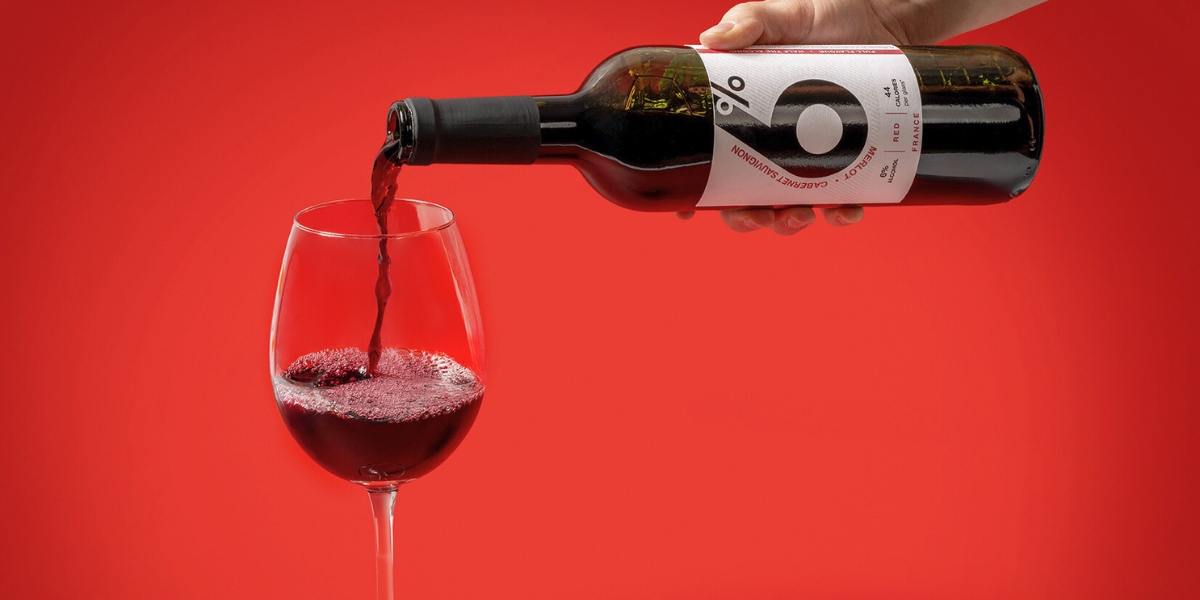
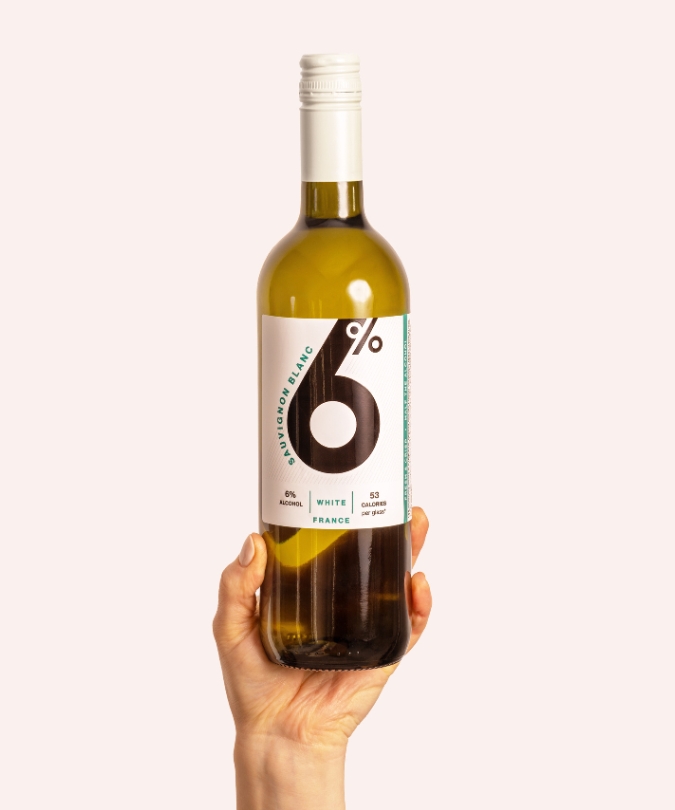
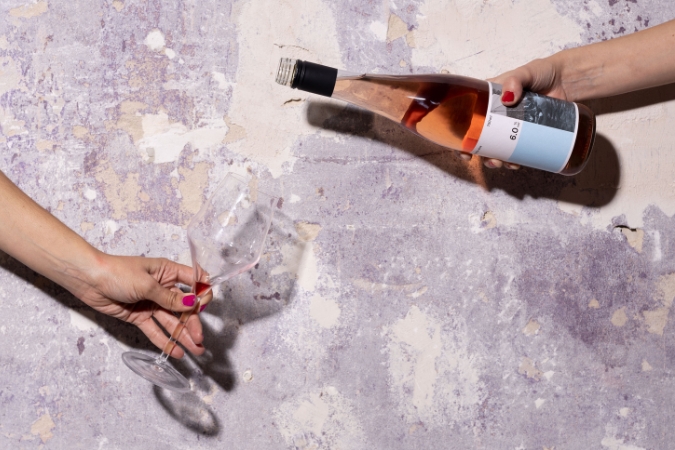
Big wine brands such as McGuigan, Torres, 19 Crimes and Kylie Minogue all have a mid-strength offering in their ranges but a wave of smaller, independent producers is now joining the movement. The desire for a wine-like product is exactly what inspired Gabriella and Russell Lamb to create their brand 6Percent. Gabi loves wine and was frustrated by the category’s failure to provide lower strength options that fit with modern ways of drinking. The feeling only became more acute when she became pregnant and then a new parent. ‘I just cut out alcohol because I couldn’t find what I was looking for,’ she says. She decided to create options herself, wines that weren’t just ‘weird, sweet grape juice’.
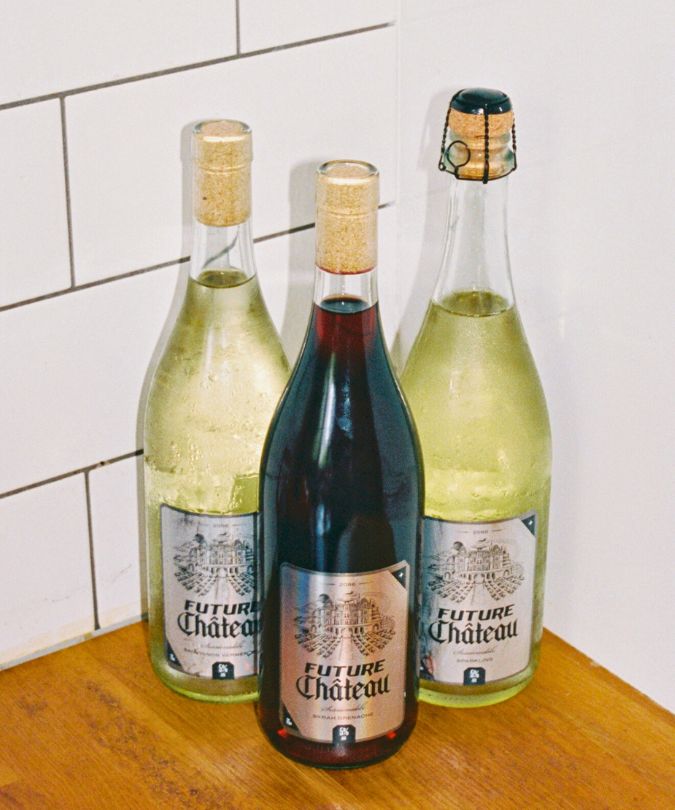
For Tom Benn, the man behind Future Château, the motivation was finding ‘the magic’ of a bottle of wine without the hangover and continuing to enjoy the associated rituals of wine; the inclination to sit at the table rather than the sofa, to listen to music rather than watch TV, to cook more ambitiously, to have better conversations.
The challenge, of course, is how to create these products. After almost five years, Benn feels he’s found the answer: using vineyard management to produce grapes with around 9-10% potential alcohol, fermenting as normal and then using a proprietary method (‘harnessing evaporation and condensation’ – a form of fractional distillation) to pare back the alcohol to 6%. He feels that a hot climate for the grapes (in his case, Northern Victoria in Australia) is particularly important, giving a sense of sweetness that allows for lower sugar additions (with residual sugar ranging between 5 to 12g/l in his three wines).
Moritz Zyrewitz, who co-founded The Gentle Wine in Germany, tells me that the major challenge is the dealcoholisation stage: the equipment is too expensive for most to have in-house, so wine is sent out to dealcoholisation plants, where the focus is on achieving potable alcohol, not making good wine. They are, in essence, ‘butchers’, he tells me. He feels blending is key, using full-strength components together with dealcoholised wine to create a more flavourful product. The Lambs do the same for 6Percent. Through this method, both brands manage to keep residual sugar levels under 15g/l, depending on the wine.
The major challenge is the dealcoholisation stage
One might assume that the rise of the mid-strength category is down to the famously sober-leaning Gen Z (although a report last year suggested that the Z-crowd is zagging back to booze). But the consumers of these products are not entirely who was expected. The Lambs are seeing interest from younger consumers but 6Percent wines are also being bought by older generations, those who might have been told by their doctors to cut down on alcohol, as well as millennials approaching middle age. Benn notes that his wines are resonating, in particular, with women over 40; a mix of those looking for a midweek option that won’t affect them at work the next day and those who find it’s the only red wine they can stomach post-menopause.
Both 6Percent and Future Château launched last year, with 6Percent’s Sauvignon Blanc winning Silver at the 2025 IWSC – and there’s no doubt that more brands will follow. While the prospect of wine lovers swapping out the fine wine in their cellars for mid-strength options remains unlikely, demand is on the rise: Ocado, for example, saw sales of mid-strength wine increase a whopping 4,000% from 2024 to 2025. The category continues to evolve and with a growing swathe of producers determined to crack the code, it’s certainly a space to watch.