While many people associate US whiskey almost exclusively with bourbon made in Kentucky, Virginia’s 400-year-old distilling prowess is currently in the midst of re-emergence and renewal, aided by a series of regulatory changes that have opened up opportunities for smaller, independent whiskey producers to experiment and thrive.
Virginia’s distillers are treating the state’s long, post-Prohibition dark age for spirits production as an opportunity to start from a blank canvas, to both reclaim tradition and reinterpret it, while also drawing in alternative influences, philosophies and approaches. The result is that, in a relatively small state (Virginia is roughly a sixth of the size of Texas), whiskey lovers can now find a striking diversity of high-quality styles.
Virginia has the rare benefit of deep history without the constraint of a single category
‘Virginia has the rare benefit of deep history without the constraint of a single category,’ says Gareth Moore of Virginia Distillery Co, who served as the first president of the Virginia Distillers Association. ‘Our neighbors in Kentucky have built something extraordinary around bourbon and we have enormous respect for that. But in Virginia, we make everything from bourbon to rye to wheat to single malt, with countless variations in between. That breadth is genuinely exciting for people who love exploring.’
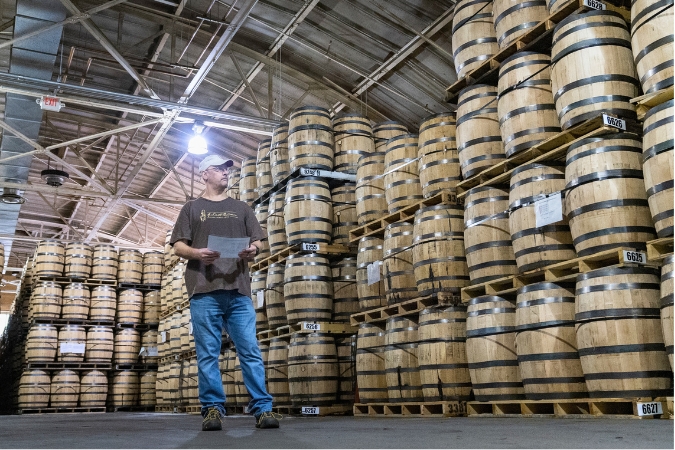
Making whiskey history
Legend has it that bourbon was created in Kentucky in 1789 by Reverend Elijah Craig, who discovered that aging harsh moonshine in charred oak barrels transformed it into a smoother drink. This apocryphal folklore – certainly convenient for a state that’s today the undisputed dominant force in bourbon – neatly overlooks the realities of 18th-century American geography. Back then, Kentucky was a territory of Virginia, so the Mother of States itself could rightfully, if controversially, claim paternity of America’s most celebrated spirit.
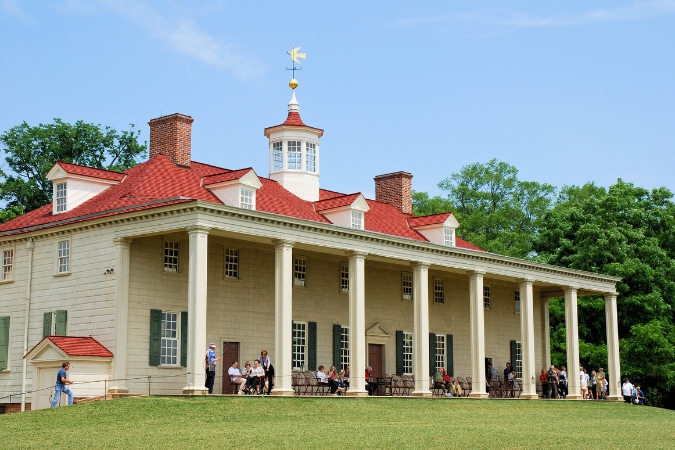
Bourbon’s origins aside, Virginia has played a central role in shaping distillation history in the US. The first documented distillation of corn whiskey in the country is believed to have been carried out by colonist George Thorpe in the heart of modern Virginia. More than a century later, George Washington ran one of the largest whiskey making operations at his Mount Vernon estate, south of what would become the US capital. Later, during Prohibition, the hidden hollows of Virginia’s Blue Ridge Mountains were a center of illicit production, as moonshiners produced much of the liquor that sustained the country’s thirst during its period of forced abstinence.
The years that followed Prohibition marked a sharp break in the state’s centuries-old distilling heritage. Rather than reopening, Virginia shifted to a control system under which the government agency ABC became – and remains – the sole wholesaler and retailer of distilled spirits. This period saw the state’s status as a key whiskey-producing region wane.
Restoring rye to its former glory
Rye has long been a dominant grain in Virginia and a popular choice for distillation. George Washington’s own distillery at Mount Vernon worked primarily with rye. The grain has since lost its central role across the Mid-Atlantic but some of Virginia’s craft distillers are now working to restore it to its former glory.
Catoctin Creek quickly became a standard-bearer for that revival since its foundation in 2009 by husband-and-wife team Scott and Becky Harris. ‘When we opened, we were the first legal distillery in Loudoun County since before Prohibition,’ says Becky Harris. ‘We didn’t want to be the umpteenth distillery making bourbon. We wanted to make something that truly reflected the heritage of this place.’
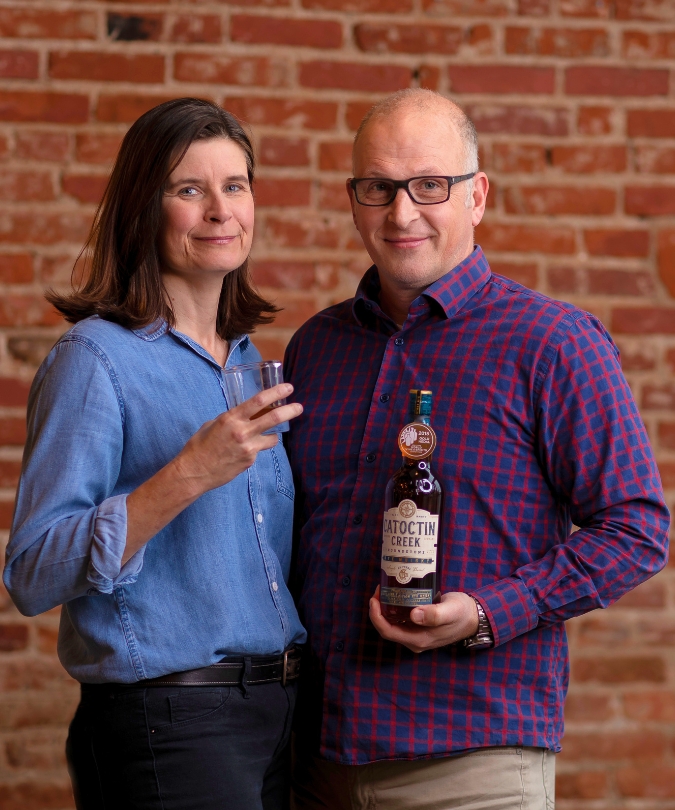
Catoctin’s flagship is a 100% rye, which is ‘a nightmare to clean off the stills but the flavour is exceptional,’ says Harris. Bottled at 40% ABV, its fruit- and wood-forward character makes it an ideal introduction to the style. But the Harris couple also makes a spicier 46% ABV expression and an unapologetically peppery and herbal Single Barrel Cask Proof (typically bottled at around 58% ABV, depending on the barrel) to please true rye fanatics.
More ryes worth noting come from Reservoir in Richmond, particularly the distillery’s powerful, bold, and concentrated 100% rye expression, as well as from Copper Fox Distillery. Its Original Rye is made from two parts rye and one part barley, floor-malted in house and kiln-dried with applewood and cherrywood smoke.
A state for single malt
Malt whisky might not be historically rooted in Virginia but the state’s growing prominence as a centre for American single malt production finds a measure of justification in the significant Scottish and Irish immigration that shaped its early history.
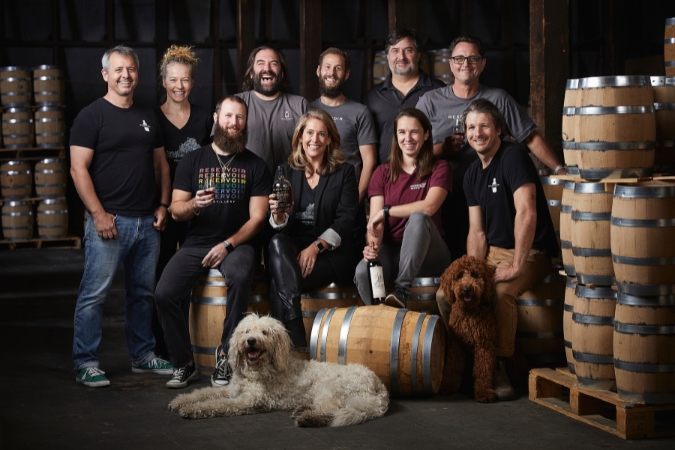
Founded by a devoted Scotch single malt enthusiast (and son of an Irish immigrant), Virginia Distillery Co is undoubtedly the leading name in the space. ‘The formal recognition of American single malt validated everything we’d been building, and we saw immediate results,’ says Moore, who was among this achievement’s most vocal advocates.
The state’s climate is a key factor in shaping the character of its whiskey, alongside the widespread use of Virginia-grown grains
While drawing clear inspiration from Scotland, Virginia’s single malt is also distinctly shaped by the state’s volatile climate, where humidity, hot summers and cold winters all significantly influence the maturation of the spirit. ‘The Blue Ridge Mountains give us a climate with dramatic seasonal swings that accelerates maturation in ways that are unique to this region,’ continues Moore. ‘Our whisky develops character quickly and distinctively. Virginia’s wood, water, weather are all real influences on what’s in the glass.’
Beyond Moore’s exceptional drams, other notable single malt producers include Spirits Lab Distilling in Charlottesville and Caiseal Beer & Spirits in Hampton. Copper Fox, too, has built a reputation for single malts using smoke from different woods as an alternative to peat.
Renewal and reinvention
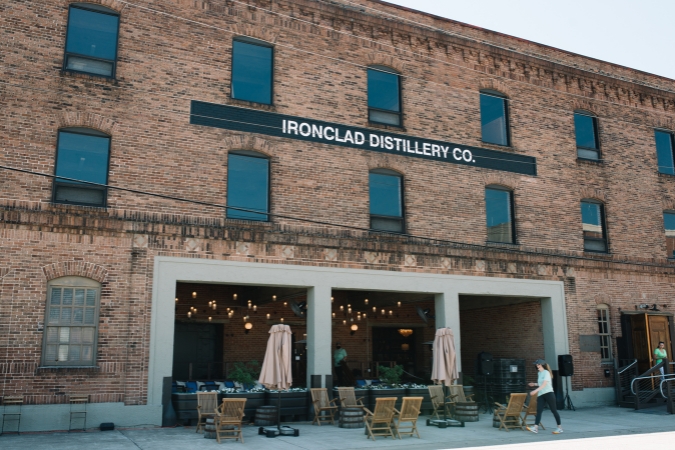
Virginia Distillery Co’s latest release – an equal-parts blend of bourbon and single malt – underlines just how important bourbon remains to American distilleries, so it’s no surprise that Virginia remains a player in that field too. A. Smith Bowman is its most prominent bourbon maker, with a broad range spanning classic straight expressions, unusual finishes, and cask-strength bottlings. But there’s also a strong contingent of smaller producers, including the aforementioned Reservoir, as well as Ragged Branch, KO Distilling and Ironclad.
Once again, the climate, with its wide variation from the Atlantic coast to the Blue Ridge Mountains, is a key factor in shaping the character of the whiskey, alongside the widespread use of Virginia-grown grains. ‘Virginia terroir is a hugely important factor in how our bourbon tastes. We use only Virginia grain and our distillery sits right on a brackish-water river, which influences the way the barrels age,’ says Ironclad distiller Owen King.
The long hiatus between Prohibition and the recent craft revival may have dulled Virginia’s reputation as a serious whiskey-producing state. At the same time, however, it has allowed the state’s scene to restart from scratch, creating what is now a dynamic landscape that blends fresh thinking with the state’s richly layered whiskey-making history.