There’s no denying that there’s a level of snobbiness around Prosecco – even among experienced wine professionals – but perhaps that comes from a lack of exposure. Around 90% of what’s imported into the UK is DOC Prosecco (rather than DOCG, the next step up on the quality pyramid), more often than not made in the sweeter Extra Dry style. Of course, there are notable producers in this category but overall, we’re missing a trick: not all Prosecco is created equal so we shouldn’t put it all in one basket. It’s time for the cynics to look for the ‘G’ and, most notably, seek out the ‘Rive’ wines.
What are Prosecco ‘Rive’?
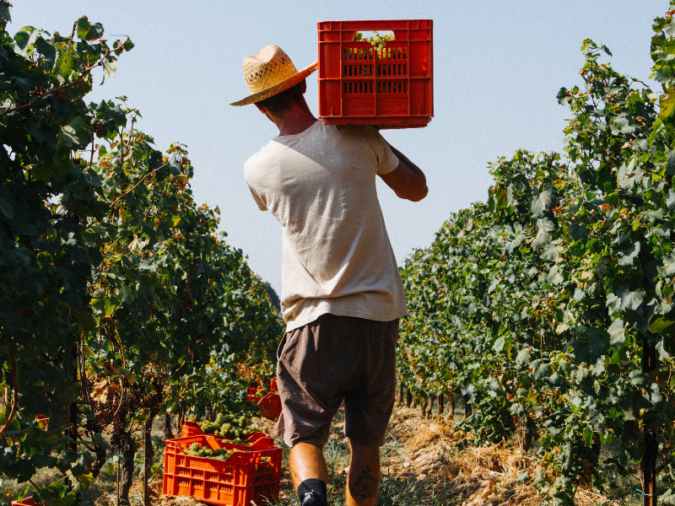
With Prosecco’s relatively new ‘Rive’ category (established in 2009), we’re not just talking about the next step up on the quality pyramid from Prosecco DOC to DOCG, where production has tighter rules and grapes come from the region’s higher elevation, hillside slopes rather than the higher-volume-producing flatlands of the DOC. Instead, we’re going deeper into a subset of DOCG. Here, rules narrow even further to using handpicked grapes only, coming from lower yields, from one single vintage and hailing from one named commune. It is with these Prosecco ‘Rive’ that you’ll find the wines with the most to say about terroir and vintage character across the DOCG spectrum.
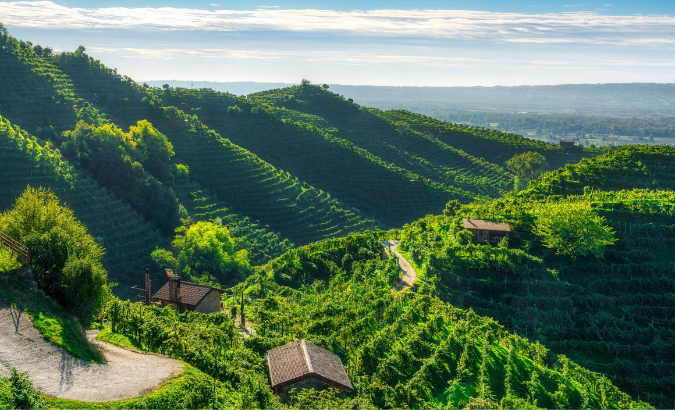
The word ‘Rive’ comes from local Venetian dialect and translates as ‘banks’ or ‘sides’. With Prosecco, this means the most precipitous, high-quality, single vineyards on the slopes found within the Conegliano Valdobbiadene production zone. There are 43 Rive in total, spread across 15 different communes, where each name is tied to a specific parish rather than any geological boundary. The word was originally local shorthand for the producers’ steepest, trickiest-to-farm hillsides, long before the rules were formalised. It therefore made sense to use the existing parish boundaries that winemaking communities recognised rather than commission a soil survey and try to redraw them.
The Sweet Spot
While this does mean we can’t put each Rive neatly into a box with its own tasting profile – there are myriad soils that could run through them – they are worth exploring for many reasons. Firstly, as I recently discovered with a team of IWSC judges tasting DOCG wines blind in Italy, while there’s no rule that Rive wines must be drier, most are made in the Brut or Extra Brut style and quickly, it becomes obvious why: once dosage hits 12-17g/l (Extra Dry), any nuance of aroma, flavour or texture is smoothed over, thus negating the many extra hours of backbreaking labour it takes to capture these nuances in the first place. They call it ‘heroic winemaking’ here for a reason. Secondly, with Rive, you’ll always get a vintage wine rather than one made for consistency, with hand-picked fruit at lower yields. If you’re a real wine buff wanting to track and compare wines year on year, this usually means more concentration and precision, so it’s easier to do.
It is with these Prosecco “Rive” that you’ll find the wines with the most to say about terroir and vintage character across the DOCG spectrum
Tasting Terroir
Are Rive Prosecco better than a good producer’s DOCG Superiore? Not necessarily, but they will give you another level of specificity, a bit like seeking out single malts over a blended scotch; not because they’re better, but because they offer a fixed point rather than an average. Interestingly, as we tasted around 150 DOCG wines while judging, several clear terroir profiles appeared within the Rive wines, though these profiles snaked across all zones. It was a fascinating exercise in detecting terroir, though a slightly frustrating one: the Rive category was created to showcase these distinctive micro-zones with their complex mix of aspect and soils formed by ancient plate movement and glacial action, but because the named zones are administrative, it is impossible to assign a specific terroir to a specific Rive.
Are Rive Prosecco better than a good producer’s DOCG Superiore? Not necessarily, but they will give you another level of specificity, a bit like seeking out single malts over a blended scotch
Having said all this, some tendencies can be noted: Rive like San Pietro di Barbozza share some of the deep soils of Cartizze (the one specific cru that sits at the very top of the Prosecco quality tree, just above the Rive qualification), so can produce richer, stone fruit styles. Rive di Guia, being higher and closer to the pre-Alps on limestone, often showcases a more citric, floral style; and gentler, more clay-based slopes towards Conegliano mean Rive di Ogliano leans towards a less aromatic, more herbaceous, green apple profile. But these are all generalisations.
What we can be certain of, however, is that if any one of us judges had been concerned about producing detailed, professional tasting notes for so many Prosecco wines, we certainly weren’t fazed once we’d started. With DOC, DOCG, Rive, Cartizze and the growing category of Sui Lieviti (on lees) wines to explore, Prosecco, in my opinion, is actually one of the most ethereal and nuanced wine categories in Italy – and certainly one for any true wine lover to explore.
Four top Prosecco Superiore Rive wines from the IWSC 2026
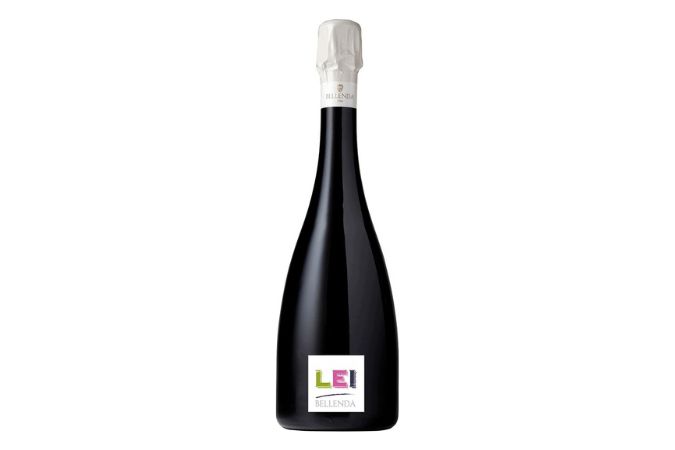
Bellenda Rive di Carpesica, Lei Dry 2020
IWSC judges praised this Rive Prosecco wine for its immediate ‘captivating nose of lime marmalade, citrus, and kerosene’ as well as for its flinty and smoky notes.
On the palate, they found guava and green apple, ‘underpinned by vibrant acidity and elegant structure, finishing with refined length.’ 95 points
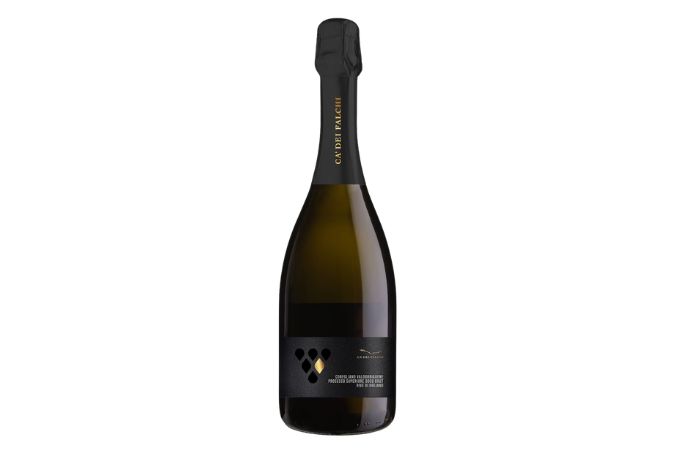
Società Agricola Ca’ Dei Falchi, Rive Di Ogliano Brut 2025
Tasting notes from the judges touched on ripe red apples and crunchy pears, the latter continuing on the mouth. ‘On the palate, tangy pear flesh and a lovely, textured crunch transcends the bubbles, leading to a long finish with refined length,’ they said. 95 points
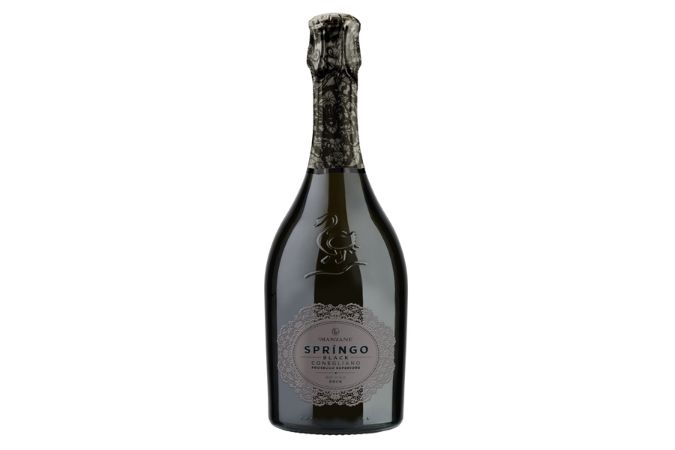
Le Manzane, Springo Black Rive di Rua Brut 2025
This Rive Prosecco is expressing some characterful notes, from greengage to oyster shell. According to judges, ‘the palate is plump yet vibrant, offering concentrated, spicy fruit and a juicy, lively character.’ There’s even a dash of salinity on a finish that is ‘smart’ and ‘refreshing’. 95 points
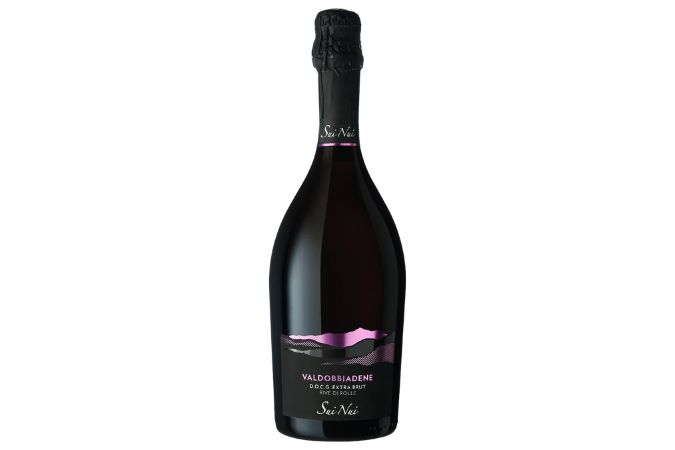
Sui Nui Spumanti, Sui Nui Rive Di Rolle Extra Brut 2025
While the classic stony pear scent is present, the nose unfolds with white blossom and a hint of citrus. Judges commented on Sui Nui’s fresh, mineral-driven palate, ‘where pear skin texture and creamy acidity’ were said to mingle seamlessly. ‘The long, soft finish lingers with real charm,’ the judges added. 95 points