After a three-hour drive through the Sierra Sur along Highway 131, humps of beige, rounded rock rolling across each other in the distance, we turn onto a narrower, forested road and arrive at the modest entrance of Rancho Concordia. It’s arid, the grass patchy, a Mexican flag fluttering next to the skeletal logo of mezcal maker Los Siete Misterios, punk-spiked agave all around. We wander through the plots, encountering coyote plants towering and arching with long, lance-like, silvery teal leaves, and tobalá glistening like avocado flesh in the sun, crouching low and wide, waiting for the pit.
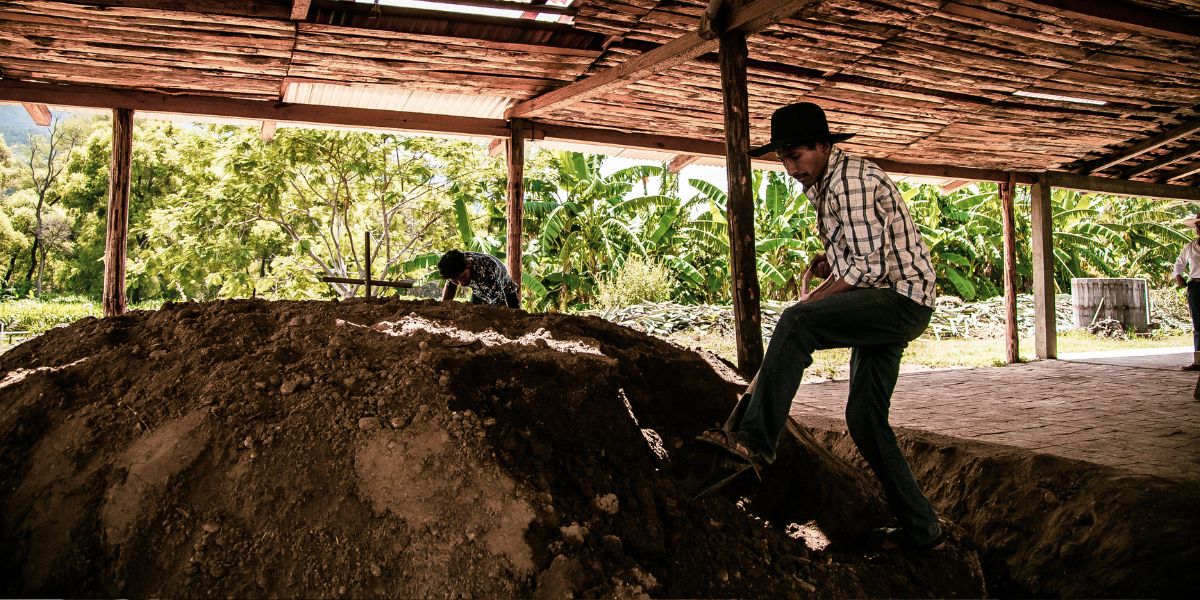
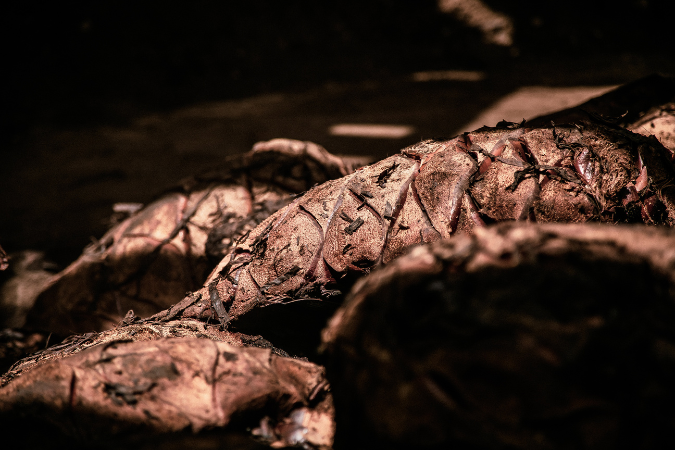
A few days before, the pits had been opened. Now all that remains is a brown-grey mound; the agave beneath slowly cooking under earth and ash. The coyote will release aromas of hoja santa and guava; the tobalá, mango, papaya and timur pepper.
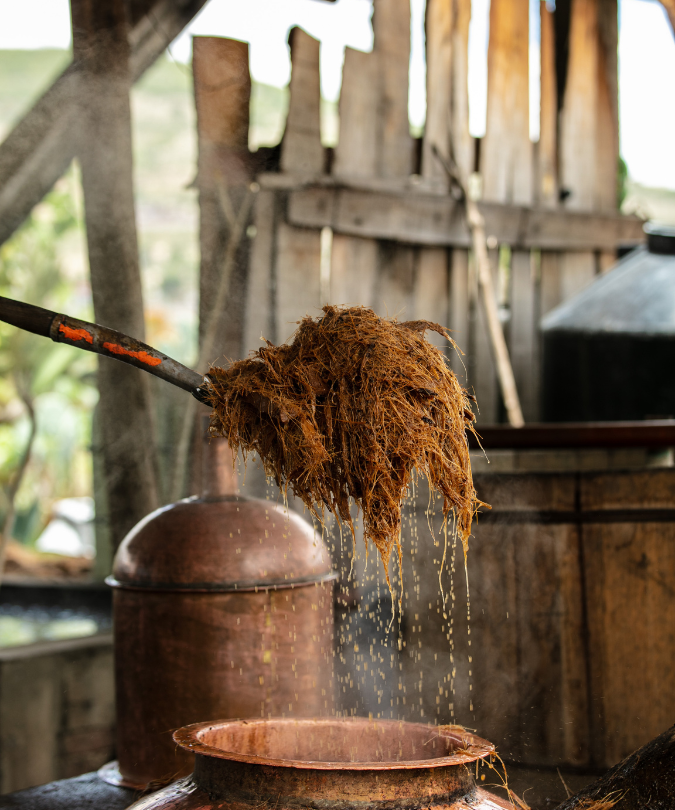
I follow Eduardo Amador into the no-frills fermentation area, its vats sealed under wooden planks. He runs the palenque alongside Angeles Mestre – her sons, Julio and Eduardo, founded the brand. Bubbles rise through a caramel-hued liquid, threaded with stringy beige strands of agave fibre.
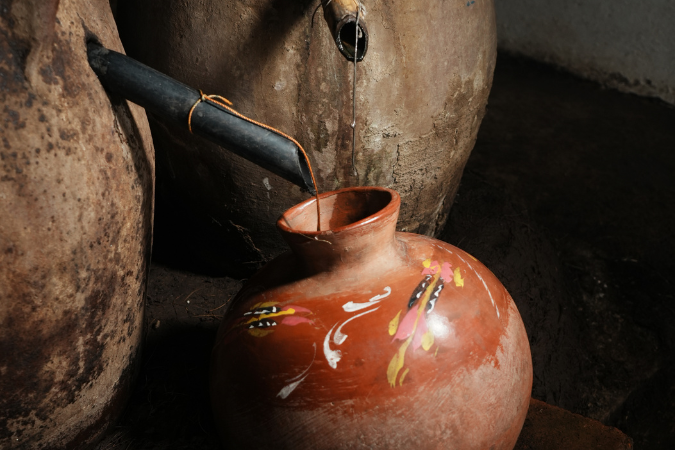
Once fermented, it’s transferred to distillation pots, which sit half-buried in a dense bed of spent agave, not for fermentation but to hold them steady and seal in the heat. Clay vessels fitted with simple funnels and lengths of hose feel improvisational and yet steeped in a history that has perfected the method.
From here, it’s a slow drip, then another – the first run is heavy and will be distilled again, sometimes a third time, refined with each pass. What emerges is crystal-clear, a stark contrast to everything that came before, and yet, in every sense, a distillation of it.
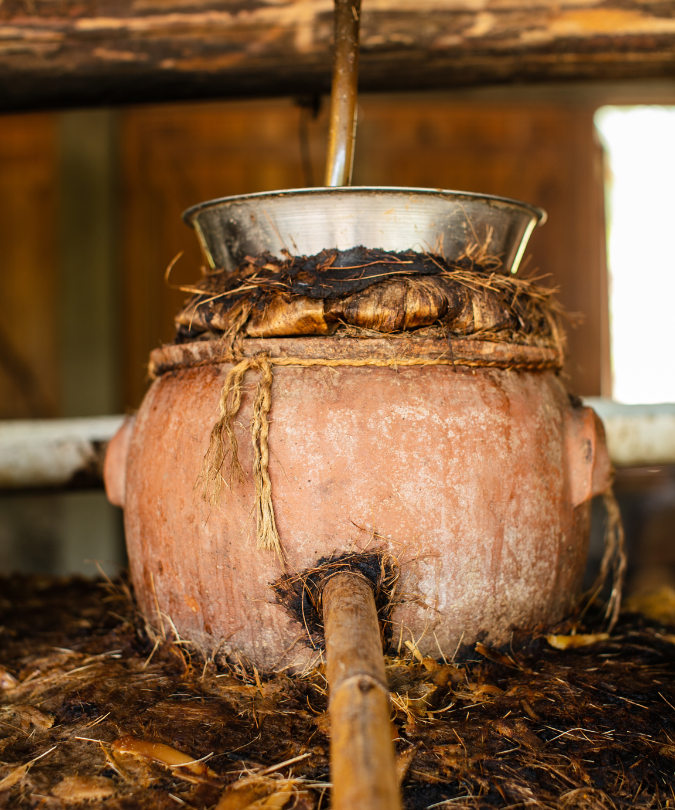
This method is mezcal ancestral and one key difference from mezcal artesanal – which uses alembic stills – is yield. Clay pots produce far smaller batches and lose a greater share to evaporation in the process: what distillers call the angel’s share. To produce one litre of mezcal, it takes 15-20 kilos of agave, as opposed to around ten. ‘Even if you want to tackle that and reduce those leaks,’ Amador explains, ‘it’s very difficult because the system is very rural.’ It is, after all, ‘the oldest way of doing mezcal.’
For all its cultural momentum, ancestral mezcal remains stubbornly resistant to modern economics
In Sola de Vega, the revival has drawn more of the village back into production. Young men and women who might have left are returning to the palenque. ‘The payment is better,’ says Amador, ‘so we’re getting more young people beginning to work in the ancestral way.’
For all its cultural momentum, however, ancestral mezcal remains stubbornly resistant to modern economics. Even producers like Los Siete Misterios also produce more commercially viable expressions – such as their lower range artesanal espadín (bottled under the local name Doba Yej) – to support their range of biodiverse agave plants.
Phil Clayton, whose brand Zacal will soon release an ancestral mezcal, points to a key tension: ‘It is unbelievably difficult and commercially not that viable,’ he says, ‘because you lose so much liquid in the process. It’s so grossly inefficient compared to whiskey or wine production.’
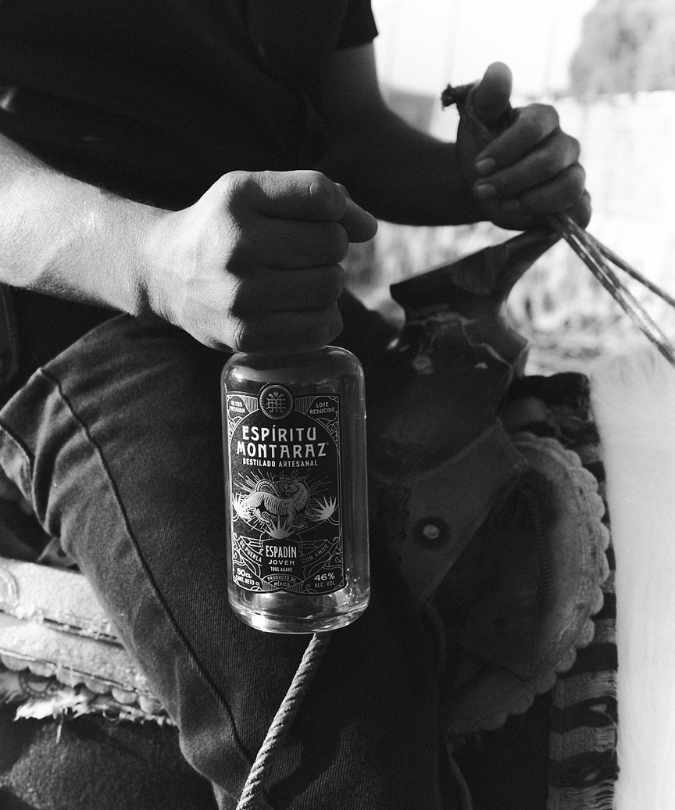
Still, mezcal brands are going to considerable lengths to source, produce and bottle ancestral expressions. One such brand is Espíritu Montaraz, which was awarded the 2025 IWSC mezcal trophy for its Ancestral Pechuga. Its founder Gianluca Limón de Jesús works with producers in Puebla (lesser known than Oaxaca), using strictly ancestral methods.
When he first visited, he realised something surprising. ‘The first time I was there – I speak Spanish and I’m Mexican – and suddenly I could see them speaking but I wasn’t understanding anything. I asked them and they still speak Nawatl.’ That living language is a direct echo of the resistance those communities chose centuries ago – and for Limón de Jesús, hearing it spoken in the distillery made the connection between history and mezcal impossible to ignore.
‘My producers say they never had contact with the Spanish because they fled – and they were already making mezcal,’ he says. ‘I don’t know if it’s true but the history and culture behind these products is really, really interesting. Maybe that’s the beauty of this spirit.’
It is still up for debate as to whether the Spanish brought distillation in alembic stills to Mexico or the ancestral method predates it but the generational legacies at ancestral distilleries are beyond dispute. At Los Siete Misterios too, Amador works with young maestros from the village who trace back mezcal production to at least their great-grandfathers.
But for all the romance, what are the effects of clay-pot distillation on the final product?
The growing attention on ancestral mezcal reflects a shift in luxury itself towards specificity
For Limón de Jesús, the length of the distillation, which must be carefully handled to ensure the clay doesn’t break at high temperatures, has a clear physical effect. ‘It’s a distillation that takes longer but in that process you preserve more of the essential oils from the agave,’ he says. ‘Ancestral mezcals are really good at preserving qualities from the agave; they feel very oily in the mouth, they stay very long and they change a lot.’At Espíritu Montaraz, this means mezcals with lactic profiles from fermentation and mineral threads from the clay. ‘When I smelled these mezcals for the first time, I had the smell of a stable,’ he adds.
Back at Los Siete Misterios, two younger maestros join us at the table as we dive into a spread of guacamole, salsa and citrusy chipulines over tostadas. One says that aged Mexicano (another agave variety) develops a very specific profile when distilled in an ancestral manner: small, chubby bananas they call manzano.
Clayton feels the growing attention on the category reflects a shift in luxury itself towards specificity. ‘The direction of travel for people buying luxury products these days is genuine craft; real human labour, time, energy and knowledge,’ he explains, ‘versus something that costs 50p to make and gets charged at £1,500.’
At Zacal, the decision to add an ancestral mezcal to the range stems from this dynamic. ‘We wanted to create something that was the absolute pinnacle of what we could make in terms of showcasing the craft of what Milton [the brand’s maestro] does,’ Clayton says. ‘Not because we think it’s going to make us rich – I don’t think it will. But it creates a halo product that sits at the very top of the pyramid.’
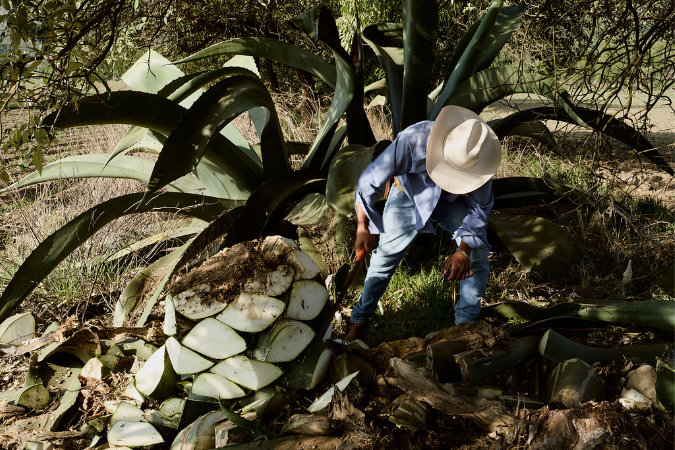
Limón de Jesús says that intrigue around ancestral mezcal will grow as terroir becomes more central to how spirits are understood. ‘I also think about Puebla the way you think about wine regions. In Italy you have Tuscany, Piemonte,’ he explains. ‘I see mezcal going the same way. For connoisseurs at some point, they will look for different regions and understand that different climates, different terroir and different species all make a difference.’
As for the ancestral method, it retains an appeal rooted in the primal texture of its production. ‘I still don’t understand how it creates this essence and these different flavour profiles,’ Clayton says. ‘It seems more like magic than science.’ Mezcal is ‘studied but not that studied,’ he continues. ‘It hasn’t been deconstructed to the point where it’s lost its mystery and allure.’