Institutions of great age are rarities in the United States, given the country is only just about to reach the 250-year mark, and institutions devoted to alcohol of any age are even rarer, few having survived the ‘Great Experiment’ of Prohibition. But with the opening of Berry Bros. & Rudd’s new store in downtown Washington, D.C. last month, the wine retailer brings more than 300 years of experience in wine from London’s Mayfair to the US capital.
‘To plant a flag here is sort of symbolic and meaningful,’ says managing director Jamie Ritchie. ‘I think it’s a very international, sophisticated community in D.C. and there’s a good wine and food scene here, and a very vibrant community, which has been growing pretty rapidly.’ Ritchie comes to the post with three decades of experience in the US wine market at Sotheby’s. While that position had him centred on New York, he says Washington was the logical choice for the new store.
‘The wealth and per-capita spend on wine is very high, not just in D.C. but in the surrounding area – among the highest in the country,’ Ritchie says. ‘I think that by coming here, we’ll have the ability to become known very quickly on both the local and national map. In New York, there are people who don’t go below 57th street or above 14th; it’s a very regional community and, in fact, it’s much harder to get your name recognised and established in the New York marketplace.’
We can access a larger, wider, more interesting range of wines by operating in D.C. than we could do in New York
The new store is not Berry Bros. & Rudd’s first overseas venture: outposts in Singapore, Hong Kong and Japan have thrived for several decades. A century ago, the family business proved it could succeed in the US market even at the most difficult of times, creating Cutty Sark whisky in 1923 and building a major presence for the brand in the US, even during the throes of Prohibition. Having thrived back then, today’s drop in wine consumption and the current US tariffs give little pause.
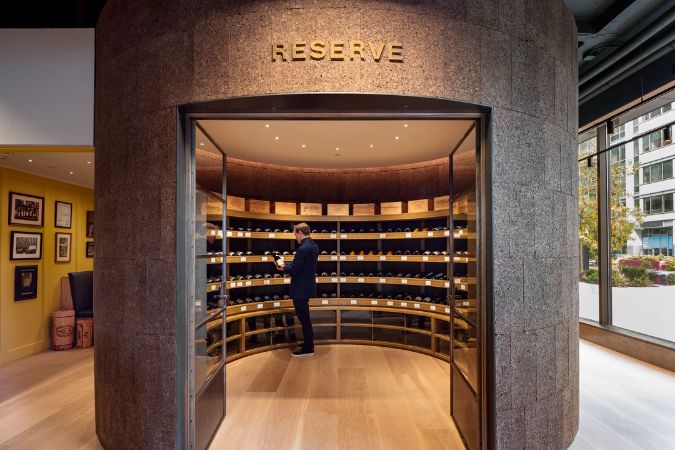
Prohibition’s aftermath left the US with a bewildering patchwork of regulations, each state setting its own agenda. In many cases, wines must navigate multiple distribution tiers to reach the shop window. D.C. as a federal district, however, has what is probably the most open market for wine in the country. ‘We can access a larger, wider, more interesting range of wines by operating in D.C. than we could do in New York.’ The new store possesses both a retail and import license, allowing them to work directly with producers from Bordeaux, Burgundy and elsewhere. ‘We get wider access and better pricing, a combination that makes D.C. a natural centre for us.’
That includes being able to bring over wines from the company’s cellars in England, so the D.C. location has been able to open with a large selection of older wines with assured provenance. ‘When someone buys them from us, they can be sure they come from the Berry Bros. & Rudd warehouse, directly from the producer.’ Having older offerings was a priority for the US store. ‘The US market is perhaps more about consumption than collecting,’ Ritchie says, ‘more about the immediacy of enjoyment, rather than laying things down for 10 or 15 years. We wanted to have a rich inventory of already mature wines ready to drink.’
Professionals from Washington’s vibrant dining scene have been hired with the aim of bringing an element of hospitality to the business
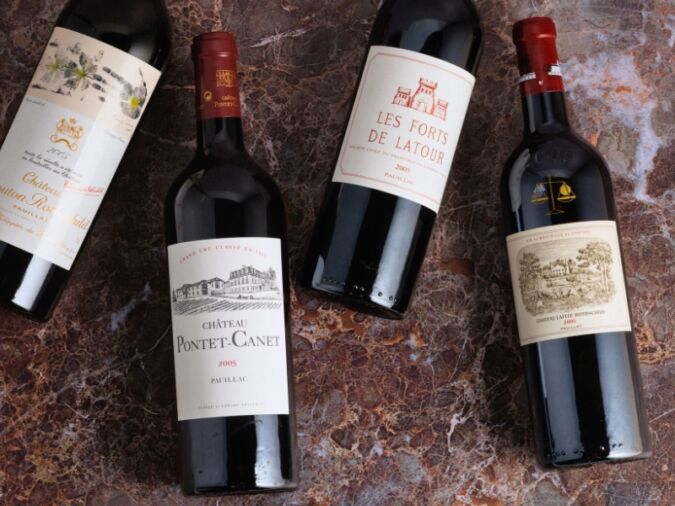
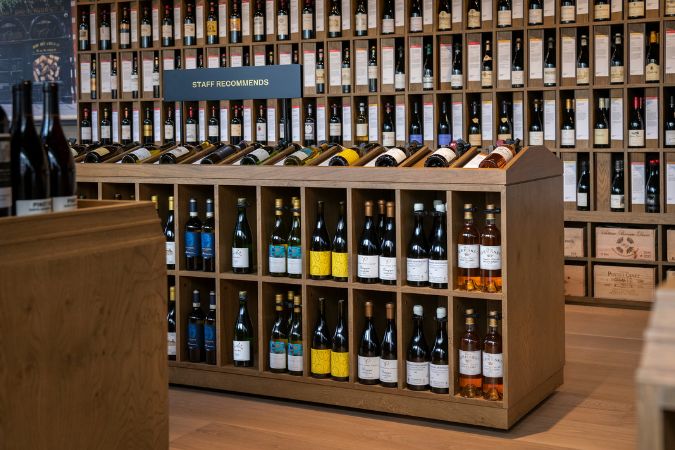
Bordeaux selections, for example, reach back to 1945, with plenty of carefully selected vintages from the early 2000s, 1990s plus others. Ritchie says they’ve supplemented that with wines sourced through local wholesalers and he’s looking forward to building a larger offering of American wines to complement the depth of European wines. They’ve also brought over 25 of their 45 Berry Bros. & Rudd labels, including Champagne, Brunello di Montalcino and a Santa Barbara County Pinot Noir, the latter made for them by Au Bon Climat. Ritchie says the Berry Bros. & Rudd range has proved popular so far, with the Champagne and Claret serving as ‘standard bearers’ for the rest of the range; even customers otherwise purchasing rarer bottles are stocking up.
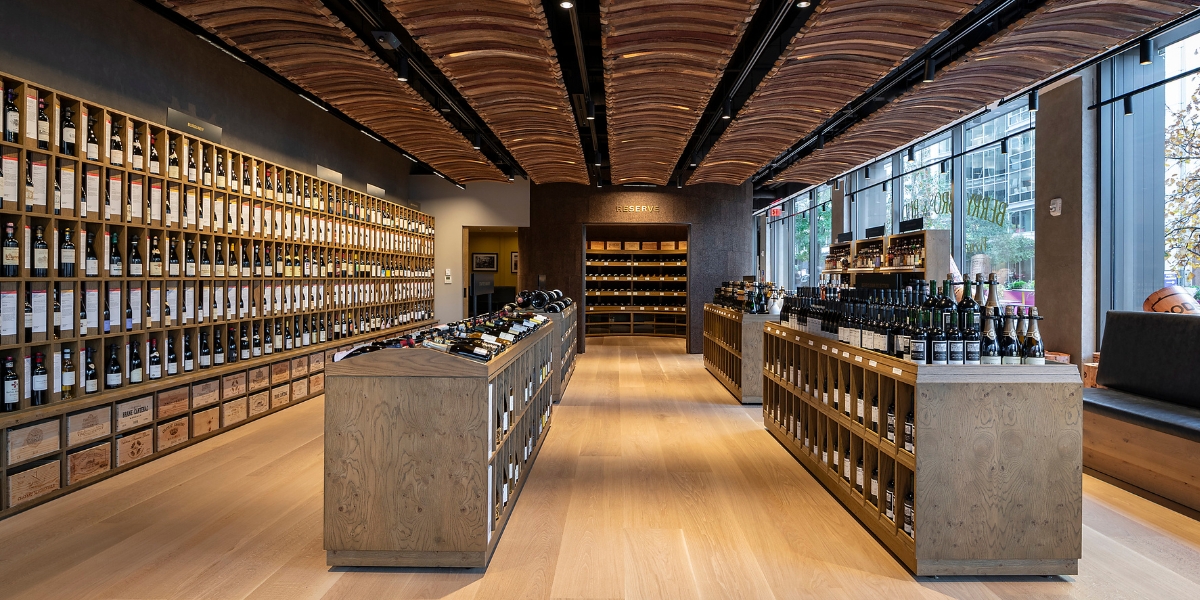
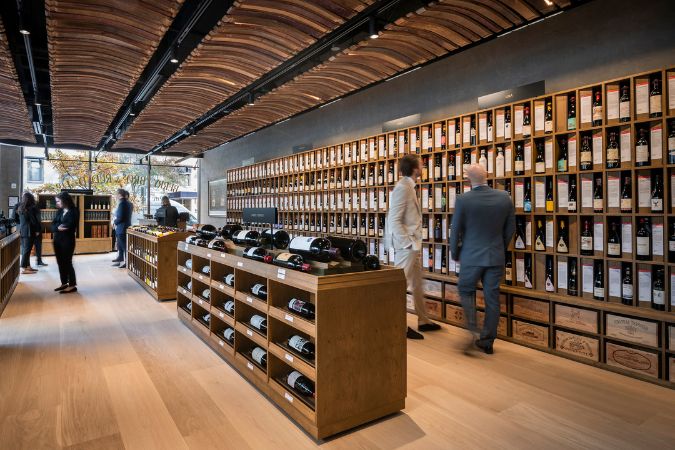
Staves from Au Bon Climat barrels also decorate the ceiling of the 1,550 square-foot retail space. The location on 17th street lies in the heart of Washington, just blocks from the White House. It’s prime real estate, easily accessible by car or public transport. To staff the new space, two London team members, Edward Richardson and Liam McKeown, made the move over the Atlantic, with Richardson heading up the all-important private client advisor team. Professionals from Washington’s vibrant dining scene have also been hired with the aim of bringing an element of hospitality to what Ritchie says has become a very transactional business after the pandemic.
Part of that hospitality will include events, both tasting-focused and more wine-adjacent. The shop has already hosted comparative tastings of vintage Champagne – 2002 squaring off against 2008 – and an in-depth look at 2005 Bordeaux. The plan is to host winery principals and winemakers, as one might expect, but also experts who might talk, for example, about the use of AI in vineyard management. ‘We’re aiming for learning while enjoying, rather than being “educational,”’ Ritchie says. ‘The idea is that every event should be fun.’
Berry Bros. & Rudd is not the first wine retailer to notice the advantages of the market in Washington D.C.; shops like Schneider’s, Calvert Woodley and MacArthur Beverages have enjoyed the advantages of D.C.’s relaxed regulations for many years. But observers say Berry Bros. & Rudd is nonetheless likely to make a mark. ‘The principal retail location for Berry Bros. and Rudd in London is right around the corner from Christie’s, where I used to work,’ says Master of Wine Charles Curtis. ‘I would often pop around the corner and look at their selection, particularly if I had to bring a bottle to dinner, and it was one of my favourite stops. I think that the opening in Washington D.C. is exciting news for all wine collectors in the U.S. – in the DC area and even beyond. For me, it’s always been an enormous, all-around resource for every aspect of wine enjoyment and wine collecting. I can only imagine that their operation in the US will be just as successful and just as important to people here in the States.’