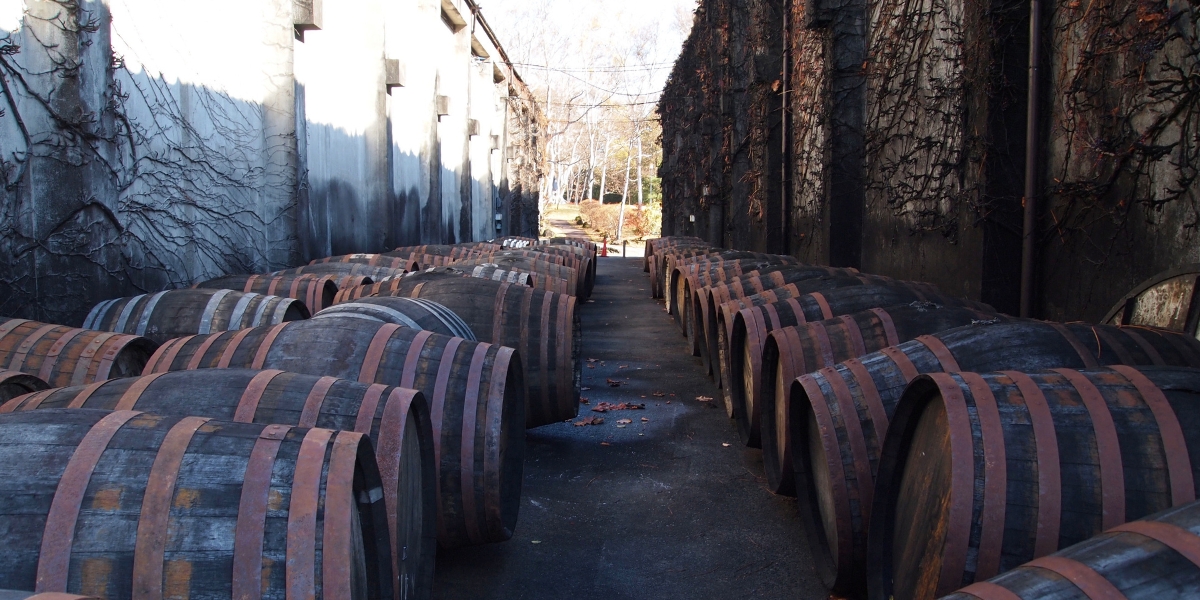
So this is it: the last of Karuizawa. Seventy years after a former winery in a spa town in Japan’s Southern Alps was converted into a distillery, and 25 years after that distillery’s four stills fell permanently silent, the final Karuizawa bottling is being released.
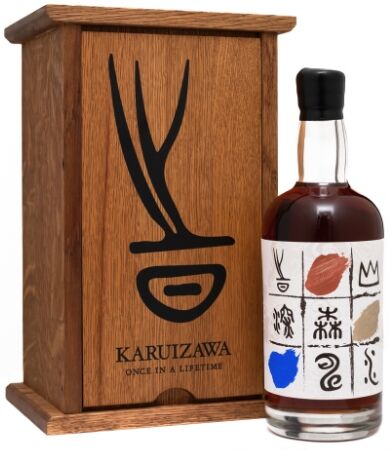
Karuizawa: Once in a Lifetime is a 145-bottle vatting of whiskies that span much of those 45 years of operation, combining liquid dating from the 1960s to 2000, and depicting the distillery’s many faces: the smoky grunt of the early years, the shapeshifting complexity of the 1980s (which those who know Karuizawa best consider its peak) and the more supple phase of the late period, when ex-Bourbon wood supplemented the distillery’s typical use of ex-sherry casks.
Karuizawa’s cult was built, initially at least, on liquid excellence as much as rarity or hype
Once in a Lifetime tells the story of Karuizawa in more than liquid form. When Number One Drinks Company, the distributor that brought Karuizawa to the world, first released single-cask bottlings from the distillery back in the mid-2000s, the pricing was – viewed through the lens of history – modest: maybe £75 a bottle.
Within a decade, as Karuizawa’s star rose, those same bottles began to fetch four-figure sums at auction. In March 2020, a bottle of Karuizawa 52-Year-Old Cask #5627 Zodiac Rat 1960 was bought at Sotheby’s London by an Asian private collector for £363,000, roughly twice its pre-sale estimate. This was Karuizawa’s zenith.
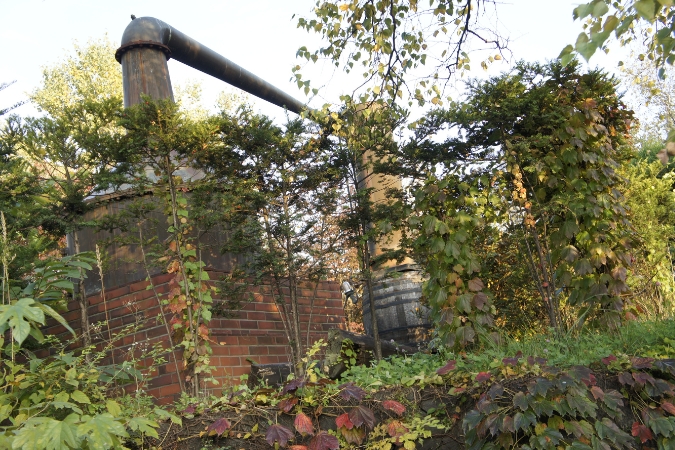
Marcin Miller of Number One Drinks Company describes Karuizawa: Once in a Lifetime as a ‘valedictory homage’ to the distillery’s 70th anniversary. The whisky, initially released via The Whisky Exchange on 13 November with other markets to follow, is priced at £19,500; in a rare whisky market chastened by recent losses, is that a lot of money? Objectively, yes. On another level, however, the price tag could be considerably higher; how do you place a value on the last iteration of something?
In common with all of the darlings of the rare whisky market – Port Ellen, Brora, old Macallan spring most readily to mind – Karuizawa’s cult was built, initially at least, on liquid excellence as much as rarity or hype. This, in turn, was the result of a confluence of factors: the use of Golden Promise barley with its textural and flavour qualities when the rest of the industry had moved on to more commercial strains; long fermentations, small stills, ex-sherry casks, the use of peat; but also the unique microclimate of Karuizawa, where huge annual temperature variations concentrated flavours and kept alcohol levels unusually high. ‘I’ve not come across anything like it,’ says Miller, who has spent decades tasting the world’s whiskies. ‘Once you’re familiar with Karuizawa and you have Karuizawa in a glass, it’s unlikely to be anything else. I don’t think anything presents or projects in quite the same manner.’
There’s a romantic element at play too, in the untimely demise of the distillery and its anonymity during its lifetime, despite being the first Japanese single malt to be released on the local market in 1976. Those who tasted those early bottlings saw nothing remarkable in Karuizawa; only with extended maturation did the liquid truly blossom, culminating in a famous 2007 tasting of cask samples undertaken by Miller, business partner David Croll and whisky writer Dave Broom. Of 69 samples tasted that day at Karuizawa, Miller would have happily bottled 68 as single-cask whiskies – a phenomenal hit rate.
Karuizawa’s long stint in the shadows only adds to the mystery and intrigue surrounding it. Since it spent most of its working life providing filling for blends, there was no archive or production records to tell its story. Instead, over the years, tantalising details have emerged here and there, such as the fact that former owner Mercian made its own Japanese ‘sherry’ and filled Karuizawa into the empty casks; or the revelation that some casks were made from Japanese oak but not the mizunara most commonly associated with whisky.
Number One Drinks Company has vatted Karuizawa before – there was an early Spirit of Asama bottling of liquid distilled in 1999-2000, and Karuizawa Five Decades 1960-2000 from a few years ago – but its legend was built largely on single-cask bottlings. For this final release, Miller and Croll wanted to relate a fuller story of the distillery’s lifespan, rather than the ‘snapshots’ offered by single casks. So liquid of the requisite quality or profile was put aside to wait for Once in a Lifetime; any whisky left over from the vatting process has since been drunk. The result, says Miller, is ‘the most complete Karuizawa’.
For this final release, Miller and Croll wanted to relate a fuller story of the distillery’s lifespan, rather than the ‘snapshots’ offered by single casks
The bottling, and the name, are inspired by the Japanese concept of ichigo ni ichido, the unique nature of each passing instant, perhaps best expressed by Dave Broom: ‘It is having the knowledge that everything is transient, and therefore to appreciate it fully we need to treasure each fleeting moment. You can observe it in the way in which a great bartender holds a spoon, how the sushi chef handles a knife, the potter understanding the feel and flow of clay.’
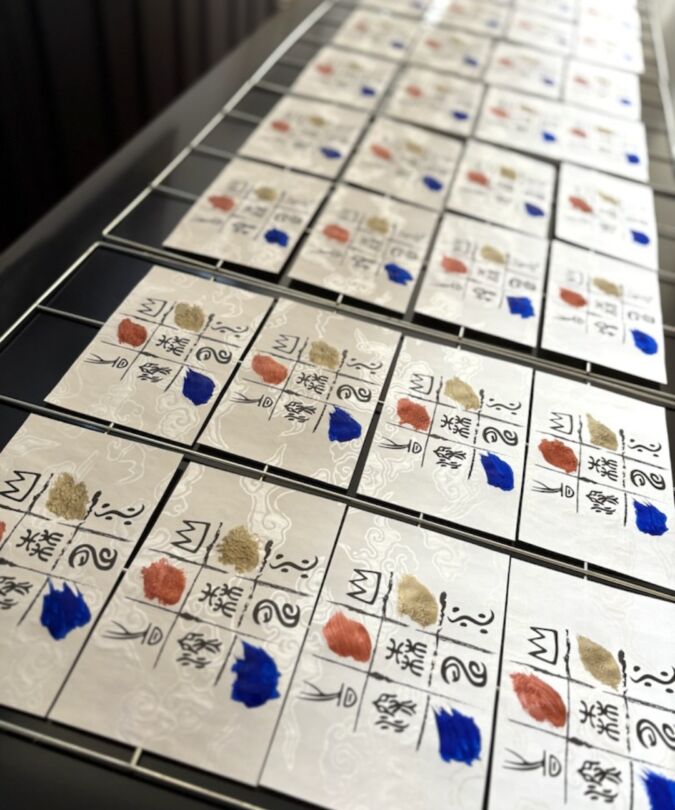
The packaging for Once in a Lifetime eschews the showier elements employed by many modern rare whisky releases for something that is consciously – to use a word somewhat jaded by overuse – artisanal: wooden boxes lined with cedar, using ex-Karuizawa staves for the lids, handcrafted in Kyoto; a nine-panel label designed by a Kyoto studio founded in 1624, with ancient pictographs that illustrate the key elements of Karuizawa’s story. Such is the nature of the karakami process used that no two of the washi labels are identical.
For all their undoubted beauty, bottle and box feel understated in the context of today’s saturated rare whisky market, where brands feel they have to make more and more noise in order to be heard above the din. Here, though, there is no need to shout: Karuizawa’s liquid speaks loudly enough.