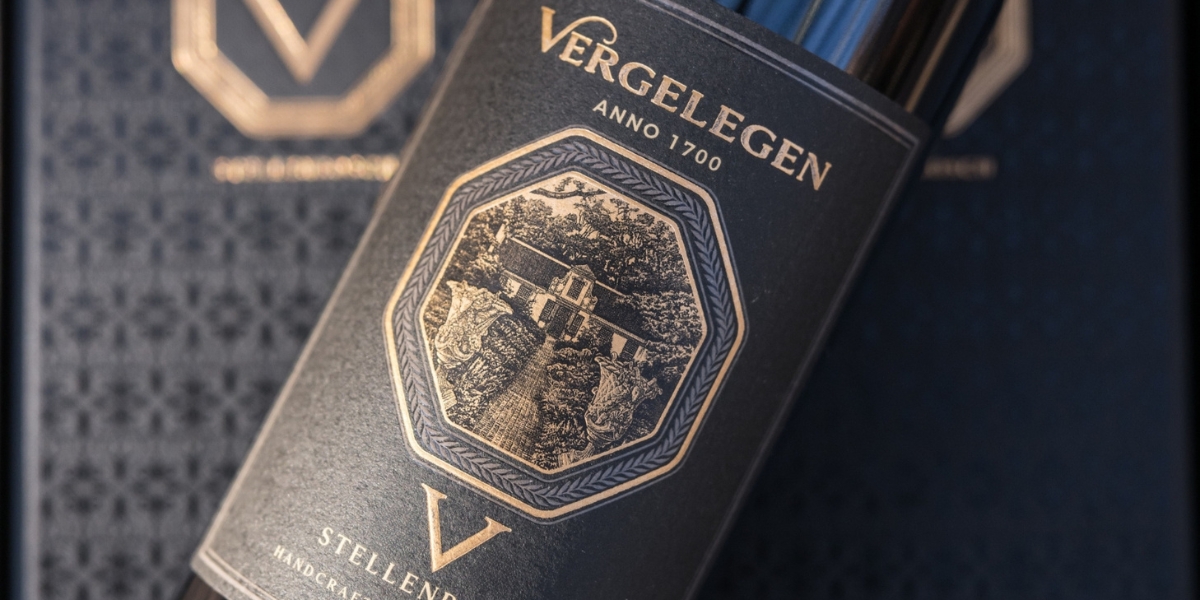
Vergelegen ‘V’, the producer’s flagship wine, was originally conceived as a specific-site selection of Cabernet Sauvignon; it was intended to be the very best expression of Cabernet from the estate, a wine that delivered incredible longevity in bottle. But of the 13 vintages tasted below, only four were 100% Cabernet, with the remainder Cabernet Sauvignon-dominant blends variously combined with Merlot and Cabernet Franc, plus occasional guest appearances from Petit Verdot and even Malbec. This vertical showed that the identity of V has been on something of a rollercoaster since the inaugural vintage in 2001.
The 2023 vintage marks a clear turning point. It was Luke O’Cuinneagain’s first at the property, having joined as cellarmaster and winemaker in September 2022 when his predecessor André Van Rensburg retired. Most of the wines I tasted were therefore made by Van Rensburg (with Michel Rolland consulting and blending with him from late 2013). With the 2023, O’Cuinneagain – whose CV includes 14 years at Glenelly Estate, as well as harvests at Château Angelus and Screaming Eagle – drew ‘a line in the sand’ and V will now return to what it was always meant to be: a specific selection of Cabernet.
This vertical showed that the identity of V has been on something of a rollercoaster since the inaugural vintage in 2001
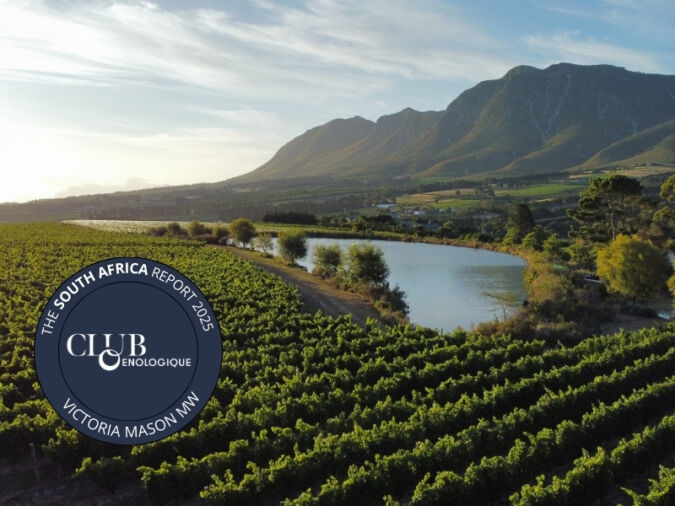
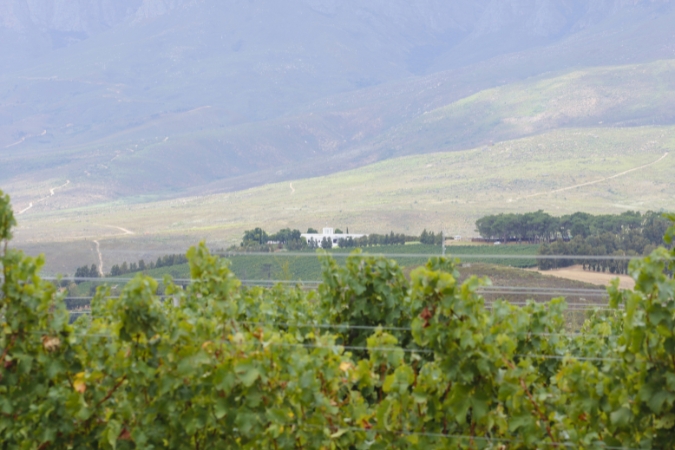
One of the Western Cape’s great historic wine estates, Vergelegen was established on the 1 February, 1700, by Willem Adriaan van der Stel, the oldest son of the first governor of the Dutch Cape Colony. In the south of Stellenbosch, nestled in the wilds on the far side of the Helderberg mountain, the site experiences the cooling influence of the Atlantic Ocean via nearby False Bay and, at times, fierce winds.
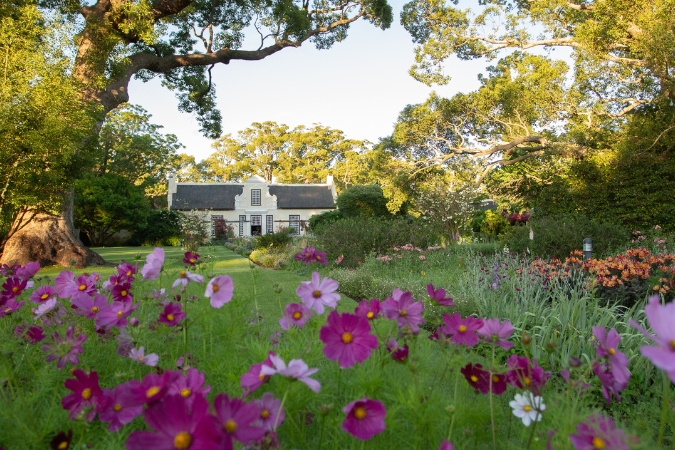
By 1706, Vergelegen was a mixed farm with cattle, sheep, orchards, orange groves and half a million vines but after its founder was exiled (under a cloud of corruption allegations) it was divided into four properties; the section surrounding the homestead retained the original name of Vergelegen – meaning ‘situated far away’ – and has passed through many hands in the intervening centuries. The wines produced at Vergelegen were reportedly highly rated in the 19th century but due to the changing whims of its different owners, the farm was without vines by 1962.
Vergelegen’s modern chapter began in 1987 when mining company Anglo American took the reins and began reestablishing vineyards, many of which were subsequently replanted in the 2000s under the direction of Van Rensburg; he was determined to eliminate leafroll virus. Today, the estate is well-known for a fastidious approach to maintaining its virus-free status, instilled by Van Rensburg, particularly important for the quality of late-ripening varieties like Cabernet Sauvignon.
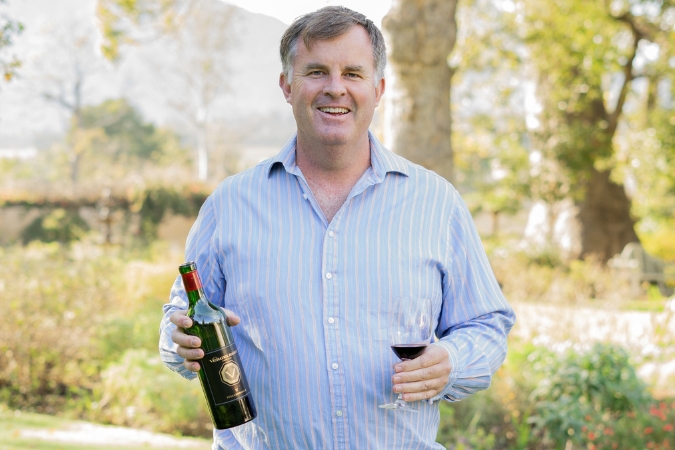
While Vergelegen’s vineyards comprise a multitude of different soil types, the Cabernet Sauvignon is planted on Clovelly, Hutton, Pinedene and Glenrosa. From 2023, V will be an expression of Cabernet on Pinedene and Glenrosa. I tasted the component parts of the 2024 vintage with O’Cuinneagain: the Cabernet on Pinedene was particularly distinctive, with an almost peppery spice and fine, granular tannin texture; the Cabernet on Glenrosa showed tannins that are denser, ‘yet have a natural polish about them,’ O’Cuinneagain notes. ‘There is a natural freshness to the Glenrosa, and an almost sappy (in a good way) character, with underlying power. The two soil expressions marry very well together and complement one another.’
V is an amalgamation of influences, from California to Bordeaux. The wine is clearly ambitious, with great structure and ample oak (often 100% new French oak), and built to go the distance, typically not for approaching before it is a decade old. It blends the ripe overtness we often associate with ‘New World’ Cabernets and Cabernet-based reds with a compelling savouriness and gravelly minerality. I didn’t find this savouriness in every vintage but when I did, I often articulated it as iodine-like or ferrous in nature.
Of the vintages I tasted from the noughties, the cooler 2007 was a highlight and I scored it the same as the acclaimed 2009 vintage. The full-bodied, richly concentrated, unashamedly showy Cabernet that 2009 presented was markedly distinct to the more slender, spicy and leafy 2007, which included 6% Merlot and 2% Cabernet Franc. The élevage of the pair was quite different, with 22 months in oak for 2009 compared with 16 months for 2007, and the 2009 was still glossy in its oak expression despite being 16 years old. They were difficult to identify as two vintages of the same wine.
Looking at the next decade, the 2015 and 2017 were both superb, as one might expect from these two superlative Cape vintages, yet – again – incredibly distinct from one another. While I loved the personality of the 2015 and its wild edge (O’Cuinneagain says ‘there’s a mongrel in 15’), the 2017 was my joint wine of the tasting (with 2023) for its purity of expression, chiselled tannins, elegance and poise.
The 2015 and 2017 Vergelegen V were both superb, as one might expect from these two superlative Cape vintages
This purity and precision was shared by the 2023 but I found a different energy to this latest (not yet released) vintage of V, which shows great sapidity and tension. It smells of the mountain, with fynbos-infused red and black fruit and a wild-flower perfume, and its substantial tannins are expertly managed. The oak plays a more discreet role here, even in a wine of this youth, evidencing one of the major changes O’Cuinneagain has implemented since his arrival: a shorter barrel maturation of around 12 months and then three months in foudre. Based on the finished 2023, and the sneak preview I got of the just-blended 2024, V’s future is very bright and we can now look forward to a continuity in identity absent in the first two decades of its existence.
Vergelegen V: 2003-2023
| Producer | Name | Vintage | Region | Subregion | ||
|---|---|---|---|---|---|---|
|
Vergelegen, V 2023
Coastal Region
, Stellenbosch
|
Vergelegen | V | 2023 | Coastal Region | Stellenbosch | |
|
Vergelegen, V 2022
Coastal Region
, Stellenbosch
|
Vergelegen | V | 2022 | Coastal Region | Stellenbosch | |
|
Vergelegen, V 2021
Coastal Region
, Stellenbosch
|
Vergelegen | V | 2021 | Coastal Region | Stellenbosch | |
|
Vergelegen, V 2019
Coastal Region
, Stellenbosch
|
Vergelegen | V | 2019 | Coastal Region | Stellenbosch | |
|
Vergelegen, V 2017
Coastal Region
, Stellenbosch
|
Vergelegen | V | 2017 | Coastal Region | Stellenbosch | |
|
Vergelegen, V 2015
Coastal Region
, Stellenbosch
|
Vergelegen | V | 2015 | Coastal Region | Stellenbosch | |
|
Vergelegen, V 2013
Coastal Region
, Stellenbosch
|
Vergelegen | V | 2013 | Coastal Region | Stellenbosch | |
|
Vergelegen, V 2012
Coastal Region
, Stellenbosch
|
Vergelegen | V | 2012 | Coastal Region | Stellenbosch | |
|
Vergelegen, V 2011
Coastal Region
, Stellenbosch
|
Vergelegen | V | 2011 | Coastal Region | Stellenbosch | |
|
Vergelegen, V 2009
Coastal Region
, Stellenbosch
|
Vergelegen | V | 2009 | Coastal Region | Stellenbosch | |
|
Vergelegen, V 2007
Coastal Region
, Stellenbosch
|
Vergelegen | V | 2007 | Coastal Region | Stellenbosch | |
|
Vergelegen, V 2005
Coastal Region
, Stellenbosch
|
Vergelegen | V | 2005 | Coastal Region | Stellenbosch | |
|
Vergelegen, V 2003
Coastal Region
, Stellenbosch
|
Vergelegen | V | 2003 | Coastal Region | Stellenbosch |