An indicator that a wine region’s following has progressed from fan club to cult is when the terroir chat shifts from the generally comprehensible (sunny slopes, chalky soils etc.) to the truly arcane. Once you have committed to memory the traits of something as unromantically named as Clone 667, you are in deep. However, Nebbiolo biotypes – a term that describes a genetically distinct variant that has arisen (usually naturally) within a variety, as opposed to clones, which are human-selected identical copies of a single ‘mother vine’ – have been part of the conversation in the Langhe for as long as anyone alive today can remember, dating at least to the 1920s identification of the prized biotype Michèt.
Fortunately for those newer to the Nebbiolo-sphere, there are few enough Nebbiolo biotypes in common use, with sufficiently distinctive traits, to make understanding them well worth a wine lover’s time. Michèt reigned supreme through the modernist-dominated years of the late 1990s and 2000s. Though known for its deeply coloured, concentrated wines, it was (perhaps ironically) more common among traditionalists than modernists: witness arch traditionalist Cappellano’s Pie Franco Michèt or G. Mascarello’s Monprivato, originally made with a proprietary Michèt clone. The modernists’ penchant for heavy green harvests, close row spacing and even the topiary-like pruning of individual bunches could perhaps be seen as an attempt to replicate Michèt’s natural concentration.
The prestige of purely, or predominantly, Michèt-based bottlings persisted despite the discovery that Michèt was, in fact, the ubiquitous Lampia biotype infected with grapevine fanleaf virus. If anything, this glamourised Michèt among some producers; I can recall a visit in the mid-2010s with an agronomist who showed me his virus-infected plot with the renegade glee of an American cigar aficionado flashing some Padron 35s. Though ultimately detrimental to the vines’ health, the infection made the bunches smaller and lowered yields, concentrating polyphenols into an inky hue that was a hallmark of that era’s most popular Barolo.
Read more: The Barolo Report 2024
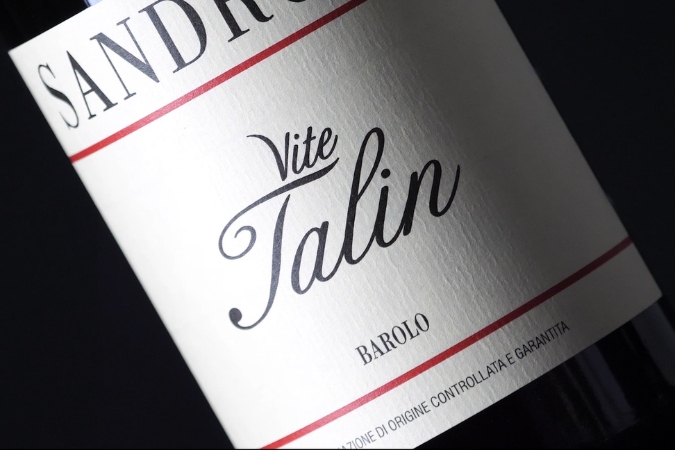
Today’s vintners have soured somewhat on Michèt, its once-prized traits decidedly less modish, its low yields now more of a nuisance than a USP, particularly as the vineyards grow steadily into middle and old age. The fact that it is not officially registered for propagation hasn’t helped its case (this was why many modernists tended to eschew it). Then there is the climate: Valter Fissore of Cogno says Michèt adapts better to medium or low altitude hills, preferring cooler environments and typically giving its best in cold years. Looking ahead, he says, he would tend to favour other biotypes. Piera Rinaldi of F. Rinaldi says her uncle Luciano was convinced that the Michèt bunch is too tight and compact, making it susceptible to rot after rain, while the sparser bunches of Lampia facilitate complete drying. Still, the search for a clone with Michèt-like concentration and structure without its associated ills has driven such obsessive journeys as Luciano Sandrone’s isolation of the clone that now forms the base of Vite Talin, a much more brooding, slow-maturing wine than the rest of its lineup.
At the other end of the inevitable pendulum swing lies Rosé, the darling of what might be called the Langhe’s ‘post-modern’ movement, which embraced Nebbiolo’s grace and perfume rather than its (natural) robustness or (rather less natural) darkness and fruit. Rosé is the postmodernists’ Nebbiolo taken to its logical extreme: lighter hued and even more perfumed, with a nose like a basketful of just-wilted roses. Valter Fissore of Cogno is its most outspoken advocate; his Vigna Elena, from a single hectare of Rosé planted in 1990 when he and his late father-in-law Elvio Cogno purchased the estate in the famed Ravera cru, is pure, quintessential Rosé: more a fragrance than a mere comestible.
However, several factors will likely deny Rosé the fervour once engendered by Michèt. The first is the inconvenient fact that it isn’t really a biotype of Nebbiolo at all, as affirmed in 2000 by renowned grapevine geneticist Anna Schneider. While this hasn’t yet prompted the authorities to forbid its inclusion in Barolo or Barbaresco, a massive wave of planting might force their hands. More pressing is the fact that while gorgeous, Rosé is rather fragile. Its lower acidity, softer tannins and higher alcohol have made even its boosters a little hesitant to go all in on it. Luca Sandrone says they are gradually reducing their use of Rosé, both for its higher alcohol and what they consider its relatively lower suitability to the current more extreme climatic conditions, even though it is – as Fissore notes – later ripening than Nebbiolo, which helps it retain its fragrance.
The experimental spirit provoked by the climate crisis will no doubt turn up more genetic variants
In fact, the biotype of the moment, if there still is such a thing, is arguably Lampia. If Michèt is the skinny jean and Rosé the Y2K wide leg, Lampia is the Levi’s 501 of Nebbiolo biotypes – not held in low regard so much as taken for granted (then there is Bolla, the polyester trackpant of biotypes held in such low regard that it was basically uprooted out of existence). Piera Rinaldi says their recently replanted vineyards are almost all Lampia now. Even Cogno uses more Lampia than any other biotype; Fissore says it best contributes finesse and balance to their Barolos.
Finally, though clonal selection remains dominant in the Langhe for its more predictable yields, organoleptic profiles and disease mitigation, the resurgence of massale selection has complicated the biotype discussion. In some cases, producers’ selections are limited to a single biotype – for instance, although F. Rinaldi’s replanting of their treasured Brunate and Cannubi plots was done by massale selection, all the vines collected were Lampia. In other cases, the biodiversity is substantially greater. At Paolo Scavino, Enrico Scavino conducted his first massale selection in 1999 and then used that approach for all subsequent re-plantings. When they were finally able to acquire a plot in Bussia, they were surprised by the astonishing array of clones planted there, some likely from the Valle d’Aosta or Valtellina. Two subsequent years of making wine and removing the vines that gave overripe grapes finally left an assortment with intense perfume but fresh acidity.
In fact, these other Nebbiolo production areas have become a pool for producers keen to keep pushing the genetic envelope. Enrico Serafino recently released the first Langhe Nebbiolo made exclusively from the Picotener biotype (typically grown in the Valle d’Aosta, where it produces elegant, alpine Nebbiolo). Its low yields and vigour, broad aromatic spectrum, resistance to severe climatic conditions and deeply coloured wines are all potential advantages. The experimental spirit provoked by the climate crisis will no doubt turn up more genetic variants; the conversation may get horrendously geeky but the wines will hopefully remain excellent.
Nebbiolo biotypes: four distinct Barolo wines
| Producer | Name | Vintage | Region | Subregion | ||
|---|---|---|---|---|---|---|
|
Elvio Cogno, Barolo Riserva Ravera Vigna Elena 2019
Piedmont
, Barolo DOCG
|
Elvio Cogno | Barolo Riserva Ravera Vigna Elena | 2019 | Piedmont | Barolo DOCG | |
|
Luciano Sandrone, Barolo Vite Talin 2017
Piedmont
, Barolo DOCG
|
Luciano Sandrone | Barolo Vite Talin | 2017 | Piedmont | Barolo DOCG | |
|
Paolo Scavino, Barolo Bussia Vigna Fantini 2021
Piedmont
, Barolo DOCG
|
Paolo Scavino | Barolo Bussia Vigna Fantini | 2021 | Piedmont | Barolo DOCG | |
|
Francesco Rinaldi & Figli, Barolo Brunate 2020
Piedmont
, Barolo DOCG
|
Francesco Rinaldi & Figli | Barolo Brunate | 2020 | Piedmont | Barolo DOCG |