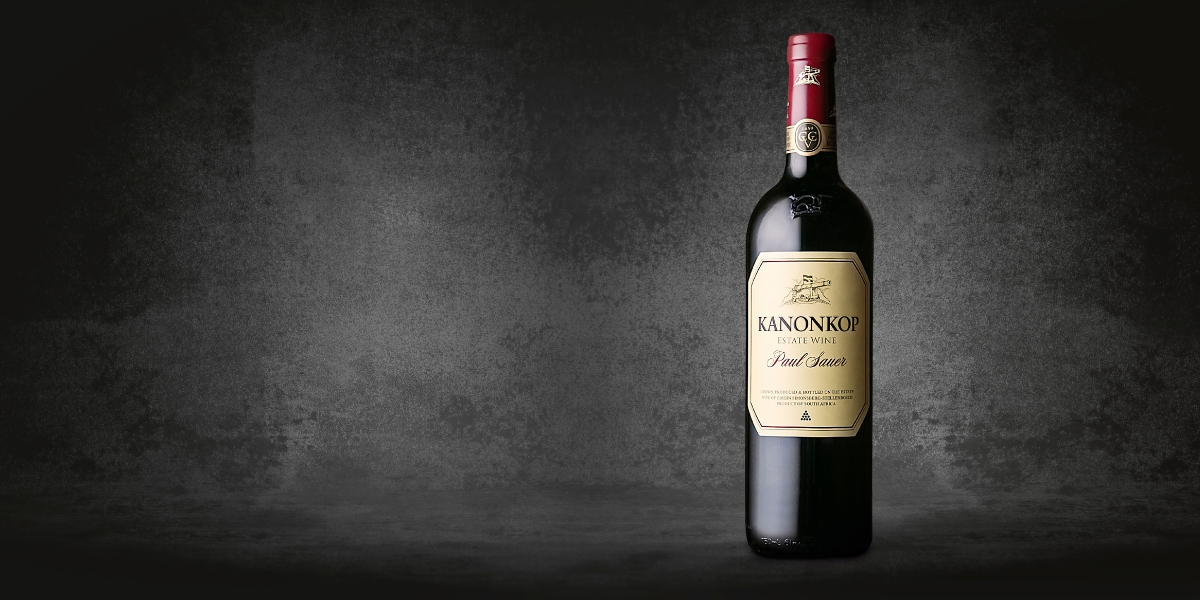
When Stellenbosch stalwart Kanonkop celebrated its 50th anniversary in 2023, there had been just three winemakers there in half a century: the late Jan ‘Boland’ Coetzee, Beyers Truter and Abrie Beeslaar. The winemakers’ long tenures, coupled with the unwavering vision of the owners, the Krige family, have ingrained a culture of uncompromising excellence and remarkable consistency at Kanonkop.
Brothers Johann and Paul Krige are the current custodians and one of Johann’s favourite phrases is: ‘we don’t reinvent the wheel here.’ I’ve heard him (and his winemakers) say this multiple times over the years and tasting through five decades of Paul Sauer this summer proved it with aplomb. There is a connecting thread, more elusive in the 1983 – which came from different vineyard blocks and is now drawing to a graceful end of its life – but so clearly weaving its way through the vintages from the ’90s and ’00s, right through to the most recent releases.
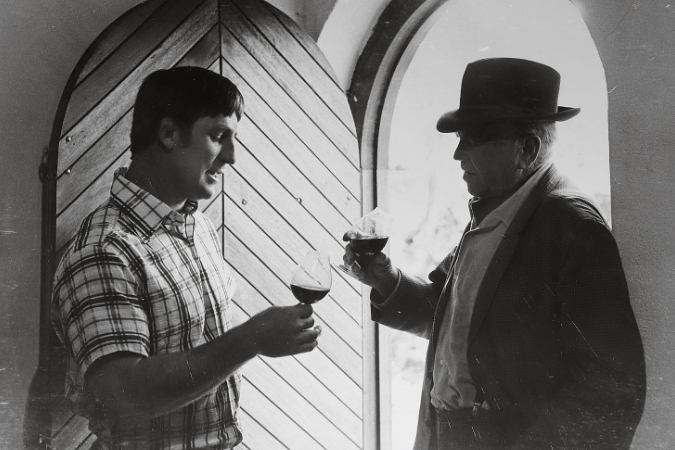
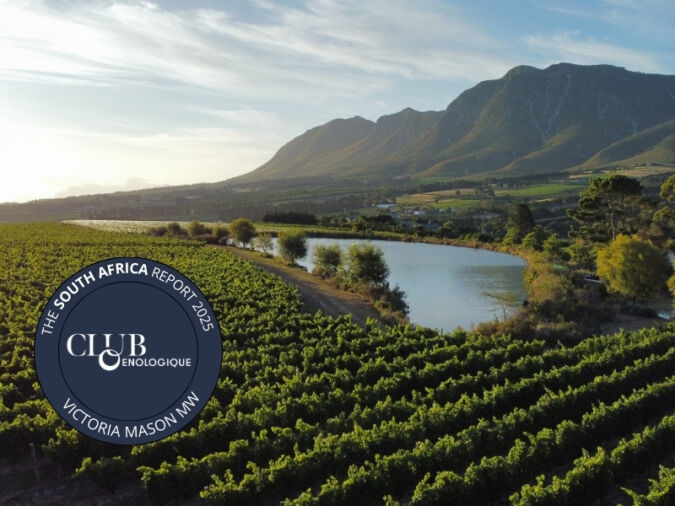
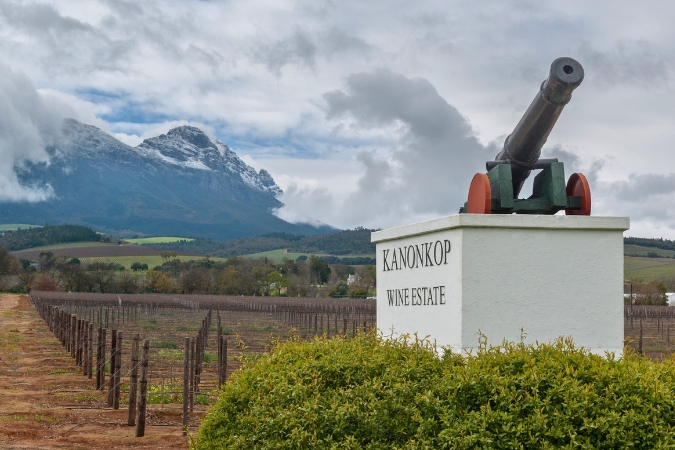
Situated on the foothills of the imposing Simonsberg mountain, this fourth-generation family estate is one of the Cape’s blue-chip names, making only red wines with a single-minded focus that is comparable to the best of classed growth Bordeaux. Paul Sauer is – and has been since its inception – a blend of predominantly Cabernet Sauvignon with Cabernet Franc and Merlot. Named after Johann and Paul’s grandfather, a politician and a farmer who made a huge contribution to South African wine culture, Paul Sauer debuted with the 1981 vintage, making it one of the Cape’s first Bordeaux-style blends.
Kanonkop makes red wines with a single-minded focus that is comparable to the best of classed growth Bordeaux
Further proving Krige’s point about continuity, the vinification remains effectively unchanged since Truter’s days, with the open concrete fermentation tanks dating back to the 1940s. Since the mid-1990s, Paul Sauer has been aged for 24 months in 100% new French oak, though the earliest vintages saw much less new wood; the Kriges sold the 1986 to 1992 vintages of Paul Sauer as Wine Futures on the South African market to generate the cash for new barrels. The absence of radical change has not meant a lack of improvement, however, as demonstrated with the change of press in 2014 and the introduction of optical sorting in 2015. Marginal gains are now the name of the game at Kanonkop.
Today, 80-90% of the fruit for Paul Sauer always comes from the same block of vines, planted from 1986 onwards. This block is on the lowest part of the property, sheltered from the wind, where cold air pools; it is ‘completely different’ to the rest of the farm, says Krige. It was formerly pasture for cattle and was always seen as having lesser soils, soils that also got waterlogged in winter thanks to a three-metre-deep bank of clay. Both the moisture retention and the cooling effect of the clay have in fact proved beneficial for growing vines and Krige marvels at the level of ripeness they achieve in this plot at relatively low alcohol levels.
Read more: The South Africa Report 2025
In late 2024, Francois van Zyl became Kanonkop’s fourth head winemaker, having worked at neighbouring Laibach (now Ladybird Vineyards) since 2000. He worked three vintages alongside Beeslaar before taking the reins. Van Zyl – a carpenter’s son – recalls tasting the 1991 vintage of Paul Sauer in 1996 and consequently resigning from his job renting out pool tables, jukeboxes and fruit machines; he enrolled to study at Elsenburg Agricultural Training Institute as an aspiring winemaker. It was thrilling to taste Van Zyl’s epiphany wine with him in this vertical and, almost 20 years after his first taste, it is still delicious.
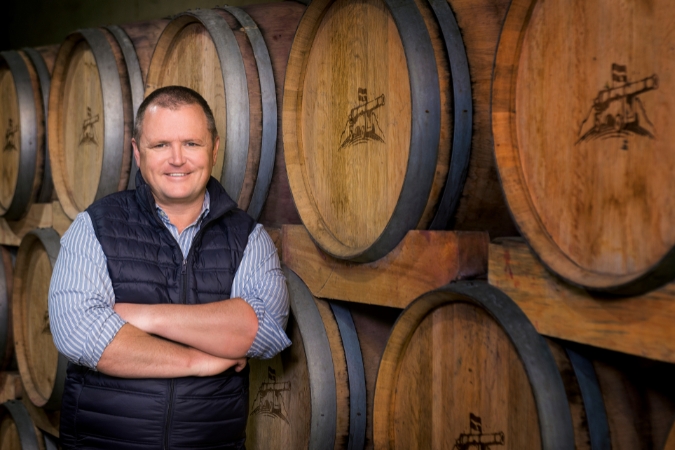
When handing over to Van Zyl, Beeslaar told him that his ‘biggest job’ was ‘to make sure Paul Sauer doesn’t lose its character.’ Van Zyl defines that character as the ‘black fruit, rose petal and cassis explosion’ that comes with bottle age. ‘The tannins are very elegant, almost powdery, and always supported by a linear, mouth-watering acidity,’ he continues. ‘When you’ve got it right, the wine shows its vintage, as well as its Paul Sauer-ness.’ Like Beeslaar, Van Zyl is modest and understated but has the quiet confidence of knowing exactly what Kanonkop’s – and Paul Sauer’s – identity is.
The 2009 is so complete and coherent, and absolutely in its prime
The 2009 was my wine of the tasting for what it is today – so complete and coherent, and absolutely in its prime. Powerful and dramatic, yet undeniably elegant, it sets the tone for modern-day Paul Sauer. Closely following the 2009, and on a par with it for power, weight and multi-dimensionality, was the majestic 2015. If you have the 2015 in your cellar, resist the temptation to drink it any time soon, as it’s still incredibly young and has much more to give. The 2001 was one of the most important wines in the tasting; at 24 years’ old, it’s a showstopper and has at least another six years of amazing drinking to go, perfectly demonstrating Paul Sauer’s ageing potential.
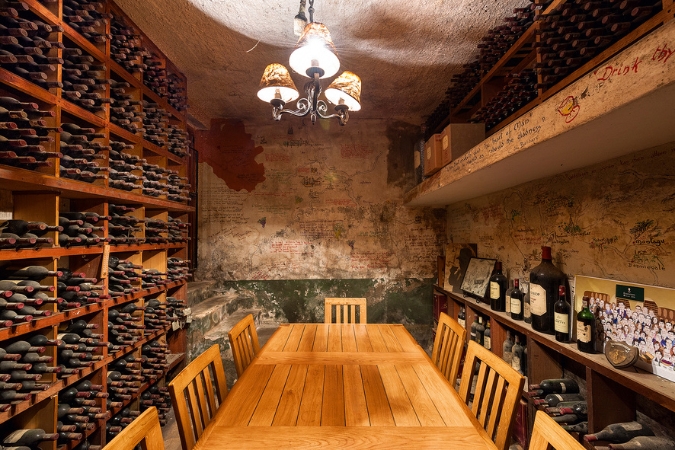
Paul Sauer is one of very few South African wines for which there is a genuine secondary market, thanks to a track record for superb quality with proven ageing potential and relatively high volumes (production today can reach 50,000 bottles in the most generous vintages) – not high in the context of Bordeaux but high compared with many of South Africa’s other sought-after labels. In 2018, the 2015 vintage was the first South African wine to be awarded a perfect 100-point score by critic and Master of Wine Tim Atkin and its market value is now 550% higher than the price of the current release.
Kanonkop is such a prominent pillar of the South African wine industry that its history seems to stretch back much further than the ‘70s. Domestically, the estate has an unquestionable reputation as a ‘First Growth’ and recognition on the world stage goes from strength to strength; this tasting ably demonstrates why both the estate and Paul Sauer have become so respected.
Tasting notes and scores are available to all registered users of The Collection, the online home of our premium wine and spirits content. To register for free, click here.
Kanonkop Paul Sauer 1983-2022
| Producer | Name | Vintage | Region | Subregion | ||
|---|---|---|---|---|---|---|
|
Kanonkop, Paul Sauer 2022
Coastal Region
, Simonsberg-Stellenbosch
|
Kanonkop | Paul Sauer | 2022 | Coastal Region | Simonsberg-Stellenbosch | |
|
Kanonkop, Paul Sauer 2021
Coastal Region
, Simonsberg-Stellenbosch
|
Kanonkop | Paul Sauer | 2021 | Coastal Region | Simonsberg-Stellenbosch | |
|
Kanonkop, Paul Sauer 2020
Coastal Region
, Simonsberg-Stellenbosch
|
Kanonkop | Paul Sauer | 2020 | Coastal Region | Simonsberg-Stellenbosch | |
|
Kanonkop, Paul Sauer 2019
Coastal Region
, Simonsberg-Stellenbosch
|
Kanonkop | Paul Sauer | 2019 | Coastal Region | Simonsberg-Stellenbosch | |
|
Kanonkop, Paul Sauer 2017
Coastal Region
, Simonsberg-Stellenbosch
|
Kanonkop | Paul Sauer | 2017 | Coastal Region | Simonsberg-Stellenbosch | |
|
Kanonkop, Paul Sauer 2015
Coastal Region
, Simonsberg-Stellenbosch
|
Kanonkop | Paul Sauer | 2015 | Coastal Region | Simonsberg-Stellenbosch | |
|
Kanonkop, Paul Sauer 2009
Coastal Region
, Simonsberg-Stellenbosch
|
Kanonkop | Paul Sauer | 2009 | Coastal Region | Simonsberg-Stellenbosch | |
|
Kanonkop, Paul Sauer 2004
Coastal Region
, Simonsberg-Stellenbosch
|
Kanonkop | Paul Sauer | 2004 | Coastal Region | Simonsberg-Stellenbosch | |
|
Kanonkop, Paul Sauer 2001
Coastal Region
, Simonsberg-Stellenbosch
|
Kanonkop | Paul Sauer | 2001 | Coastal Region | Simonsberg-Stellenbosch | |
|
Kanonkop, Paul Sauer 1997
Coastal Region
, Simonsberg-Stellenbosch
|
Kanonkop | Paul Sauer | 1997 | Coastal Region | Simonsberg-Stellenbosch | |
|
Kanonkop, Paul Sauer 1991
Coastal Region
, Simonsberg-Stellenbosch
|
Kanonkop | Paul Sauer | 1991 | Coastal Region | Simonsberg-Stellenbosch | |
|
Kanonkop, Paul Sauer 1983
Coastal Region
, Simonsberg-Stellenbosch
|
Kanonkop | Paul Sauer | 1983 | Coastal Region | Simonsberg-Stellenbosch |