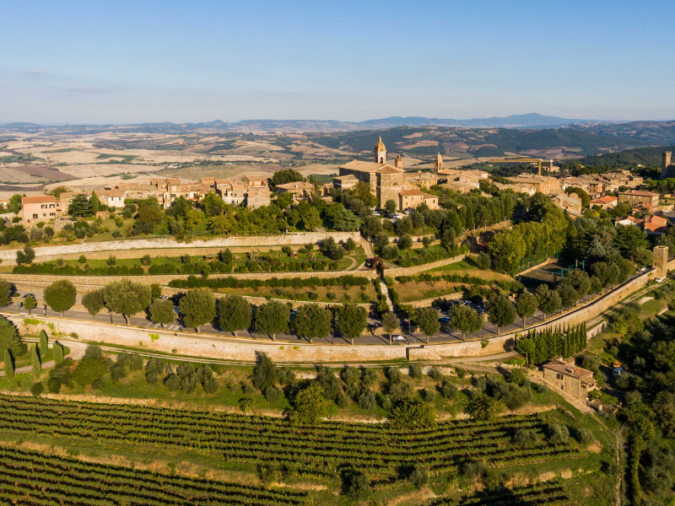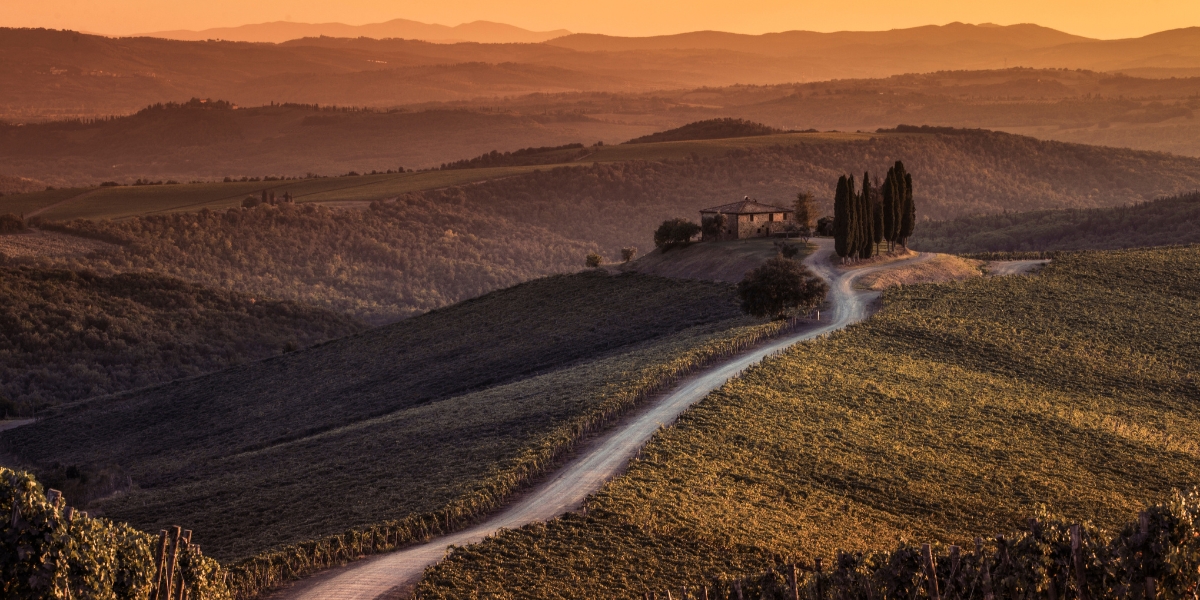
The winemaking at Castiglion del Bosco is dedicated to realising Sangiovese’s potential in its vineyards to the northwest of Montalcino. All the estate’s cuvées share a common character, yet each has its own personality, a quality achieved through a philosophy that showcases both terroir and vintage. The careful treatment of each parcel of fruit within the estate’s 62 hectares of organic vineyards allows the idiosyncrasies of each plot to shine. Best embodying the true essence of this philosophy are Castiglion del Bosco’s flagship Brunello di Montalcino and the Gauggiole Rosso di Montalcino.
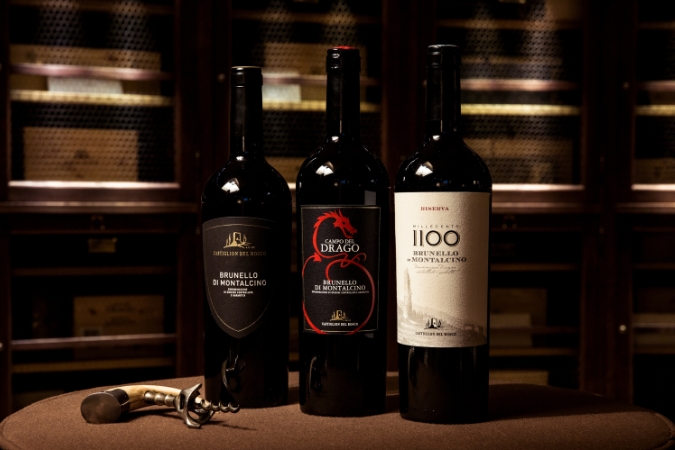
Brunello di Montalcino
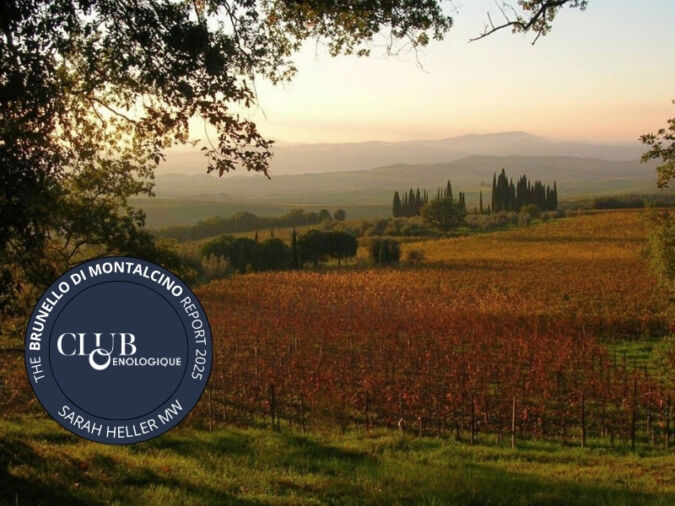
Castiglion del Bosco’s flagship Brunello di Montalcino originates in the Capanna vineyards, where environmental and geological features – from natural isolation to high altitude, along with soils rich in clay schist – imbue the wine with trademark elegance. The Capanna vineyard runs along the ridge of the hill like a vast, green river, facing southwest, at altitudes ranging from 250 to 460 metres. Its 40 hectares are divided into several parcels that begin with the Campo del Drago at the hilltop and stretch down to its lower slopes.
The choice of the Capanna vineyard as the foundation for Castiglion del Bosco’s flagship Brunello is no coincidence. Vines there are subject to some stress, fostering a complexity in the wine that gives depth and structure. To maximise this potential, the different parcels from the Capanna vineyard are harvested and vinified separately, remaining distinct throughout the winemaking process. This approach helps highlight the full character of the parcels, each distinguished by its unique orientation, altitude, soil and microclimate.
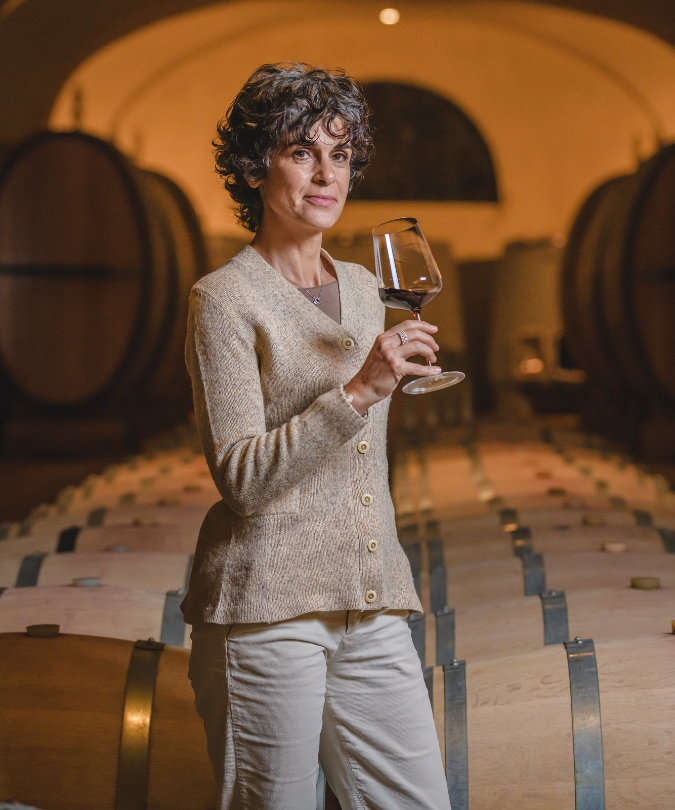
The grape must and solids are left to macerate together for around 18 days to extract the best in texture, flavour, and aroma from the berries. Following the fermentation of the must, the wine’s maturation lasts for 24 months and takes place in barrels of varying sizes, including barriques but with a preference for larger botti of 30 to 50 hectolitres. After the first 18 months of the process, winemaker Cecilia Leoneschi begins to shape what will become the final Brunello blend. The wine is released five years after harvest, by which time vibrant aromas of ripe berries, pepper and sweet cinnamon have developed and are lifted by delicate notes of white flowers. On the palate, Castiglion del Bosco aims for a Brunello with richness, balance, bright acidity and fine tannins. The result is a surprisingly approachable wine that nonetheless shows impressive structure from release.
Gauggiole Rosso di Montalcino
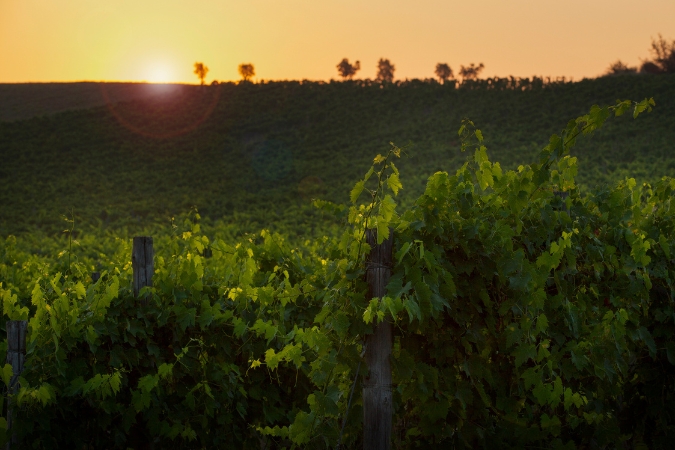
Rather than creating a ‘smaller’ Brunello, Castiglion del Bosco’s Gauggiole is a Rosso di Montalcino with its own distinct style and identity. The fruit for Gauggiole comes from a selection of the finest grapes grown in the eponymous 20-hectare vineyard situated in the north-eastern part of the estate, at altitudes of 250 to 350 metres above sea level. The site’s north-eastern exposure moderates the power and heat found in these lower-altitude vineyards, giving the grapes the potential to develop beautifully perfumed nuances.
The winemaking team gives Gauggiole extra time in the cellar, beyond official requirements, to reach optimal maturity for release. Most of the wine spends six months in stainless steel vats to preserve its freshness, while a small portion undergoes some ageing in wood. It’s brought together again to rest for 18 months in unlined cement vats to further enhance the grapes’ primary aromas before a final four months in bottle. On the nose, the Gauggiole Rosso di Montalcino opens with delicate notes of fresh flowers, violet, and rosemary. On the palate, there is structure supported by integrated tannins and acidity. The fruit’s richness is balanced by freshness and energy.
Like the Brunello, the Gauggiole is representative of the philosophy and ethos of Castiglion del Bosco: careful attention given to the vines, the separate harvest and vinification of each plot, and every decision made in the vineyard and winery with the intention of expressing the power and elegance of the Sangiovese grape.