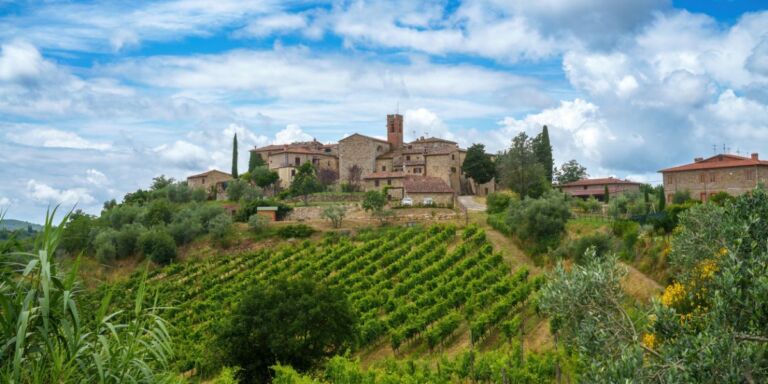
It is a dramatic drive from the rocky outcrops of Marseille up to the Provence Alps. Sweeping grain fields and wide, languid rivers transform into hilly uplands as you climb past shimmering mountain lakes and vertigo-inducing mountain-valley drops. My destination is Distillerie Lachanenche but the varied landscapes en route showcase exactly why French whisky makers are so distinct – and why the category is undoubtedly so exciting right now.
The concept of French whisky raises eyebrows among some staunchly traditionalist single-malt drinkers but the country has been quietly perfecting its production for more than 40 years. In 1983, Warenghem Distillery started making single malt in Breton and today, its flagship Armorik brand boasts some lofty age statements – a 16-year-old single cask has been released – and is considered the grande dame of French whisky. Since Armorik was founded, more than 100 whisky makers have fired up their stills across France and they are producing some sensational spirits. A recent showstopper tasted at the 2025 IWSC Spirits Judging was Le Breuil’s Sherry Oloroso Single Malt Whisky. Our panel was so enamoured that it awarded an impressive 96 points.
In some ways, the French expansion into whisky distilling isn’t surprising. The country’s heritage as a winemaking nation, as well as its expertise in all kinds of brandy and fruit-spirit production, makes it the perfect candidate for a move into whisky. Couple that with a near-insatiable thirst for Scotch – France is the largest importer globally by volume – and it makes sense that home-grown distillers would thrive.
By the mid-2010s, momentum was building. The world was slowly waking up to France’s potential as a whisky-producing country. In 2016, 25 distilleries and eight bottlers banded together to form the Federation du Whisky de France. Fast forward to today, and the consortium is working on an established definition, or Geographical Indication (GI), for French whisky, that, in legal terms at least, would put it on a similar footing to Scotch, Irish whiskey and American single malt. French whisky has arrived – and drinks lovers in the know are lapping it up.
It was against this backdrop that I undertook a trip to Provence’s smaller whisky distilleries, curious to see how flavour was being crafted, harnessed and interpreted by distillers slightly off the beaten track. In Haute Provence, in the shadow of the Southern Alps and the dominion of ski resorts, it is clear that there is a commitment to push forward distilling expertise that runs generations deep.
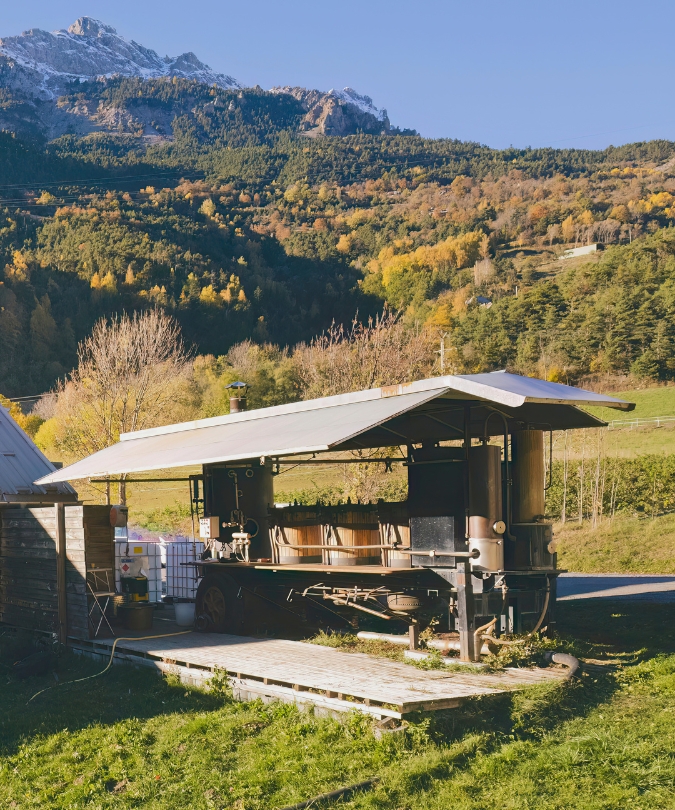
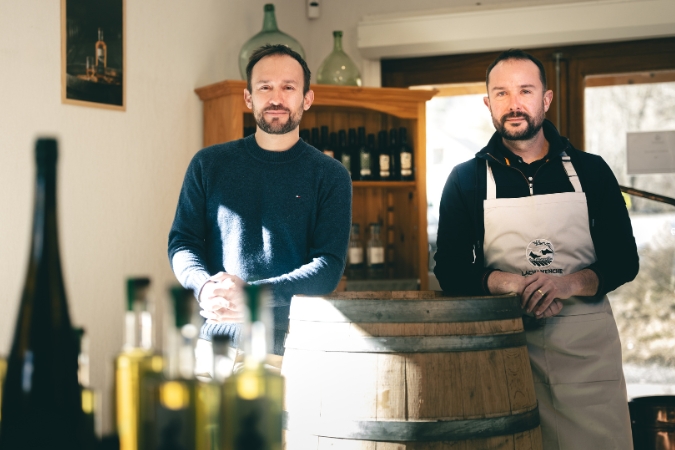
‘My parents first produced raspberry liqueur,’ Jérôme Million Rousseau tells me, as I step inside Distillerie Lachanenche. Whisky-making is a relatively new phenomenon here, pioneered by Jérôme and his brother Benoit. The pair took the reins in 2019, continuing a commitment to organic, additive-free spirits production. Their first move? To start using the decades-old, Armagnac-style outdoor alembic system to make French whisky. In the south west, it would be a fairly common sight to see these nomadic stills wheeled around smaller producers at harvest time. But I’ve never seen it used for whisky before.
Lachanenche partners with a nearby brewery to source its wash, which is made from local barley and transported fresh up the mountain just before a distillation run. Jérôme takes me outside to see the distillation setup, surrounded by alpine wildflowers. The only sound is horses grazing nearby. It’s too hot to run the vats and a small column still on the day I arrive, so they use it to cook sausages instead. ‘It’s traditional,’ he says in explanation.
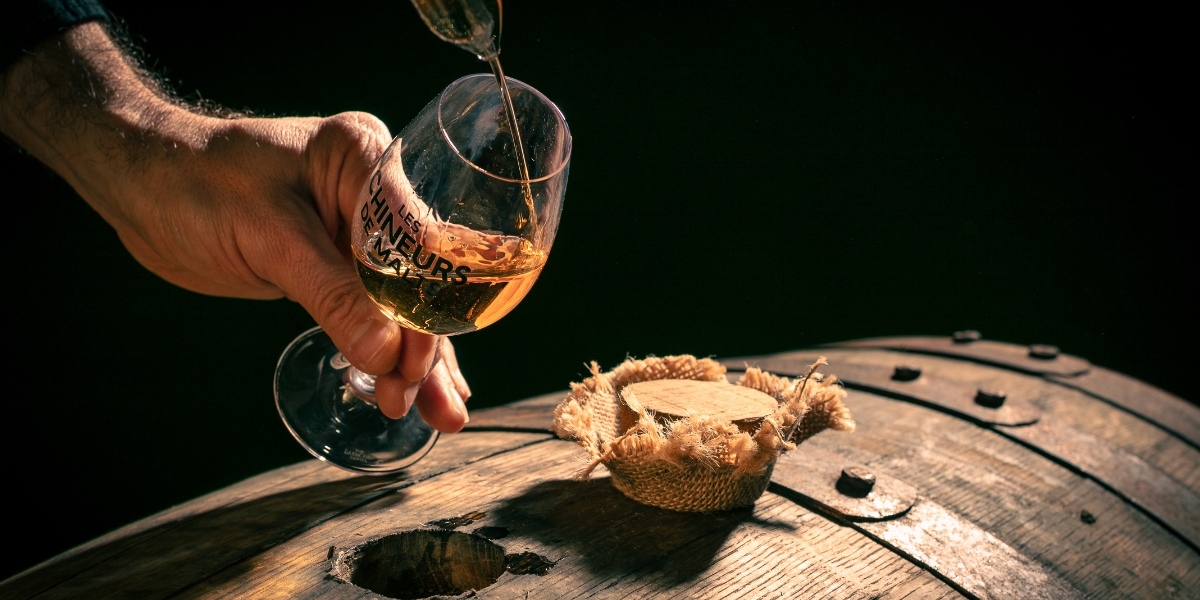
What isn’t traditional is the maturation regime at Lachanenche. We hop in his car and head back down the mountain, past the same section of road that induced the heady vertigo. But we don’t stop at warehousing. Instead, a disused railway tunnel houses the ageing casks. There are finishes with Madeira and Nebbiolo, among others. We sample both straight from the cask: young, vibrant whiskies awash with stone fruit and succulent honey notes. Then I’m allowed to sample a Sauternes cask, the very first one filled in 2019. It’s a special moment.
Lachanenche’s only commercially available release at present is a single malt called Laverq, named after the valley where the tunnel warehouse burrows underneath the mountain. It’s bursting with apricot and pear notes, young but full of promise. Jérôme and the team are ambitious. There are plans to build a small maltings in the area, a cooperative-type project supported by a cohort of local brewers. When that arrives, they’ll explore making their own wash. There’s a lot more to come from a distiller already doing things its own way.
There’s a pride that speaks to a growing confidence that’s building across the country’s distilling community
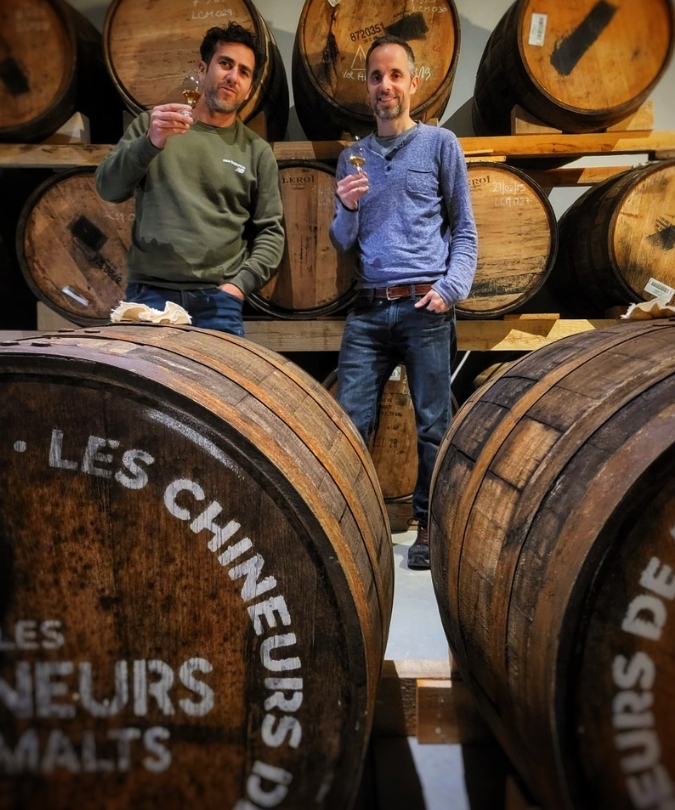
If Lachanenche is informed by an ancestry of fruit-spirit distillation, then Les Chineurs de Malts, a distillery set up in 2020 just a stone’s throw from the town of L’Isle-sur-la-Sorgue, is steeped in wine. Founded by former Châteauneuf-du-Pape oenologist Jean-Yves Pomaret and business partner Loïc Puviland, it’s a distillery that wears its vine know-how as a badge of honour. The pair embarked on a tour of Scotland to understand distilling and spent time studying in Cognac, too. Learning ‘was our first job,’ Jean-Yves tells me.
‘The distillery isn’t big but it’s perfect for us,’ he says as he takes me from the visitor centre round to the production area. While 80% of what they make is unpeated, crafted from barley harvested from a nearby plot and malted locally, sacks of imported Simpsons Malt provide the peated grain. But it’s after the tiny 2,500-litre mash tun that things really get interesting.
Along one side of the distillery is a series of oak wine barrels. These are not for maturation but to serve as fermentation vessels. For three to five days, depending on the time of year, these vessels hold the fermenting wash. Once complete, the barrel-loads are combined in a metal tank prior to distillation to protect it from bacterial contamination. ‘We have a lot of respect for Scotland and it’s the model for Les Chineurs de Malts,’ Pomaret explains. ‘But I’m using my wine story too.’
This grape-based philosophy continues in the still house. The space is unveiled through a set of double doors with a flourish: centre stage is a cobalt blue-clad Cognac alembic and worm tub condenser with 20 years of service under its belt. Pomaret tells me the still head was made new, the shape a signature for the distillery.
‘I think we are too young to say there’s a signature style,’ he acknowledges, with Les Chineurs de Malts less than five years into production. But he’s excited about the possibilities. ‘We test after we produce all new make – it’s crazy because there’s loads of mango and passion fruit.’ He’s excited to see how it develops with age.
During spring and autumn, the distillery makes about three barrels a week, with all of them maturing on-site. We dive into some cask samples before tasting through the core range, which spans inaugural release Réal with its elegant floral notes, experimental range Insulae, and one-offs bottled under the Magic Cask range. The warehouse holds ex-bourbon, some Oloroso and Pedro Ximénez sherry butts, but most notably an array of biodynamic French white wine barrels, almost exclusively from the Rhône Valley. There’s even a barrel that previously held wine that Pomaret made. It feels like a full-circle moment as we try the young spirit from it.
‘For us, it’s all about singularity,’ he says. Les Chineurs de Malts is about distinctiveness; a sense of place that’s unique to the maker but also undeniably French. There’s an evident sense of pride in both these producers that speaks to a growing confidence within the country’s distilling community. Your next favourite whisky? There’s every chance it could come from France.
French whisky: five gold medal winners from IWSC 2025
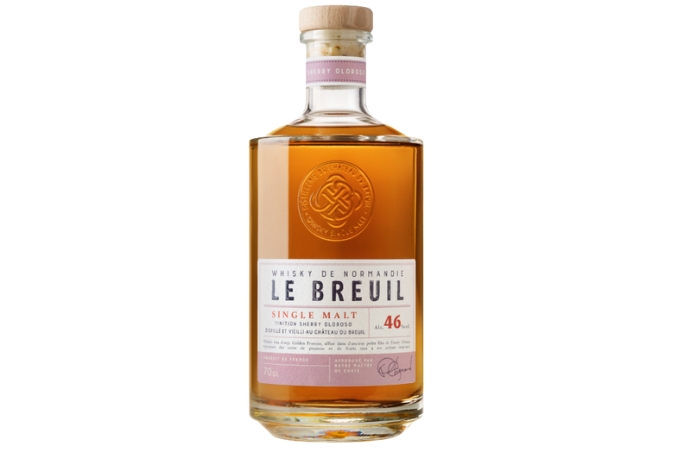
Le Breuil, Oloroso Finish Single Malt
Le Breuil is based in Normandy and makes several high-quality whiskies, including this one that’s finished in Oloroso sherry casks. This French whisky took gold at the IWSC 2025 thanks to a nose that is ‘a delightful blend of honeycomb toffee with hints of golden syrup, evoking the biscuit base of a berry cheesecake’ according to the judging panel, backed up by a palate that ‘unfolds with creamy milk chocolate and nutmeg enriched by a smattering of espresso.’ The finish reveals ‘toffee apples and a touch of smoke’. 96 points
£64, Amathus
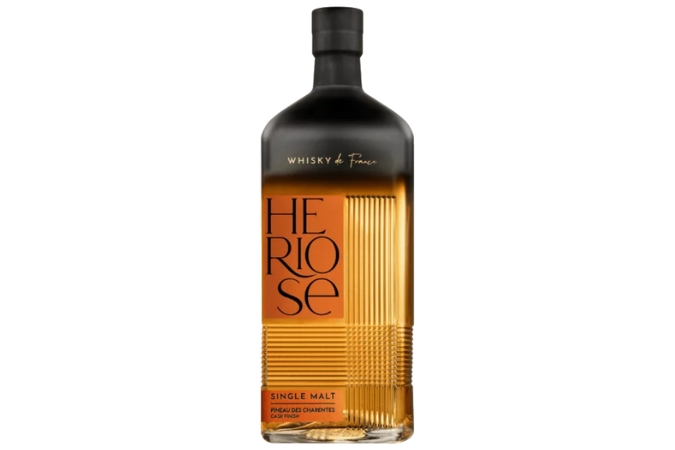
Hériose, Pineau des Charentes Cask Finish Single Malt
Hériose is a relative newcomer to the French whisky scene, having been launched by Maison Boinaud, a Cognac producer, in 2022 after an initial four years of whisky distilling. This single malt is finished in casks that once contained Pineau des Charentes, a fortified wine local to the region of Charantes where the distillery is based. IWSC judges loved the ‘enticing nose of cinnamon latte and a whisper of liquorice’ and a palate that ‘bursts with juicy orchard fruits, complemented by a subtle cheesecake richness.’ 95 points
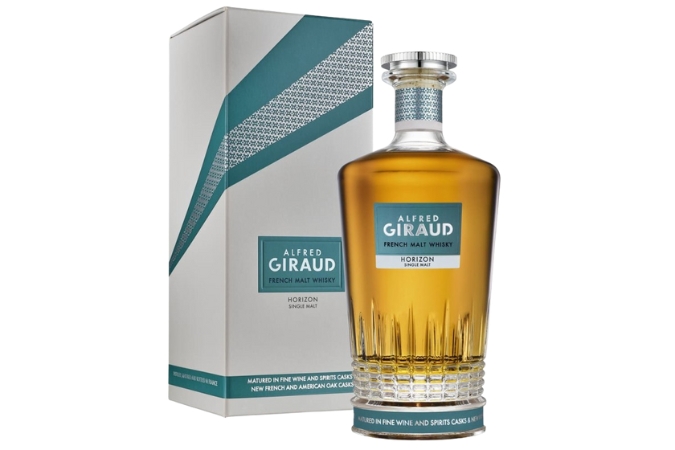
Alfred Giraud, Horizon Single Malt
Alfred Giraud is another French whisky maker that makes use of expertise in Cognac production, with the family having more than 100 years’ worth of experience as coopers and cellar masters at a Cognac house. Horizon is the brand’s first single malt whisky and is aged in 14 different cask types, including Cognac and Bordeaux Grand Cru red wine. Judges loved the ‘soft, well-integrated palate’ that ‘reveals orchard fruits and hints of Danish pastries.’ The finish is ‘refreshing, with lingering notes of dark berries.’ 95 points
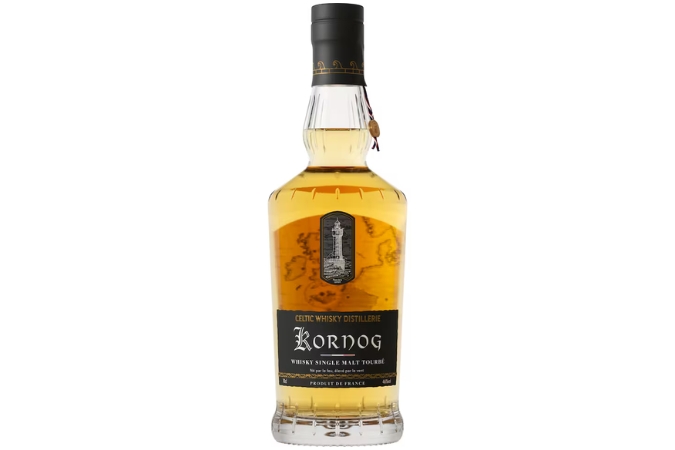
Celtic Whisky Distillerie, Kornog Single Malt
Celtic Whisky Distillerie in Brittany has crafted a peated whisky that has a palate offering ‘rich caramel that mingles with stewed berries, delivering a delightful dance of fruitiness and smoke,’ according the IWSC judging panel in 2025. ‘It finishes exceptionally well,’ the tasting note continues, ‘leaving a lasting sweetness that invites another sip.’ 95 points
£97, The Whisky Exchange
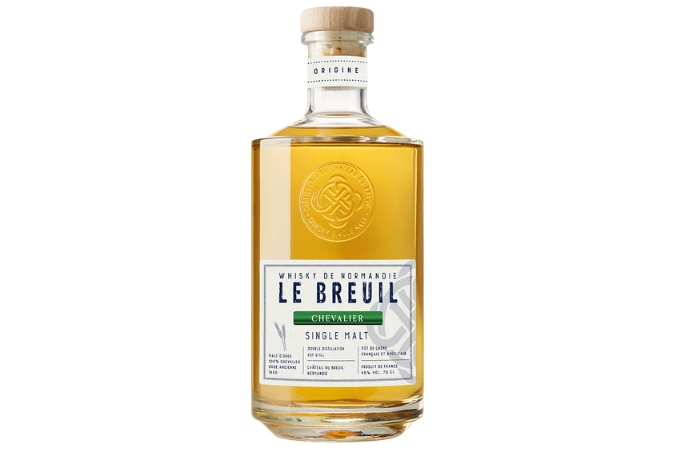
Le Breuil, Chevalier Single Malt
The Chevalier is Le Breuil’s second gold-medallist at the IWSC 2025, just a point behind its Oloroso cask single malt. This bottling is named after an ancient variety of barley and aged in French and American casks. Judges were enamoured with the ’round and rich, creamy yet balanced’ mouthfeel and ‘earthy spices grounding the luscious caramel pudding’ notes. 95 points