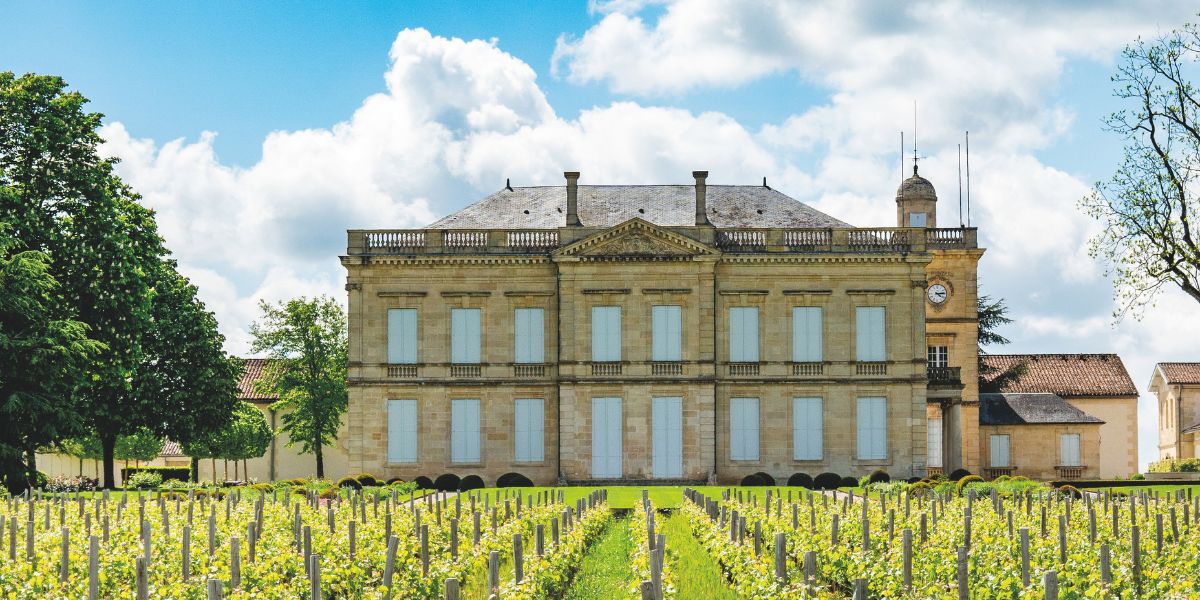
Over the past 20 years, almost every relevant modifiable variable has changed at Gruaud-Larose. An underperforming estate with a history of success has been reinvigorated and wines are again being made which remind the drinker why this wine deserves the moniker of “the king of wines, the wine of kings.” What’s been behind that?
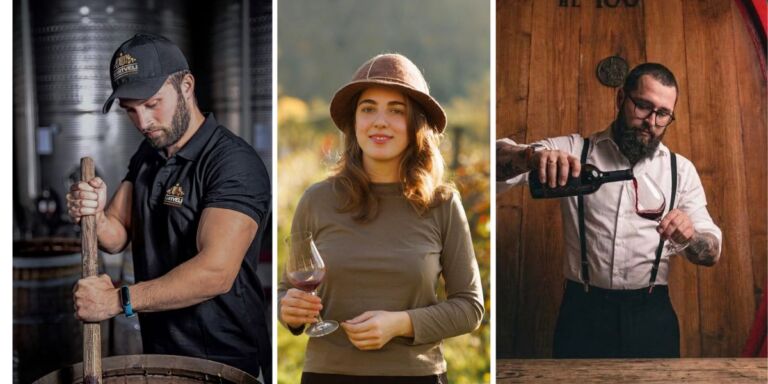
The team has changed entirely. There’s a real esprit de corps at Gruaud-Larose and the team of young, talented individuals is in possession of and open to new ideas. They also possess the talent and experience to regain the standing that Gruaud-Larose is capable of achieving. This isn’t to say that the prior team was not capable and, admittedly, some of the difficulties the estate saw were due to decisions by its ownership rather than its staff – see comments by Georges Pauli below.
The average vine age has increased from 35 years in 1984 to 40 years today
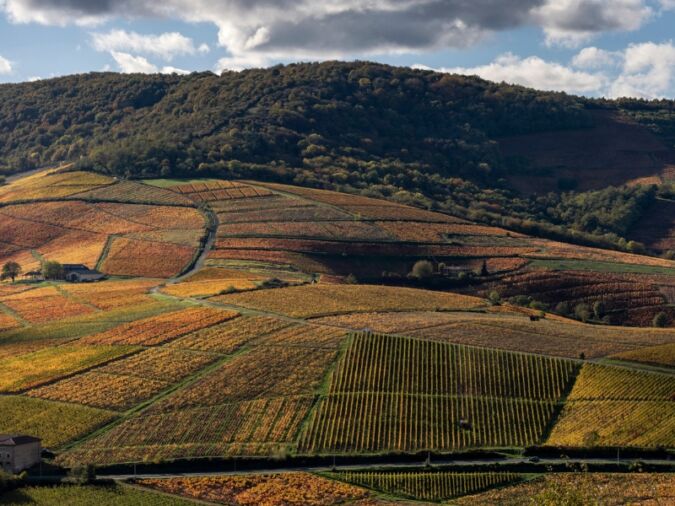
The changes in the vineyard have been remarkable. The prior team, led by Georges Pauli, set to work re-planting in the 2000s. The overall encépagement has not changed dramatically (in 1984, 64% Cabernet Sauvignon, 24% Merlot, 9% Cabernet Franc, 3% Petit Verdot compared to today’s 60% Cabernet Sauvignon, 35% Merlot, 5% Petit Verdot + Cabernet Franc), but the cépages are planted on more appropriate terroir in many instances with Cabernet Sauvignon on the property’s 3 croupes of deep gravel and its Merlot on the clay veins in between them. The average vine age has increased from 35 years in 1984 to 40 years today. It will be interesting to see the results of the property’s massale selection which is now underway, propagating the hundred best-performing Cabernet Sauvignon vines identified at Gruaud-Larose.
The yield of the vineyard has also returned to a much more reasonable level. In 2003, yield was as high as 50-60 hl/ha with 300,000 bottles of the grand vin and 200,000 bottles of Le Sarget de Gruaud produced. 2007 figures indicated an even higher production of 540,000 bottles annually – almost double the volume produced in 1929. Today, half that amount of grand vin is made with only a 25% increase in the production of Sarget.
While yield alone doesn’t indicate whether a château’s wine is at the highest quality it can be, every vineyard has a maximum which can be borne without sacrificing quality. Georges Pauli served as the general manager for Gruaud-Larose (and the other Cordier estates) from the 1970s through to the 2000s. Stephen Brook writes about discussions with Georges Pauli, the latter explaining that he recognised that yields were too high with inadequate selection and the suggestion that 30-40% of the crop be declassified met with an unwillingness by Cordier to declassify more than 10%. Luckily the estate is allowed to focus on quality first under Merlaut ownership.
Changes in yield are a combination of intentional and unintentional factors. Certainly, one can determine how many buds to leave when pruning and how much to green harvest if the projected yield is too high. As vines age, yield naturally decreases – and while we haven’t seen a substantial change in age, we have seen a drift in rootstock with the high-yielding SO4 seen in much of the Médoc in the 1970s-1980s giving way to 101-14. Organic viticulture likely also plays a role; while it isn’t clear to the team whether this has changed the organoleptic properties of the wine, organic viticulture certainly decreases yields.
There’s a real esprit de corps at Gruaud-Larose and the team of young, talented individuals is in possession of and open to new ideas
Work in the winery has changed as well, with more precise selection (Gruaud-Larose has used an optical sorter since 2018) and more precise and more delicate vinification methods. The cold soak previously done at Gruaud-Larose has been replaced with a process which cools the grapes to 10oC only briefly as they pass into the fermentation tank, helping to preserve acidity. Indigenous yeasts were used, but have been replaced with selected yeast to facilitate a complete fermentation with no untoward aromas. Fermentation temperatures as high as 33oC were previously employed from the 1980s-2000s (rising to 34oC at the end of fermentation), but today a temperature of 25-26oC is targeted, with only Cabernet Sauvignon allowed to rise as high as 28oC under certain conditions. In the early 1980s, maceration proceeded for 12 days after fermentation and the wine was put in 160hL vats for its malolactic fermentation. This shifted and malolactic later occurred in barrel; Brook quotes Pauli as mentioning that the latter felt it stabilized the color and harmonized the tannin. Since 2018, co-inoculation has been used.
Practices in the cellar have also changed. The proportion of new oak has increased from 40% to 90-95% with a similar duration in barrel (previously 16-18 months, now regularly 18 months). The second wine comprised 45% of the production as of 2004; now that figure is flipped with 62.5% of the production going into the second wine. And what about the excess Brettanomyces of the 1980s? “With the Brett, I think we’ve found a solution,” Nicolas tells me. “There were a lot of stages which I think were not 100% protected. We identified where the Brett was in the cellar and also we do a lot of analysis to prevent that. If there is a lot with specific trouble, we can identify it. We also put in a new air conditioning system and added insulation to keep the cellar cool. When I arrived, there was still a bit of Brett. Now the wines are super clean.”
There was a time when Gruaud-Larose’s excellence merited a price second only to the First Growths. The team at Gruaud-Larose is working hard to restore the vineyard – and the wines – of the estate to that level of quality. The results speak for themselves and I suspect the best days are ahead.