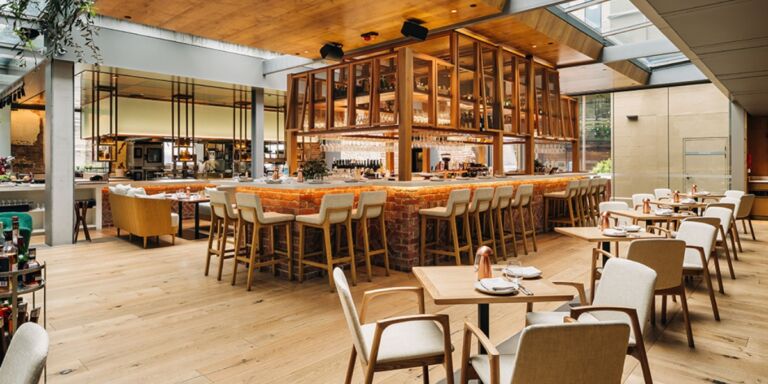
From the moment you walk in, you can tell Humble Chicken in London’s Soho is a restaurant with intent. On one shelf sit Michelin memorabilia and an array of homemade preserves. To the right, an L-shaped wooden counter with 16 smart leather stools where guests wait, each having paid £235 for the omakase experience. Facing them is an open kitchen; here, the chefs (almost as numerous as the customers) calmly slice, chop and cook on induction hobs and a small robata grill. The dishes are memorable, perfectly balancing sweet, sour, savoury and salt. The crowning glory on this visit, a savoury course of Anjou pigeon, is breathtakingly good.
Humble Chicken is part of a modern wave of omakase restaurants to have hit London. In 2023, the exclusive Sushi Kanesaka, from two-Michelin-starred Japanese chef Shinji Kanesaka, launched at The Dorchester on Park Lane. Elsewhere in Mayfair you’ll find Maru, down the road in Knightsbridge there’s The Aubrey, and Marylebone has Mayha. Further afield, Kurisu in Brixton has gained stellar reviews, while even trendy restaurants like Levan in Peckham are getting in on the act, hosting special omakase-style dinners.
Restaurants offering omasake (loosely translated as ‘I’ll leave it up to you’) surged after the Japanese financial boom in the 1990s and are seen by many as the ultimate form of Japanese dining. Highly skilled chefs creating a series of small dishes, often 10 to 20, for intimate groups of diners, usually also between 10 and 20. They can, admittedly, be hushed, silent affairs, the kitchen a stage, the diners the audience, everyone’s attention squarely focused on a chef precisely filleting a mackerel. I’ve been to some where I’ve been afraid to talk.
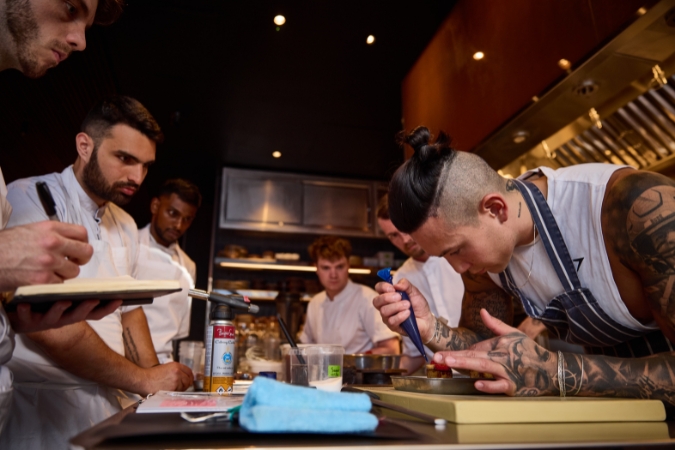
But the third iteration of Humble Chicken, which reopened in June last year, is far from that. From its origins as a ‘comb to tail’ yakitori restaurant, where it focused on grilled skewers featuring the likes of chicken offal and the parson’s nose, it has evolved into a two-Michelin-starred omakase where the cooking is stellar and precise but the atmosphere is fun. The chefs and sommeliers love to chat. Chef-owner Angelo Sato can be heard singing along to Eminem’s Stan. There is orange wine.
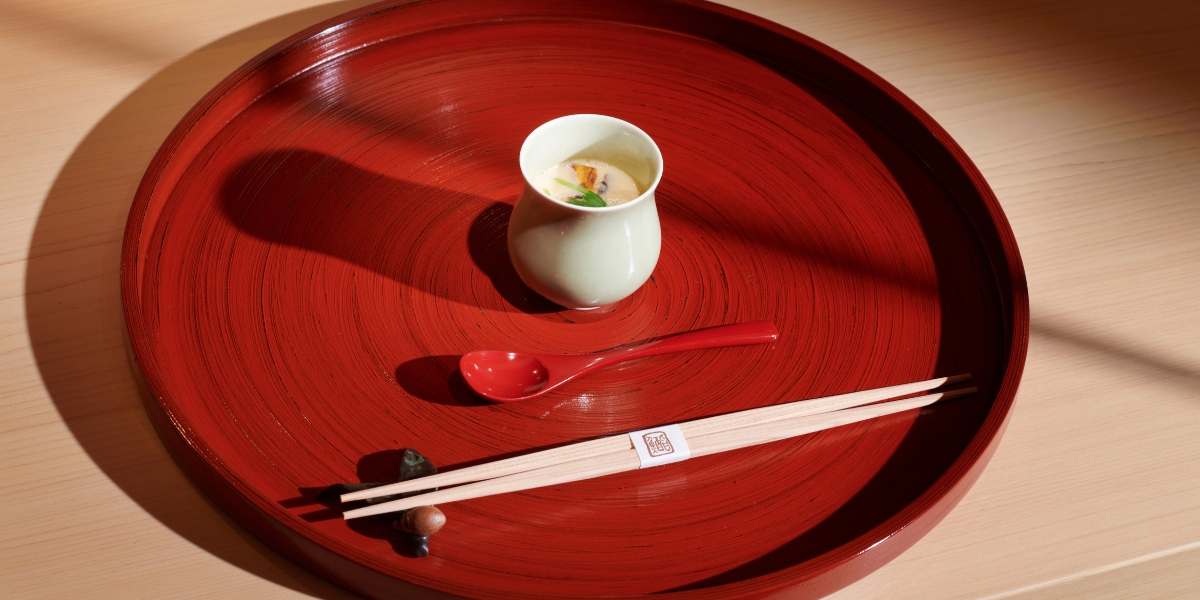
The menu includes Japanese staples – a brilliant scallop nigiri, a beautiful chawanmushi – and influences from further afield. A bread course, featuring a selection of small dishes including braised pigs’ heads and pigeon liver parfait, tastes faintly Germanic. A langoustine toast is inspired by a late-night meal the chefs had in Chinatown. Sweetcorn custard with tuna tartare is the poshest comfort food possible. ‘Our omakase is what I like to eat and how I like to cook,’ says Sato. ‘It’s modern in that it’s a reflection of my German and Japanese heritage and all of the experiences I had at various kitchens. It’s ever-evolving.’
In the 20th century, ‘the influence of Japanese culinary culture spread through fine-dining restaurants around the world’
Sato says the first incarnation of Humble Chicken was ‘an entry point’ to London’s restaurant scene, ‘one that would appeal to the landlord and generate revenue.’ But for Sato, who says he wants three Michelin stars, a high-end omakase was always the goal. ‘From a chef’s perspective, it gives you the ability to serve a menu how you see fit. Sometimes with à la carte, guests don’t pick dishes that complement each other, whereas with a tasting menu, that is taken care of by the chef. The chef has control of the experience, setting the pace and flow. It’s also about consistency, you know what to prepare for, what and how much to order, so everything will always be super-fresh.’
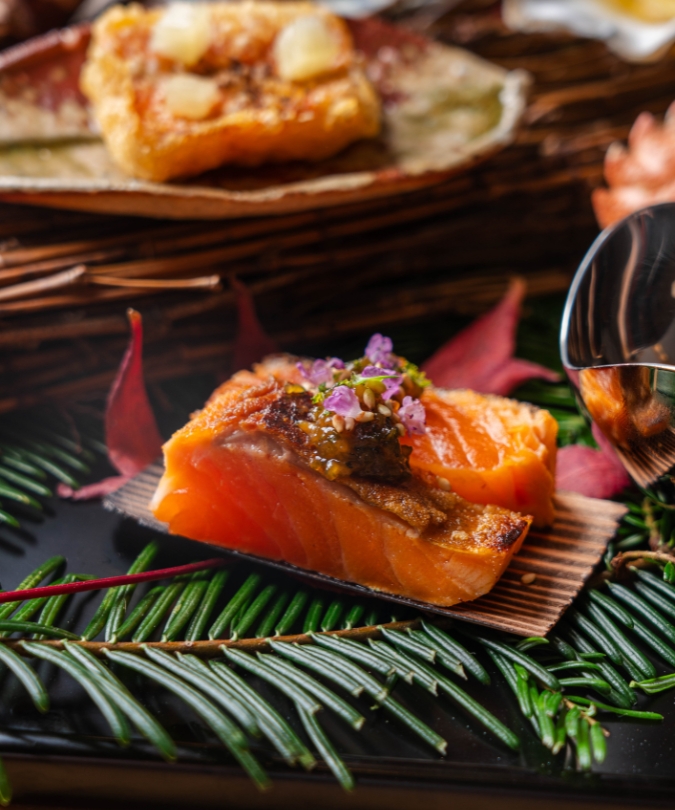
The rise of the omakase marks the culmination of a long-growing trend, with Japanese cuisine coming to dominate global fine dining. In 2011, Japan overtook France to become the country with the most three-Michelin-starred restaurants, and by 2024, it was second only to France in total Michelin-awarded spots. This year, Maidó in Lima, Peru, which fuses Japanese and Peruvian cuisine, was named the number one restaurant at the World’s 50 Best.
From omakase to kaiseki (another Japanese form of multi-course tasting menu), Japanese fine dining is ubiquitous. Interest in Japanese food outside its home country began in earnest in 1960s America, and by the late 1990s high-end sushi bars were opening all over the globe, Nobu and Zuma being two notable examples. ‘Japanese food started being seen not just as “ethnic” but as premium fine dining,’ says Kylie Clark, a consultant and expert in Japanese cuisine. ‘High-end establishments helmed by authentic Japanese chefs began appearing in New York, London and Paris and were no longer just exotic but serious culinary destinations.’
Shore describes Japanese as one of the ‘core pillars’ of New York fine dining
Japanese cookery expert Akemi Yokoyama adds that, in the 20th century, ‘the influence of Japanese culinary culture spread through fine-dining restaurants around the world,’ and Japanese chefs’ ‘deep understanding of umami and innovative use of fermentation introduced refreshing new perspectives that continue to shape global gastronomy.’
Arguably, nowhere can the dominance of Japanese fine dining be seen more deeply (outside Japan, of course), than London, where high-end options range from the traditional, such as Defune in Marylebone, to the modern, like Soho’s Moi, which opened in July 2025 and blends British sourcing with Japanese dishes. October, meanwhile, saw the arrival of Tobi Masa at the Chancery Rosewood, the second London restaurant from Mayasoshi ‘Masa’ Takayama, the chef behind the three-Michelin-starred Masa in New York, which the New York Times credited as ‘changing the sushi game’.
Like London, you’re never far from a fancy Japanese spot in New York. ‘The fuse was lit in the late 60s, early 70s’,’ says Arden Shore, editor-in-chief of The Infatuation. ‘It went mainstream in the 90s with Nobu, turned ultra-luxe in the 2000s with Masa, and exploded into today’s omakase era.’ Shore describes Japanese as one of the ‘core pillars’ of New York fine dining, alongside French, Italian and a recent Korean surge. She adds that restaurants like Yoshino, Shion 69 and Shuko are currently carrying the high-end omakase flag.
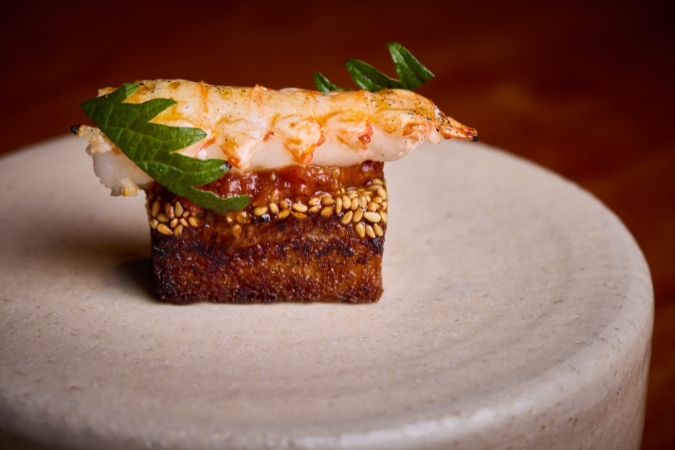
Paris also has a plethora of high-end Japanese restaurants, French restaurants with Japanese influences, and vice versa. Regions with longstanding Japanese populations, such as California, Peru and Brazil, which has the largest Japanese community outside Japan, are equally well stocked. Just look at São Paulo, where recent one-Michelin-star restaurants include Huto, Jun Sakamoto, Kan Suke, Kanoe, Kazuo, Konishita, Kuro, Murakami, Oizumi Sushi and Ryo Gastronomia. For most, the focus is omakase.
Like London and New York, the 1990s was a ‘turning point’ for Japanese cuisine in São Paulo, says Tadashi Shiraishi, who runs Kanoe, an eight-seat omakase in the Jardins district (and just metres from another brilliant omakase, Sushi Vaz). Partly, the rise stemmed from Japanese food being considered healthy, and partly from a growth in fast-casual sushi joints. Since the 2010s, high-end Japanese restaurants have proliferated, accelerated by an increasingly wealthy populace travelling more. In terms of Japanese food, Shiraishi, who has lived all over Europe and the US, says ‘we’re way ahead of LA, Chicago, I would say Miami. I don’t think São Paulo is much behind New York.’
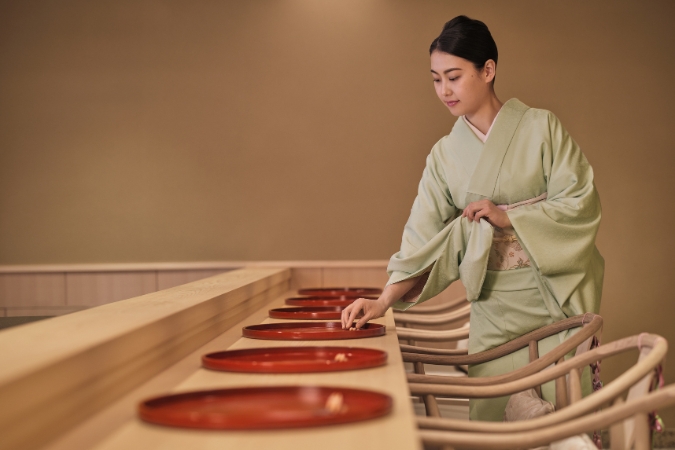
A classic French education once was the apex for any aspiring chef. That may still be true but Japanese sensibilities – particularly an emphasis on precise technique and impeccable ingredients – are now equally essential. Since the 1970s, French luminaries of the nouvelle cuisine movement, such as Paul Bocuse and Joël Robuchon, borrowed from Japanese culinary aesthetics, says Kylie Clark, emphasising lighter sauces, seasonality and elegant presentation. ‘Their experiments would weave Japanese minimalism and seasonal discipline into the fabric of haute cuisine in the West.’
In the UK, chefs who came to prominence in the early years of this century, such as The Fat Duck’s Heston Blumenthal and l’Enclume’s Simon Rogan, also borrowed heavily from Japan. That has only sped up in recent years, with chefs including Stuart Ralston of Lyla in Edinburgh, or Andy Beynon at Behind in east London. While a Michelin-starred restaurant might not be explicitly Japanese, you’re never far from a chawanmushi, dashi or raw fish bar.
A classic French education once was the apex for any aspiring chef but Japanese sensibilities are now equally essential
Despite never having trained in Japan, Ralston says the country’s cuisine has been ‘hugely influential’ on his cooking. ‘The approach to seasonality, restraint and precision resonates with me. I admire the respect for ingredients – letting them be the focus and treating them simply. Ingredients like miso, dashi, soy and kombu have become part of my natural cooking style. But more than that, it’s the techniques: the knife work, balance of flavour, fermentation, pickling. Mainly, it’s just that everything tastes delicious.’
Is it hard to find a Michelin-starred chef these days who hasn’t been inspired by Japan in some form? ‘I think that’s fair,’ says Ralston, who is renowned for his love of chawanmushi. ‘Japanese food has become a cornerstone reference point for so many chefs globally. Even if someone isn’t consciously cooking “Japanese food”, the influences are often there in a broth, in the way a vegetable is prepared, in the use of acidity or umami. It’s part of the modern fine-dining DNA.’
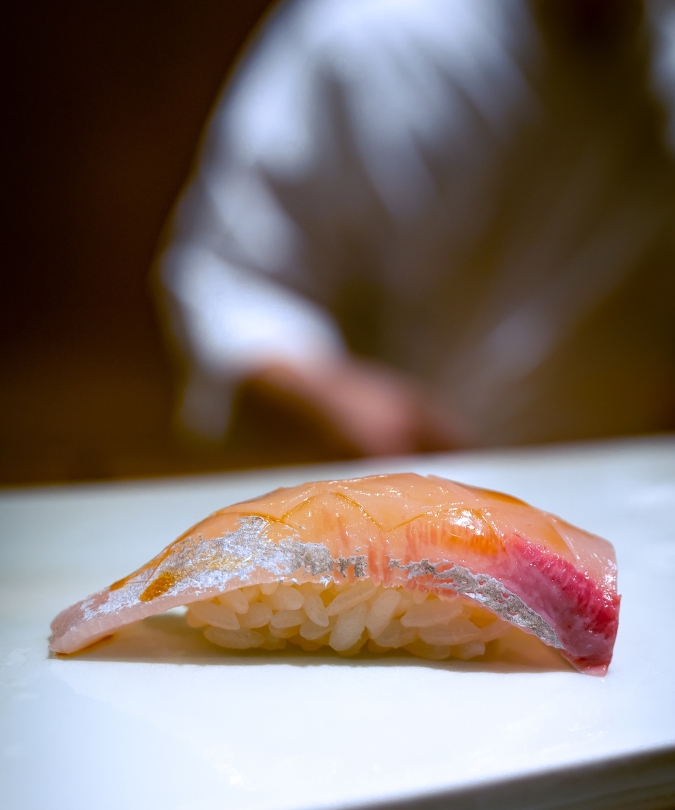
At most high-end Japanese restaurants, and particularly omakases, you’re likely to find a sake pairing alongside the more traditional wine offering. Japanese drinks, mainly sake and whisky, are now considered some of the best in the world but, according to Dawn Davies MW, buying director at The Whisky Exchange, in the early 2000s they were not well understood. ‘Sommeliers and restaurateurs have become less hooked on tradition and are taking inspiration from world cuisine,’ Davies explains. She recommends Tamagawa Red Label, a full-bodied sake with a tannic edge for richer meaty dishes and, on the lighter side, Dewazakura Oka Ginjo, which boasts ‘beautiful elegant florals and is a perfect aperitif or paired with sashimi.’
Davies explains that the Japanese ‘have a unique way of taking something classic and making it beautifully elevated and elegant. That, for me, defines true Japanese whiskies. I love the classics, such as Hibiki and Yamazaki, but the new kids on the block – like Chichibu, Fuji and Kanosuke – are really producing some delicious whiskies.’ She adds that Japanese wine is emerging as a ‘very interesting’ category. Davies recommends seeking out Koshu, an indigenous grape, which is ‘elegant and fresh, with citrus, hay and apple notes, and is being produced by some exciting vineyards in the Yamanashi prefecture.’ Try to track down the Grace Koshu Hishiyama 2023 Private Reserve, which pairs beautifully with sashimi.
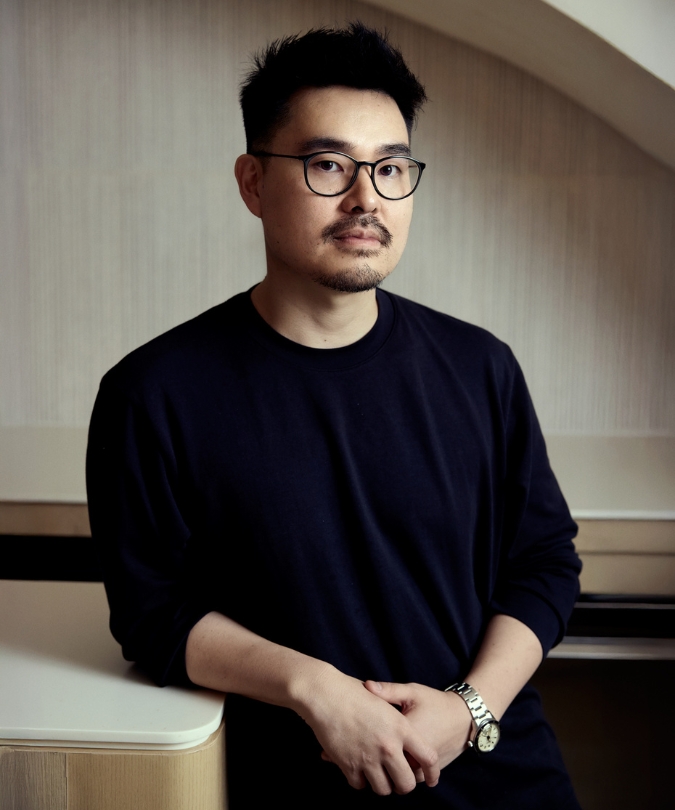
‘If there’s a pairing option that includes sake, take it,’ says Clark. ‘Sake is remarkably versatile. It enhances umami, complements fermented elements and supports delicate flavours without overpowering them. When thoughtfully paired, it can deepen the experience and make the meal feel even more memorable and complete.’
While France and Denmark are strong contenders, arguably no country has influenced global gastronomy in the 21st century quite like Japan (and, of course, Noma’s René Redzepi was heavily inspired by Japan). It’s an assertion Arden Shore supports. ‘Dashi in sauces, miso in glazes and caramels, yuzu and yuzu kosho everywhere, wagyu as a headline, uni on everything. Even techniques like precise knife skills, fermentation and mindful plating have been adopted by chefs, along with the emphasis on fresh, seasonal ingredients and the pursuit of umami.’
Over the course of 50 years, the food and drink of Japan have gone from relative obscurity to world-conquering ubiquity. And from London to Lima, New York to São Paulo, diners show no sign of losing their appetite for Japanese cuisine.