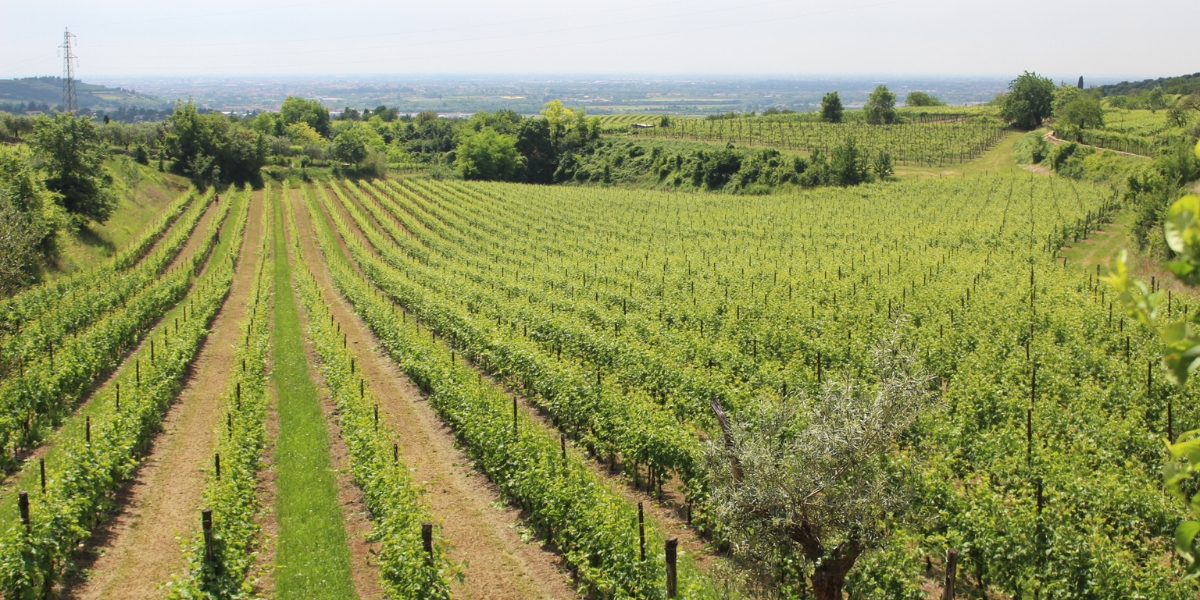
Looking back, it seems clear that Anteprima 2024, which saw the release of Amarone’s glorious 2019 vintage, marked a definitive shift towards light and bright in Valpolicella. Some of the credit belongs to the 2019 vintage, which was a tendentially cooler year, starting slowly, delivering a largely spike-free summer and winding up with a crisp autumn, conditions that seem unattainably normal in this era of incessant disease pressure and fierce heatwaves.
However, I’d argue producer intention played a still greater role. Pioneers like Marco Speri of Secondo Marco (highlighted in last year’s rising stars list) and Andrea Lonardi MW, previously at Bertani and now leading Marilisa Allegrini’s Villa della Torre, used the many levers of viticulture, appassimento and winemaking to steer their wines in a much more graceful direction than had been the norm through the ‘90s and ‘00s.
One duo that has had an outsized impact, working closely with the proprietors of many of the estates highlighted here, is Enrico Nicolis and Gian Maria Ciman. Both collaborated with the late Professor Roberto Ferrarini at the University of Verona and have since developed a business as consultants, sometimes working together, driving a broad-based ‘new wave’ of Amarone. The movement aims to capture more of what is unique about the landscape and grapes of Valpolicella without losing Amarone’s trademark exuberance.
The rising stars highlighted here are a selection of producers whose wines mainly fit in the lighter and brighter vein, though the ways they have achieved this vary. A few pillars of the ‘new wave’ championed by Nicolis and Ciman include a shift away from international/non-local grape varieties like Merlot, Cabernet Sauvignon and Croatina (all of which add dark purple flavours uncommon among Valpolicella’s native grape); cleaner appassimento, with less oxidation and ‘off’ aromas; a more controlled, calibrated level of sweetness; less obvious oak, more site-specificity and more drinkability.
Read more: The Amarone della Valpolicella Report 2024
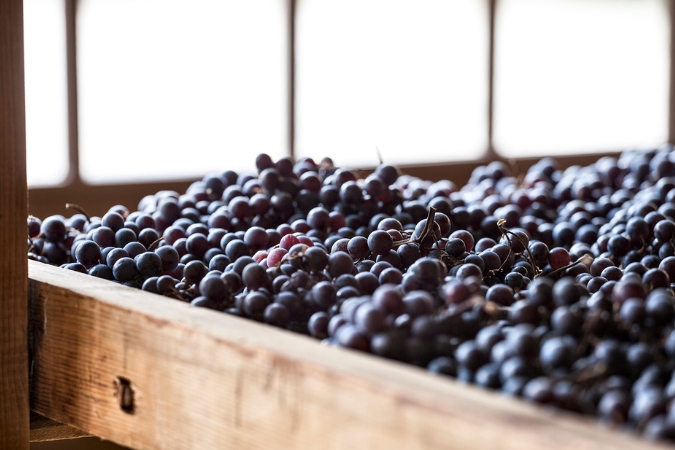
All begins in the vineyard. Nicolis says harvest timing has become an area of in-depth study in Valpolicella, with the nature of the skins, the shape of the bunch and the homogeneity of ripening more critical here than other regions because of the unusually high ratio of skin to juice. Once treated as a ‘single varietal mass’, each variety is now being farmed uniquely.
Ciman places great emphasis on the native grapes’ individual relationships to specific site types – vineyards mixed between Corvina, Corvinone and Rondinella should instead have specific blocks dedicated to individual varieties based on their soils and mesoclimates. Nicolis adds that vineyard management should also be tailored to the desired wine style: Valpolicella, Valpolicella Superiore, Amarone or Recioto. Notably, Pergola Veronese (a vine training technique once spurned in favour of Guyot) has become increasingly popular among producers, preserving freshness and avoiding sunburn through greater shading.
Amarone became iconic precisely because of its distinctive characteristics
The next obvious area of focus is appassimento. Nicolis says that while it is an amazing technology, it can ‘flatten’ territorial identity if abused. Discussing the early years of his career, he says ‘the drying process was supposed to further increase concentration and this seemed to be enough to define a quality Amarone.’ Now scientific evidence suggests the duration of appassimento (as opposed to metrics like weight loss) is most critical, he says. Discussing Amarone’s style evolution over the past decades, Lonardi says appassimento time has undoubtedly decreased, though there is still substantial variation among producers. Ciman says that even though many of their clients are currently a chasing ‘fresh and refined style’ and he agrees ‘exaggerated products in terms of alcohol content and structure should certainly be avoided,’ he is also sceptical of ‘excessive streamlining,’ saying ‘Amarone became iconic precisely because of its distinctive characteristics.’
Finally, the more standard aspects of red winemaking – extraction and maturation – take on extra significance with Amarone. High sugar levels make it prone to stuck fermentation, high skin-to-juice ratio can lead to exaggerated structure, and relatively mature phenolics make the wines sensitive to oxygen exposure during maturation. Ciman says ‘for companies with which we collaborate, which aim for very refined styles of Amarone, extraction is necessary to guarantee longevity.’ He describes carefully calibrating extraction to vintage quality to achieve the best possible structure in good years and avoid extracting raw tannins and herbaceous compounds in poorer years.
Ciman says the use of wood has been demonised but believes the issue is not the wood itself but how barriques and tonneaux were being used; more attention is needed to the timing of transfer to wood and the total time in wood. Nicolis says wood ageing must become more rational and less ‘recipe-like’, though the same is true for ‘trendier’ tools like cement and amphora, which can help preserve varietal and territorial identity but can also produce simple wines with limited potential to evolve.
Overall, the doctrine is greater precision, exactly as it should be. While quality was once extremely variable – Nicolis says that ‘the peaks of quality were there and were very, very evident but what was missing was the consistency and widespread quality found today’ – now the challenge is to achieve greater distinctiveness. Beyond differences in site, I’d argue we need to maintain a diversity of vision among producers, even as market forces seem to favour certain styles. As will hopefully be made clear below, the existence of a cohesive stylistic movement needn’t result in interchangeable wines.
Five Amarone estates to have on your radar
SalvaTerra
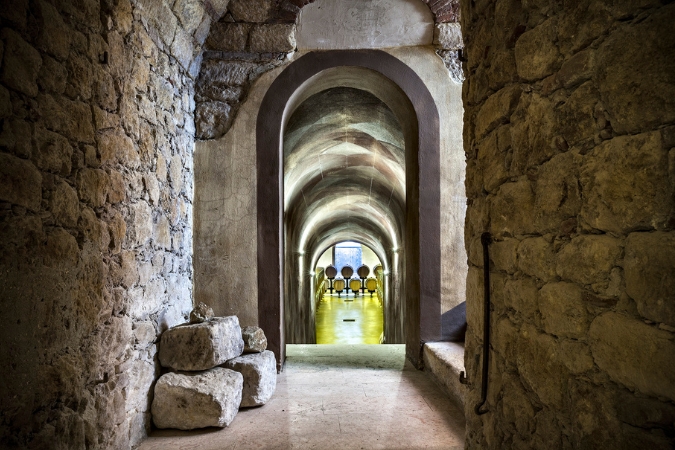
SalvaTerra is perhaps the kind of project that reads a certain way on paper; though founded in 2014 by the winemaking Furia family, it has been owned since 2022 by the recently formed Veraison Group, a collection of ‘assets’ (wineries, wine exporters, importers – including in China and Eastern Europe – and private label producers) and currently sells approximately 2.5 million bottles. On its website, one of the pages is titled simply ‘Respect’, with sections on ‘Conservation’ and ‘Soil’ that never specify what/where that soil actually is (I was told by their representative that the project draws from 100ha between estate holdings and ‘collaborations’). Its headquarters is the photogenic 15th-century Villa Giona.
However, the wines handily live up to the estate’s stated goal of creating more drinkable wines of strong varietal expressiveness, something that can be credited to the guidance of Nicolis, who is an oenologist for the project. Their attractiveness speaks to his point that elevated quality is much more widely available across the region than even a decade ago when the project started. His innovations here have included more careful temperature management during fermentation, more delicate macerations and a more targeted use of wood to create market-friendly wines that retain a strong identity. The payoff has been success in discerning markets like the UK, Switzerland and Denmark along with extremely value-conscious (but selective) markets like Holland and Germany, particularly among younger consumers.
The Save the Land bottling, seemingly custom-designed to appeal to this demographic with its conscientious consumerism angle (the wine is organic, the bottle and label fully recyclable and even the cork is zero-carbon footprint), has a certain juicy appeal derived from the red-fruited prettiness of the region’s native grapes. However, the classico Amarone aims a little higher, with a complexity and depth of flavour that feels sincere and genuinely connected to the land.
View this post on Instagram
Crosarola
Experienced grower and agronomist Sebastiano Righetti founded Crosarola in 2000 with a clear view of the type of Amarone he wanted to make, prioritising typicity and regional identity over bombast. Having inherited lands from his family, who had long-standing, substantial holdings in Casterna at the southern end of the Fumane Valley, Righetti set to work. He focused purely on native varieties – even though this was the height of Valpolicella’s international grape boom – including the classic Corvina, Corvinone, Rondinella and Molinara but also Dindarella, all contributing to a naturally sheerer, slender-bodied style.
The sites are postcard Valpolicella Classico – high pergola vines on stone terraces of the type that permit little mechanisation – and viticulture is sustainable, adhering to the Consorzio’s RRR protocol. Righetti remains actively involved in grape selection in the vineyards, isolating the best material for use in the Amarone and Amarone Riserva. Appassimento is not exaggerated, lasting roughly three months after harvest, which typically falls between September and October, fairly late for these lower-lying sites (175-225m asl). Maturation, a little unexpectedly, takes place solely in barriques, though not all are new; the Riserva spends another year in tonneaux, lending a truffley, tertiary richness. Residual sugar remains low (below 5g/L) even as alcohol creeps upward of 16%, keeping the balance from tipping over into the pillowy.
Crosarola Amarone della Valpolicella DOCG Classico Riserva 2016
Pietro Clementi
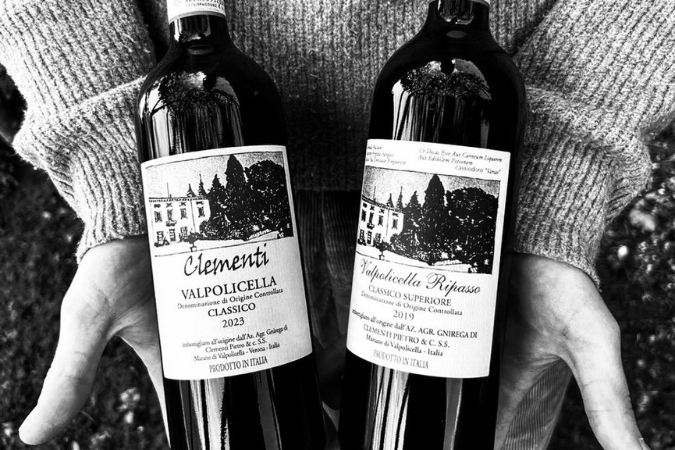
Lawyer and one-time mayor of Marano Pietro Clementi, who works with Nicolis, has been edging slowly into the wine industry since time spent with his grandparents in the post-war period sparked his love of viticulture. The first definitive step was a 1969 purchase of 20ha in Gnirega, a forested, west-facing stretch of hillside in the heart of the Marano Valley partially planted with vines. It would take many years to move from a sort of garagiste wine production – aided by various more experienced locals – to a more professionalised phase. In 2002, Clementi took the plunge, investing in a new cellar with substantial space for appassimento, also allowing him to commercialise his production. The winery is now lead by Clementi’s three children, with continued input from the family patriarch.
The winery adheres to several tenets of the ‘new wave’, including the exclusive use of native grapes Corvina, Corvinone, Rondinella and Molinara (both Oseleta and Croatina are also planted but not used for Amarone or Riserva). Vineyards sit on traditional dry-stone marogne (terraces) at around 300-400m asl, with traditional pergola training, a logical choice for a sunny, south-west facing site. Ageing takes place exclusively in 30hL botti and even the non-riserva matures for an almost unthinkable seven years in wood before hitting the market – 2013 is the current release. The style is almost completely dry, with only 2-3g/l of residual sugar. However, these wines are hardly small and dainty, weighing in at around 16.5% ABV, a reflection of warm sites and a considerable stint in the fruittaio (up to four months). These are slow-burn wines of a certain heft and seriousness, reflecting their origin story.
View this post on Instagram
Terre di Leone
A much more intimate affair is Terre di Leone, a gem of the volcanic soil-heavy Marano Valley with 7ha of vineyard. Founded by couple Chiara Turati and Federico Giotto, and named after Giotto’s grandfather Leone to whom the land once belonged, it has been a long journey, starting with the development of the property in 1996 and culminating in commercial sales in 2009.
The production philosophy straddles the modern and the post-modern. As Turati puts it, they knew even when starting out that ‘extreme philosophies should not compromise the careful and hard work in the fields.’ The grapes are native – Corvina, Corvinone, Rondinella, Molinara, Oseleta and others – but many of the plantings are high-density Guyot (60%) rather than traditional pergola. Harvest is relatively late, typically falling in October, while appassimento is quite extensive at roughly 120 days, as it was in Leone’s day, and maturation is very slow: up to eight years in wooden botti, though they are made of French oak. The fruttaio is traditionally styled, sitting above the ageing cellar and only actively cooled when outside conditions deviate from the typical winter weather of yore.
The wines in the glass red as ‘new wave’, thanks mostly to the red-fruited brightness derived from high altitude (450m asl). This is especially true of the more contemporary ‘Re Pazzo’ (‘Mad King’), which ages for less time in French oak vats and retains an energetic mien appropriate to its name. The classic Amarone is a little less madcap, still red-fruited but more opulent and less angular, loosened up by its long ageing in oak and giving a more generous expression of these sunny slopes.
Terre di Leone Amarone della Valpolicella DOCG Classico 2019 Il Re Pazzo 2019
Villa Spinosa
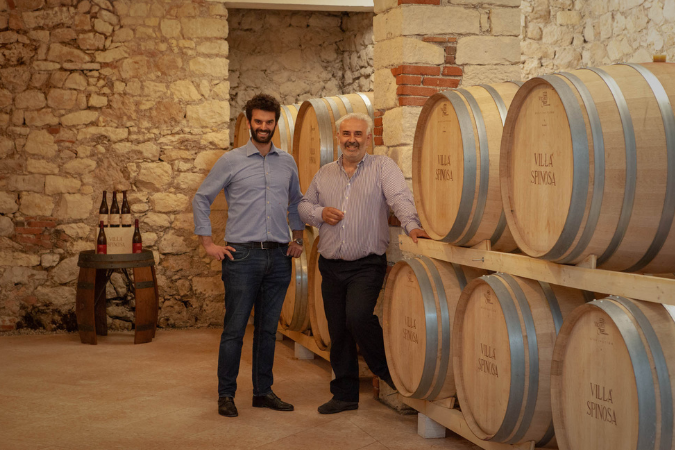
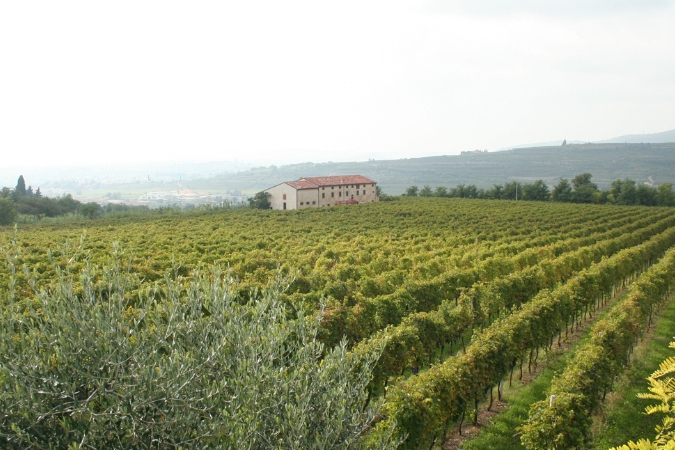
A multi-generational family farm that evolved into a winery in 1990, Villa Spinosa’s transformation was triggered – according to Enrico Cascella Spinosa – by the methanol scandal of the 1980s, which compelled the family to start vinifying its own grapes to secure its future. Spinosa claims this is much more common in the region than many would care to admit. Despite being born into a wine world obsessed with scale and fruit intensity, Spinosa says the aims were ‘elegance, freshness and drinkability,’ which sounds like a credo for today’s new wave.
In fact, Spinosa works with both Nicolis and Ciman, though it has been a process of small adjustments and a greater attention to detail rather than major changes. For instance, herbicides have been abandoned, replaced by careful attention to grassing and the spreading of floral essences; Pergola Veronese has been eschewed in favour of Guyot, permitting greater density and, in Spinosa’s view, greater quality. With 20ha spread over three sites in the ‘crus’ of Jago, Figari and Costa del Buso, they have also turned their attention to site specificity. This extends to their non-Amarone production, for Spinosa says that while Amarone quality has radically improved in recent years, attention needs to be turned to the other DOCs of Valpolicella, especially Superiore, which he sees as the future protagonist of the zone.
Spinosa’s classico Amarone comes from Negrar and Marano, from east and west-facing sites respectively sitting between 230-423m asl for a complementary assortment of traits. Appassimento is long (120 days or more) and maturation includes a year in French tonneaux and one in 20+hl Slavonian botti, leaving an unprocessed, chalky crunch to the tannins. Meanwhile Albasini, from their relatively low-lying Figari vineyard at the base of Marano (230m asl), ages for substantially longer. Four years in Slavonian botti after the same initial year in French tonneaux have imbued it with the silkiness that is quintessential to Amarone’s new wave.
Villa Spinosa Amarone della Valpolicella DOCG Classico Albasini 2016