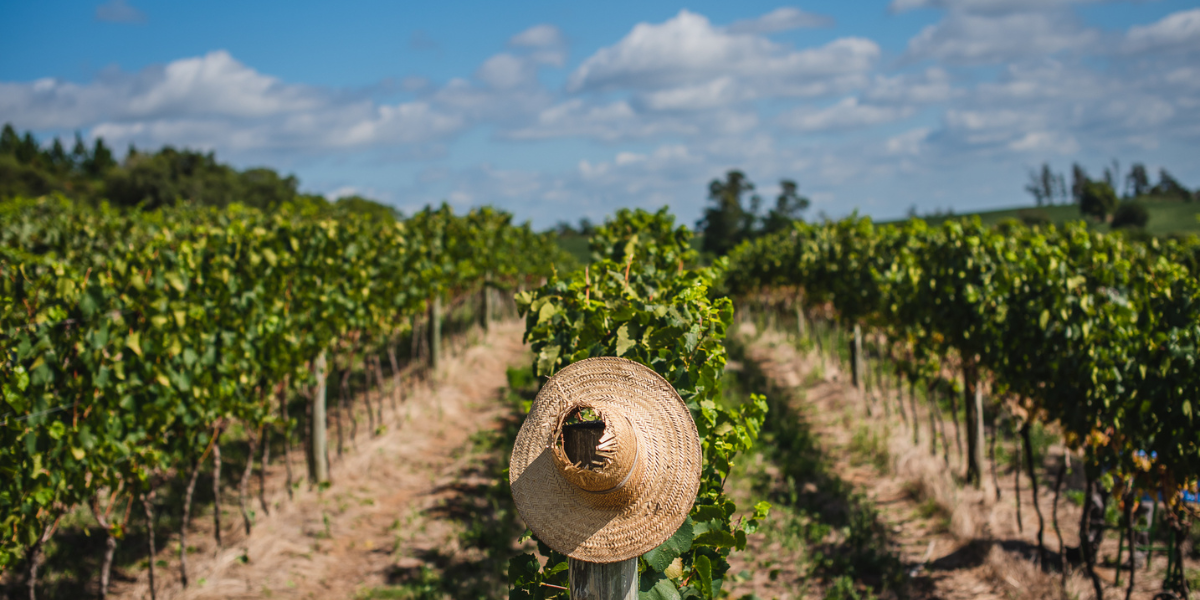
As the motorway gives way to gently ascending winding roads, the billboards are the first sign you are deep in wine country. It might initially defy belief among the lush, semi-tropical flora, but as we creep upwards the rich foliage gives way to rolling hills covered with vineyards as far as the eye can see.
Brazil and wine don’t often sit together in people’s minds. In many ways that’s fair, yet Brazil is South America’s third-largest producer and, in some years, makes more wine than New Zealand (it is, obviously, a much larger country). As wine consumption staggers across much of the world, in Brazil it is booming, rising 42% between 2024 and 2025. The average Brazilian now drinks three litres a year, according to figures presented at ProWine, a trade fair in São Paulo that took place in early October. While paltry compared with neighbouring Argentina, Brazilians, who have long been beer and cachaça drinkers, are developing a taste for wine. In its major cities, wine bars serving Brazilian bottles were once unthinkable; now they are everywhere.
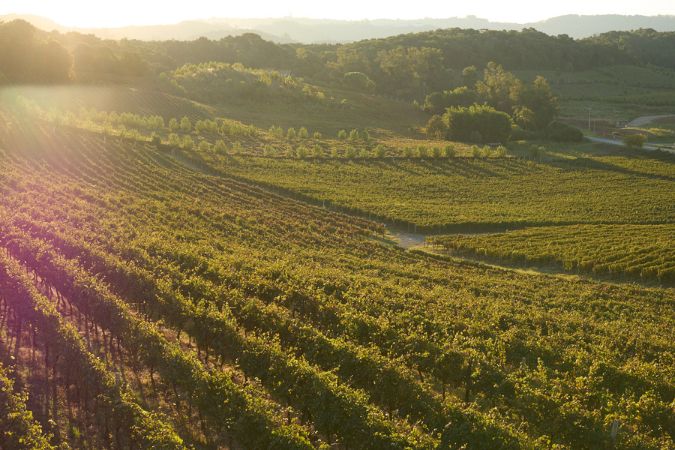
Brazil’s southernmost state, Rio Grande do Sul, is its winemaking heartland, and I’ve come here to learn about its growing industry. From the 1870s, waves of European immigration, primarily from Italy, introduced winemaking to the region, particularly the Serra Gaúcha. These highlands, a 90-minute drive north of the state capital, Porto Alegre, have the right soils, high altitudes, warm summers and cool winters. With its Italian heritage and undulating hills, it has unsurprisingly been dubbed the ‘Tuscany of the Southern Hemisphere’. Today there are around 800 wineries in the region, according to Deborah Villas-Bôas Dadalt, CEO of hotel Spa do Vinho and president of the Association of Brazilian Enotourism.
Producers range from historic houses like Casa Valduga to small newcomers like Monte Astral. The Vale dos Vinhedos (Valley of the Vineyards), where the Spa do Vinho hotel serves as a welcome base for tourism, has its own Designation of Origin, the first in Brazil, with ripe, fruity Merlots and crisp, aromatic Chardonnays. It was followed in 2022 by the nearby Altos de Pinto Bandeira, the first DO dedicated to traditional-method sparkling wine outside Europe.
Waves of European immigration, primarily from Italy, introduced winemaking to the region. These highlands have the right soils, high altitudes, warm summers and cool winters. With its Italian heritage and undulating hills, it has unsurprisingly been dubbed the ‘Tuscany of the Southern Hemisphere’. Today there are around 800 wineries in the region
Reds are often easy drinking, fruit-forward and fresh, but you’ll find big, bold ones, too. Sparkling wines, which Brazil is most famous for, tend towards bright and acidic with delicate fruitiness. There is a growing natural wine scene taking inspiration from the likes of Beaujolais and Burgundy, with aromatic orange wines to boot. You’ll find remarkable Sauvignon Blanc with tropical notes – think passionfruit and pineapple.
According to Nicholas Corfe, who founded Go Brazil Wines, which imports into the UK, in 2010, ‘there has been a growing self-confidence amongst winemakers, boosted partly by the many awards won, partly by the interest shown by international buyers, and also growing interest and demand from the domestic market.’
Yet there is a long way to go. While exports grew by 173% between 2018 and 2023, it can still be hard to find Brazilian wine in Britain, although importers like Go Brazil Wines and restaurants including Manchester’s Sampa are doing their best. A trade deal between the EU and its South American counterpart will reduce tariffs by 2034. And Brazilian wine still faces prejudice at home, imports often seen as superior.
Nevertheless, Villas-Bôas Dadalt believes that, when it comes to wine, Brazil is ‘the country of the future.’ She adds: ‘Of every 10 bottles sold in Brazil, just two are Brazilian. Look at the size of that potential market.’
For now, your best bet might be to visit the country itself, with most producers set up for tourism (smaller ones are less likely to be able to host in English). Here are five Serra Gaúcha wineries to know – whether visiting the region or admiring from afar.
Five top wine estates in Brazil’s Serra Gaúcha
Vinícola Ales Victoria
Bento Gonçalves
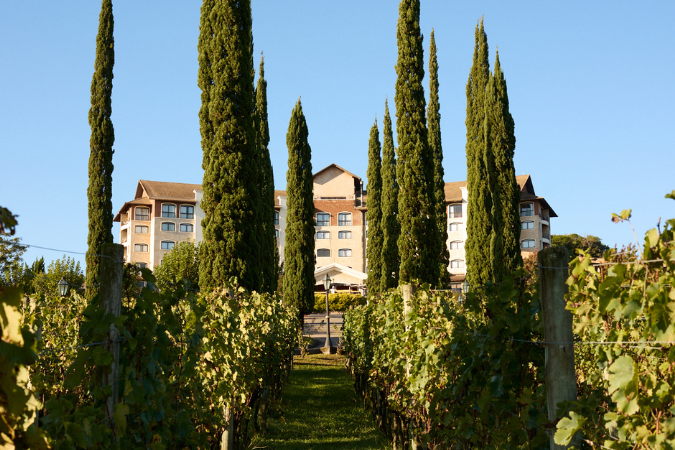
The Spa do Vinho hotel in Bento Gonçalves and its winery, Ales Victoria, is the perfect base for exploring the Vale dos Vinhedos. It organises tours to surrounding vineyards, but you can just as easily spend a couple of days at the hotel, with its spas, excellent restaurants and beautiful views across sprawling vineyards.
Founded in 2007 by former journalist Deborah Villas-Bôas Dadalt and her hotelier husband, Aldemir Dadalt, it has grown into one of the country’s main wine attractions. With help from the late legendary oenologist Michel Rolland, they planted 16 hectares of vines, including Chardonnay and Merlot. Unlike many new-generation producers, who eschew barrel ageing for a fresher profile, Ales Victoria doesn’t shy away from oak. A 2019 Blanc des Blancs draws special attention. ‘It has different characteristics to the traditional sparkling wines from the Vale dos Vinhedos,’ says Villas-Bôas Dadalt. ‘Many are acidic, fruity. Ours has a little toastiness, brioche, butter, it reminds you of Champagne. But there are Brazilian characteristics, a freshness you don’t always find in Champagne. It’s a piece of both worlds.’ Equally alluring is the 2020 Ales Merlot, reminiscent of a Super Tuscan: velvety, rounded, dark fruits and a touch of pepperiness. These are serious wines, many fetching equally serious prices.
The hotel complex is impressive. You’ll find multiple possible tastings; paths to wander through the vineyards, which are surrounded by jungle (you might spot toucans and marmosets); one of Brazil’s biggest spas; a Brazilian wine library; and, most impressively, the country’s largest wine cellar dedicated solely to Brazilian wines, with 40,000 bottles from around the country. ‘People come for a glimpse of Brazilian wine in general, not just the Vale dos Vinhedos,’ says Villas-Bôas Dadalt.
Such is its dedication to Brazilian wine that Ales Victoria is introducing a plot trialling Bibiana, a recently developed Brazilian hybrid with characteristics of Sauvignon Blanc and Chardonnay. ‘We want to propose a Brazilian grape to the DO, we believe in it,’ says Villas-Bôas Dadalt. ‘Someone has to do it, we’ll be going against the grain.’
Monte Astral
Farroupilha
Within minutes of arriving at Monte Astral, Paulo Rutzen is telling me the story behind one of his flagship wines, Chardô da Lata, a beautiful, straw-coloured sparkling chardonnay with delicate tropical notes. The phrase da lata (‘from the can’) comes from an infamous event in 1987, when thousands of cans filled with cannabis washed up along the coast. The best cannabis is now often referred to as ‘from the can’. ‘So this sparkling wine is “from the can”,’ jokes Rutzen. ‘It’s good quality,’ he adds, laughing.
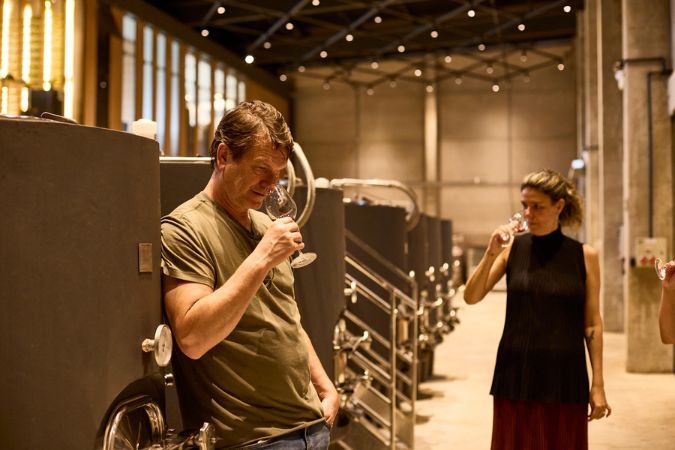
That it is. And it’s a testament to the irreverent nature of Monte Astral, which focuses on minimal-intervention wines (both in the vineyard and in the winery), part of a growing natural wine movement. Rutzen fell in love with it while visiting Parisian wine bars on work trips in the 2010s. Now, he and his wife, Fernanda, grow seven hectares of vines, their first bottles released in 2021, from grapes including Chardonnay, Pinot Noir, Alvarinho, Cabernet Franc and Seperavi. Oak barrels are eschewed for concrete tanks. Their Noir Alchemy 2023, a biodynamic Pinot Noir, is fresh and delicately tannic, with hints of hibiscus and tea. ‘The idea is to make light wines,’ says Rutzen. ‘Naturally we go towards Burgundy, but it can be with any grapes, not just Burgundian grapes.’
Although just 18 miles from the Vale dos Vinhedos, Monte Astral cannot rely on the same levels of tourism. ‘Around one million people go through the Vale dos Vinhedos each year,’ says Rutzen. ‘We don’t have that. You don’t get passing trade, it’s only starting to become a region.’ Visitors come mostly for their excellent restaurant Ostara, a beautiful wood-and-glass structure inspired by Explora, a small group of smart boutique hotels in South America. As Monte Astral’s wines take Sao Paulo’s restaurants and wine bars by storm, that is sure to change.
Casa Valduga
Vale dos Vinhedos
In the Vale dos Vinhedos, few wineries can match the heritage of Casa Valduga, founded by Marco Valduga, who was among the first wave of immigrants in the 1870s. Hailing from Rovereto in northern Italy, a region with its own reputation for excellent wines, and armed with cuttings from the homeland, Valduga set about creating a distinguished winery in southern Brazil.
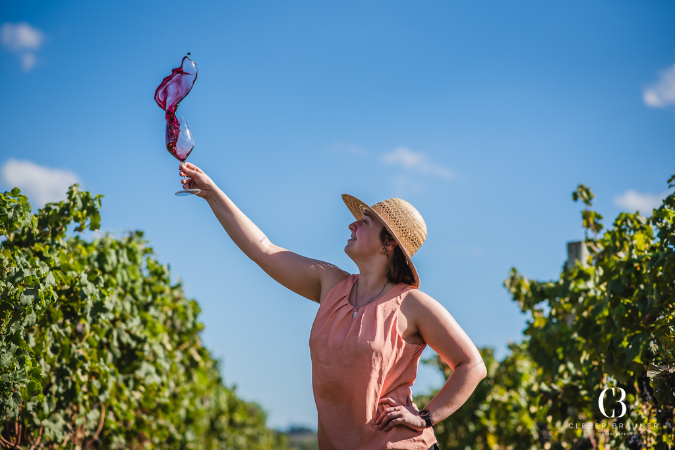
He certainly succeeded. Today Casa Valduga is one of Brazil’s most prominent wineries, winning countless awards and achieving particular acclaim for its elegant, traditional-method sparkling wines. The 130 Blanc de Blanc, with a gentle creaminess, brioche notes and bright acidity, is a particular hit.
This year, Casa Valduga picked up three medals at the IWSC (International Wine and Spirit Competition), including a Silver for its 130 Special Edition Extra Brut NV. The Chardonnay-Pinot Noir blend was praised for its ‘bright citrus and apple aromas’ and ‘creamy, butter notes [that] mingle with sweet spices, culminating in a refined, lingering finish.’ The 140 Blanc de Noir Brut NV and Premium Brut Nature NV were similarly praised, both receiving Bronze. Alistair Cooper, who was a judge on the panel, says Casa Valduga is one of the ‘standard bearers in the region’, adding that their still wines, including those made from Tannat and Chardonnay grapes, were worth seeking out too.
Unsurprisingly, Casa Valduga is geared up for visitors, including guided tours, tasting menus with wine pairings and one of South America’s largest wine cellars. The boutique hotel overlooks acres of stunning vineyards. With many of its wines available in the UK, via Enotria or GreatWine, it is also a great starting point to discover Brazilian wines without crossing the Atlantic.
Faccin
Rio Grande do Sul
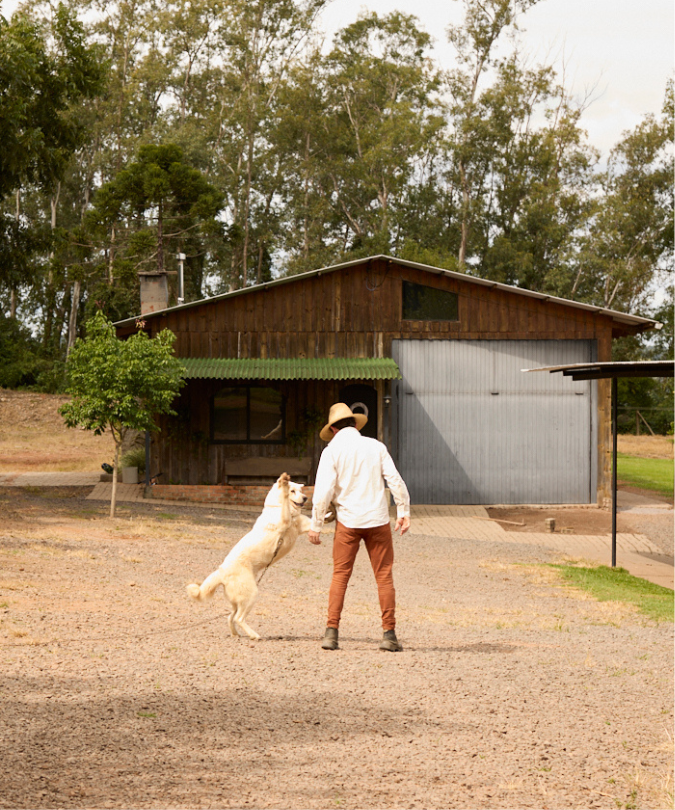
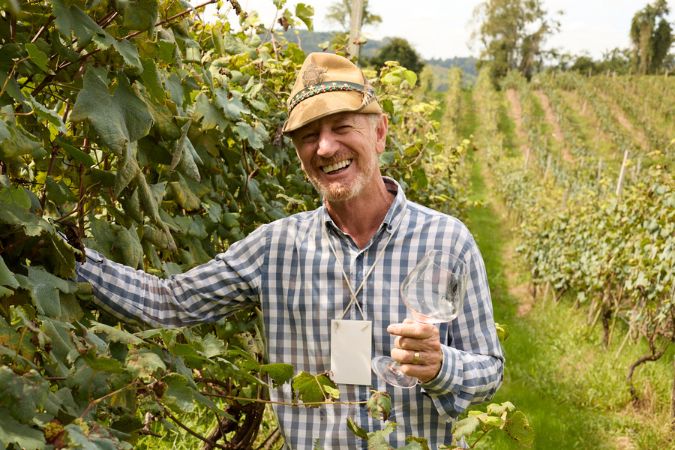
Antônio Faccin, owner of Faccin winery, is the fourth generation of his family to grow grapes around Monte Belo do Sul, which straddles the Vale does Vinhedos. His great-grandfather immigrated from Vicenza in the 1880s and Antônio proudly displays his Italian heritage, greeting me sporting a traditional alpine soldier’s cap. He uses the odd word of Talian, a dialect of Venetian spoken in southern Brazil. He speaks passionately of the region’s winemaking history, throwing in a board of local cheese, salami, and homemade bread.
He grows Italian grapes, too, including Peverella, brought by the first Italian immigrants but since discarded for more fashionable varietals like Pinot Noir, Merlot and Chardonnay. ‘It has a lovely, peppery taste,’ Antônio says of Peverella. ‘In Monte Belo, only two families produce it, so I wanted to rescue it.’ His version, with five days of skin contact, is bold, displaying notes of honey, dates and tropical fruits.
The family has always grown grapes and produced wine, but the Faccin winery was launched in 2015 when Antônio converted a garage in his modest hilltop home into a winery. His wines soon grabbed the attention of Brazil’s top sommeliers. There is an impressive range – 15 in total – with Antônio and son, Bruno, producing around 10,000 bottles a year. The skin-contact Chardonnay is a heady mix of Cognac, sherry and walnut notes. The bestselling Pinot Noir is superb: light and fruity with a trace of strawberry and vanilla. Best consumed chilled, it’s perfect for the region’s 30C+ summer days.
Antônio believes Brazilians have finally begun to value their wine, but many nearby winemakers still focus on copying Argentinian, Chilean or European styles. ‘Our wine is from Monte Belo. It’s our terroir, our style, we don’t compare it to anyone else.’
Vitivinícola Jolimont
Canela
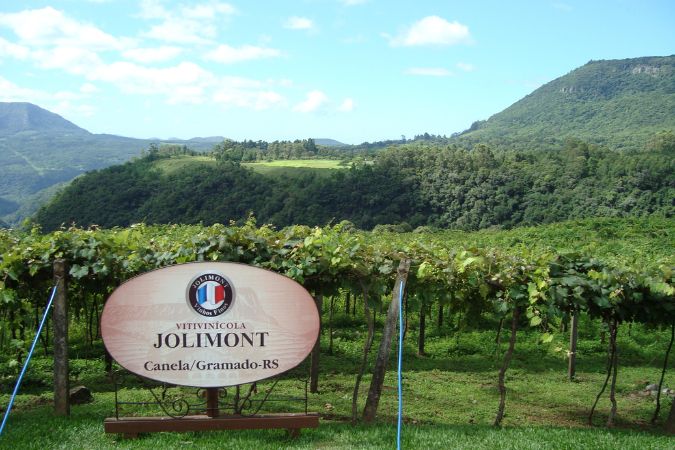
Unlike many star names in Brazil’s wine scene, Jolimont is on the edges of the Serra Gaúcha, around 80 miles east of the Vale dos Vinhedos. Yet here, Frenchman Jacques Brière, who arrived after World War Two, found a terroir reminiscent of his homeland. Aiming to produce fine wines at a time when most local producers made table wine, he set up Jolimont.
Today Jolimont produces upwards of a million bottles a year, across a range of styles. It is one of the most visited wineries in the country, offering a wide range of tours and tastings. It has arguably become one of the most respected on the international stage. At the 2025 IWSC, when 38 Brazilian wines picked up medals, Jolimont’s Marselan Querências do Sul 2022 stood out, picking up 95 points. According to the panel, the ‘nose opens with dark cherry, tar, and smoky undertones with a hint of game. The generous palate reveals pomegranate, mineral, and black olive notes, lifted by lively acidity. Red fruit, white pepper, and spice linger on the complex finish.’
This year, two silvers followed, for the Marselan as well as the Gran Reserva Cabernet Sauvignon 2020, with its ‘earthy, mushroom, and spicy bouquet’. Internationally, Brazil is primarily known for sparkling wine. Many, even in Brazil, are still sceptical of its ability to produce world-class still wines. Jolimont is proving they can compete with the best. Cooper said Jolimont’s wines showed ‘consistency over both grape varieties and vintages,’ and were a prime example of a winemaking culture that has vastly improved over the past 10-15 years.