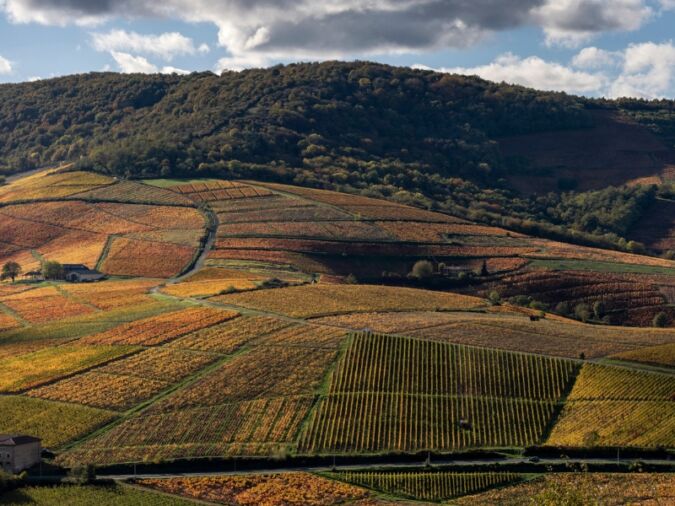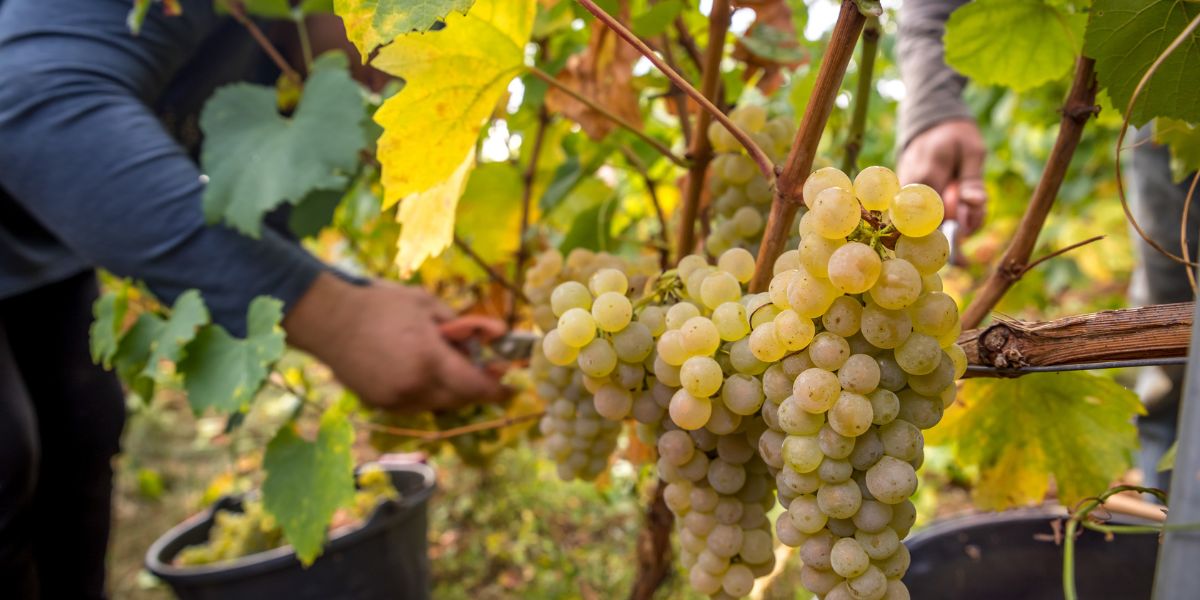
Beaujolais has experienced a recent renaissance with drinkers, its fresh, crunchy style favoured by wine fashion, and its ageworthy cru cuvées arousing the interest of connoisseurs, but few regions can be so synonymous with a single colour. To most of us, Beaujolais means red. However, the region also produces enticing whites that are starting to gain some of the spotlight.
With its bucolic rolling hills, Beaujolais makes for an unlikely monoculture, but more than 95% of its vineyards are planted to just one grape: Gamay. The French use the term ‘monocépagiste’ and there is no other major winemaking region in France so overwhelmingly dominated by a single variety. It has arguably done Beaujolais no harm, because Gamay has been perfectly suited to a terroir long considered a bastion of granite. However, the reality is much more complicated: a major study – conducted over a decade, involving the digging of almost a thousand pits – revealed a far richer and more complex geological patchwork than had previously been recorded. The findings contributed to the region’s recognition as a UNESCO ‘Global Geopark’ in 2018, inspiring a new wave of plot-specific wines.
Alongside its celebrated granite and less-well-known diorite (aka ‘blue stone’) and schist, Beaujolais has swathes of clay and limestone, soil types on which Chardonnay famously shines. There are pockets of plantings across the region’s 10 crus but they are primarily focused at the northern end bordering the Mâconnais, and in the south, towards Lyon. The latter area, Pierres Dorées (meaning ‘golden stones’), is larger, slightly warmer, and arguably inspiring the most excitement, to the extent that there is talk of it as a future cru showcasing Chardonnay.
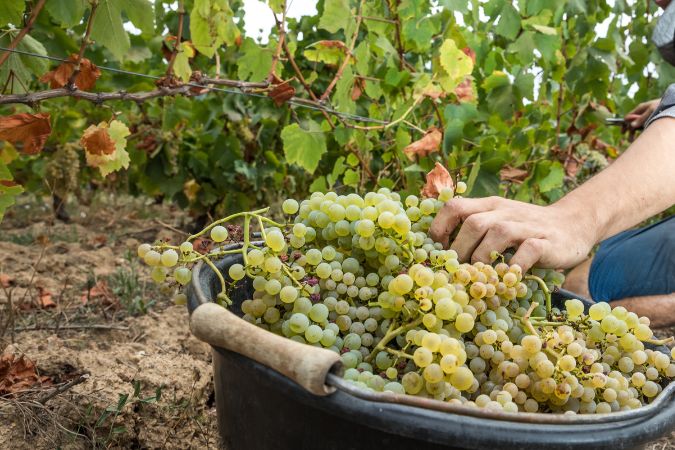
While Beaujolais is very much a place apart, it also falls under the wider regional AOC Bourgogne appellation, meaning its Chardonnay can be used for generic white Burgundy or Crémant de Bourgogne. Both categories are big sellers, giving wineries a range of potentially lucrative options for their grapes and meaning that producing white Beaujolais, and building a new market for it, has not necessarily been a priority.
With Beaujolais enjoying a boom, many wineries are now being tempted to try to capitalise on the region’s enviable name recognition to build a new category for whites
‘Until very recently, I had never really tasted a Beaujolais Blanc and I think that’s probably true for most consumers, so it’s a blank slate and it’s a hand sell,’ says Maggie Macpherson, group buyer for Jeroboams. ‘You have to rely on people to really be passionate and to understand it … I mean, generic Bourgogne is an easy sell, let’s be honest, because it has been in the market for a very long time.’ However, Macpherson credits rising enthusiasm for Beaujolais, especially ‘nouveau’, to a new generation of consumers. A report last year for importer Liberty Wines suggested the fashion for lighter reds had seen sales of Gamay rise by 35%.
With Beaujolais enjoying a boom, many wineries are now being tempted to try to capitalise on the region’s enviable name recognition to build a new category for whites. Though undoubtedly still a niche proposition in terms of its presence in the UK market, a measure of the growing appetite for white Beaujolais comes from the popular wine bar chain Vagabond, now a division of Majestic, which sells by-the-glass wines via electronic dispensers in its 12 branches. The chain recently listed a white Beaujolais and has seen sales soar: ‘It absolutely flies out and it’s a staff favourite too,’ says Vagabond buyer, Colin Thorne. ‘People are very keen to recommend it, pointing people towards it, because I think within this category, it sits as a value option: a creamy Chardonnay that isn’t expensive.’
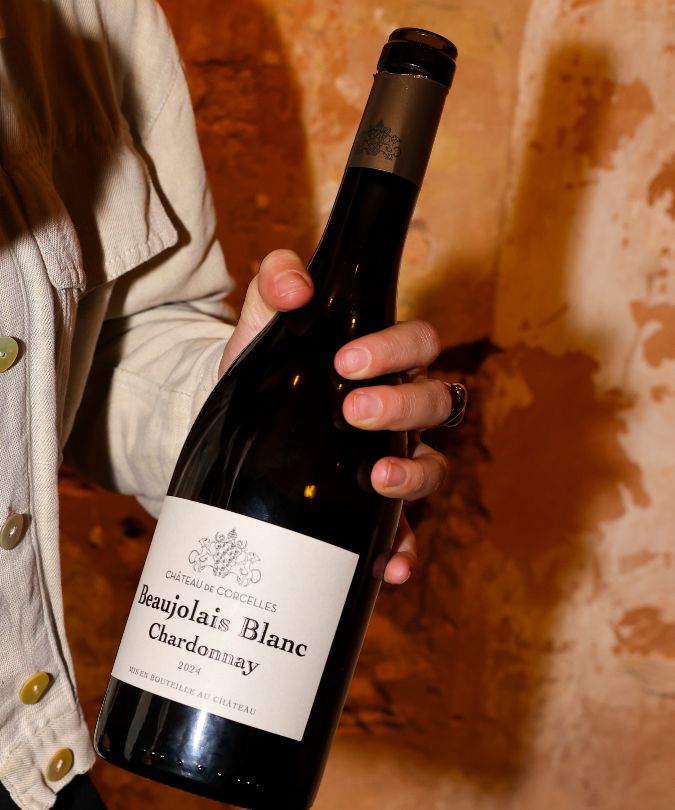
Back in the Beaujolais region, the positive sentiment, combined with the relative scarcity of Chardonnay, has seen the price of vineyards planted to white grapes overtake those dedicated to Gamay. According to the Beaujolais regional regulatory body, there are 574 hectares of Chardonnay, with plantings on the increase: around 450 winemakers are producing 2.3 million bottles of white wine from the main entry level appellation and 930,000 with the designation Beaujolais Villages.
Beaujolais Blanc tends to exhibit plenty of freshness, with floral notes, plump citrus, vibrant acidity and, perhaps unsurprisingly, some Burgundian influence, though there’s also a noticeable energy and dynamism
So does white Beaujolais have a signature style? The answer has to be that these are early days for a category that’s only just getting started, in the UK market at least, with winemakers still experimenting. Some are using oak to produce a plumper, richer style; others are opting to keep it fresh, lean and clean. The wines tend to exhibit plenty of freshness, with floral notes, plump citrus, vibrant acidity and, perhaps unsurprisingly, some Burgundian influence in the winemaking, though there’s also a noticeable energy, a dynamism that’s often lacking in generic regional Burgundy. As a rule, the wines are gastronomic, requiring food, rather than ‘summer sippers’, and the prices are mostly reasonable, occupying the £12-£18 bracket.
After tasting two dozen different examples, Thorne believes there are now two different and distinct styles of Beaujolais Blanc emerging: ‘There’s that kind of rich, old-school Meursault kind of vibe, with an oatmeal, creamy, slightly lazy fatness. And then there are these really quite energetic, salty, crisp styles, which might be interesting in a Chablis blind tasting.’
There’s so much more now understood about the complex tapestry of terroir that underpins the Beaujolais region. When you place this alongside the fact that sales of white wine are increasing globally and that the price of Burgundy is continuing to rise beyond the reach of many consumers, it’s easy to see why an appetite is building among producers to shape a new category harnessing the power of name recognition. As a result, the continued growth of white Beaujolais would seem to be a very safe bet.