In the Koreatown neighbourhood of Los Angeles, I’m having lunch with Jenee Kim, the owner of Park’s BBQ, who is something of a ‘K-Town’ matriarch. We are sitting in the unassuming, noir room, which stands in stark contrast to a technicolor spread of side dishes called banchan that soon brightens the table. There are fermented cucumbers and kimchis representing different levels of funk and tang; strips of salty-sweet eomek (fish cake); pickled king oyster mushrooms, and more. Many of them were discovered on recent field trips to Seoul and other Korean cities. Then, the jewels arrive in the form of the signature short-rib galbi, thinly-sliced brisket, rib-eye chuck and bulgogi beef. My most primal energies are voraciously alit as the meat is expertly cooked before my eyes, before dipping in ganjang (a soy-based seasoning) or wrapping in lettuce and perilla, ssam-style, along with flamingo-pink radish pickles and a nutty, piquant dipping sauce called ssamjang.
With the attention to detail behind the banchan, the quality of the meats, and the expert cooking of them in front of you, Park’s BBQ isn’t your average Korean barbecue restaurant, so its tenure over 21 years isn’t surprising, but its evolution and capacity to stay relevant have been spurred on by other influences, created in part by modern-Korean restaurants that have made waves beyond K-Town.
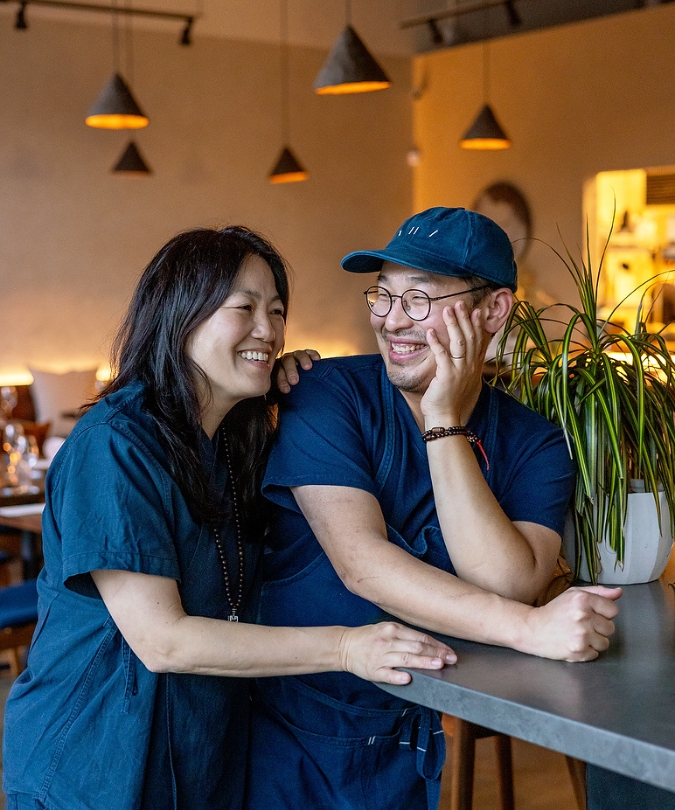
First, there is LA Times food critic Bill Addison’s Restaurant of the Year for 2024, Baroo, in Downtown Los Angeles. There was also the success enjoyed by recently closed but much loved Yangban, which served ‘Korean Americana’ food in the same area, as well as David Chang’s Majordōmo in the northeast corner of Chinatown, which has been open since 2018. In Silver Lake, there’s Joseon, a tasting menu concept from chef Debbie Lee, who has North Korean roots, and there’s Perilla by chef Jihee Lee in Victor Heights, which reinterprets banchan using premium Californian ingredients.
‘I think the second-generation young chefs are making Korean cuisine more popular and easier for everyone to understand,’ says Kim, citing kimchi, Bo Ssäm, and banchan as terms that Angelinos will all be familiar with today. For head chef of Baroo, Kwang Uh, it is important to acknowledge the path forged by pioneers in K-Town. ‘The longstanding, traditional Korean restaurants in LA’s Koreatown have set the standard for our community,’ Uh says, ‘We wouldn’t have the reach and be able to connect with diners without the work of Koreatown restaurants.’
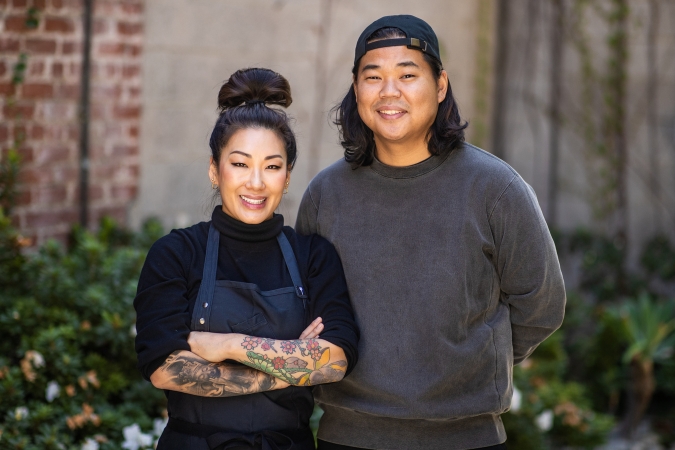
For Katianna Hong, a chef who has appeared on the US reality cookery programme Top Chef and co-founded Yangban, the K-Town food scene was built by immigrants out of necessity. She perceives, however that this newer generation ‘is also telling a different narrative through a different lens, a more American lens,’ she says. ‘Many of us, while being born in Korea, have not lived in Korea and don’t have that experience to share.’
These Korean restaurants are symbolic of a shift that has finally got some momentum. As Uh puts it, reflecting on Baroo’s Restaurant of the Year win, ‘the award certainly feels like a recognition of the importance of this moment in Korean cuisine.’ Below are four Korean restaurants in Los Angeles that help encapsulate that moment.
Four Korean restaurants to try in Los Angeles
Majordōmo
Chinatown
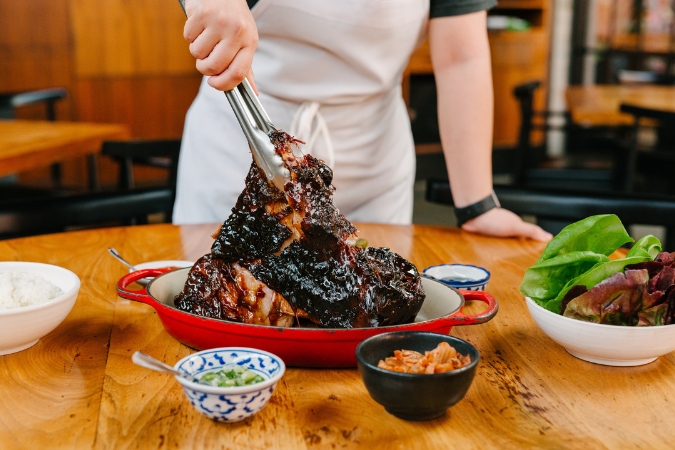
There was a lot of excitement when David Chang opened his first restaurant in LA, and the restaurant’s buzz continues to this day. The spacious super-restaurant is full of energy, and whilst the menu is very eclectic, it was an important player in raising the profile of modern Korean food in the city. ‘Majordōmo’s food is quite unique in that our Korean inspired large formats really anchor our menu,’ Tim Mangun, the restaurant’s executive chef says.
He cites the smoked beef whole plate short rib and smoked Bo Ssäm, with the former an adaptation of Chang’s mother’s galbi marinade, while the Bo Ssäm uses cured, smoked and glazed bone-in pork shoulder instead of sliced pork belly, as is tradition, with both served ssam style with bibb lettuce, perilla, shiso, and kimchi. Korean influences shine through in dishes like oysters with kimchi and kombu mignonette, and wagyu ragu rice cakes with onsen egg and garlic chili. The drinks offering is impressive, featuring excellent sakes and an eclectic wine list, with particular strengths in Burgundy, German Riesling, and Italian Nebbiolo.
Baroo
Downtown
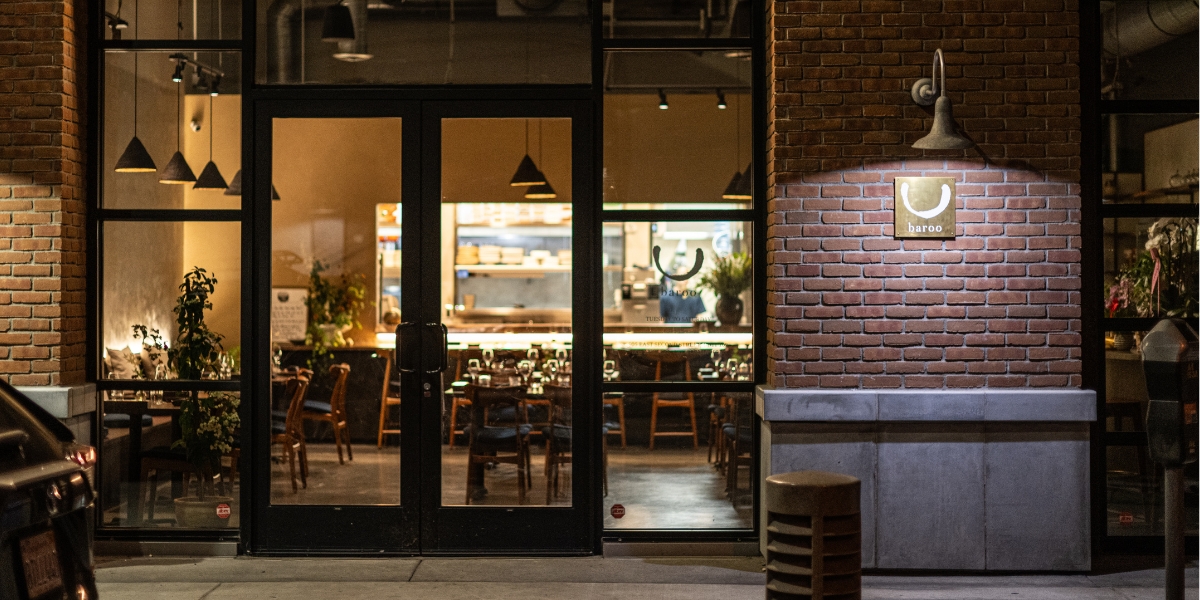
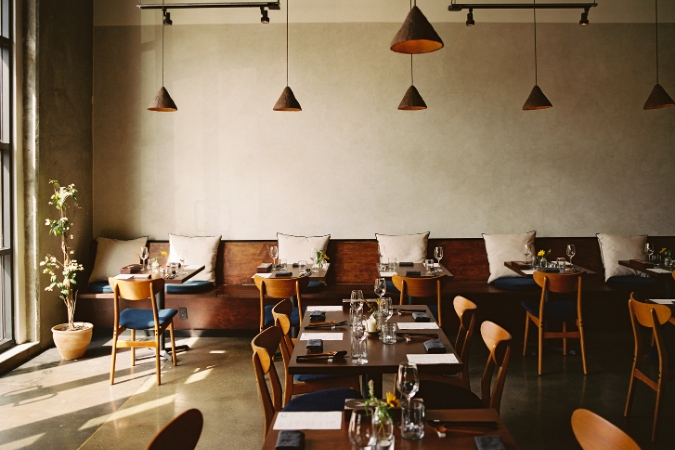
At Baroo, culinary influences include René Redzepi of Noma and Seoul-based chefs Hee-Sook Cho and Mingoo Kang. However, most impactful is Buddhist nun Jeong Kwan, renowned for her plant-based temple cuisine. Uh’s six-month stay at her hermitage deeply shaped his respect for nature, traditional fermentation and the philosophy of temple cuisine. This is obvious as soon as you enter Baroo and are swept in by its calm, organic decor and look around at characterful artefacts that ignite a sense of curiosity.
The tasting menu at Baroo is uniquely structured to reflect the Buddhist lifecycle. Each course is named after a phase of life, beginning with birth and concluding with a dessert symbolising the transition between death and rebirth. ‘To me, this is like each phase of life – connected and ideally in harmony and not jarring,’ Uh explains. You can go for a wine pairing or a Korean sool pairing, which features makgeolli and other Korean beverages. The menu changes with the seasons and availability of ingredients but a wild black cod dish, with the fish soy-braised and served with dongchimi (radish water kimchi), lemongrass, buttermilk, and green papaya was a highlight; a flawlessly cooked Hokkaido scallop with minari (water celery), gim (seaweed), and puffed wild rice; as well as a gorgeous piece of pork collar, with a rich and meaty goulash jiggae sauce and baek kimchi(a white version without gochujang) are all worth ordering if on the menu. My ineffably delicate and harmonious dessert was a play on the dish Bingsu, consisting of peach sorbet with almond and sikhye (a sweet Korean rice drink), peach snow ice and black sesame crumble. It is, emphatically, a rebirth.
View this post on Instagram
Park’s BBQ & K-Team BBQ
Koreatown
Park’s BBQ has become a Korean institution in Los Angeles, with a focus on barbecued beef, marinaded ribs and great hospitality – it’s an LA classic and should be considered a rite of passage for lovers of this style of food.
In 2024, the Park’s team opened K-Team BBQ to complement the original restaurant and while many of the new guard are reinterpreting Korean food through an American lens, K-Team BBQ draws on references from 1970s Seoul. With its tiger orange and white checked tiles and animated posters on the walls, its reinvention of nostalgia feels utterly contemporary. Pork takes centre stage at K-Team, with highlights including frozen pork belly and thin pork belly, pork collar, as well as one bovine anomaly: beef tongue. Any order comes with a small selection of banchan, including radish-shoot kimchi, ssamjang, gochujang and a ssam set of lettuce leaves and perilla. There’s also plenty of excellent options outside the barbecue offering, with the chilled kimchi acorn noodle soup an exceptional must-order. Wash it all down with a Sochelada (an LA-inspired soju cocktail) in a can or some craft makgeolli.