Created by four university friends in partnership with a maestro mezcalero in Mexico’s Michoacán, Zacal offers an alternative to the many mezcals from Oaxaca, the majority of which are made from Espadín agave.
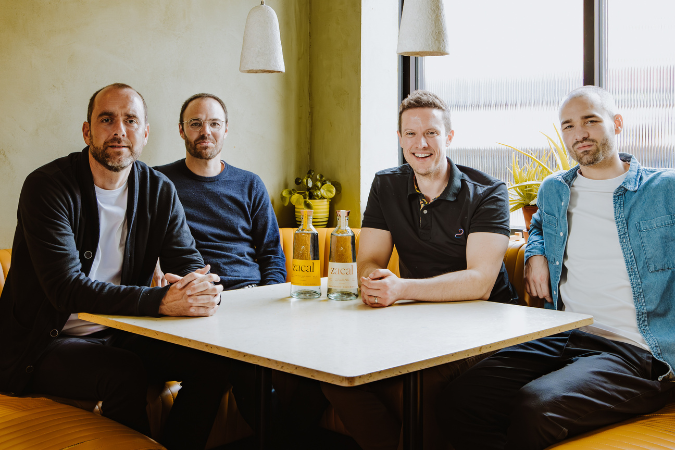
Plans for the brand began in 2020, during lockdown, when Phil Clayton, Andrew Maidment, Christian Osborne and Ian McCaig decided the time had come to create a spirit brand together and settled on mezcal. After a few years of research, visits to Mexico to find the right partner, product development and inevitable shipping delays, Zacal finally launched in the UK in 2025.
‘While everyone else was learning to bake sourdough, we went, “let’s launch a business together”’
– Zacal co-founder Phil Clayton
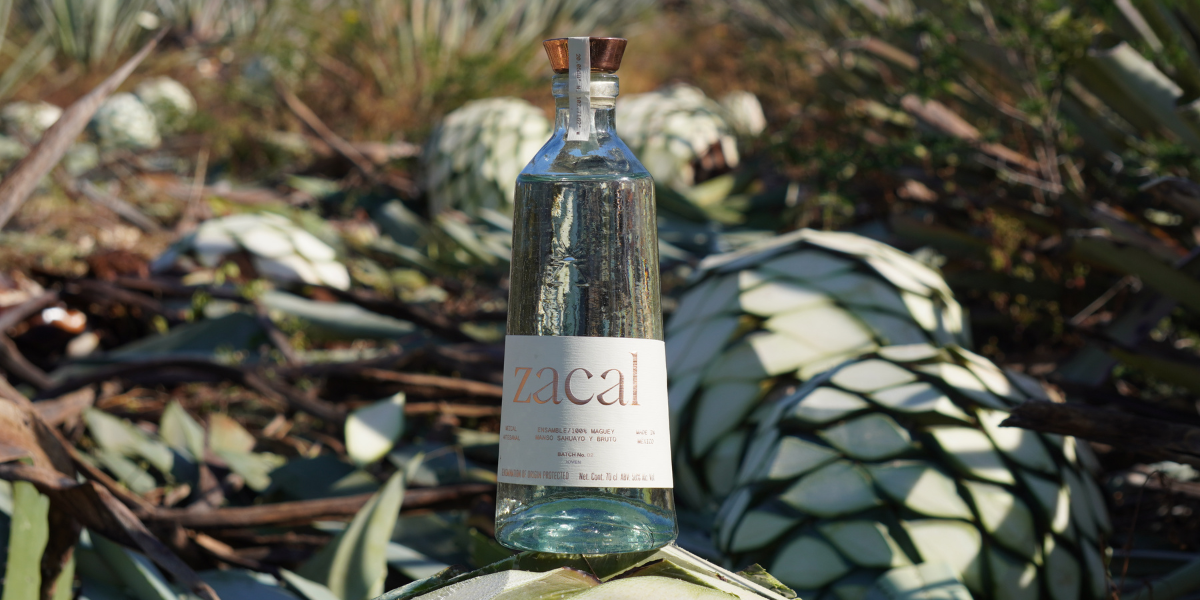
Third-generation mezcalero Milton Ochoa creates two expressions, one centred around the Manso Sahuayo agave, and another, an ensamble, which blends Manso with Bruto. Both have been awarded Silver medals from the IWSC, and there are more products set to join the range this year.
The origins of Zacal
‘We used to run hospitality nights in Bath, which was really the start of us thinking that we should maybe do something together in hospitality, or in the drinks industry,’ says Clayton. ‘That’s the kind of naivety, or stupidity, of people in their early twenties thinking that anything’s possible, but it set the tone for a lot of what we’ve done as a business and a brand – it’s a kind of mindless optimism.’
The four, who had mostly gone into careers in tech, would meet regularly via Zoom during the Covid pandemic, where the plan for Zacal began to form. ‘Sometimes we’d be drinking mezcal, sometimes beer, just pretending we had a social life. And while everyone else was learning to bake sourdough, we went, “let’s launch a business together”.’
Bruto is a massive agave that grows wild on rocky hills taking anywhere from 15 to 30 years to mature
Following some sound advice to follow the path less travelled rather than head, predictably, to Oaxaca, the four set their sights on the state of Michoacán and were able to secure an online meeting with the head of the union for the region’s mezcaleros. ‘He was this lovely fellow who was like, “who are these gringos?”. But we convinced him eventually, and he agreed to take us around to meet some people,’ says Clayton.
A visit to the region followed in 2021, leading to a meeting with Ochoa at his vinata, or distillery. ‘He’s this mischievous guy, a bit Willy Wonka-esque, and he just swore a lot in broken English. We clicked straight away.’
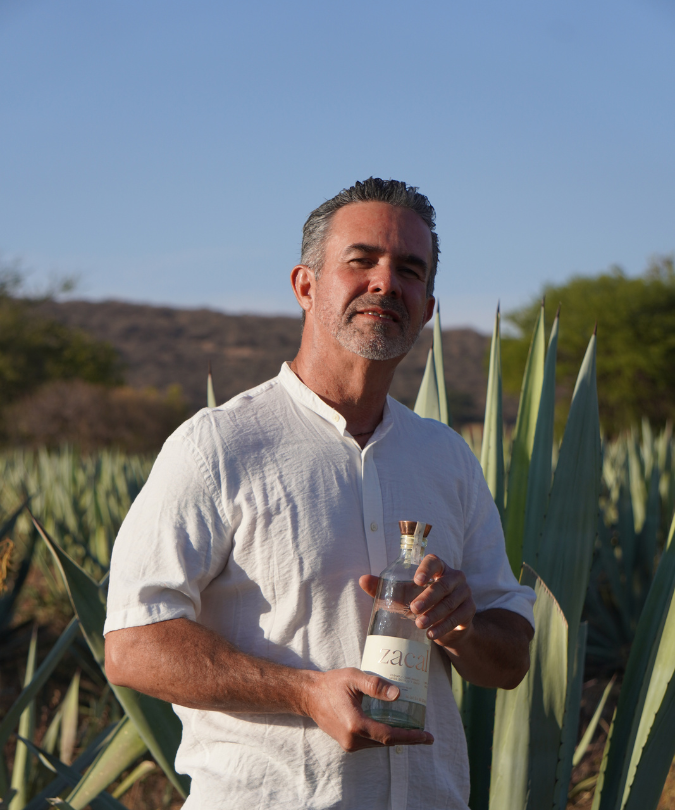
After sampling the mezcal that Ochoa sells locally, the mezcalero offered a taste of what he produces for friends and family, with an extra, third distillation in copper stills. With a few tweaks, this became Zacal’s Manso Sahuayo expression.
There were plenty of logistical hurdles yet to come. ‘We nearly didn’t get to market. We should have launched in October 2024, but our stock went missing in customs for ten weeks at Vera Cruz,’ says Clayton. ‘It had been flagged because it was a small-batch producer that hadn’t exported before, and that route was being used by drug dealers to smuggle fentanyl into Europe.’
What goes into making Zacal?
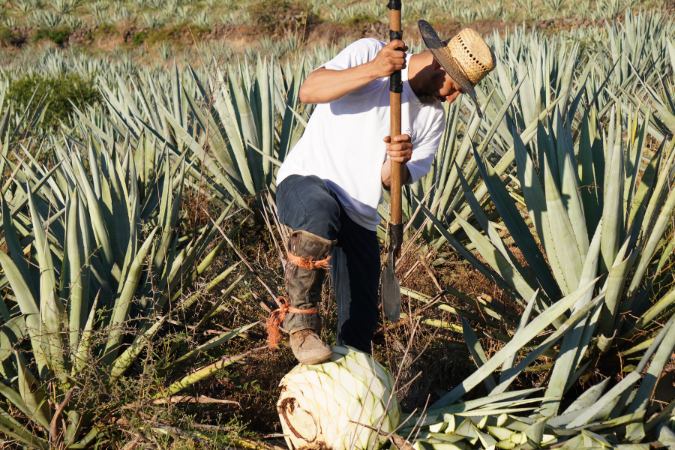
The team chose to focus on two agave varieties, starting with Manso Sahuayo, which shares its name with the local municipality and is native to the region. While not cultivated, it’s grown in fields and is a relative of the most commonly used agave in mezcal, Espadín, and of Agave Tequilana too. The appropriately named Bruto, meanwhile, is a massive agave that grows wild on rocky hills taking anywhere from 15 to 30 years to mature.
Volcanoes are a significant part of Zacal’s identity
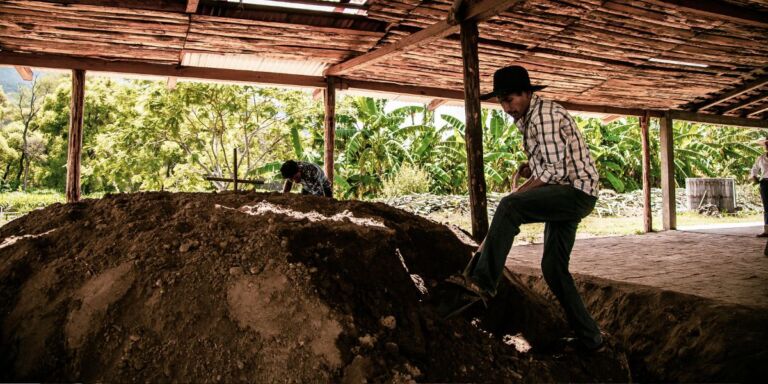
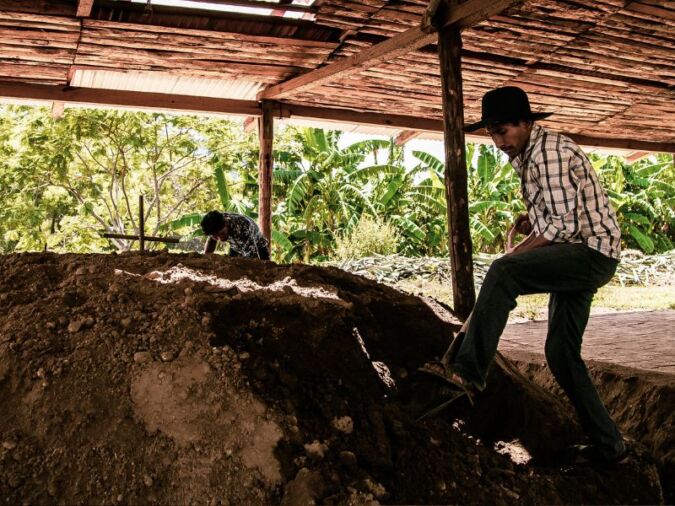
Ochoa cooks these with local Encino and Mesquite wood, covering the agave with the region’s volcanic clay soil. This results in more caramelised flavours, rather than smokiness, Clayton explains. After nearly a week of cooking, the agaves are hand crushed using a mallet, and then fermented in open brick tanks containing wooden pallets. ‘It sounds a bit nasty, but they don’t clean it – it’s that microbiology, and the microclimate, that determines a large percentage of the flavour. You realise those cultures are decades old, some from when Milton’s grandfather was around,’ he adds.
After about a week of fermentation, depending on the time of year, distillation takes place – first in steel, and then twice in copper stills. The resultant distillate is hand filtered and hand bottled.
How did the design come about?
Volcanoes are a significant part of Zacal’s identity, inspired in part by nearby Parícutin, a cinder cone volcano that emerged in a field a few hours’ drive from Ochoa’s vinata, in 1943. ‘There was a farmer walking through his cornfield, and it just erupted. Within two weeks he had a 400 metre volcano in his field,’ says Clayton, adding that volcanic soil and terroir are significant in Michoacán generally.
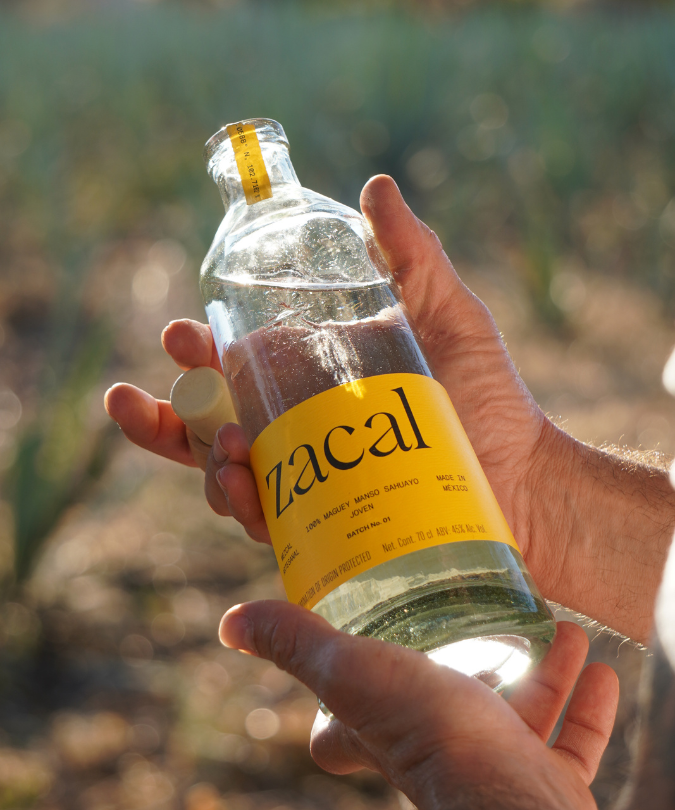
Parícutin became the inspiration for the shape of Zacal’s handmade bottle, and informed the design of the brand’s logo too. These were both designed by Aldo Álvarez Tostado, a Mexican artist and the cousin of a friend of the four founders. ‘He’d never done a bottle design before, but he’s a great artist with a great feel for what we are. He’s come on board as a sort of creative adviser.’
What’s next for Zacal?
After its initial launch in the UK, Zacal has begun to be available in Spain and France, with Mexico next on the list. The range is expanding this year too, starting with the recently-launched Zacalita – a sparkling mezcal Margarita in a can. The team have worked with Chris Tanner from London bar Dram on the recipe with the idea of creating an accessible gateway into Zacal, and into the world of mezcal more generally.
Meanwhile, at the other end of the spectrum, work is underway to create an ancestral expression. While the initial pair of spirits are mezcal artesanal, a classification with tightly defined criteria, mezcal ancestral takes things further, in an even more traditional direction. Notably, these mezcals are distilled in clay pot stills.
Zacal’s ancestral will be made entirely from Bruto, and will be presented in the same shape bottle, but with different coloured glass and a weighty stopper made from red and black obsidian. If all goes well at customs this time, it’s set to reach UK shores by October this year.