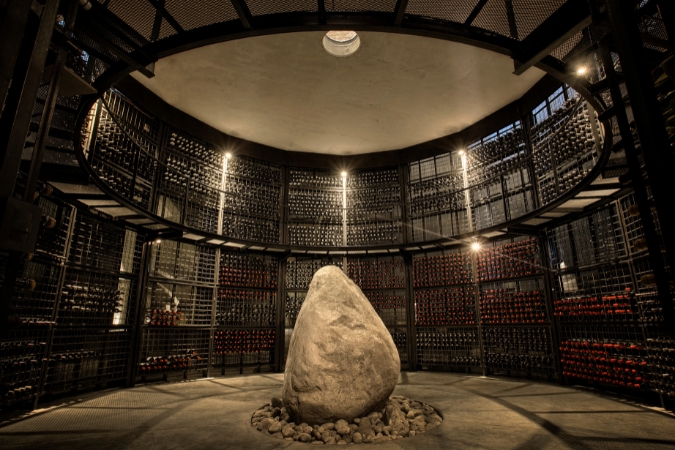
We all had a strong urge to touch the rock in the cellar of Zuccardi’s winery in Mendoza. It’s the size of a small car, surrounded by a ring of wine racks, the bottles pointed inwards like acolytes, and it has a magnetic quality. My colleagues and I ran our hands over it and marvelled at its energy.
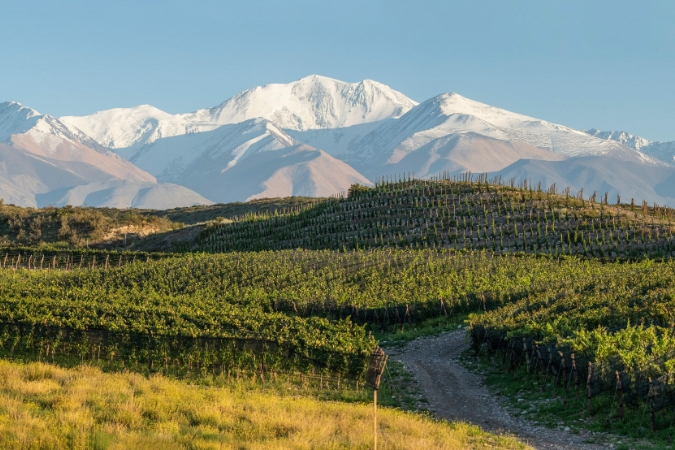
If you were allowed two words to describe Mendoza’s wine culture, those words might be ‘mountains’ and ‘stone’. The Andes is a range so vast and so all-pervading that the word ‘terroir’ does scant service as a descriptor. The mountains, untamed and intractable, are alive in the way a river is alive. They are as watchable as the sea. At sunset, the cordillera becomes iridescent, changing from shades of green and brown capped with white to layers of blue, pink and the deepest purple.
Mendocinos’ relation to Mother Earth comes in many forms. Laura Catena of Catena Zapata has a weakness for the mystical: her ‘astrological tasting’ aligns tasters’ star signs with certain cuvées (mine, Sagittarius, is paired with her excellent Bonarda). It’s a slightly loopy experience, made more so by a meditation session beforehand. ‘Don’t worry if you fall asleep,’ Catena said as she stretched out happily under the trees on the lawn.
It would be wrong to give the impression that winemakers in Mendoza are moonstruck. Catena Zapata has been committed to research for three decades: since 1995, the Catena Institute has worked with major universities to study every aspect of the soil and micro-organisms of the 1,450m high Adrianna vineyard in Gualtallary, planted in 1992 and the jewel in the winery’s crown (several renowned wines come from here – a trio of parcellaire Malbecs and the famous Chardonnays called White Bones and White Stones). ‘We use science to preserve the nature and culture’ of Argentina’s wine heritage, Laura Catena says.
‘The study of soil is a whole new frontier,’ agrees Alejandro Sejanovich, another veteran Mendoza viticulturalist. He met executive Jeff Mausbach when they were both working at Catena; 15 years ago, they founded Mil Suelos (‘a thousand soils’); their mission: ‘To deeply explore Argentine soils and reflect their diversity in every bottle.’ Mil Suelos is now a 1mn-bottle operation working across Argentina and exporting to 30 countries, producing superbly lean and complex wines like Gualtallary’s El Cerro Chardonnay from the Buscado Vivo o Muerto range.
You’re constantly reminded that the land is cultivated under sufferance
Similarly, the research team at Grupo Avinea, the company owned by the businessman Alejandro Bulgheroni, also behind Argento and Patagonia’s Otronia, is dedicated to understanding how ‘organisms of the vineyard ecosystem’ interact. As part of the MatrizViva project, rows are sown with different native plants such as Nassella, Gazania and Achilea and their impact on carbon sequestration, microorganisms and so on is measured. It’s a complicated study and the effect on the vines will take years to be understood. ‘But,’ says Andres Valero, the group’s head of sustainability, ‘we already win because we know the project will foster biodiversity.’
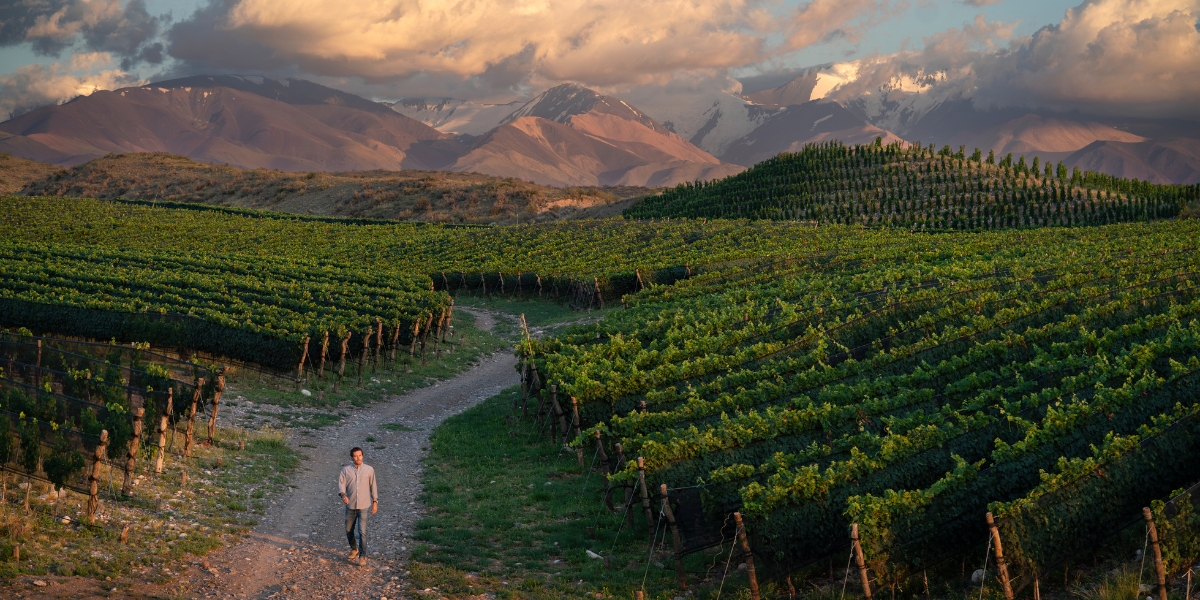
The respect for the land is unsentimental. In Gualtallary, in the Valle de Uco, Zuccardi has terraced a hillside. It’s a beautiful spot and agronomist Martin di Stefano has us walking the rows in silence. I wonder if they took the current orthodoxy into account, that terracing destroys the integrity of the soil. ‘We asked ourselves that question,’ di Stefano says. ‘But this is the most sustainable way of building terraces; we did it all by hand and the vine is planted at the very edge in order to bind the soil. And it’s a haven for wild plants and herbs.’
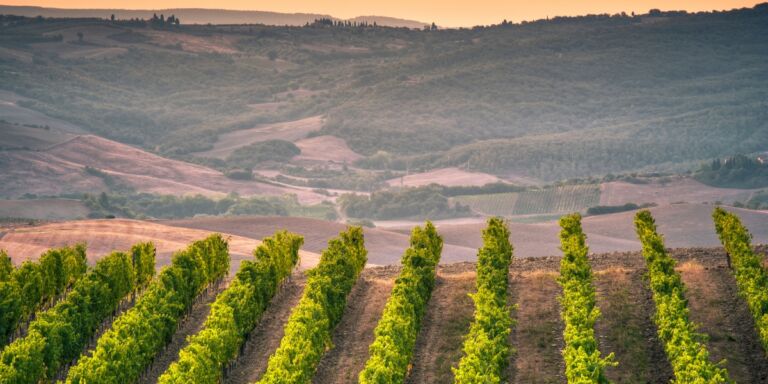
Laid out in 2018, this vineyard – called Agua de la Jarilla – uses several different training methods, from gobelet to more conventional vertical shoot systems. There are four ‘geology units’ – alluvial, limestone, caliche (calcium carbonate) and younger soils. The plots up here are asymmetrical, higgledy-piggledy, following contour and hummock, interspersed with native shrubs and herbs – gassania (valerian), dandelion, camomile, retama (broom), aromatic rocket, purple thistles in full bloom and many more. Enormous boulders are everywhere.
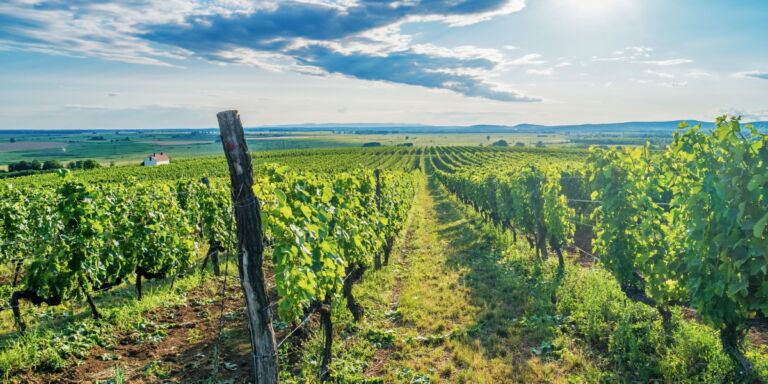
You’re constantly reminded that the land is cultivated under sufferance. ‘This was desert before we came and it will return to desert when we are gone,’ is the refrain of the vigneron here. Approaching Chakana, a winery founded in 2002 in Agrelo, Lujan de Cuyo, our wheels throw out a cloud of fine dry white dust that brings on a keen thirst. Then suddenly there are green lawns, fountains and lush bougainvillea; weeping willows cast a delicious shade.
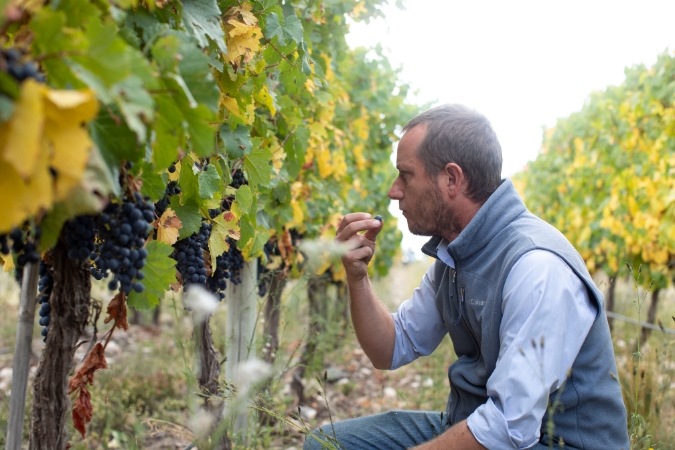
Chakana is fully biodynamic, one of only about ten such wineries in Argentina, agronomist Facundo Bonamaizon says. Bonamaizon uses ten different Malbec clones in the 65ha vineyard (Chakana has 90ha in total, two thirds Malbec with a range of international varieties, as well as a six-hectare plot of the increasingly interesting native Bonarda). We’re at 900m, under the bright white glare of an early summer sun: temperatures here can be 40°C in the daytime, dropping to 25°C at night.
Agrelo, however, ‘can be less elegant than the higher, cooler regions,’ Chakana’s winemaker Leo Devia says. ‘There’s a danger of over-ripeness.’ The team counters this with rigorous vineyard management and earlier harvests to keep hold of acidity. Yields have fallen dramatically: production is down 75% since Chakana was launched, from two million bottles to half a million today.
Amidst the proliferation of vessels found in many Mendoza wineries, concrete is king
The result is a series of remarkable wines. The Chakana Singular Torrontes, with its honeysuckle and mandarin aromas and fine tannic heft, is fermented and aged for eight months on skins in concrete eggs. The Nuna Malbec, of which Devia says ‘we’re trying to make this representative of Agrelo’, is lean and textured. It spends 18 months in raw concrete. These are intense and interesting wines – a Cabernet Franc from a more gravelly plot has a superb raspberry aroma and fine palate spiced with clementine.
At Salentein, whose winery is a dramatic concrete structure with a vaulted barrel hall that looks like a set from Fritz Lang’s Metropolis, planting and harvesting is done by soil type. It’s an enormous operation with some 800ha in production over five estates, the highest at 1,700m at the sought-after San Pablo, a region of Uco Valley that’s considered the coldest in Mendoza. Soil is analysed for its mineral content, microorganisms and size of particles. ‘We now understand a whole new aspect of terroir,’ agronomist Diego Morales says. Winemaker José Galante (one of Argentina’s most respected vignerons) sets much store by the calcium carbonate of high vineyards, like the 1,600m Las Secuoyas in San Pablo, and the stony precision it imparts to the wine.
While Galante uses oak to express Las Secuoyas’ minerality, amidst the proliferation of vessels found in many Mendoza wineries, concrete is king. Look at the wineries: Salentein’s clean brutalist lines, Zuccardi’s soaring concrete walls (even the patio chairs are made of the stuff – just try to lift one). The 100-year-old house at Bodegas Bianchi in San Rafael is a symphony of stone.
One of concrete’s keenest exponents is the renowned Daniel Pi. In Albo, one of Gualtallary’s de facto sub regions, the Bemberg brewing-to-private equity dynasty bought the 3,700ha behemoth Peñaflor in 2010, retaining Pi, its veteran head of winemaking. He persuaded the family to work on single-vineyard projects from its very best plots.
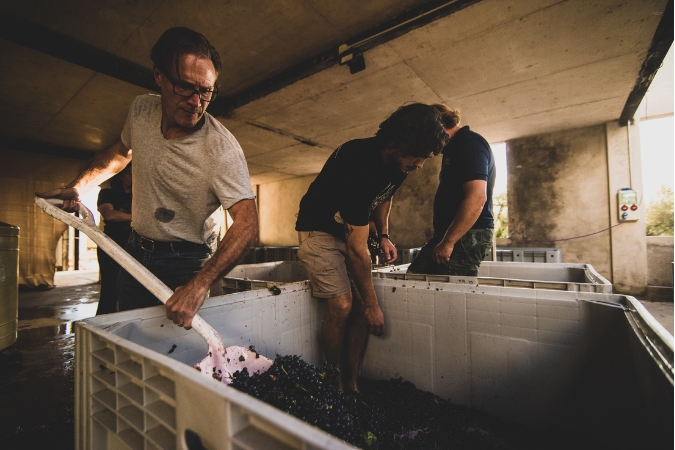
Pi works with a seemingly infinite range of materials, shapes and sizes of vessel: oak, plastic, ceramic; amphorae, eggs big and small, spheres, square concrete tanks and a stunning hall of 3,500-litre concrete vats. Furthermore, vine density is set according to soil depth and the resultant capacity for water retention. The La Linterna range, for example, includes Malbec, Chardonnay, Pinot Noir and Cabernet Sauvignon from topsoil (the sandy loam before it hits the stony caliche) varying in depth from less than 20cm to over a metre. The shallower the soil the denser the planting – the idea being to achieve the same overall yield from vines giving very different individual yields.
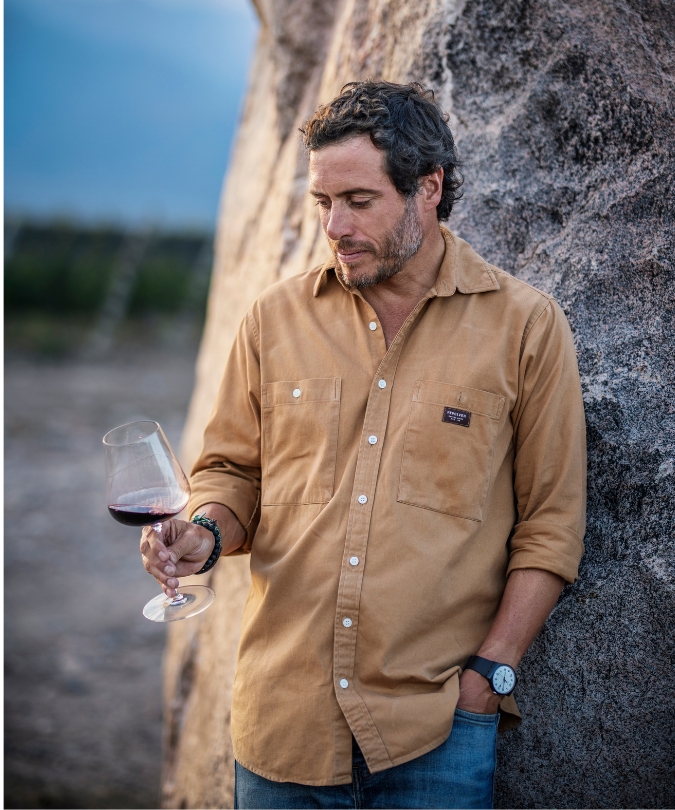
Even as winemakers and agonomists reach for the latest in experimental technology (the only vessel I didn’t see was the black-glass cube that’s becoming fashionable in some parts of the wine world), they never forget the bonds that tie them to the land. Sebastián Zuccardi pats his altar-rock as one might a tame tyrannosaurus. ‘It would have been impossible to move it,’ he says. ‘So we built the winery round it.’