Not so very long ago, I heard someone who makes a living from selling expensive Burgundy say something rather unexpected: ‘We are a little bit sad about the elevation of the price.’ And half an hour later, from another leading figure in the region: ‘We were almost hoping that the prices would go down.’
Context is everything. The two men in question – Thibault Liger-Belair, founder of the eponymous Nuits-St-Georges domaine, and Laurent Delaunay, head of négociant Edouard Delaunay – were speaking to me during the March 2023 Hospices de Nuits wine auction. Their comments were born of a concern that the unprecedented spike in Burgundy pricing experienced during the years leading up to that moment was alienating the region’s core customers, pricing them out of the market. More than two years on, you might say that their wishes have been granted – and how – as prices across the fine-wine and spirits landscape have taken a prolonged tumble.
‘This is the longest and deepest downturn that the fine-wine market has faced in the past 25 years,’ says Tom Burchfield, head of market intelligence at global fine-wine exchange Liv-ex. ‘Since the peak of October 2022, the market is down 27%. In contrast to previous downturns, which mostly affected Bordeaux, this one has hit every fine-wine region.’
Over the past three months, we’ve seen increases in white Bordeaux, Rhône and also South African wines, versus this time last year
While wider economic factors – from spiralling inflation and interest rates to geopolitical tensions – have hardly helped matters, it’s clear today that, in the first two years of this decade the fine-wine and spirits market had become overheated, especially for new releases. No matter how much you adore a particular winery or distillery, why would you pay over the odds for a product that loses value before you can drink it?
‘At the heart of the contract of primeurs and new releases is the understanding that buyers who commit early for wines that need a number of years of cellaring are rewarded with the best price for the wine in its lifetime,’ explains Nick Pegna, global head of wine and spirits at auction house Sotheby’s. ‘This confidence has been undermined by recent Bordeaux primeur prices [see Bordeaux sub-heading below] and overly ambitious price increases in Burgundy.’
The result? ‘This downturn has been characterised by a supply-and-demand imbalance, specifically a lack of demand from Asia, from older collectors who have enough wine to see them through, and from younger collectors not yet entering the market to take their place,’ says Burchfield. ‘What’s more, this lack of demand has been exacerbated since March by US buyers withdrawing due to the threat of tariffs.’
Why should collectors care about all of this? Well, as long as demand remains subdued, prices continue falling – and you may end up paying more for a case of Petrus today than it would cost you in a few months’ time. As a result, everyone is waiting impatiently for the market to bottom out. So, are we there yet?
‘The short answer is no,’ says Burchfield. The Liv-ex Fine Wine 100, a benchmark index that tracks the price movements of 100 of the most sought-after wines on the secondary market, had fallen for six months in a row to the end of July.
‘I don’t believe prices have yet reached their floor,’ echoes Amayès Aouli, global head of wine and spirits at auction house Bonhams. ‘In fine wine, true price appreciation over the long term depends on bottles being consumed – corks pulled – to create rarity.’ However, he explains, a slowdown in consumption has pushed against this, eroding demand and putting downward pressure on prices as a result.
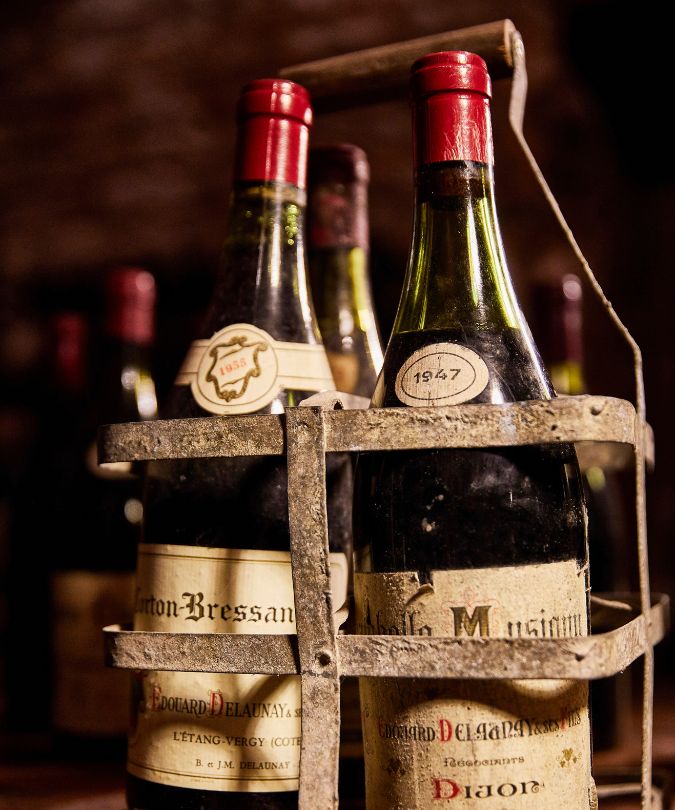
Luckily for all concerned, there’s a longer and more nuanced answer to that question too. First of all, the downturn is far from universal. Tim Triptree MW, international director of wines and spirits at Christie’s, highlights a three-day sale held in New York in June. All three auctions – including The Cellar of William I Koch: The Great American Collector, which raised $28.8m – were 100% sold, with highlights including a Methuselah of Romanée-Conti 1999 that fetched $275,000. ‘There remains strong demand for the finest and rarest wines, particularly those with a compelling story,’ Triptree says.
The conviction that young Bordeaux and some Burgundies remain overpriced is also piquing interest in other origins and styles. ‘Over the past three months, we’ve seen increases in white Bordeaux, Rhône and also South African wines, versus this time last year,’ says Barbara Drew MW, content officer at Berry Bros. & Rudd. ‘On BBX, our fine-wine exchange, there’s been a nearly 50% increase in sales of Loire wines over the past year.’
The Loire could be one to watch. Drew sees ‘real value’ and age-worthy quality among the region’s red and white wines – a view endorsed by Aouli, who name-checks Clos Rougeard in Saumur-Champigny, and by Angélique de Lencquesaing, cofounder of auction house iDealwine. She says, ‘The Loire Valley remains a rich source of well-priced gems, alongside lesserknown regions at auction, like Alsace and Corsica, which are gaining attention for their quality and affordability.’
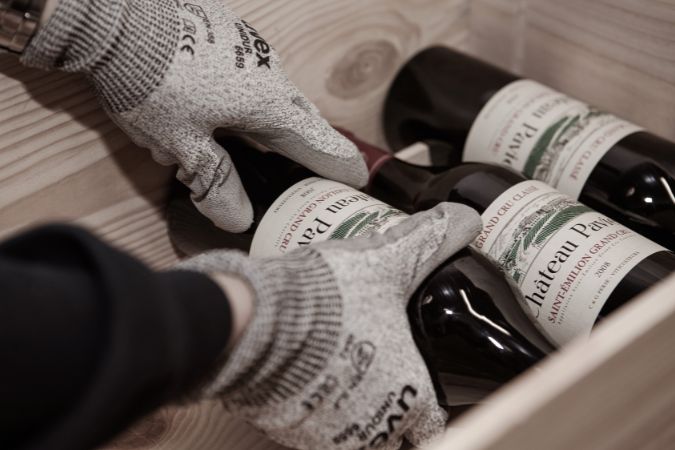
As the price gap between smaller regions and high-end Bordeaux and Burgundy widens, their value-for-money credentials become more compelling. But as de Lencquesaing points out, Bordeaux, Burgundy and the Rhône accounted for 72% of the company’s auction volumes in 2024. For the broader market to regain real vigour, its mainstays need to rouse themselves.
‘There are certainly some glimmers of light emerging,’ reports Matthew O’Connell, head of investment at merchant Bordeaux Index and CEO of the company’s LiveTrade platform. ‘Burgundy trading is materially better, and there are some positives in Champagne.’
‘We’ve seen increasing demand for white Burgundy across all tiers,’ adds Daniel Elswood, senior category manager (wine, whisky and spirits) at online auction marketplace Catawiki. ‘Roulot and Coche-Dury remain aspirational, but there’s great traction for producers like Pierre-Yves Colin-Morey, Jean-Marc Roulot and Benjamin Leroux.’
Now could be the moment for buyers to re‑enter the market, reaping the benefits of the price drops that have characterised the past couple of years
The sense is of a diverse market where some segments may have hit the bottom, but others still have a way to go. So here’s the key question: what should collectors be buying now?
‘I’d look at some top Champagne, and Burgundy towards the upper end of the spectrum – the top 20 producers or so,’ says O’Connell. ‘In a few years’ time, I think people will wish they’d bought at these prices.’ He references Bollinger La Grande Année 2008 being available in bond for not much more than £100 a bottle. ‘That’s not going to last for very long.’
At Sotheby’s, Pegna believes mature Bordeaux prices are ‘looking very compelling currently’, adding, ‘Some domaines in Burgundy are looking excellent value compared to recent vintage releases. For whisky, there are currently some amazing deals to be had buying Macallan and Bowmore in the secondary market.’
Ah, yes: whisky. Amid the much-hyped price spikes and luxury releases, it’s easily forgotten that spirits have not been a significant feature of this rarefied world for long. Even for whisky – which dominates the rare spirits space, despite activity from Cognac, rum and agave spirits – the traded volumes remain minuscule compared to fine wine. That creates inconsistent pricing and instability – hazardous territory for the unwary buyer.
‘The fine-spirits auction market is still young,’ says Aouli. ‘Fine-wine auctions have existed for 50 years, with a 150-year track record of tradable assets; fine spirits entered the auction world only about 15 years ago – Bonhams was a pioneer – and the marketplace remains volatile. The market is now separating enduring icons from passing fads.
In the foreseeable future, any resurgence across the fine-wine and spirits spectrum is likely to be patchy and subdued. ‘For me, it’s more about the pace and shape of the recovery, rather than whether we’re at the bottom yet,’ says O’Connell. ‘A widespread recovery would need a shift in the wider economy and spending power. I think that’s unlikely.’
But it isn’t all gloom and doom. There are early signs of a generational shift at play, with Christie’s Triptree reporting interest from millennials in online auctions, while Catawiki’s Elswood says, ‘Younger, digitally savvy collectors – particularly those in their 30s and 40s – are much more active now and joining the more traditional, slightly older buyer segment. They’re less driven by status and more by exploration. These are people who might pick up a 1990s Laphroaig one week and a 2016 Barolo from Burlotto the next.’
At Bonhams, Aouli foresees a greater focus on individuals over regions and styles in the future. ‘We’re moving towards a more “artist-based” model, similar to fine art, where value depends on the reputation and style of an individual producer rather than just region or vintage.’
It also seems that the downturn may have engineered a shake-out of those who entered the market in a speculative manner in search of short-term gains – in turn benefiting those who nurture a long-held love for the product. ‘We saw some sellers holding back as prices softened. But on the flip side, this has re-energised serious collectors and drinkers who were previously priced out,’ says Elswood. ‘We’re entering a more rational, value-driven phase, with users increasingly looking for quality, provenance and value over hype.’
Pinpointing when any market has hit rock-bottom is notoriously difficult; but if Elswood is right, now could be the moment for buyers to carefully re-enter the market, reaping the benefits of the price drops that have characterised the past couple of years – and secure in the knowledge that their future drinking pleasure will not be tarnished by the prospect of losing out financially along the way.
Is Bordeaux en primeur doomed?
Bordeaux en primeur (EP) – the mechanism for pre-buying wine from the most recent vintage while it is still in barrel – has existed for centuries, through boom and bust. But does the system’s current crisis pose an existential threat?
According to Château Angélus co-owner Hubert de Boüard, ‘Two years ago, maybe 300 châteaux had a successful en primeur campaign. Last year, it was about 150. This year,’ he continued, ‘15 to 20.’ When I recounted this anecdote to one London merchant, he responded with, ‘That many?’
An average price drop of 18% for 2024 has failed to revive a market tested to breaking point by the uncomfortable fact that the mature 2005 vintage now trades at or below the cost of 2022 EP – a wine that people may not want to drink for decades. So is EP broken? And if not, how can it be revived?
Daniel Elswood, senior category manager (wine, whisky and spirits) at Catawiki, told me that recent campaigns have ‘struggled to engage buyers […]. For en primeur to recover, it needs recalibrated pricing, better transparency and a renewed focus on end-drinker value.’
Meanwhile, Tom Burchfield, head of market intelligence at Liv-ex says that ‘it’s all about the price. If next year’s releases are priced well below all other recent vintages […], then it still makes sense to buy.’
Ultra-rare whisky rolls on
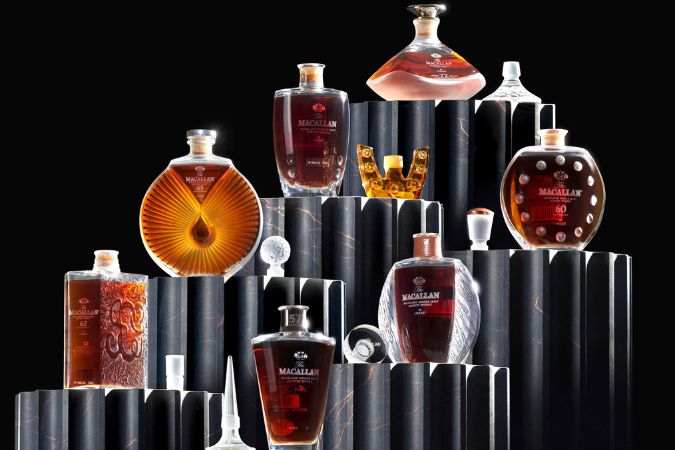
The correction to the rare whisky market has been prolonged, but the conviction among distillers and bottlers is that the apex of the market – those uber-rare releases aimed at ultra-HNWIs – has been less affected by softening demand.
Witness the release earlier this year of One for the Next from House of Hazelwood, the luxury whisky arm of William Grant & Sons – a £10,000, 60-year-old grain whisky from Girvan distillery with a twist: only some of the liquid has been bottled, with successive releases planned for each future decade, culminating in a 100-year-old whisky in 2065.
Then there is the oldest single malt yet bottled: Gordon & MacPhail 85-year-old from Glenlivet – a release of 125 decanters from the independent bottler priced at £125,000 each.
Finally, we have Artisan Casks, a new programme from the Artisanal Spirits Company, which will see a handful of Scotch whisky casks released each year, with the inaugural tranche ranging from £50,000 to £600,000.
Did any of them think twice in the current climate? ‘To be completely honest, it doesn’t make it any easier, and part of the reason for that is that there’s probably more competition for the same clients,’ says House of Hazelwood director Jonathan Gibson. Meanwhile, Stephen Rankin, director of prestige at Gordon & MacPhail, feels a launch as rare and exclusive as the 85-year-old Glenlivet transcends such concerns. ‘There are a lot of people who do enjoy and prioritise their spend on products of significant importance to them in their world.’
For James Mackay, private client director at Artisanal, ‘The people who buy these casks are not employees or C-suite executives, but generally chairmen or founders, or retired people with a lot of wealth. Their lives revolve around dinners and events in exotic places, and the interest level has remained.’
Five bottles to buy now
Château Montrose 2004
The chaos that has engulfed Bordeaux en primeur pricing in recent years means that mature vintages constitute excellent value for money by comparison. This super-second is a standout in a sometimes overlooked and somewhat inconsistent year. £72.50 (in bond) Bordeaux Index
Bollinger La Grande Année 2008
Rather as with Burgundy, Champagne prices were on a tear in the early 2020s but have come crashing back down to earth over the past two to three years. As a consequence, wines such as this – superb now, but with a long life ahead of it – have become more and more attractive. £103.33 (in bond) Justerini & Brooks
Clos Rougeard Brézé Saumur 2017
An eight-year-old white wine from the Loire might not be the most obvious pick, but this is one of the finest expressions of Chenin Blanc that you’ll find anywhere – and it will almost certainly comfortably outlive almost all of us. £174.17 (in bond) Cru World Wine
Domaine Roulot Meursault Clos des Bouchères Premier Cru 2022
Despite recent falls, Burgundy prices remain historically high, so deciding when to re-enter the market is the proverbial minefield. In this environment, dependable blue-chip names such as Roulot – lauded for its expressive, ageworthy wines – seem the safest bets. £466.67 (in bond) Bordeaux Index
Gordon & MacPhail 85-year-old from Glenlivet Distillery
I’m not sure how you place a value on a whisky that was filled into cask in the Speyside wartime winter of 1940, when production at Glenlivet and elsewhere was severely cut back. The oldest single malt yet released more than lives up to the hype, thanks to its remarkable vivacity and endless complexity. An astonishing whisky. £125,000 gordonandmacphail.com