Even before the industrial revolution, debates raged about what additives and treatments were best for wine. In Pliny the Elder’s Natural History, he alludes to the use of pigments to colour wine, pitch and resin to flavour wine, and lye-ash, pounded marble, salt, and sulphur to ‘adjust’ the wine. He concludes that ‘poisons’ were added to wines and that they were not ‘wholesome’ – an indication that even in Roman times, wine additives were hotly contested.
A historical pattern begins to emerge: winemakers develop tools, ingredients and other winemaking aids to improve the wine or to enhance the production process in some way. And then a countermovement pushes back with calls for purity, naturalness or a return to basics. The particulars of the accusations may change depending on the historical era the dialogue takes place in but the principles of the debate tend to remain the same: innovation versus traditional craft, quality or efficiency versus authenticity, industry versus purity. In many ways the tension rests on what truth is and what beauty is.
One way to observe what many call the natural wine movement is through a cultural lens, by witnessing it in action at a natural wine fair. One such event, the Cali Natty Wine Fair in Richmond, California, takes place next to a nondescript industrial building a short walk away from the San Francisco Bay. The modern movement is not only about a philosophical disregard for intervention but a creative playground, a celebration of uncommon winemaking techniques resulting in a cacophony of vibrantly coloured and often cloudy wines in a wide spectrum of flavours, from ethereal to microbially derived stews. It is clear there are cultural as well as ideological differences at play here, at least at the more maximally natural-leaning end of the spectrum.
Even in Roman times, wine additives were hotly contested
In terms of philosophical perspective, the modern movement still has many parallels with the type of protestation exemplified by wine commentators of earlier eras. The differences emerge when reviewing the winemaking techniques and additives in question. The level of innovation in wine technology has leapt forward at a dizzying pace, with many criticising the use of concentrates, industrial tannins, aroma-creating yeasts and dealcoholizing machines, to name a few of the more modern means of intervention.
RAW WINE, Vin Méthode Nature, and VinNatur are three prominent organisations with definitions for naturalness but there are other organisations with rules, not to mention the countless writers, winemakers and sommeliers with their own ideas of what defines natural wine. As with all complex debates, the definition of the terms must be approached cautiously, the way a toreador approaches a bull.
Apart from winemaking limitations, there is often a requirement for certain types of farming for natural wine. RAW defines the term as referring only to organic or biodynamic grapes. The Vin Méthode Nature rules, which were recognised in France by INAO in 2020, include a ‘Charter of Commitment’ that requires the grapes to be organic but says nothing about biodynamics. Based in Italy, VinNatur has its own prescription for farming and additional requirements, such as the requirement that at least 90% of the grapes must be grown by the vigneron, not purchased from other growers.
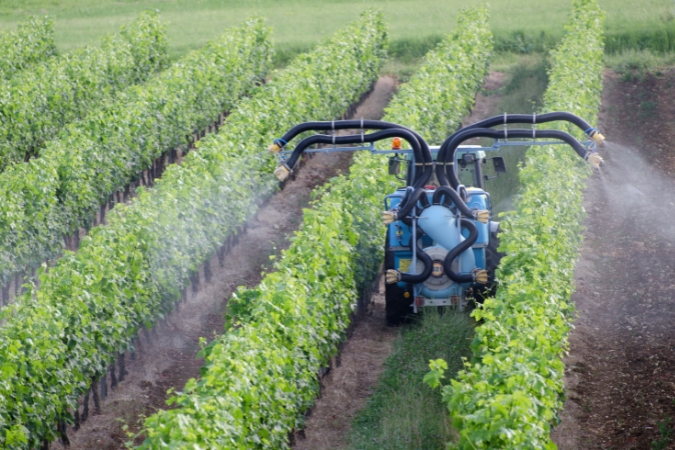
The key question to consider when regarding farming is to what degree these viticultural requirements are fair in terms of capturing what is natural. Those in support may point to a chasm between a vineyard farmed with naturally derived applications and laborious weed control and one farmed with a panoply of chemical fungicides, herbicides and fertilizers. They posit that a natural wine should come from a vineyard that uses only – or at very least mostly – natural farming tools and treatments. Though difficult to draw the line anywhere, some natural advocates say that organics is the best place to do so because it is an objective and legally measurable difference in farming that takes natural values into account.
Those against this idea have a few arguments to turn to. Many organic certifications around the world include exemptions, so there is no guarantee that everything used is natural. It is precisely for this reason that some naturally inclined growers want to go further. They could also argue that organic, or even progressive farming that goes beyond organics, favours machine weeding as opposed to spray but it may also be fair to say that an advanced piece of machinery isn’t a more natural way to control weeds.
How should the different definitions of natural be reconciled to decide what a natural wine is?
As for the marginal cases, for growers that make one organic exception, say, correcting for a severe phosphorus deficiency with an assimilable compound or using one synthetic spray to address an insect infestation, these critics could argue that this is a very reasonable action and that it in no way limits the naturalness of the resulting grapes. Some might argue that the current zeitgeist has drawn the definitions too narrowly, either because they are misguided or in efforts to limit competition. And as for the limitation placed on purchased fruit, the critic might ask how the transaction of buying grapes invalidates naturalness.
Given the widespread desire for natural products and the length of time humans have debated naturalness in wine, the conversation is unlikely to go away. Depending on the technologies and innovations in wine, the rules of transparency or lack thereof, and the state of the wine world, the additives and processes in question will change, but the fundamental questions and movements will remain. How should the different definitions of natural be reconciled to decide what a natural wine is? What can human beings and their inventions do to something before it ceases to be a reflection of the natural world? Can nature be captured in a bottle?