It’s an early summer evening in Satan’s Whiskers, one of London’s – indeed the world’s – best cocktail bars. I’m four cocktails deep yet feel as fresh as ever. Each drink has surprised and delighted me but what none of them has done is get me drunk. None of them contain any booze.
Even a year ago, it would have been difficult to find so many non-alcoholic offerings in one bar. And the ones you did see would either be insipid takes on classic cocktails ‘only without the alcohol’ or overly sweet, juice-based concoctions that you’d struggle to finish, let alone order more of.
Momentum and evolution in ‘low and no’
The Pathfinder was the first non-alcoholic drink to make it into a cocktail at Satan’s Whiskers, ten years after it opened, despite owner Kevin Armstrong’s initial misgivings. ‘The Pathfinder Amaro’ was an early test, served long with honey and ginger ale, which worked so well that it has been a fixture on the menu ever since.
There’s so much momentum in the non-alc category that bartenders just can’t close their eyes to it anymore
Rish Ravalia, who manages The Pathfinder in the UK, says there have been developments over the last 12 to 18 months (such as the introduction of The Pinnacle Guide, which scores bars partly on their non-alcoholic offerings) that mean bartenders can no longer ignore the non-alcoholic category. ‘They have to jump on the non-alc scene. The other part of it is there’s so much momentum in the non-alc category that bartenders just can’t close their eyes to it anymore,’ Ravalia says.
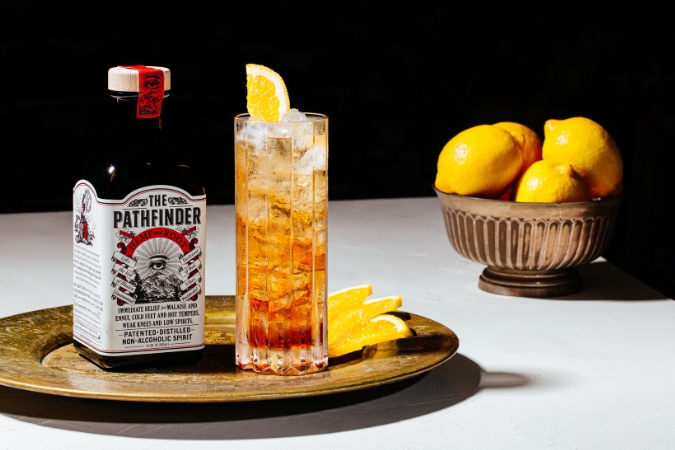
The Pathfinder works particularly well because it’s flexible enough to bridge the gap between alcoholic and non-alcoholic. ‘Everyone at a table can have a drink with The Pathfinder in it,’ says Ravalia. Indeed, The Pathfinder now makes its way into other Satan’s serves such as riffs on the Americano or the Paper Plane, in which it replaces one of the alcoholic ingredients – facilitating the ‘low’ in the ‘low and no’ options.
As non-alcoholic serves spread further into cocktail menus at high-end bars, stepping on alcohol’s once-hallowed turf, the category shifts away from the defensive instincts that sometimes saw early non-alcoholic brands position themselves essentially as ‘good despite no alcohol’. Now brands like The Pathfinder are confident and unapologetic about their identity. ‘We are rock and roll,’ says Ravalia. ‘We’re fun. We’re interesting. We’re exciting. We are a drinks brand – full stop.’
Chemistry of pleasure
Customer demand explains the ‘why’ behind this rise in high-end, low-alcohol serves but not the ‘how’. For that we need to look closer at the liquids bartenders are using to meet that demand, such as Botivo, co-founded by Sam Paget Steavenson. Steavenson’s background in hospitality consultancy taught him to value top quality ingredients. ‘We would only ever buy things in if we couldn’t make a better version,’ he says.
Steavenson observed a ‘real absence of craft in the space’ when developing Botivo, noting most low and no products sounded like ‘a chemistry experiment’ if you read the ingredient labels. Alcohol does much for a drink: it adds texture, extracts flavour from other ingredients and acts as a preservative. Steavenson needed to find a natural way of doing all that for Botivo without booze.
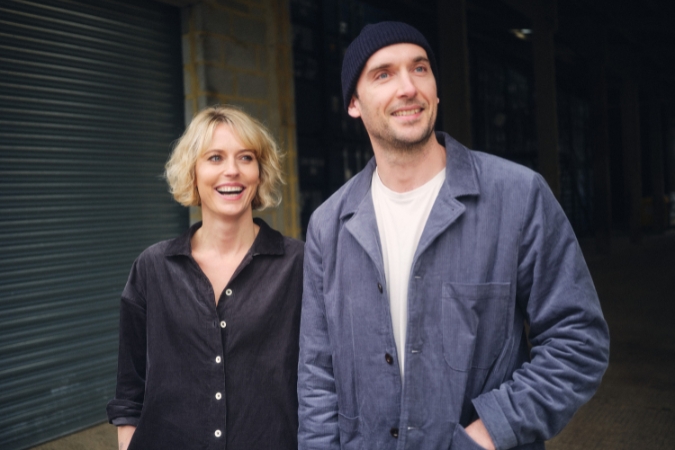
‘I came across these things called oxymels, which are a combination of vinegar, honey and botanicals,’ he says. They also gave Botivo an inherent complexity that mirrors the way most cocktails are built. It has acidity from apple cider vinegar, sweetness from honey and bitterness from wormwood and gentian root.
For Steavenson, drinks like Botivo and The Pathfinder represent a ‘second generation’ of non-alcoholic products that are complex and interesting in their own right without mimicking alcoholic ones, which makes them the more exciting category to be in right now. ‘We take inspiration from the world of aperitifs and vermouths but we are not an imitation,’ says Steavenson.
‘We’re all about pleasure and we’re not about moderation. We don’t want people to drink Botivo to feel good tomorrow, although that is a benefit of it; we want people to drink it because it’s delicious.’
A new professional curiosity
The cocktail bars pioneering these non-alcoholic serves complete the story. At Happiness Forgets, not far from Satan’s Whiskers in Hoxton, head bartender Benedetta Paris says the bar sells more non-alcoholic drinks than ever: ‘Sometimes we have complete tables where they order just non-alcoholic drinks, something that two years ago was impossible.’
She also says many customers will move fluidly between alcoholic and non-alcoholic options throughout their evening, suggesting they don’t necessarily see these as two separate categories at all. Nor has she had any quibbles over price – customers seem happy with the £8.50 Happiness Forgets charges for its non-alcoholic cocktails.
Paris says she creates non-alcoholic serves such as the (delicious) Green Lantern – featuring Botivo alongside fresh mint, cucumber, apple juice and lime – in the same way she would any other. ‘Honestly, it’s exactly the same process as an alcoholic drink,’ Paris says. She emphasises that the process isn’t simply one of removing alcohol but of building drinks from fresh, quality ingredients as the foundation.
Without alcohol to give body and complexity, the other ingredients have to work harder to create balance. This is why Paris puts her faith in the Italian concept of la materia prima (quality of base ingredients). It also helps that these fresh ingredients are ones that customers can easily understand, which gives them confidence to order what are still unfamiliar serves.
And what of the industry professionals who come to drink in this ‘bartender’s bar’? When it comes to talking shop across the stick, Paris says it is the less familiar non-alcoholic serves that pique their professional curiosity. ‘They are probably more curious about how we work in non-alcoholic than how we make alcoholic,’ she says. ‘They are impressed.’
The age of the over-sweetened mocktail is over
The age of the over-sweetened mocktail is over. With newer brands like The Pathfinder and Botivo, non-alcoholic serves can become shorter, bolder and more sophisticated – not simply booze-less versions of classic cocktails but drinks that can rely on the strength of their own characters.
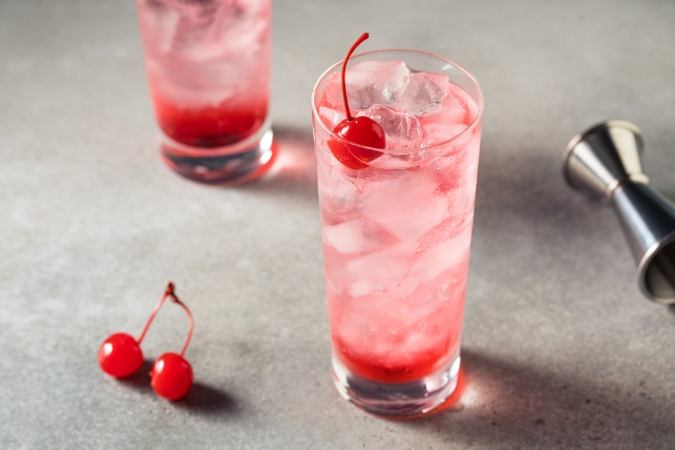
As more bartenders and drinkers discover just what is possible, the more this evolution will snowball. ‘Apart from the Shirley Temple, I don’t think there is a famous non-alcoholic cocktail,’ says Ravalia. ‘But with the direction the category is moving in, hopefully there will be.’