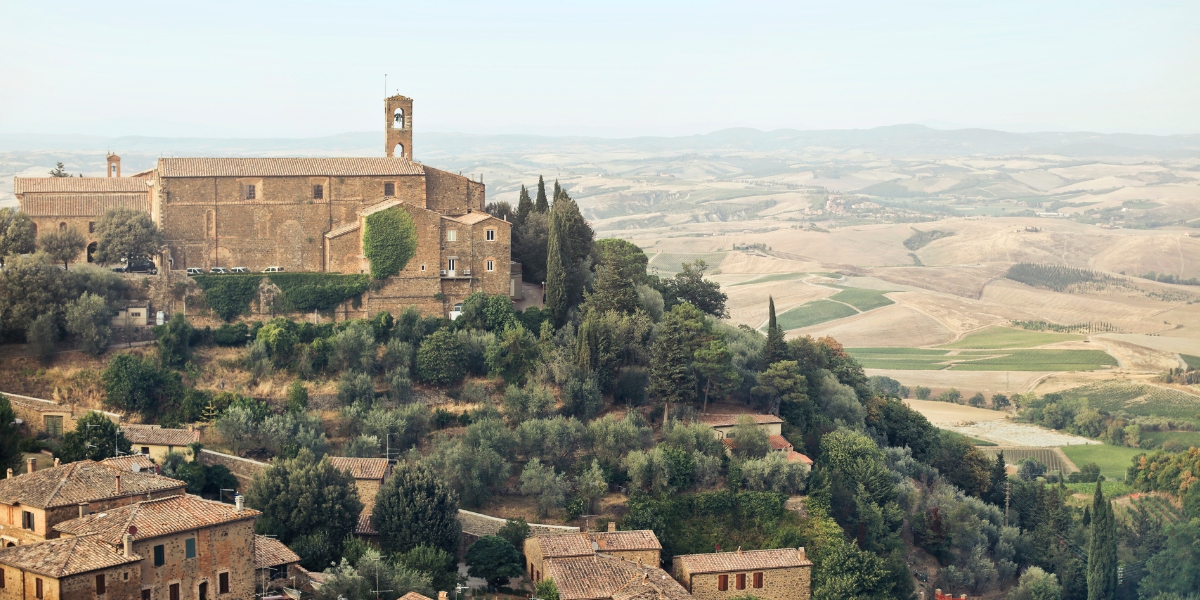
Rosso di Montalcino, historically viewed merely as a younger, lighter sibling to Brunello, is experiencing a significant shift in perception and market position. This DOC wine, crafted exclusively from Sangiovese, has traditionally been overshadowed by Brunello’s prestige and rigorous aging requirements. Today, however, it is increasingly recognised as a distinct expression of Montalcino’s unique terroir, with an identity that prioritises vibrancy and immediacy.
The market trajectory for Rosso di Montalcino shows a clear upward trend in value, gradually shifting its positioning from supermarkets to fine-wine merchants and independent bottle shops. Around 3.6 million bottles are released each year but an extra 350ha approved in 2023 could lift capacity by another three million bottles, effectively doubling supply without re-planting. Approximately half of the production remains within Italy, with the US currently the primary export market. Recent market data underscores a diminishing presence in supermarkets, reflecting a growing consumer understanding that Rosso di Montalcino with terroir-driven character and drinkability is not often available in a retail sector that generally has to prioritise shelf space for wines at the lowest prices.
However, recent external threats, such as the introduction of a 20% US tariff in 2025, pose challenges for producers who depend heavily on American markets. This economic reality underlines the urgency for producers to communicate the wine’s unique appeal and find new drinkers for it.
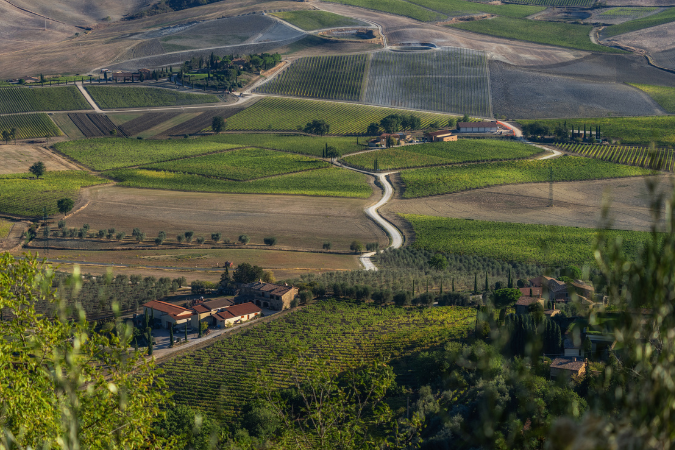
The terroir of Rosso di Montalcino
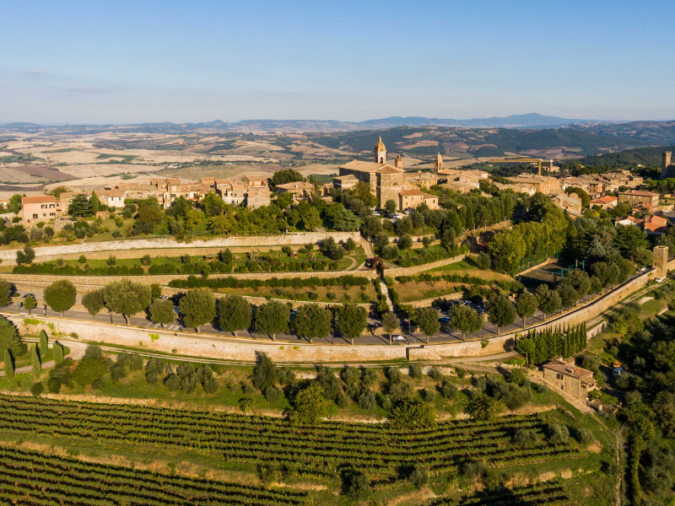
Montalcino’s terroir is marked by significant diversity, which helps to explain Rosso di Montalcino’s range of styles. Vineyards on north-facing slopes, typically cooler with higher altitudes (up to 564m), produce grapes with higher acidity, more refined tannins and enhanced aromatic complexity. These vineyards benefit from galestro and albarese soils, which are ideal for wines of tension and aromatic purity.
Conversely, south- and west-facing slopes receive greater sun exposure and warmth, moderated by Tyrrhenian breezes. Here, clay-limestone soils and occasional volcanic influences near Monte Amiata contribute richness, depth, and subtle mineral nuances. This terroir-driven contrast provides winemakers opportunities to craft distinct yet complementary styles within the DOC.
Climate change remains a pressing factor, with increased average temperatures (up by 1–1.5°C since 2000) and erratic rainfall patterns. Producers have responded by shifting vineyard plantings to higher elevations and adopting innovative canopy management techniques to mitigate heat stress and preserve acidity.
Human influence and winemaking philosophy
One of Rosso di Montalcino’s strengths lies in regulatory flexibility. Unlike Brunello, which requires extended wood aging, Rosso can be released after just ten months, with no mandatory oak influence. This allows producers to highlight fresh, fruit-driven characteristics.
However, a significant issue remains: not all producers define clear vineyard strategies for Rosso. Often, fruit selection occurs post-harvest or during aging, leading to inconsistent styles, ranging from approachable, fruit-forward wines aged briefly in neutral vessels, to heavily extracted ‘baby-Brunello’ versions that are subjected to extended macerations and new oak.
Examples illustrate these contrasts vividly. Wines like Col d’Orcia (2015) and Poggio alle Forche (2023) showcase vibrant fruit purity through minimal oak influence and brief maceration. On the other hand, Uccelliera (2020) and Sanlorenzo (2018) adopt extended maceration and small oak barrels, resulting in denser textures and pronounced secondary notes.
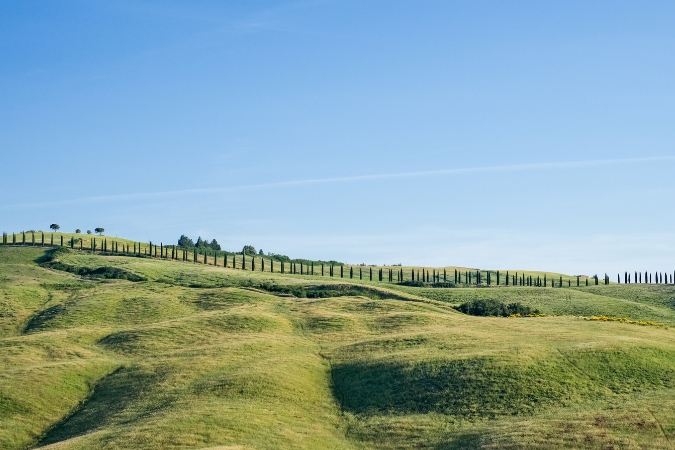
Shaping the Rosso identity
The clear trend emerging is toward defining Rosso di Montalcino as a standalone DOC, independent from Brunello. Producers increasingly recognise the importance of vineyard selection and winemaking methods aligned explicitly with Rosso’s vibrant, immediate character.
Wines exemplifying this contemporary approach include Sesta di Sopra (2023), marked by crunchy fruit and energetic acidity, and Casanova di Neri’s Giovanni Neri (2019), which combines terroir transparency with judicious oak use, enhancing rather than obscuring the grape’s intrinsic qualities.
Rosso di Montalcino stands at an exciting crossroads, moving decisively beyond its historical role as a mere Brunello precursor. Producers now have the opportunity – and challenge – to cultivate an identity deeply rooted in the immediacy, freshness and transparency of terroir-driven Sangiovese by making good decisions in the vineyard and the winery. This, combined with an effort to emphasise the wine’s unique identity to wine drinkers, will help to ensure a bright future for Rosso di Montalcino.