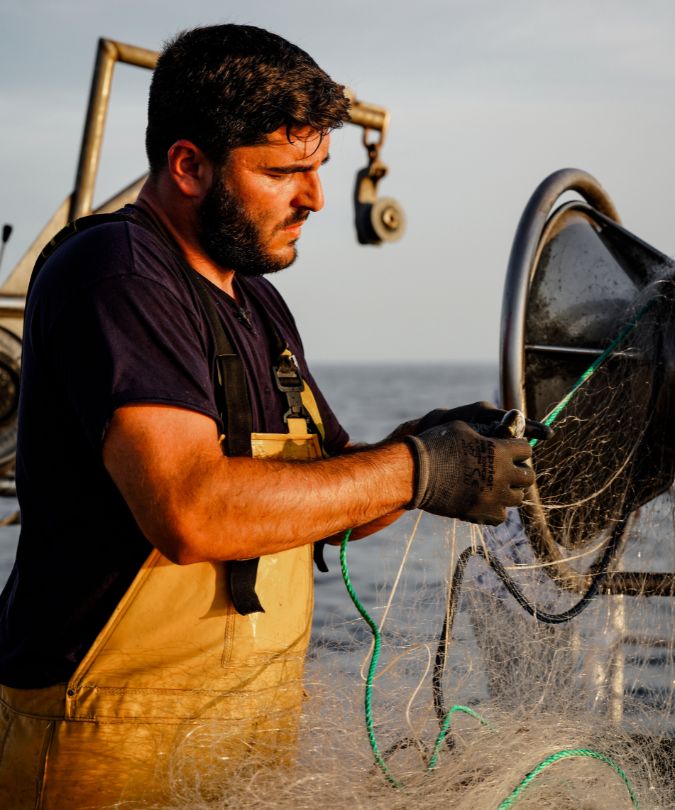
The low evening sun casts a golden hue over the canal waters and 1930s buildings along Quai Colbert. Welcome to Le Grau-du-Roi, the largest trawler-fishing port in the Mediterranean, located in the Petite Camargue, southern France, around 90 miles from Marseille. Aboard the St-Paul II, a towering, broad-shouldered fisherman prepares to cast off. Mathieu Chapel, 33, is the founder of Côté Fish, an online platform selling seafood directly to consumers – both private customers and, increasingly, as word spreads about his unconventional methods, some of France’s most renowned chefs.
Around 30% of fish is wasted by traditional fishmongering, says Chapel, but he strives to reduce waste. Far removed from the industrial trawlers that indiscriminately scour the seabed, the local-born fisherman works exclusively with boats under 12 metres. By collaborating closely with a network of local fishermen and prioritising selective fishing techniques, Côté Fish champions the Mediterranean’s unique terroir.
The Mediterranean is saltier than the Channel or the Atlantic, which influences the flavour of the fish
‘Terroir isn’t just for wine,’ Chapel insists. ‘The Mediterranean is often misunderstood. It’s a semi-enclosed sea, saltier than the Channel or the Atlantic, which influences the flavour of the fish – their flesh is more intensely iodised. Supply is unpredictable, but it holds hidden treasures.’
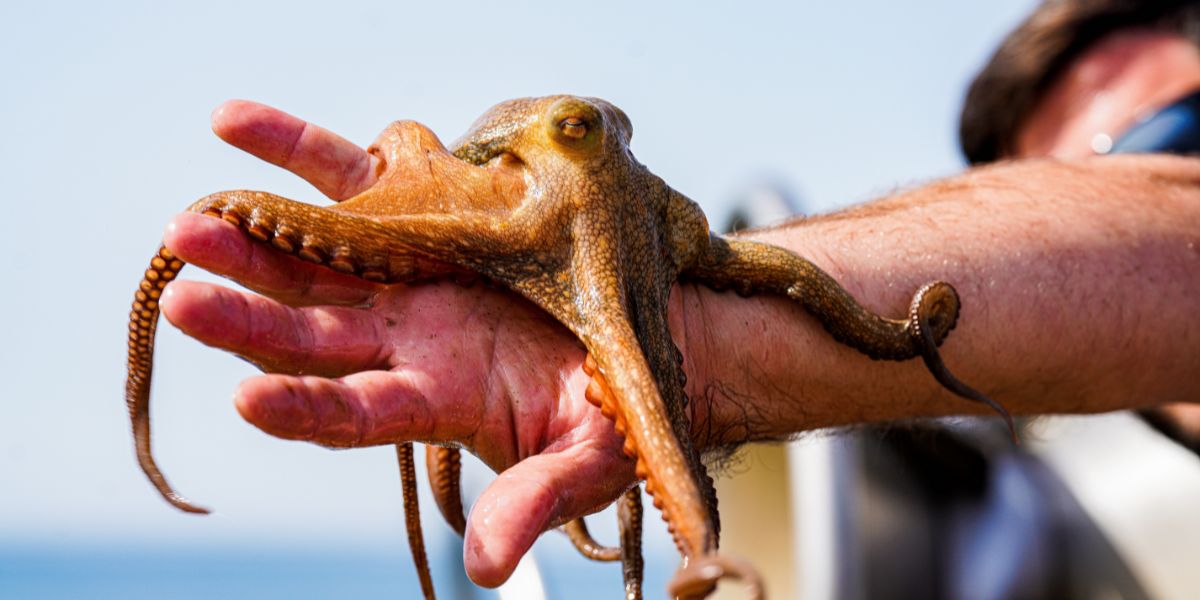
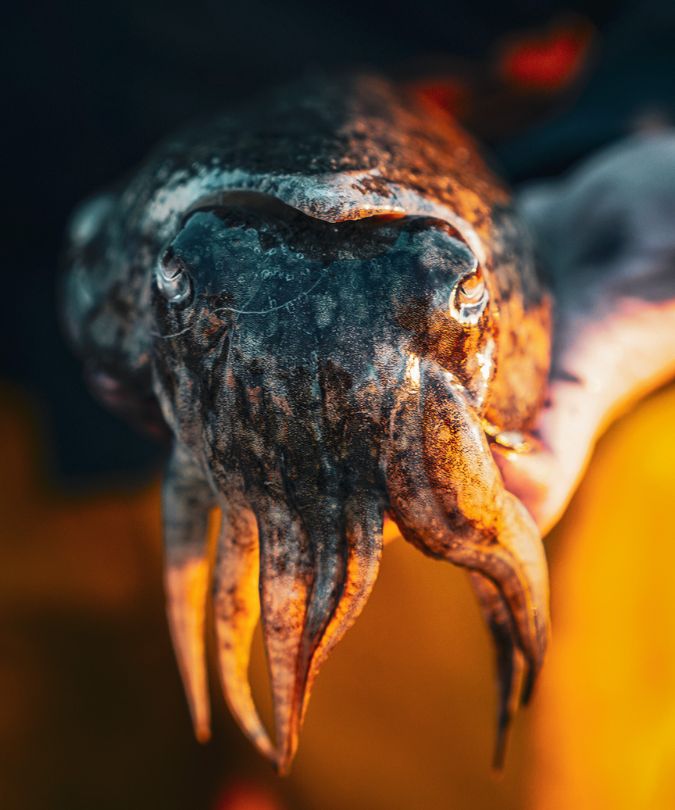
Preserving marine ecosystems starts with understanding their biodiversity. Beyond celebrated species like sole, turbot, monkfish and sea bass is an array of lesser-known fish with which many top chefs are unfamiliar, like galères, ‘somewhere between prawns and langoustines, or pageots, pink-hued fish similar to royal sea bream’. At Chapel’s recommendation, Kelly Rangama of Michelin-starred Le Faham in Paris recently added murex – exotic whelks with a delicate texture. The Romans once feasted on them, as attested by the mosaics of Pompeii. A marine biologist regularly joins Chapel to document these little-known delicacies.
‘As soon as it’s caught, it’s delivered,’ says Chapel. Well, almost. Whether whole, gutted, scaled or filleted, every fish is delivered at peak freshness, shipped to individual and restaurant customers across France within 24 hours.
For chefs, it’s a game-changer. ‘We save an incredible amount of time,’ enthuses Nîmes-based Nicolas Fontaine, whose two Michelin-starred Duende and a brasserie next door serve 200 covers a day. ‘Mathieu is the only one around here capable of delivering this level of quality on a daily basis.’ That quality transfers to dishes including giant Grau-du-Roi prawns coated in prawn head jus infused with Manzanilla, or Mediterranean squid grilled over a Japanese barbecue and paired with sweetbreads lacquered in bitter orange, served alongside morels sautéed in Maury wine.
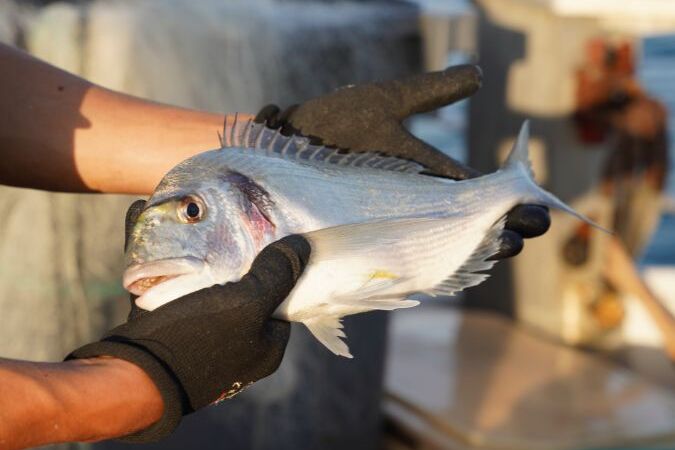
Onboard, the young skipper practises ikejime, a Japanese technique that involves dispatching large fish immediately after they’re caught by piercing the brain and spinal cord, leading to an instant, painless death. Chapel also employs korijime, immersing fish in a seawater-and-ice mix at 0–2°C as soon as they’re caught, which extends shelf life and enhances the texture.
It’s almost midnight when, in the pitch-black night, under the glow of his smartphone, Fontaine, who has joined us, carefully guts and fillets a freshly caught lisette (small mackerel). The taste of its raw flesh is one I’ll remember for some time; lightly seasoned with just salt and pepper, and so finely sliced that you can see through it, it melts on my tongue.
I experienced two very different fishing trips, exclusively by net: one at night, the other at dawn. Chapel is a born teacher. The nets consist of layers, the mesh size depending on the species targeted. To know which net to throw and where, Chapel uses cutting-edge sonar software. ‘Based on the depth at which the sonar detects a mass, we can figure out what type of fish it is.’ He also chooses the location by factoring in various other parameters: ‘The wind, the swell, the current… But there’s always an element of luck.’
Nets are cast from the stern. ‘Watch out, don’t lose a finger!’ Chapel jokes. The risk is falling overboard, pulled in by the net, or getting it tangled. And to haul in the net? The bow is where the action happens. As a huge spool, a reel pulls the nets back in. You need to move fast, untangling the fish caught in the mesh. ‘Don’t reel in too quickly, don’t panic and don’t damage the fish by pulling it out too roughly. You have to grab it by the head, not the body,’ advises Chapel. Soon, sand mullet, bream and gascons (Atlantic horse mackerel) appear. Big fish, like a giant sea bass, make up for yesterday’s poor catch. ‘That’s the life of a fisherman. You don’t win every time.’
Chapel’s journey is one of resilience and defying the odds. He doesn’t come from a fishing family – his parents ran a brasserie. ‘I was raised by my grandmother, an immigrant from Spain. I left high school in my final year due to illness, which kept me bedridden for 18 months.’
He pivoted to a maritime school in Sète to learn his trade. ‘I quickly obtained my diploma as a boat mechanic.’ But he didn’t see himself as a fisherman. ‘I went shrimp trawling for my internship, and I absolutely hated it – I was seasick every single day. I told myself, “Never again!”’
At 22, this natural-born entrepreneur co-founded a taxi-boat service catering to high-profile clients – local VIPs, rappers, Miss France contestants, reality TV stars. ‘The idea was simple: use the sea to dodge traffic jams on the way to Montpellier.’ Before long, he was ferrying tourists to hidden beaches and setting up gourmet picnics. Business boomed, until his partner walked away, causing the outfit to crash.
At 26 and broke, Chapel teamed up with his brother-in-law, a fisherman from a long line of Grau-du-Roi seafarers. Together, they launched Côté Fish, a next-gen fish shop championing local, sustainable fishing with short supply chains and fair prices. He learned on the job, alongside a crew of seasoned fishermen: Jeff and his father Paul Gros, and Albert, a retired fisherman who took the newcomer under his wing. The first year was brutal. Private customers weren’t biting. It was the chefs that saved them.
I went shrimp trawling for my internship, and I absolutely hated it – I was seasick every single day
Chapel’s luck changed post-Covid, when legendary Michelin-starred chef Pierre Gagnaire discovered the renamed Côté Fish. Word of mouth and social media did the rest. Soon, Chapel was supplying France’s finest chefs, including Hélène Darroze, who always follows his recommendations for Villa La Coste’s catch of the day.
Arnaud Donckele has earned three Michelin stars twice in France – first at La Vague d’Or at Cheval Blanc St-Tropez hotel, then for Plénitude at Cheval Blanc Paris. ‘Not only is Mathieu passionate, but he is constantly striving to improve – that’s what connects us,’ he points out. ‘He sends fish in seawater bags, ensuring unparalleled freshness.’ From initially supplying La Vague d’Or in 2020, Chapel now delivers to Cheval Blanc Paris’s three restaurants. ‘What began as a business relationship has become a friendship,’ says Donckele.
Chapel agrees: ‘Some chefs have become friends. Florent Pietravalle of La Mirande in Avignon has supported me since the beginning.’ Pietravalle recalls an unforgettable moment when he’d run out of fish. Chapel ‘didn’t hesitate. At one in the morning, he jumped in his car and personally delivered a tuna he’d just caught. Mat is in love with the product and fascinated by the chef world. He brings rigour to the traditionally roughand-ready Mediterranean fishing industry.’
Chef Georgiana Viou of Rouge, in Nîmes, agrees. ‘Mathieu says the sea isn’t a supermarket, and he’s right. I tell him what I’d like ideally, but we work with whatever the sea provides.’
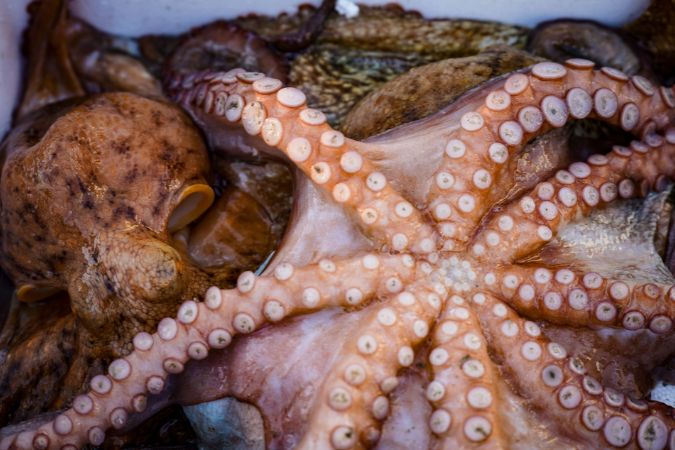
To ensure excellence, Chapel limits the number of restaurants he works with, whether Michelin-starred or casual bistros. Rangama explains how she co-creates menus with Côté Fish over the phone. When her finances are in good shape, they recommend high-end fish. ‘If some months are more difficult, he guides me towards others, like mullet, which are cheaper.’
For Chapel, it’s not just about elevating fine dining. He is eager to share his knowledge. ‘It’s essential to make the sea accessible,’ he insists. Whether by day or night, you can even join him and his crew on board. Not to fish, but to observe and learn about fishing in the Med. Chapel regularly gives masterclasses at École Ducasse Paris and facilitates discussions among Mediterranean fishermen. His ultimate dream? To teach fishermen in neighbouring countries his innovative techniques.
‘Ancient Romans called this area Mare Nostrum, meaning “our sea” in Latin,’ Chapel says. ‘I’d even add that it’s for everyone.’
Côté Fish (cotefish.fr) delivers to addresses all across France. On board with Mathieu Chapel, discovering Mediterranean fishing: €80 per person. Booking essential: contact@cotefish.com or +336 30 46 56 83. Max ten people on board.