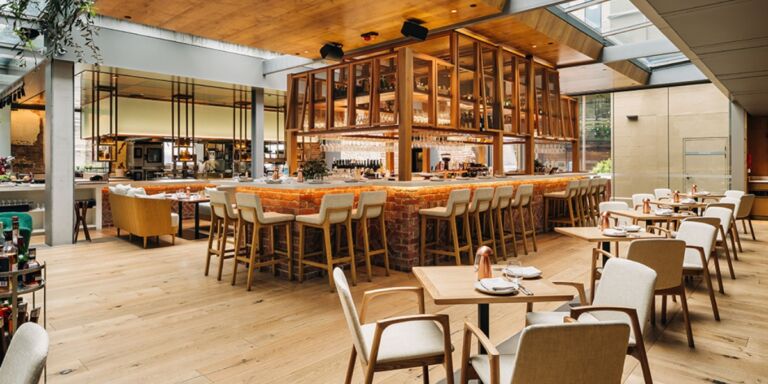
My feet are buried in golden-beige sand on the outskirts of Barcelona, as I sip on a refreshing Gin Mare and tonic, garnished with spring of rosemary and a twist of orange zest. Its refreshing, bright and briny, an ideal match to the anchovies swimming in fruity olive oil and bittersweet flavour of red prawn paella. Around me are wild beaches where sun-bleached shrubs and hardy silver-green coastal plants push through sand and stone.
‘Gin Mare was one of the first gins to embrace a savoury flavour profile, utilising Mediterranean herbs and salty savoury olives,’ says gin expert and curator of World Gin Day Emma Stokes, ‘creating a gin that stood out not just on the shelf but in the glass too.’
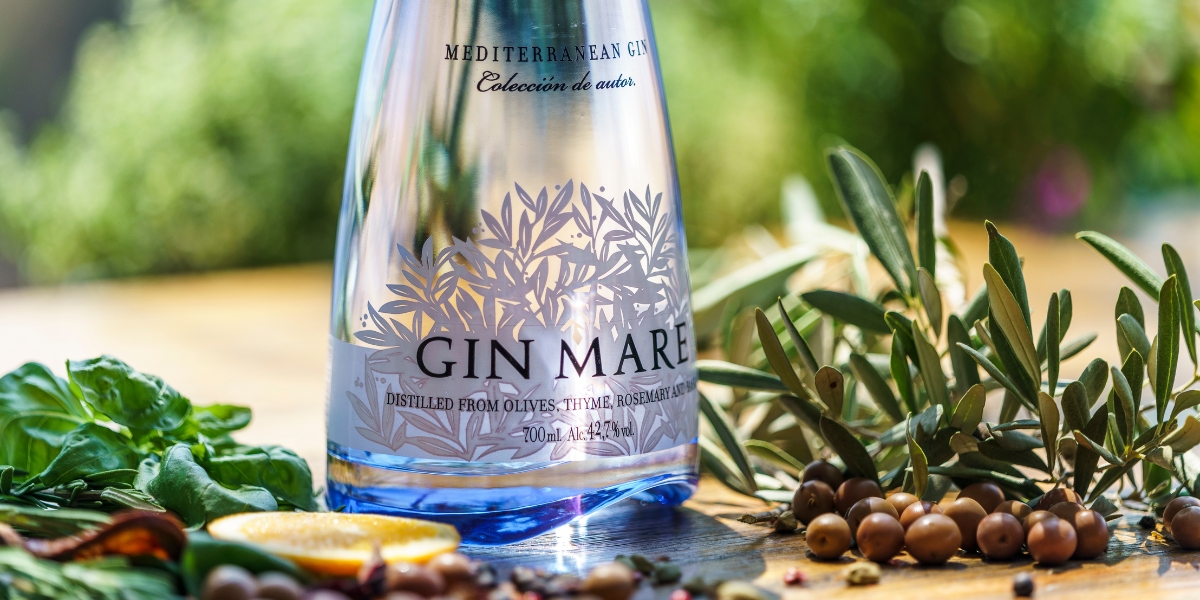
Established in 2010 by the Giró Family, Gin Mare is the most well-known of its kind, with its name derived from the Latin phrase mare nostrum, meaning ‘our sea,’ and its iconic blue-tinted bottle designed with a sinuous wave at the base. This is supposed to prompt ‘a visual association to the coast,’ says global brand ambassador Robyn Evans. ‘Gin Mare’s botanicals are inspired by flavours from throughout the region but also brings to life the aspirational Mediterranean lifestyle.’
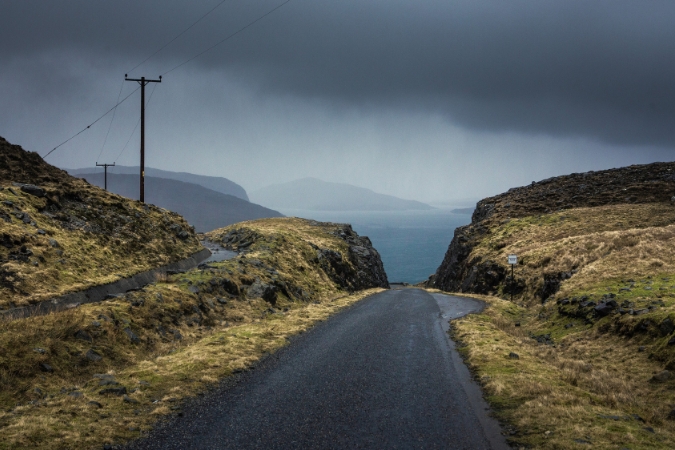
Whether driven by lifestyle or taste, Gin Mare’s success sparked a coastal-gin movement. ‘With the UK gin boom ramping up in the early 2010s, producers looked to what was local, and, as a tiny island, many looked to our own coastline for inspiration,’ Stokes adds. ‘Building on the success of brands like Gin Mare, it became common to see botanicals like seaweeds, samphire and even oyster shells make an appearance.’
The ability to evoke the shore gives coastal gins an escapist edge
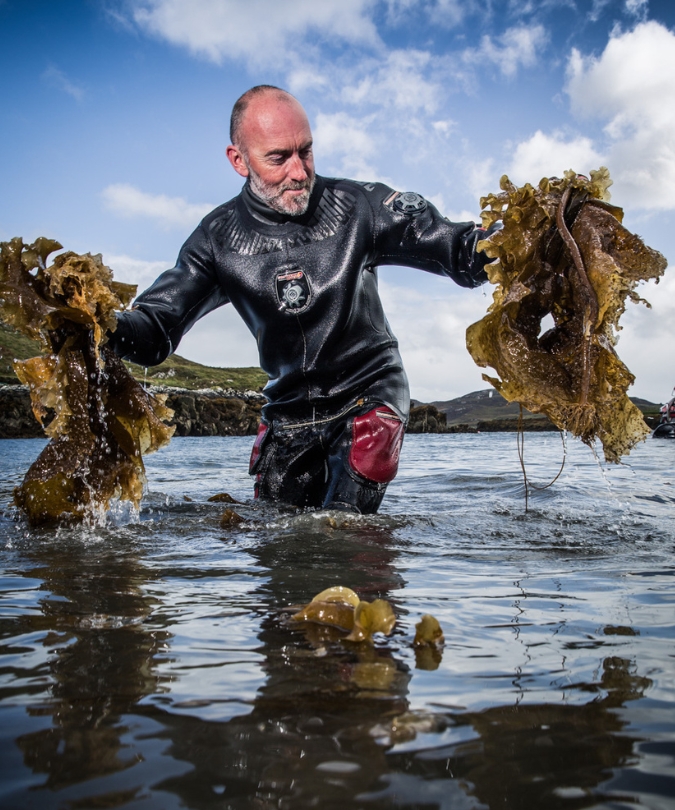
Emerging in the last decade are IWSC winners Isle of Harris, located in the Outer Hebrides. ‘The island itself is at the heart of our gin,’ says their distiller Norman Ian Mackay. ‘Living and working here, you can’t escape the sea; its winds, waves, and wide, sandy beaches are part of daily life, and they shape every drop we make.’ The aim is to create a gin that really reflects the surrounding area. ‘When you drink Isle of Harris Gin, you’re tasting the island, its energy, and its spirit,’ Mackay emphasises.
Some brands even use ocean water, such as ETSU Pacific Ocean Water gin, which is softened with water drawn from the Pacific. This gives the gin ‘a distinct mineral edge and a whisper of salinity,’ says Maëlys Patard, brand marketing manager. ‘It’s not overpowering,’ she adds, ‘but it creates a subtle tension with the gin’s floral and citrus botanicals. The result is a crisp, almost briny freshness that lingers on the palate, like a sea breeze cutting through delicate aromatics.’
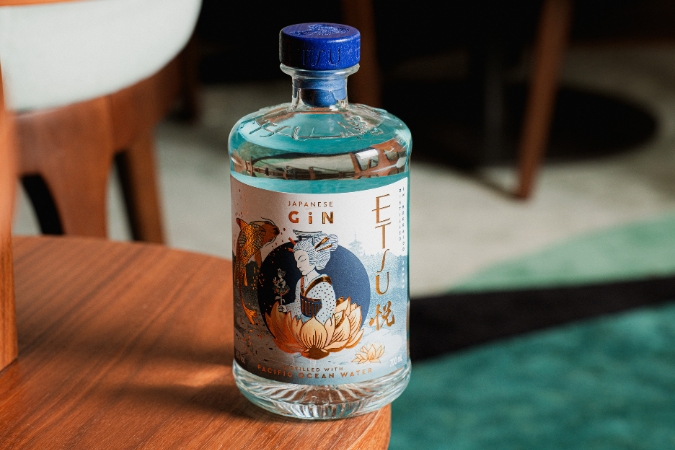
Coastal gins take their character from more than just juniper, with botanicals used to evoke a maritime connection. Gin Mare channels the Mediterranean with Arbequina olive, thyme, rosemary, and basil, while its newer line, Gin Mare Capri, adds bergamot and Sorrento lemons for a brighter, citrus-soaked twist that responds to its success in Italy (their biggest export market). ETSU Pacific Ocean Water Gin balances its base of Pacific seawater with yuzu, coriander, and angelica, while Isle of Harris Gin draws on hand-harvested sugar kelp, lending a savoury-sweet maritime depth.
Another IWSC winner, Mermaid Gin, on the Isle of Wight, takes its association with the sea even further. It uses wild-foraged rock samphire, or ‘mermaid’s kiss,’ alongside local hops and fruit, with the aim to evoke the myth of mermaids guiding sailors. As co-founder Xavier Baker says, ‘washed by the waves of the southern side of our island, our key botanical rock samphire grows just above the high tide line, giving our gin a savoury note and hint of sea air.’
People are drawn to coastal gins because they offer a taste of place and a story to go with it
These coastal gins make for perfect Gin & Tonics: Mermaid suggests a splash of Fever-Tree Refreshingly Light Tonic Water, garnished with three cucumber wheels, while Isle of Harris recommends a premium tonic and a wedge of red grapefruit. But these gins can do more than just elevate a G&T. Gin Mare, for instance, ‘works really well in savoury cocktails,’ Evans says, ‘which are definitely trending at the moment.’
At Kyara, a futuristic bar in Barcelona founded in June by Tayēr & Elementary, Gin Mare forms the base of a Habanero Martini, served with habanero distillate and mezcal. It’s one of many bespoke creations in the bar’s Martini experience room – a bright, otherworldly space, with walls lined with flavour distillates designed to suit a wide range of palates.
For Evans, this is an example of how the savoury element of Gin Mare provides depth and balance, and she also recommends it with a dirty Martini, using fino sherry instead of vermouth alongside olive brine – or even in a dirty Espresso Martini. ‘Although gin is a lesser used spirit for this modern classic,’ she explains, ‘Gin Mare and a teaspoon of black olive tapenade works amazingly with the rich, chocolatey bitterness of espresso. Think of the tapenade as if you were just adding a pinch of salt when cooking.’
For Stokes, it’s this sort of thinking that is leading the category into new territory. ‘With the growing trend to savoury cocktails worldwide,’ she says, ‘this trend in gin has caught on around the world, and you can now find coastal-inspired gins from Australia, Japan, the US and beyond.’
But while savoury cocktails are in vogue, one thing that’s timeless is the gins’ ability to evoke their natural environment. As Mackay at Isle of Harris says, ‘people are drawn to coastal gins because they offer a taste of place and a story to go with it.’ As for ETSU, it’s Hokkaido, a place of ‘long winters, fertile summers, pristine water sources,’ Patard says, adding that terroir in spirits goes beyond soil and climate, and extends into the ‘surrounding environment, culture, and philosophy.’
But for Baker, the most important aspect is the sea itself – pointing to the notion of ‘merroir,’ more commonly known within the oyster industry – a concept coastal gins aim to capture, with Mermaid achieving its salty taste through rock samphire. It’s this ability to evoke the shore that gives coastal gins an escapist edge. ‘Naturally we are drawn to the ocean,’ he says, ‘and all reminisce of our time spent by the coast.’ Coastal gins can take you right there.