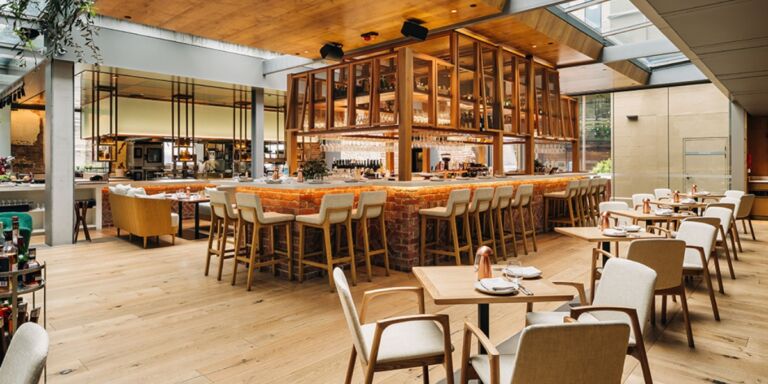
The cocktail laboratory at Fede Cocktailab in Florence, Italy, ‘is the beating heart of the venue: a fully visible production and creative hub, designed to remain constantly in sight,’ says bar manager Simone Covan. As the bar’s name suggests, the lab is the focal point, separated from the main room by a glass wall. ‘What is typically concealed in the making of a cocktail is revealed and shared here, transforming the creative process into an integral part of the experience.’ Covan describes the space as a ‘laboratory of taste’, both alchemical and high-tech, incorporating techniques such as distillation, fermentation and clarification.
There’s a similar approach at recently opened London bar FlipDog, where equipment like a rotovap for distilling, a dehydrator and more, are all visible to the public. ‘We decided to showcase it for everybody to be fully transparent. We use the best ingredients and different techniques, and we believe this should be visible and interesting for our guests,’ says head bartender Igor Brovko. Visitors to the bar can explore the space, as well as taste the infusions and distillates made there.
Understanding the effort and techniques behind each cocktail adds another layer to the experience
One of the biggest changes at cocktails bars in recent years has been the arrival of ‘batched’ drinks made behind-the-scenes, often using an array of sophisticated techniques and equipment. Bar teams can achieve better consistency, your drink arrives more quickly and is potentially more complex than one created a la minute. But the downside, some argue, is a distance from the magic and theatre of mixology. In response, a rising number of bars are offering a look behind the curtain by revealing their most creative spaces to guests.

It’s the same story at Adam Handling’s Eve Bar in Covent Garden, where the lab – behind glass near the entrance to the venue – is the focus of private events and masterclasses, offering an insight into the techniques behind the drinks. ‘The lab is fully integrated into the experience, giving people a behind-the-scenes look at the processes involved in creating the cocktails on the menu,’ says Adam Handling Collection beverage director Kelvin McCabe. ‘We use the space to experiment with flavour extraction, distillation, infusion and texture, as well as to refine ingredients and techniques.’
At Otro Bar in Costa Ricas’s San José, the cocktail lab, while fully part of the room’s design, can be hidden behind a curtain to create a more intimate atmosphere. ‘That flexibility is important,’ says owner and creative director Lissa Barquero. ‘We activate it in subtle ways. At times we open it fully and, occasionally, towards the end of their time with us, we invite a few guests in for a small taste. It stays informal and personal.’
This reveal connects the complexity behind the drinks with the pleasure of enjoying them. ‘The focus isn’t on making things feel overly technical but on refining flavours and textures so that what reaches the glass feels simple, even if the process behind it isn’t,’ says Barquero. ‘Some engage deeply and ask about processes or equipment, while others don’t interact directly but still register it. There’s a sense that nothing is being hidden, just revealed at the right time.’
‘The goal is not just to show techniques but to give insight into why we approach things the way we do,’ says Vasilis Sgouromallis, director of bars for Jul’s Group, which has cocktail labs in its venues in Ibiza, Athens and London. No.11, in the basement of Jul’s London, has a lab in full view from the main seating area, accessible via the bar. The idea behind having the lab, according to Sgouromallis, is to foster a culture closer to that of a kitchen, where everything is created in-house. And by making it visible, guests are invited to be part of the process.
‘Guests appreciate the transparency; it gives them a clearer understanding of what goes into their drinks and for those who are curious, it often becomes a point of engagement and conversation,’ he says, adding that visitors might leave with something tangible too, such as cocktails from the session, further extending the experience.
View this post on Instagram
Jinseok Kim, owner and bartender at The Mix Lab Seoul, sees a similarly positive response to his cocktail lab, ‘because it is a bar concept not commonly found in Korea and because the variety of unfamiliar equipment on display naturally draws attention’, he says. Amidst liquid nitrogen tanks, a centrifuge and more, not to mention an array of ingredients, visitors are offered guided tastings of what’s created there. ‘We welcome guests to freely enter the area, observe the equipment firsthand and ask about how everything works,’ says Kim.
‘People enjoy being able to see what goes into their drinks,’ says Brovko. ‘It creates a different connection, understanding the effort and techniques behind each cocktail adds another layer to the experience without making it too serious or complicated.’
Bars with cocktail laboratories are tapping into growing appreciation for craft and provenance
At their best, these labs are fully integrated, offering a glimpse behind the scenes that enhances the overall experience. ‘The bar and floor team frame each cocktail through the lens of the lab, where techniques, preparations and transformations take shape,’ explains Covan. ‘Guests move beyond observation into full immersion: seeing, tasting and understanding how raw ingredients evolve into refined liquid and gastronomic expressions. What is typically hidden becomes a living, central element of the experience.’

Bars like these are tapping into growing appreciation for craft and provenance, finding new ways to highlight the various elements and expertise that go into making their cocktails. ‘When people start to see even a small part of it, it creates a sense of appreciation, not necessarily because they understand every technique but because they recognise the intention and the work behind it,’ says Barquero.
Eve Bar is perfectly located for this. ‘We’re in the heart of theatreland, so people really enjoy getting a behind-the-scenes experience, with the lab and bar processes visible within the space,’ says McCabe. ‘It gives guests a more immersive experience and helps showcase the level of creativity and detail behind each cocktail.’ It’s also about education, he adds: ‘There’s definitely an appetite for learning more about how cocktails are developed.’
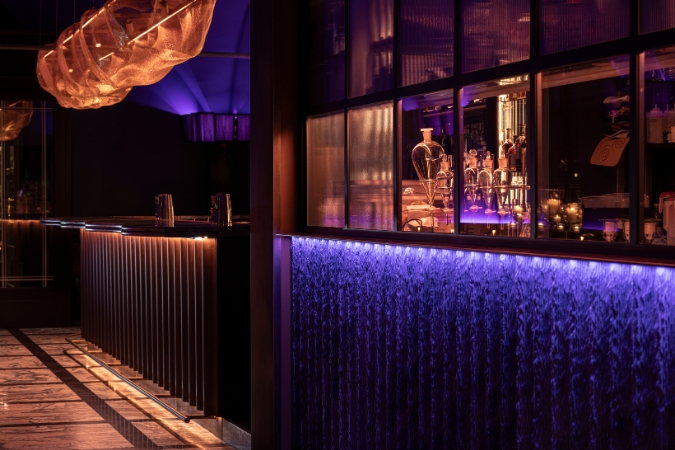
At Fede in Florence, everything culminates in the cocktails themselves. ‘All research conducted within the laboratory finds its expression in the drinks list, where iconic classics engage in dialogue with original creations developed through various techniques,’ says Covan. ‘In this way, the laboratory is the true creative engine driving both the drinks list and the evolving experience offered to guests.’
More than just an element of design – as striking as they often are – these cocktail labs help restore the connection to the craft of the cocktail, while enriching the experience of visiting the bars themselves.