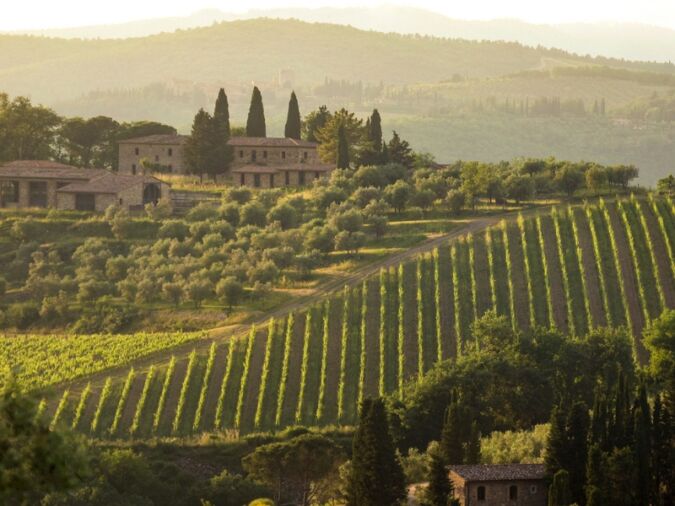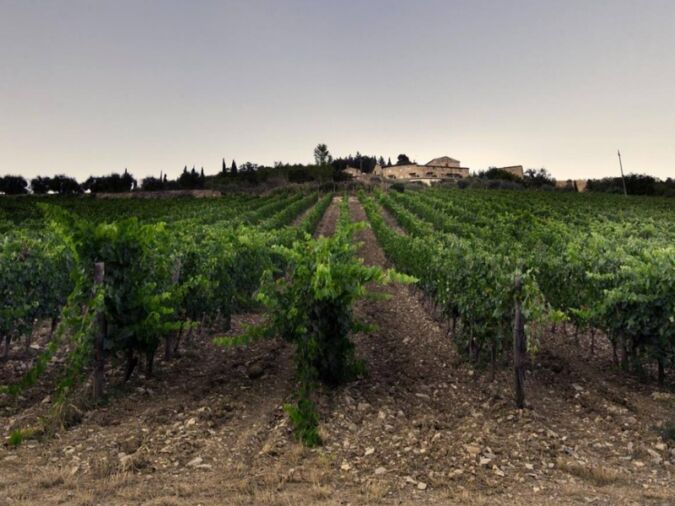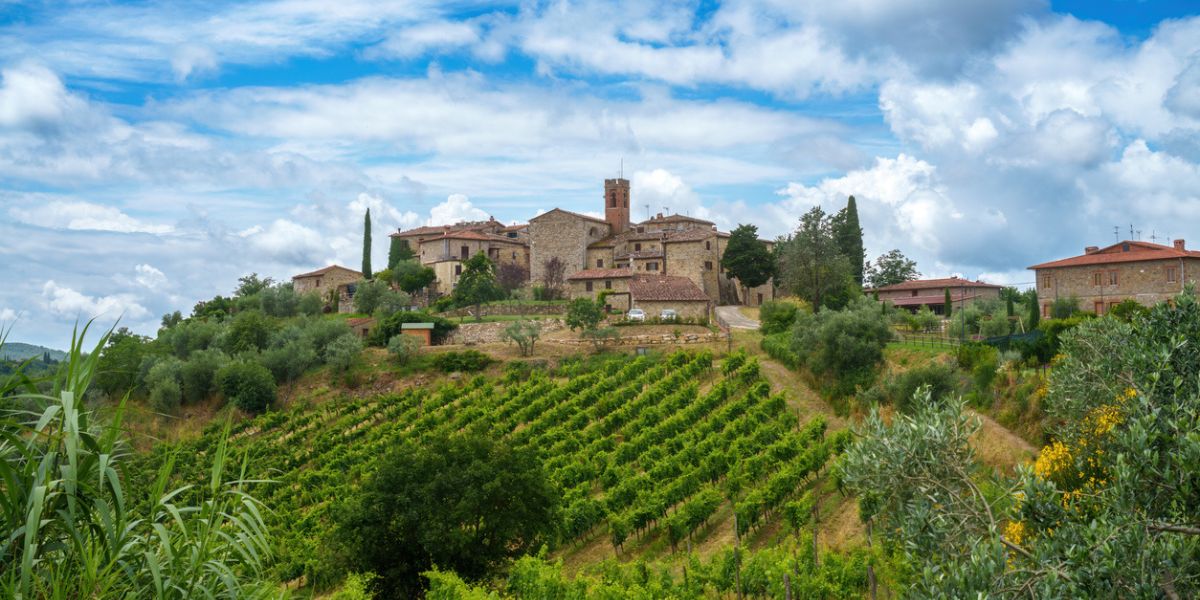
Introduced in 2014, Chianti Classico’s Gran Selezione category has grown into a clear success. Today, 187 estates contribute to the category, with 245 Gran Selezione wines currently available — a striking increase from just 33 at launch.
The surge reflects producers’ increasing commitment to the category, while the recent addition of UGAs (Unità Geografiche Aggiuntive or ‘Additional Geographic Mentions’) has helped to sharpen its identity. Taken together, they present Chianti Classico DOCG at its most ambitious and strategic.
Turning points
The recent evolution of Chianti Classico rests on two milestones. In 2014, approval by the Ministry of Agriculture was granted for Gran Selezione, a category above Riserva in the quality pyramid, with the first wines released in the same year. It was the first time a new top tier within a DOCG system had been introduced in Italy.
Requirements are exacting and blend rules are evolving
Then, in 2021, the Consorzio created eleven UGAs to identify the key communes and villages of the territory. Legally in force from July 2023, they give producers the opportunity to highlight provenance and build an identity for the specific areas of the region.
Together, these developments have given Chianti Classico new clarity and international resonance, driving forward both quality and typicity. ‘The Gran Selezione category and the UGA strengthen the relationship between our wines and where they are made,’ says Consorzio president Giovanni Manetti. ’Together they are crucial to improving the reputation of Chianti Classico around the world.’
A new tier for quality
Gran Selezione now sits at the peak of the Chianti Classico pyramid, above annata, at the base, and Riserva. Requirements are exacting: grapes must come from estate vineyards, wines must reach at least 13% abv, and ageing must extend for 30 months before release, including three months in bottle. Each batch is approved by a dedicated tasting commission.
The blend rules are also evolving. At launch, a minimum of 80% Sangiovese was required, with up to 20% other authorised varieties. From the 2027 harvest, the minimum rises to 90% Sangiovese, and the balance must be drawn exclusively from native Tuscan grapes, such as Canaiolo, Colorino, Ciliegiolo, Pugnitello and many others.
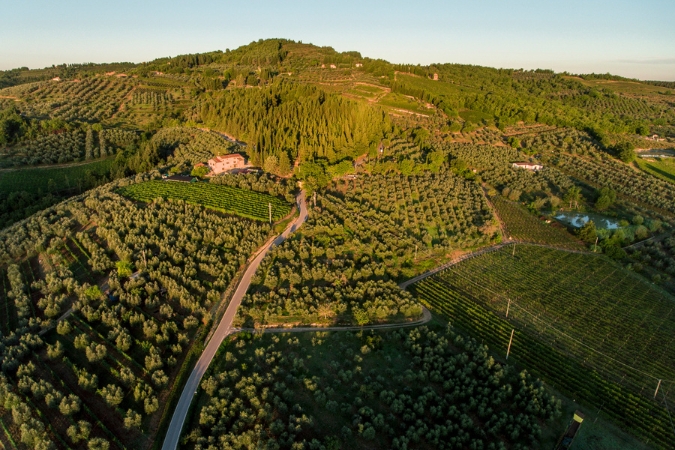
A Gran Selezione may come from a single vineyard or be an estate blend. The aim is always to capture the highest quality fruit and create the best wine from an estate. Today Gran Selezione represents around 5% of Chianti Classico DOCG production and contributes over 13% of value. It has established itself as a flagship category that defines the region’s ambitions for the quality of its wines.
A sense of place
If Gran Selezione elevates quality, the UGA project underpins it with a clearer sense of origin. The eleven UGAs — Castellina, Castelnuovo Berardenga, Gaiole, Greve, Lamole, Montefioralle, Panzano, Radda, San Casciano, San Donato in Poggio and Vagliagli — allow producers to add a geographical designation to their Gran Selezione labels.
The system, originally designed by the Consorzio Vino Chianti Classico, was analysed and promulgated by Alessandro Masnaghetti of Enogea, one of Italy’s foremost cartographers of wine, particularly in his book Chianti Classico: The Atlas of the Vineyards and UGAs. The UGAs encompass broader zones defined by soils, slopes, altitudes, cultural heritage and other human factors. As such, the model has more in common with Bordeaux’s communes or the villages of the Rhône than with Burgundy or Barolo’s vineyard-specific mapping systems.
A decade on from its creation, Gran Selezione has become a defining symbol of Chianti Classico
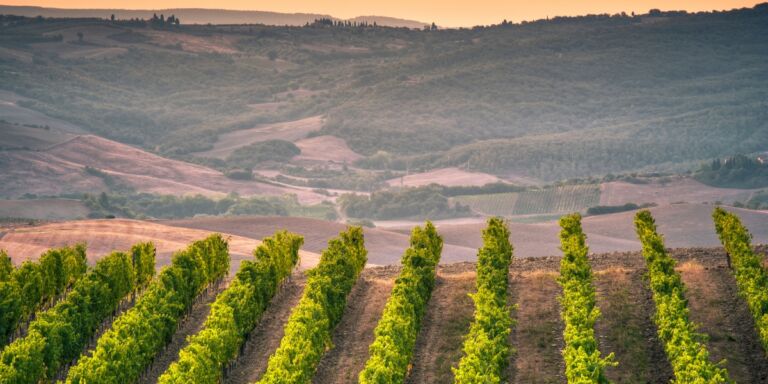
Soils and elevations give each UGA its character: Greve mixes limestone and clay, San Casciano is marked by marls, the south shows the structure of alberese, while Lamole at high elevation is noted for its sandstone (macigno). Vineyard altitudes range from 180m to almost 900m, with Chianti Classico authorised up to 700m — one of the widest elevation ranges in any fine-wine appellation.
The UGA framework allows estates to present their wines with a stronger sense of identity. To give an example, Angela Fronti of Istine, long dedicated to single-vineyard expressions, chose in 2021 to label them as Gran Selezione. ‘I was waiting for the rules to change so that you could write Radda UGA on the label. This is very important for me,’ she says.
For established names, UGAs add an extra dimension. Giovanni Mazzei of Fonterutoli sees them as part of a broader legacy: ‘My generation is conscious of adding to the region, and the UGA is an important part of that effort. We have the depth and quality to support both Gran Selezione and traditional categories such as Riserva, and I hope that in time we will be able to use the UGA name on Riserva and annata wines.’
A new era
The relationship between Gran Selezione and the UGAs is now central to Chianti Classico’s story. A decade on from its creation, Gran Selezione has become a defining symbol of Chianti Classico. With UGAs adding a stronger sense of identity and the 2027 rules set to further emphasise Sangiovese and native varieties, the region’s flagship wines are more distinctive than ever. The path is clear: Gran Selezione, in partnership with UGAs, is carrying Chianti Classico into a confident new era.