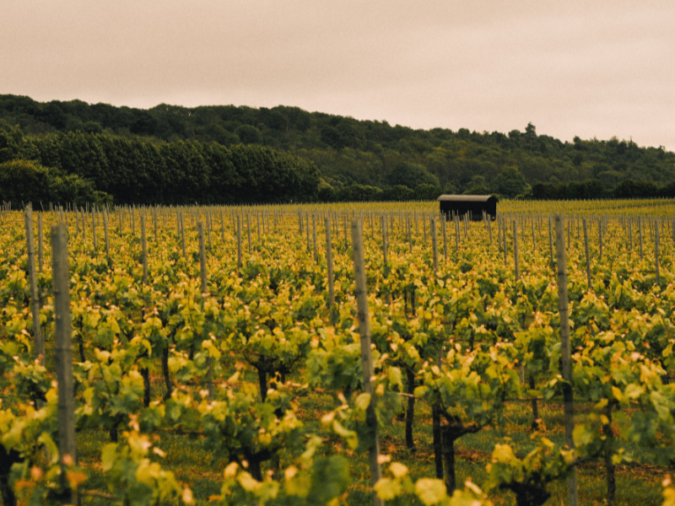
Richard and Joy Morris had a moment of doubt back in 2019. The couple put their Monmouthshire wine estate, Ancre Hill, up for sale. Richard had technically retired two decades earlier and their son David, who had been making the wine, left to pursue other projects. But with the arrival of the Covid-19 pandemic, the vineyard languished on the market. The decision was made for them, in some ways: they sold some land to make the property more manageable and started searching for a new partner and winemaker.
That’s when Jean du Plessis got a call out of the blue from a UK recruiter. The South African had spent much of his career at Anwilka in Stellenbosch. He spent only two days in Wales before deciding that the Ancre Hill opportunity was too intriguing. With his wife and son (then under one), he decided to put down new roots, arriving at Ancre Hill in 2022. ‘Everything was upside down,’ he tells me. Going from a region where he was trying to tame ripeness, he found himself desperately seeking Brix, working with a new trellis system and pHs unlike anything he’d ever seen.
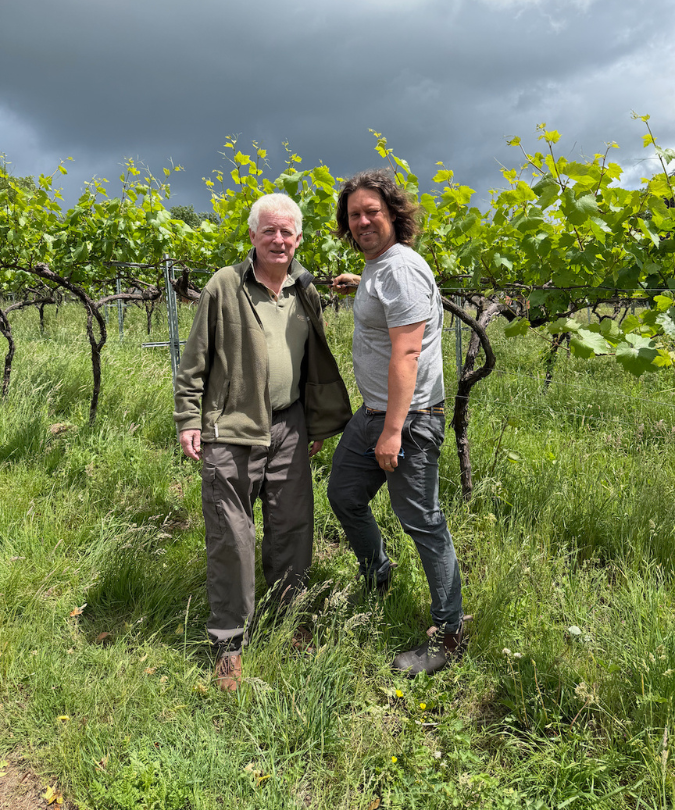
This twist in fate aligns with an estate whose origin story is also one of happenstance. Richard had planned to retire, having sold his business in 1999, but was inspired to plant a few vines on the south-facing slope in front of the house, just for fun, after some trips to international vineyards early on in his retirement.
Twenty years on from that serendipitous decision, Richard is still working – as is Joy – and Ancre Hill is the standard-bearer for Welsh wine. Now in his 70s, he has finally stepped back from the hard labour a vineyard demands. ‘I’ll prune three mornings a week,’ he tells me, as he drives me through Wales’s country lanes in his mud-spattered truck, ‘not six days like I used to.’ Few retirees are as full of energy as Richard and Joy, who accidentally became pioneers of not just Welsh wine, but natural wine too.
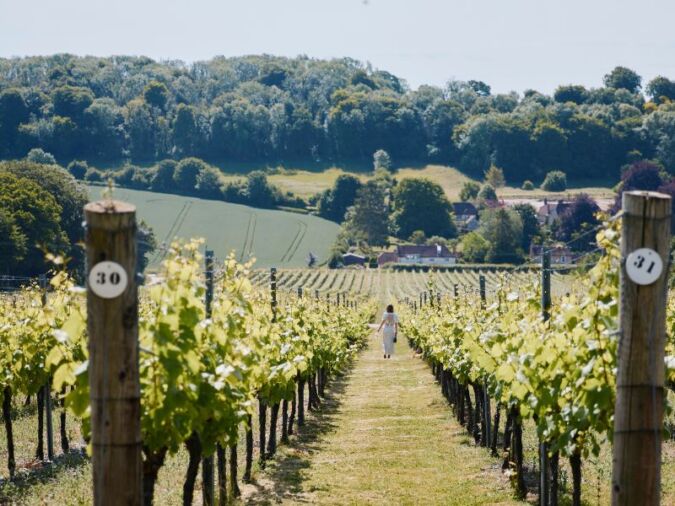
Ancre Hill wasn’t chosen for its viticultural potential – it was just where Richard and Joy lived. Yet, the property happens to sit at the foot of the Monnow Valley, in a rain shadow; so, despite Wales’s rather wet reputation, rainfall at Ancre Hill in the growing season (April to October) averages a modest 200mm (less than you’d expect in Bordeaux, Burgundy or Champagne). ‘That was luck, really,’ says Richard, with a shrug. Combined with Monmouthshire’s mild weather and the site’s largely free-draining soils, Ancre Hill is surprisingly well-positioned.
Ancre Hill wasn’t the first to plant vines in Wales, but they have become the most famous
Richard did a year-long viticulture course at Plumpton, but has learned most of what he knows on the job. He planted four acres back in 2006, but the vineyard is now double that. He didn’t use chemicals in the vineyard from the start, and rapidly moved to organic and biodynamic viticulture, becoming Demeter-certified in 2014 – one of only seven biodynamic vineyards in the UK and the only one in Wales.
Although already limited in what they can use to fight disease, Ancre Hill avoids copper wherever possible – only resorting to the heavy metal in challenging vintages like 2024. They make all their own preparations and tisanes, growing as much as they can on-site. This approach isn’t for the faint of heart and comes at a price in trickier seasons (they lost half their crop in 2024, for example); but for Richard, ‘It just seemed the right thing to do.’
Surrounded by plane trees, with flourishing cover crops between the rows, the impact of this philosophy is clear: it’s a vineyard brimming with life. The vines here look slightly unusual, trained on the Geneva Double Curtain system – exposing the fruit to the sun, and keeping the fruit zone high, away from ground frost.
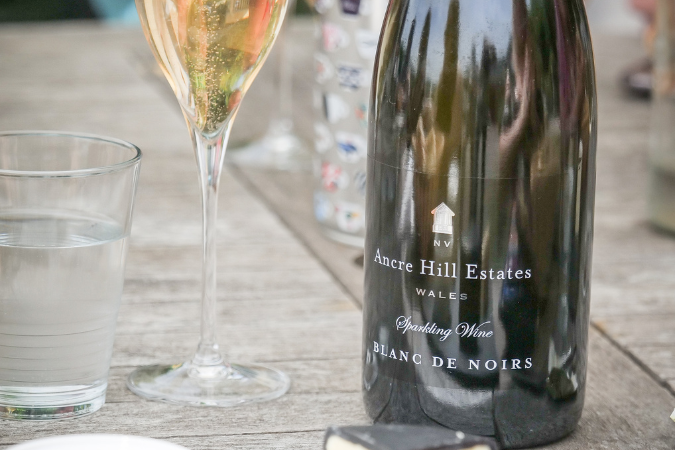
The original plantings were Pinot Noir, Chardonnay, Triomphe and Seyval Blanc, with the latter swapped for Albariño in 2011, and Solaris added in 2022. The first wines were made at Three Choirs (one of two wineries that make most of Wales’s wine), but when they decided to become Demeter-certified, they moved operations in-house. They worked out of the tractor shed while an eco-friendly winery was built – finished in time for the 2015 vintage. This allowed them to echo their approach in the vineyard – with minimal intervention throughout. Using native yeast for all primary ferments, and generally never chaptalizing, they don’t filter or fine, and use minimal SO2. The resulting wines sit as low as 9% alcohol and range from pét-nats to more classically styled Chardonnay and Pinot Noir. Their traditional-method Blanc de Blancs and Noirs, benefitting from long lees and cork ageing (the current releases are 2018), are impressive zero-dosage expressions of what Wales can do. There’s a natural lilt to some of the wines, which doesn’t quite align with my tastes, but I’m particularly excited to see new vintages of the still wines made entirely by Jean – who seems to have a more precise approach.
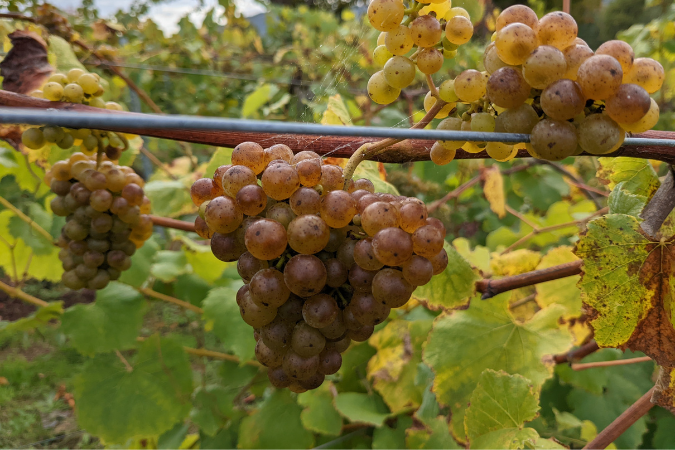
Ancre Hill wasn’t the first to plant vines in Wales, but they have become the most famous. Lord Bute had a parcel of Gamay planted in the 1870s at Castell Coch near Cardiff, although that was ripped up in 1920. The first modern commercial vineyard is thought to be Glyndwr, established in 1979 in the Vale of Glamorgan. Today there are over 90 hectares under vine, most in tiny parcels – with Richard reporting there are now 60 vineyards across the nation.
Although no longer involved at Ancre Hill, Dave Morris consults for many Welsh wine ventures – as well as making his own wines under Mountain People Wine. Most wines are still made across the border at Three Choirs or Halfpenny Green, but more producers are adding their own tiny wineries – as at Hebron or Velfrey Vineyard. Jean is clear that the highest quality wines still come from Chardonnay and Pinot Noir, even in years like 2024, but Wales’s wine growers are embracing hybrids, with disease-resistant PiWis Solaris and Regent especially popular. It is the practical solution to Wales’s climate – especially for vineyards in the north or west of the country.
Four years after his arrival, Jean has been gradually refining things at Ancre Hill – although, with the estate’s long élevage, it’ll be another year or two before we see his imprint on the wines. For him, the energy and collaboration among Welsh wine producers reminds him of the Swartland Revolution. It may be 20 years since Ancre Hill first planted vines, and almost 50 for those elsewhere in Wales, but this remains a new frontier.