If the people of Indonesia had liked the taste of aquavit then Linie, Norway’s most famous brand, wouldn’t have found its raison d’etre. Master blender Morten Paulsen explained how in 1805 the company shipped a cask of spirits to Batavia (present-day Jakarta); however, nobody wanted any, so it came back to Norway, where it was ‘discovered that something interesting had happened.’
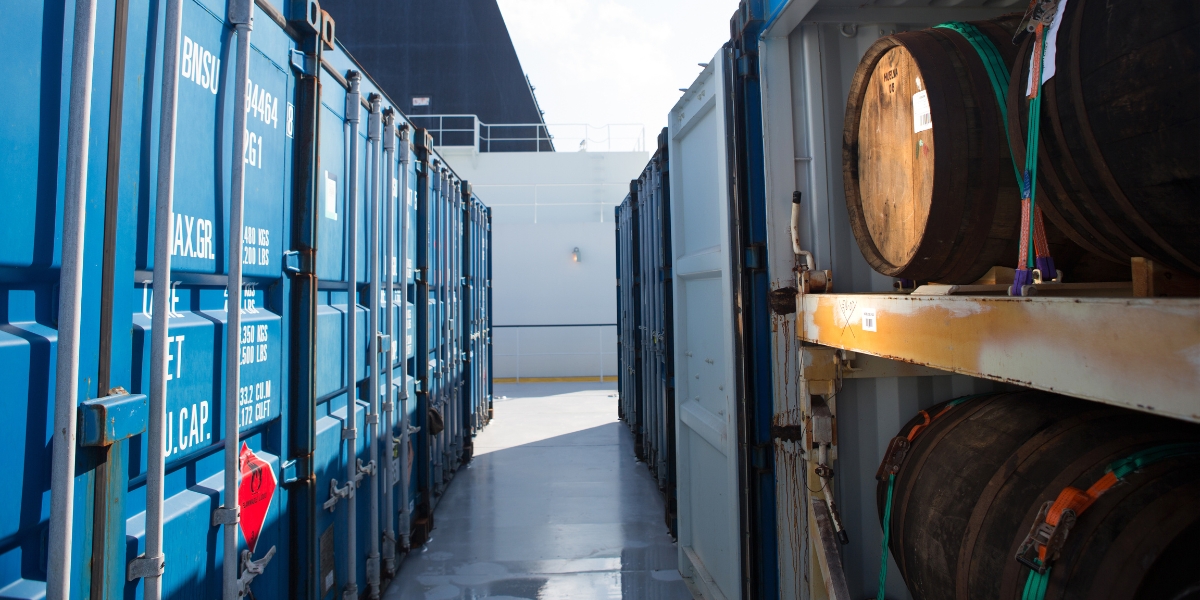
The action of time, extremes of temperature, humidity and motion had softened the flavour of caraway – ‘which can be rough when fresh’, Paulsen says. Today the manufacturing process of Linie Aquavit is designed to mimic that first voyage. The liquid spends 12 months in oloroso Sherry casks – a mixture of first-fills and some older ones – in a temperature-controlled warehouse at 55% humidity. The team blends the spirit and transfers it into 500-litre sherry butts; then, it’s time for a journey: across the Atlantic, through the Panama Canal to Australia and Japan, and back again. Linie is better travelled than an Australian backpacker. The cask is at sea for around four months and crosses the equator twice, with temperatures hitting the high 40s Celsius and going below –10°C, plus similar variations in humidity.
Today, the casks sit safely in containers but in the past, unscrupulous sailors would drill holes in them, drink the aquavit and bung up the holes with wooden sticks. When they arrived back in Norway, some barrels were, Paulsen says, ‘like porcupines on the inside’.
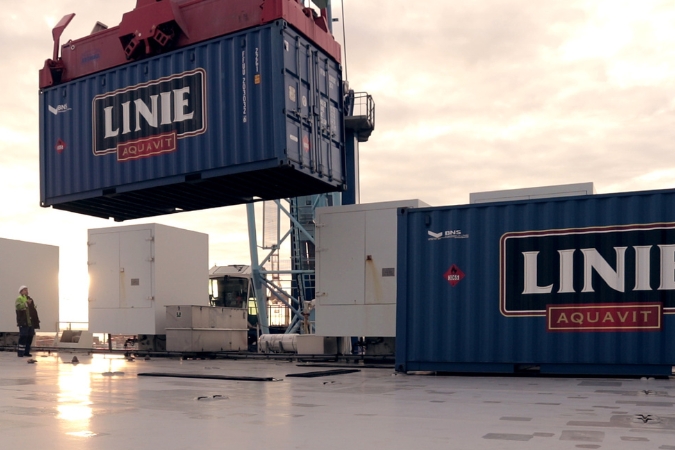
Linie’s story evokes the romance of sailing ships that once transported drinks like India Pale Ale, Madeira and rum on long sea voyages during which the liquid was found to mellow and mature in a way that it didn’t do on dry land. And yet, for the most part, these drinks are no longer shipped in cask. So why continue with this archaic practice?
Paulsen explains that they have tried to replicate the process in Norway, but ‘there is something about complexity and rounding of spices caused by the sea voyage.’ Linie does make an aquavit that is matured only in the warehouse, but the export market just wants the sea-aged version.
On long sea voyages, the liquid was found to mellow and mature in a way that it didn’t do on dry land
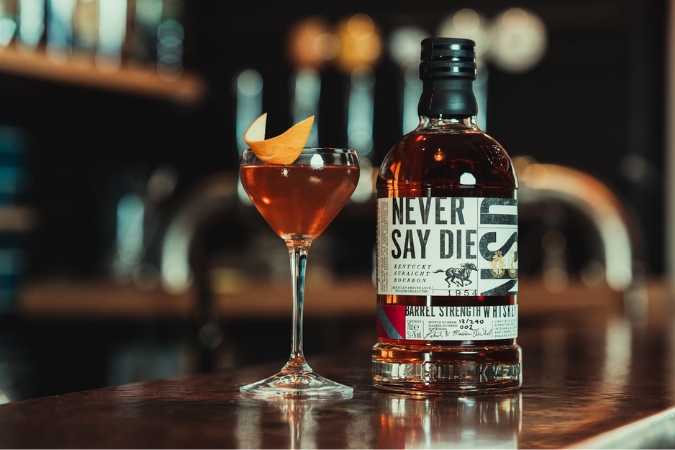
The dynamic ageing of spirits, as it’s called, is on the rise. Several years back, Starward Australian Whisky shipped a cask on deck from Melbourne to Southampton, though it was just a one-off to raise money for charity (and a great publicity stunt). Other whiskey producers, however, are making the voyage part of the brand story. Among them is Never Say Die Bourbon, which is distilled in Kentucky and shipped to England in cask. According to co-founder Brian Luftman, the six-week sea voyage is vital: ‘This natural churning acts much like stirring a tea bag.’ He also thinks that the salty sea air of the Atlantic might have an effect on the spirit: ‘Fans have commented that they can detect a very slight salinity to the whiskey’s flavour profile.’
It’s probably a subtle influence, because the vast majority of the whiskey’s ageing (five to seven years) takes place in Kentucky. ‘Finally, the barrels reach the cooler and more temperate climate of northern England,’ Luftman says. ‘Here the ageing process slows, allowing the flavours to mellow and integrate, resulting in a whiskey that is robust yet refined.’
It’s easy to be sceptical and see this sort of thing as a marketing stunt but where a spirit is aged does have an influence on how it interacts with the wood. This has long been known in Cognac, where it was common to ship in cask to England. These so-called ‘early landed’ spirits would be aged in the cold and humidity of Bristol or London. Hine still produces them: the English-aged ones taste noticeably fresher and more floral than identical vintages aged in Jarnac.
Alexandre Gabriel, owner of Maison Ferrand, has taken the concept to the extreme with his Renegade No.4 Cognac, which is shipped in barrel to Barbados, where the angels’ share (the amount of liquid that evaporates annually) is 10% compared with 3% in Cognac. Ageing outside Scotland is strictly verboten for Scotch whisky, but Gabriel checked with the Bureau National Interprofessionnel du Cognac (BNIC) first, so ‘I’m not going to jail for five months,’ he jokes.
Where a spirit is aged does have an influence on how it interacts with the wood
Gabriel has had his run-ins with the French authorities before (over the ageing of Cognac in unconventional casks) but he seems to have a knack of working around bureaucracy, as his latest experiment in the dynamic ageing of spirts demonstrates. Since 2021 he’s been ageing rum and Cognac on Barge 166 on the River Seine.
Originally he wanted to do it on the Charente, but ‘everyone told me to do it in Paris. There was a waiting list of 20 years to get a barge on the Seine, but we did it in a year and half.’ Gabriel had the boat and the berth but the douane (French customs) told him that having a boat full of flammable liquids in Paris was illegal. Completely unfazed, he simply removed the engine and called it a floating warehouse. Et voilà: Barge 166 was launched.
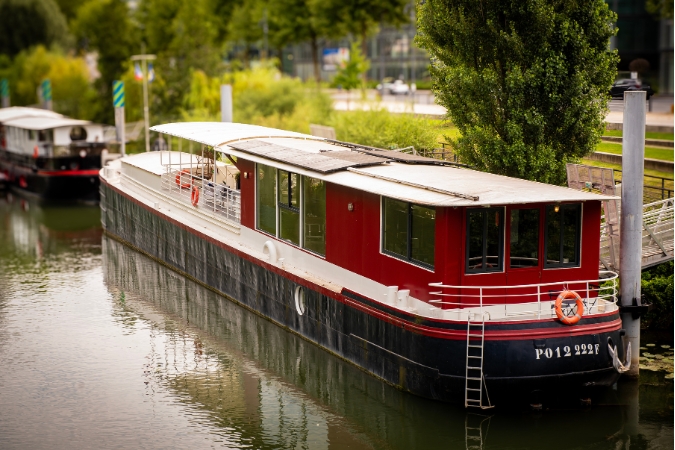
The boat, which holds 1,500 casks, also doubles as a convenient brand home in the heart of one of Europe’s largest cities, as well as what Gabriel calls ‘a floating scientific research centre’. His next move was to get a licence to ‘distil on the boat but the man from the authorities said, “Don’t push your luck! That’s not possible.”’ So for now the boat is just for ageing casks of rum and Cognac in 30-litre barrels that customers can buy and keep on the boat. There’s also a small quantity of boat-aged bottles for sale on board or from Ferrand HQ in Jarnac.
According to Gabriel, Barge 166 has even attracted the attention of the Guinness Book of World Records, which wanted to include it as the largest floating cellar in the world; Gabriel turned it down when they tried to charge him $25,000 for the inclusion.
On the boat – sorry, floating warehouse – the high humidity and movement provide a unique ageing environment. However, Gabriel has helped nature to take its course: ‘I didn’t have enough movement, so I built a mechanical arm to programme the movement, pushing it against the dock.’ He is convinced that it makes a noticeable difference to the resulting spirit. The humidity means that the Cognac loses alcohol rather than water. He describes a 2013 vintage that has been ageing on water for two years as ‘like Cognac candy’.
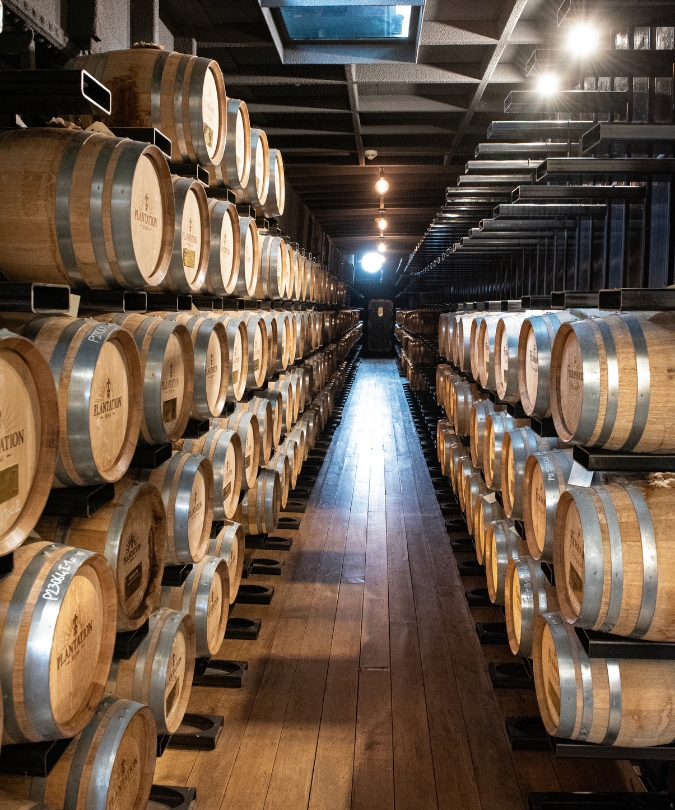
Eager to taste the difference, I sought out the Maison Ferrand stand at the recent Cognac Show in London. They had three originally identical Cognacs: one aged in a humid cellar, one in a dry cellar and one partly on Barge 166. The difference between the first two was noticeable, but the experiment was rather ruined by the fact that the boat-aged spirit had been matured in a 30-litre cask, so it had had more wood contact.
Billy Abbott, educator for The Whisky Exchange, says that the effects of water-borne ageing are ‘difficult to assess’. He continues: ‘Baking a cask is going to accelerate things a lot more than sticking it on a boat but sloshing your spirit around on the high seas is likely to do more than sailing it down the Thames, although the latter may have more of a marketing impact.’
This gets to the heart of the matter with dynamic ageing of spirits: the difference to the liquid may not always be easy to quantify but it’s clearly a story that resonates with the customer.