Choosing the best wine with Christmas dinner can prove a mind-boggling task, especially since there is a seemingly never-ending selection to match the multiple, varied courses. As well as food pairings to think about, you’ve also got to consider the tastes of your guests; are they likely to prefer classic styles or is something a bit more unusual likely to be welcome? In our Ask the Sommelier series, we put your wine-related questions to the world’s top sommeliers. In this festive instalment, we sit down with sommelier Paul Biwand of London’s Elsa to discover which wines are best to serve throughout the day, as well as during the main event: Christmas dinner.
Opened in 2024, Elsa has made itself a go-to spot for Alsatian fare in London. Sommelier Paul Biwand is in charge of the wine list and has been entrusted to select a variety of off-beat pours and timeless classics that follow the restaurant’s approach to seasonality, simplicity and sustainability. While many wines from Alsace appear on the list, Biwand isn’t scared to look further afield, and his list features wines from Switzerland, as well as biodynamic bottles from overlooked regions of France. We sat down with the sommelier to talk the best wines with Christmas dinner.
‘I’m in charge of selecting the wine this Christmas. Which wines would you recommend to serve for each course of a traditional Christmas dinner and to ensure this year’s drinking is extra special?’
Frank from Oxford, UK

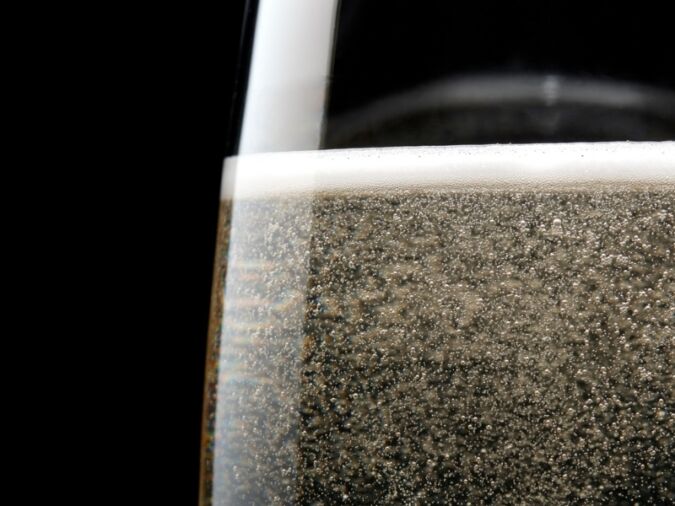
What sparkling wine should I open as guests arrive?
A safe bet would be a Crémant if you aren’t going for Champagne. If you’re conscious about budget, I would go with a Crémant d’Alsace, which is the region we highlight most at the restaurant. Crémant from there can often comprise Riesling as well as varieties that are specific to Alsace. If you’re after something a bit classic, say if you’re pouring for in-laws or older members of the family, I’d go for the Achillee Zero Dosage. It is bone dry, super sharp, and close to Champagne in style.
Alternatively, that part of France also make excellent Pét Nats. We’ve recently been pouring a delicious Pét Nat from a producer called Jusmeyer and the cuvée is called Chante Pinot. It’s high dosage at around 7-9mg, but this gives it a luscious and silky texture, meaning it doesn’t feel overly sweet. It’s made from Gewürtztraminer and has beautiful texture, richness and acidity. I’ve not met anyone who doesn’t like it.
What’s the best wine to pair with turkey at Christmas?
If you’re choosing white, I’d pick something from Alsace that is rich and can stand up against food. A Pinot Gris – such as Josmeyer’s Fromaneteau Pinot Gris, which has a lot of body and richness – is what I would go for.
For a red, I would go for Nebbiolo. A producer that I love at the moment is called Proprietà Sperino; they’re from the northern part of Piedmont and they have a cuvée called Lessona. I’ve had this a couple of times in the past few years and it has blown my mind every time.

What about a wine to pair with beef?
I would go for something that is rich, with spice and concentration. A winery in South Africa that I love called Blank Bottle make over 60 different wines and have some beautiful Shiraz cultivated on the Ceres Plateau, which would pair perfectly with beef.
Can you pick a vegan wine that would pair perfectly with a nut roast?
With a nut roast, I would choose Champagne. I really love Drappier – their wines are vegan and never disappoint. In order to echo the nutty flavours of the dish I would pick a Blanc de Blancs.
For a red wine, I would go for a Bordeaux, and would head to the Côtes de Bourg, specifically from the producer Les Graves de Viaud. Their vineyards are planted with Cabernet Franc and Merlot, and they practice biodynamics. It’s still quite hard to find biodynamic wine in Bordeaux but this wine is excellent.
View this post on Instagram
What’s the best wine to pair with Christmas pudding?
For dessert, the wine always has to match the sweetness; it has to be as sweet or sweeter. In terms of pairing, you can either go for something that contrasts or mirrors the flavour. If the dessert is rich and fruit-heavy, you could go for a classic Pedro Ximénez – the sticky toffee notes would work well. Barolo Chinato also has an element of surprise, which is interesting, and it isn’t necessarily that difficult to find. Otherwise, if the dessert is more stone-fruit heavy and lighter in colour, you could go for a Marsala. The Marsala from Nino Barraco would work well.
What is a wine that you would recommend as a gift to someone who already knows their wines?
I would gift a bottle of Champagne, in particular Grower Champagne from either Guillame Sergent’s Les Chemins de Chappes or Flavien Nowack – who creates my favourite Champagne. If I was on a budget, I’d got for a Crémant we love here at Elsa called Domaine des Marnes Blanche from the Jura, which I absolutely adore. For a sommelier friend, I would go for a rosé from a winery called Clos Cibonne in the south of France, which I just discovered; I feel like I’m very late to the party on this as many wine-focused restaurants, such as Noble Rot, have been pouring it for a long time. It is made from a grape variety called Tibouren and they grow about 80-90% of all Tibouren in the world. It is a beautiful texture with lots of wild herbs. It’s a rosé wine that really speaks to the terroir of the south of France and is very gastronomic.
Do you have any good non-alcoholic options for guests that don’t drink?
From what I have been tasting in the past few years one of the things that has stood out is a drink from the Basque country called AMA. We are seeing this more and more in Michelin restaurants as part of their non-alcoholic pairing. It is labelled as a kombucha but it isn’t as aggressive in terms of a vinegar kick. It’s not as in your face; there’s lots of elegance and lots of finesse. Serve it in a flute if you want to feel a bit fancy.
Interview by Charlotte Russell
Do you have a question to put to the world’s top sommeliers? Send them to editor@cluboenologique.com
Note: This story was first published on 27 Oct 2021 and updated with answers from a different sommelier on 9 Dec 2025