It is a fact worthy of a quiz question that the highest point in Portugal is not on the mainland but on the island of Pico. The dormant stratovolcano that dominates the island rises to a height of 2,351 metres. Pico is formed of several relatively recent volcanic eruptions and is young geologically at around 300,000 years old (the much smaller Azorean island of Santa Maria to the east, the first to form, is 8 million years old). Pico last experienced an eruption in the nineteenth century and these very visible recent lava flows are referred to enigmatically by the locals as mistérios (‘mysteries’). The young volcanic soils are generally poor and shallow. There is some grassland around the centre of the island, but the soils are mostly unsuitable for the cultivation of arable crops. Due to the paucity of the soils, grapes were the only viable crop and Pico became by far the most important source of wine in the Azores. It remains so today.
The remarkable rehabilitation of Pico’s vineyards has restored a viticultural vocabulary
Two types of volcanic rock formation are favoured for viticulture: biscoitos and lajido. The former earns its Portuguese name from the hard chunks of bread (or ‘biscuits’) found on the transatlantic sailing ships, and which were almost inedible. The latter signifies volcanic slabs (laje) or extensions that in places seem to flow off the island into the ocean. The so-called red lava (known as bagaço vermelho) also found here, is not considered suitable for viticulture.
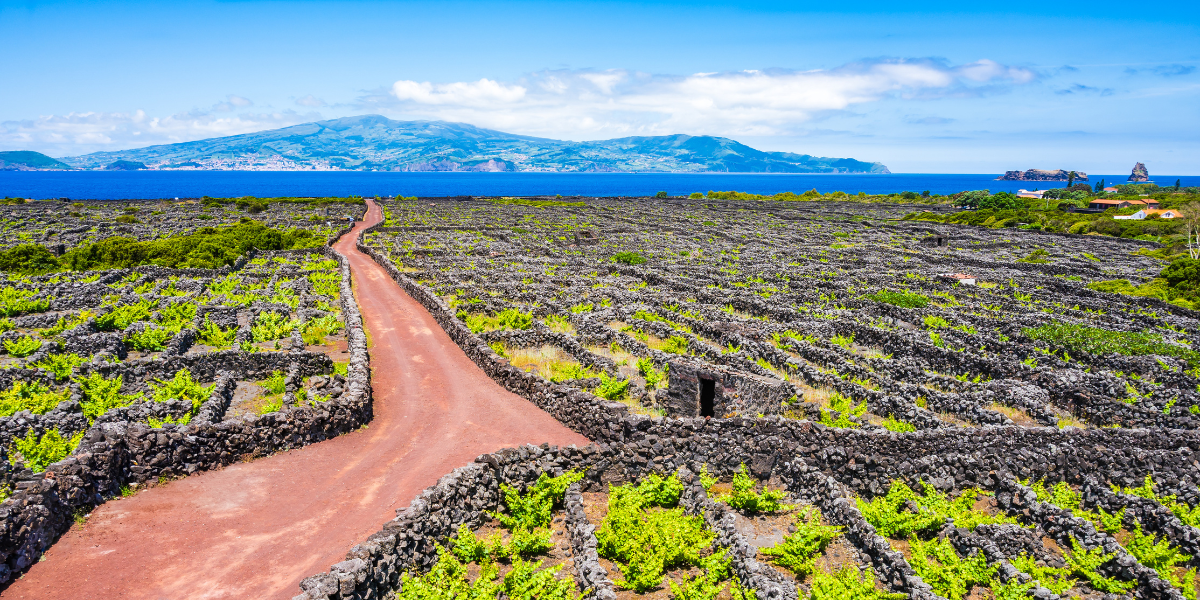
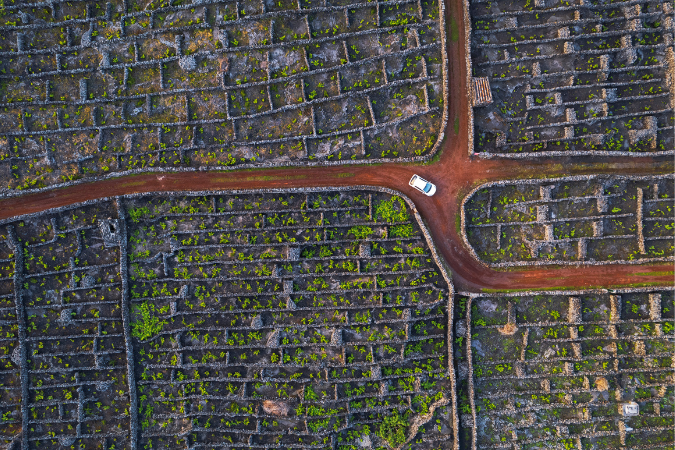
Historically, the lajido close to the sea is the only place to make the sweet passado wine. The holy grail for this is Criação Velha, a remarkable area of vineyard just south of the island’s main town, Madalena. With the use of the most primitive of implements, early colonizers opened up holes in the hard, dark basalt to anchor vine cuttings. The stones that were cleared in the process have been piled up to form a latticework of currais (plural of curral), small stone-walled enclosures to protect the vines from the wind and the sea. It is estimated that at the end of the eighteenth century there were 8,000–12,000 hectares of vineyard on Pico, which would have meant that the walls of the currais, placed end-to-end, would have stretched twice round the equator! Such was the decline in viticulture that by the end of the twentieth century there were only just over 100 hectares of vineyard remaining. Most of the vineyards were reclaimed by lenha, the windswept trees and stunted bushes that still cover much of the island. When I visited Pico for the first time in the summer of 2002, most of these remarkable currais were still hidden beneath the scrub, with only the historic Criacão Velha vineyard remaining in production, though threatened with abandonment at the time.
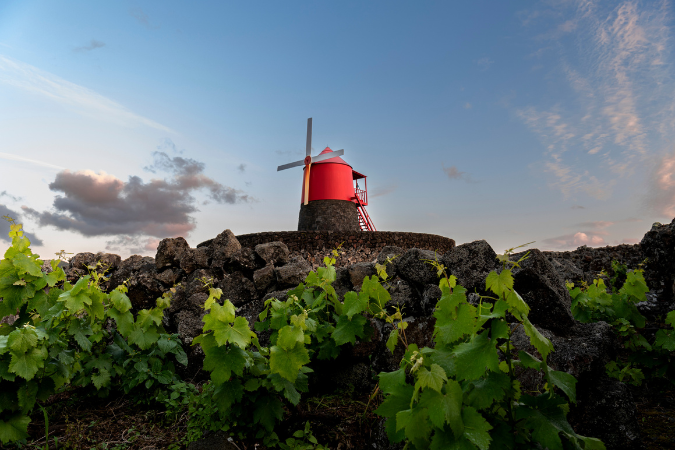
Since the turn of the twenty-first century there has been a restitution that is little short of astounding. Pico’s currais were awarded UNESCO World Heritage status in 2004, and grants became available to reinstate and protect these hugely labour-intensive vineyards. Restoration gathered pace with the EU-financed VITIS project, starting in 2014, which offered €25,000 per hectare to replant vineyards. This mostly meant clearing away the scrub to uncover, rebuild and replant the currais that had been abandoned in the nineteenth century. There are now around 1,000 hectares of vineyard growing on Pico, mostly along the western and northern parts of the coastline. Vines are planted at up to around 150 metres above sea level. Above this, the cultivable land is mostly given over to dairy farming.
There is a local saying that the best wines come from the vineyards ‘where you can hear the crabs sing’
The remarkable rehabilitation of Pico’s vineyards has restored a viticultural vocabulary. A row of currais is known as a jarão and the lane separating currais is a canáda, a word that sometimes crops up on wine labels.
This is ‘heroic viticulture’: not just because of the volcanic terrain that has to be seen to be believed, but also because of the climate and low, erratic yields. (One grower I met called it viticultura dos loucos, ‘viticulture for the crazy’). Exposed to the Atlantic, Pico’s annual rainfall totals are in excess of 1,000 millimetres. Summers are warm, humid and often overcast, making this a paradise for fungal diseases. Pico mountain stands just off centre on the island and creates a Foehn effect, making the weather warmer and drier on its leeward side. Often occluded or partially covered by a capacete (‘helmet’) of cloud, the mountain serves as a barometer to the locals. Powerful Atlantic storms are frequent, with the saltwater spray reaching as far as 3 kilometres inland. Vines close to the coast can be ‘burnt’ by the salt and those closest to the waves run the very real risk of being flooded and swept away. But there is a local saying that the best wines come from the vineyards ‘where you can hear the crabs sing’ (i.e. closest to the sea). These are areas where the risks are highest, but they certainly produce some of the most characterful wines, with a pronounced maritime, ‘low tide’ quality that I have not come across anywhere else in the wine world. There are so called ‘tidal wells’ in the midst of the vineyards where the rainwater sits on top of saline water and levels rise and fall with the tides. Vines are trained low, and old specimens seem to crawl spider-like over the rocks, the retained heat from which helps the grapes to ripen. Yields are low, with just 200–300 kilograms per hectare typical from the famous lajido vineyards at Criação Velha. Consequently, many of the wines are quite pricey.
There are three main grape varieties, all white: Arinto dos Açores, Verdelho and Terrantez do Pico. The most planted of the three today is Arinto, with around 450 hectares. Capable of producing distinctive dry white wines with an acidic streak, this is not the same variety as Arinto on the mainland (sometimes called Arinto de Bucelas). On the island of Terceira, the same Arinto dos Açores is known confusingly as Terrantez da Terceira (such is the problem with varietal synonyms). Verdelho (the same as on Madeira) covers around 380 hectares. This variety may have originated in the Azores and is favoured for the more traditional, richer (but unfortified) wines made from shrivelled, raisinized grapes. The third Azorean grape, Terrantez do Pico, is believed to be indigenous to the island (and is not the same as the prized grape with the same first name on Madeira). Early ripening, it is susceptible to birds and to rot, making it the most challenging of the three grapes to grow. Terrantez do Pico was almost rendered extinct in the last century, but with the revival of Pico’s vineyards there are now just under 50 hectares in total. Alongside these grapes, Galego Dorado and Boal can also be found in old vineyards and make their way into field blends. With all the work that goes into viticulture on Pico, grapes are expensive and top quality Terrantez was trading at around €6 per kilo in 2024. There are also plots of Merlot and Syrah on Pico that are now more than experimental and capable of making good wines. Alongside Isabella and other red hybrids like Herbemont and Seibel there is also a quantity of a red variety known locally as Saborinho (‘small and flavoursome’), which equates to Tinta Negra on Madeira. Bastardo and Tinta Pinheira also make an appearance.