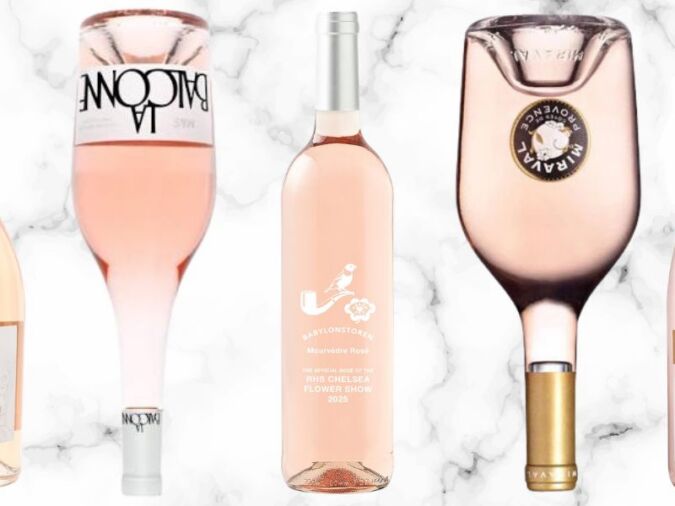
Despite the oceans of commercial rosé, Provence is still today a hotbed for quality, premium pink wine. Rather than being a radical departure in style, oak barrels for ageing rosé are part of the once traditional range of winemaking vessels, along with large concrete tanks. These wooden barrels were large and old, giving little oak flavour, and a more oxidative form of winemaking. This tradition lives through the cult wines of Clos Cibonne (where they still use 100-year-old barrels) and Château Simone. Elizabeth has memories of some of the small traditional estates in the mid-1980s fermenting all of their wine in large, old wooden vats. Her notes taken at a tasting run by Liz Berry MW and her husband Mike, at their South Kensington wine shop La Vigneronne in July 1990, of the Ott family’s Château de Selle rosés are interesting, revealing a completely different style to the rosés produced today: ‘Château de Selle 1989 30 per cent Cabernet Sauvignon, 30 per cent Cinsault, 30 per cent Grenache. Old vines, low yield. One night maceration. Fermented in old casks, minimum six months ageing in cask. Pale orange pink. Very soft fruit, would have liked a bit more, oak evident, some tannins, good acidity and alcohol evident. Not delicate, more like a red wine.’
The level of oak is a constant discussion, with both producers and consumers either loving or hating it
What was new was the use of oak to add complexity to the wines, with fine whites in mind. In 1990, in response to requests from restaurant customers, Guy Negrel at Mas de Cadenet started to produce a rosé aged in new, small oak barrels. With some minor changes (less maceration, and no malolactic conversion since 2004), the Grande Garde is still made today. In the late 1990s, Lars Torstenson at Château d’Esclans was active in research and development. Experiments included a ripasso from dried Cinsault grapes, called Recinsaut (recioto + Cinsaut); harvest dates; and a rosé fermented in new oak launched in 1997 called Rochêne (rosé + chêne – oak). ‘It was supposed to be a rosé wine for people who didn’t like rosé wine or wanted more from their rosé wines,’ says Torstenson. However, it was current Château d’Esclans owner Sacha Lichine’s launch in 2007 of his three oaked rosés, Garrus, Les Clans and Château, that brought attention to this style of wines in Provence. Using Burgundian methodology and high tech, wine consultant Patrick Léon fermented and aged the rosés in temperature-controlled barrels. The level of oak is a constant discussion, with both producers and consumers either loving or hating it. ‘Oaked’ has become, to many, synonymous with premium. Myths and misunderstandings abound: contrary to popular belief (even in educated, trade circles), almost no Bandol rosé is oaked.
Evident, excessive new oak is rare. Old oak is common, but oaky wines are not a major style in the red, white or rosé wines of Provence. It is rare to see large barrel rooms full of new barrels – expect to see the occasional old foudre, used more to moderate and micro-oxygenate reductive varieties such as Cinsault and Mourvèdre. Attitudes towards oak are slowly evolving, and experiments are ongoing: Château de Saint-Martin’s Comtesse rosé is aged in acacia and mulberry wood barrels.
A few which stand out as being more evidently oaky are Clos Cibonne’s Cuvée Caroline, initially aged completely in new oak, and red Bandols from Châteaux d’Azur, Vannières and Val d’Arenc. Sainte Marguerite’s white and Tour Saint Honoré’s red, white and rosé in La Londe, Domaine de Métifiot in Les Baux and Domaines de Fontenille and de Tara in the Luberon all stand out – in our opinion, positively, as the ripe, round fruit of Provence can carry oak effortlessly, without being overpowered.
Jarres, amphoras and concrete eggs are appearing everywhere throughout the region in ever increasing numbers, for all three colours
Discussion about reductive or oxidative winemaking has continued and there is a slow growth in the use of more porous vessels for fermentation and ageing. More porous vessels (unlined cement, amphoras and jarres) have been seen as the solution for more complex and less reductive rosés – we particularly like the extra texture they can give rosé. Most famously, Château de Pibarnon has moved from Stockinger barrels to jarres for the Nuances rosé, calibrating the porosity to allow the reductive Mourvèdre to breathe. They also provide more oxygen, allowing for the opportunity to consider spontaneous fermentation or indigenous yeast. Jarres, amphoras and concrete eggs are appearing everywhere throughout the region in ever increasing numbers, for all three colours.
Vintages and the age of wine is a much-discussed topic when it comes to rosé. Before the 1980s, rosés were often bottled without a vintage indication and drunk by the end of the summer. As exports grew, vintages were deemed essential to ensure that the rosé was drunk young and at its best. ‘Old’ (more than a year old) rosés became unsellable. Consumers did not need vintage charts to appreciate the wine, as the latest was always proclaimed to be the best. Big brands prided themselves on the uniformity of style from year to year. In today’s market, where wine sales are slowing down, and ‘leftover’ stock at the end of the year is increasingly a risk, several options are available for rosé. The first is the very small growth in aged or ageable rosés, in effect a reserva style, known in Provence as ‘rosé de garde’. Another option is a non-vintage or multi-vintage wine, blending different vintages. This is not simply an entry-level phenomenon: exciting solera-style wines exist, such as Cante Gau Rosé from Domaine de la Réaltière and Dai! from Myrko Tépus. Some producers are almost hiding the vintage on the label, others clearly state non-vintage.
Some producers have noted that it is not just rosé where the market wants younger wines. With a lack of cellar space, few people have the ability to age big powerful reds and there is a growing demand for lighter red and white wines.