It was only in early 2008 that I started to think that doing the Best Sommelier in the World one more time was feasible. I knew that it was probably my very last chance to enter. I would be 53-years-old in 2010 and although there is no age limit to participate in the competition, it tends to be more difficult as you get older. By the middle of 2008 my mind was made up: I would enter the Best Sommelier in the World 2010. I told Nina and she gave me her full support. She might not admit it, but I think secretly she enjoyed coaching me for all those wine exams and competitions.
Looking back at my Best Sommelier in the World competition track record, one thought came to mind. During a professional career spread over the 1960s and 1970s, French cycle racer Raymond Poulidor finished third on five occasions and second on three during the Tour de France, always just missing out on the big prize. Throughout the 1980s and 1990s, Jimmy White, one of my favourite snooker players and one of the most exciting players ever, reached the final of the world championship six times, but sadly never won it. I was determined not to be the Raymond Poulidor, or the Jimmy White, of the Best Sommelier in the World competition.
I notified the AFWS in 2008 that I would like to participate in the 2010 competition. I was told that, unless I was the only one to put my name forward, there would be a UK selection in 2009.
Towards the end of 2008 I had put a lot of thought into my upcoming preparation. I wanted to refresh my approach compared with how I had prepared for the 2004 and 2007 contests. Uncle Bob had done a great job coaching me for the last two contests, but to get a different approach and view, I needed a new coach.
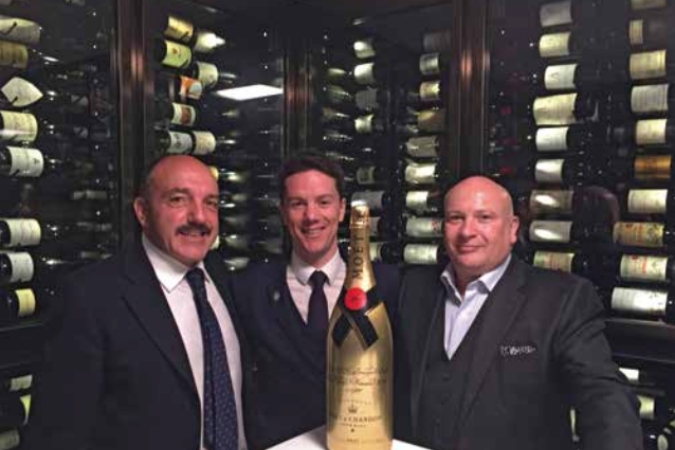
I knew a business coach called Nick Twyman, so I asked him to be my manager for the Best Sommelier in the World 2010. I contacted two of my ex-Hotel du Vin sommeliers, Dimitri Mesnard and Xavier Rousset, and asked them to be part of my team. Nick and I would decide on the main aspects of my preparation and after each important stage he and I would review my progress and decide what we needed to modify or amplify. Dimitri and Xavier would be in charge of organising a few tough tests, similar to those I was likely to experience during the competition. Some of these tests would take place at Hotel TerraVina, but others would take place in unfamiliar surroundings.
My two wonderful Hotel TerraVina sommeliers at the time, Laura Rhys and Laurent Richet, regularly set up countless blind tastings of wines and spirits for me. They were both preparing for sommelier exams or competitions at the time; Nanda, Laurent’s future wife, was our restaurant supervisor and she would often set up a service exercise, such as decanting, at six o’clock before the restaurant service. Nina supervised everything, as she had so much understanding of sommelier competitions.
For my preparation I also needed to consider the financial aspect. Some members of my team, like Dimitri and Xavier, very generously donated their time for free. Obviously if they wanted to stay and enjoy an overnight stay at Hotel TerraVina that would be with our compliments, although they offered their time and expertise spontaneously, without expecting anything in return. Others quite logically had to be remunerated. Several bottles of wine, many liqueur and spirit miniatures and some training equipment needed to be purchased. New outfits for the competition were bought and of course a lot of activities would take place away from home or our hotel, which also created some costs. Therefore, as I had done before, I raised some money through sponsorship. This time I did not ask Le Creuset, but a spirits company with offices not far from Hotel TerraVina and an international wine company that I knew well. Between the two companies I raised £10,000, which Nina and I matched from our own finances to make sure I had a sufficient pot of money for my training.
In 2009, a few past winners of the UK Sommelier of the Year decided to enter the UK selection. I knew that I had to be very sharp, as Matthieu Longuère, who had worked for me at Hotel du Vin, was among the candidates, and was a very talented and serious contender.
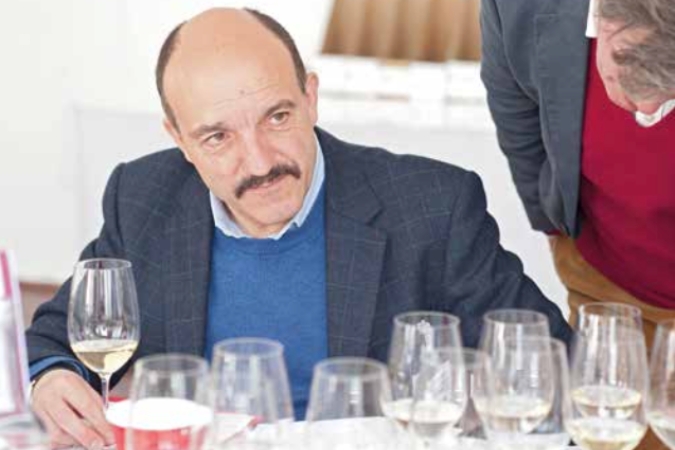
The selection took place in a hotel in London, and was run by Nick Scade, MBE, director and president of AFWS, Paul Breach, OBE, director and vice-president of AWFS, and Brian Julyan, MS, CEO of the Court of Master Sommeliers. I cannot say that my performance was brilliant that day, but I was consistent. Also, my long competition experience greatly helped me in terms of knowing when to take risks and when to play it safe. After a long questionnaire, a written blind tasting and some service exercises I was declared the winner of the UK selection process and this ensured that I would be in Chile in 2010. The final phase of my preparation could start now in earnest.
With just a bit less than a year left before the competition, I first spent two months redoing all of my wine files. The last time I had completely revised them was in 2003 when preparing for Athens 2004; I had simply updated them for Rhodes 2007. I now felt it was important to have some new material and I redid them from scratch. Next, I restarted my training routine.
Nick, my coach, with the help of Dimitri and Xavier, set up a tough test in London, in a private club in Sloane Square. The idea was to re-create what Alan Holmes had done three years previously at Chewton Glen, but in an even more alien environment.
On the day of the test, I made some mistakes, but on the whole, technically I did reasonably well, both on the blind tasting and in the different service exercises. However, my performance was a bit laborious. I was not very inspired and there was a lack of dynamism. It was worrying.