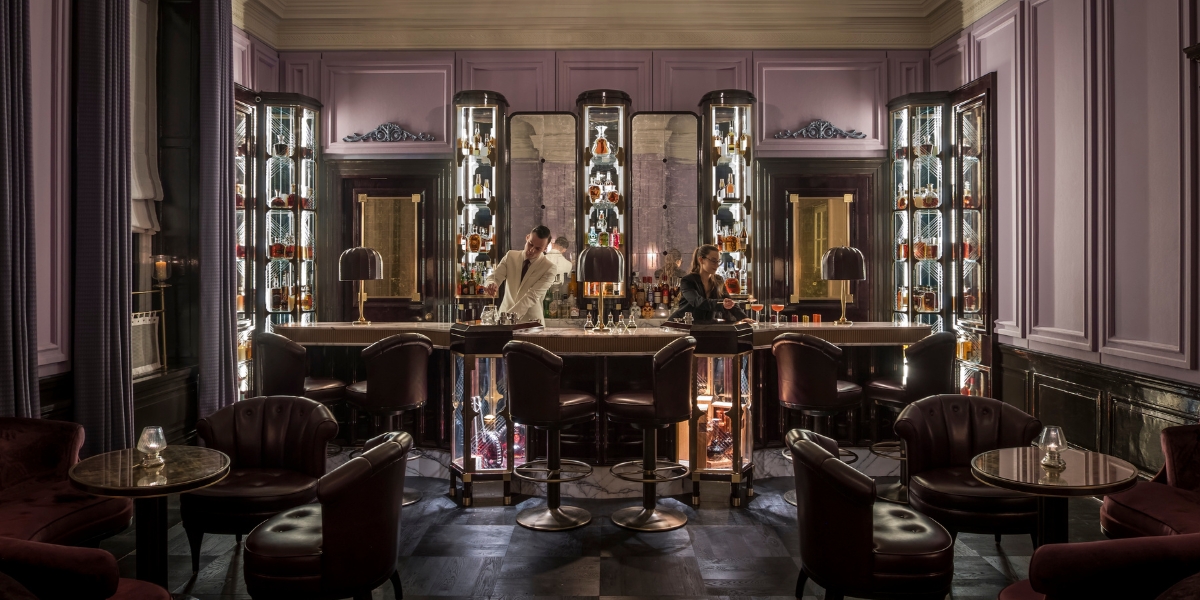
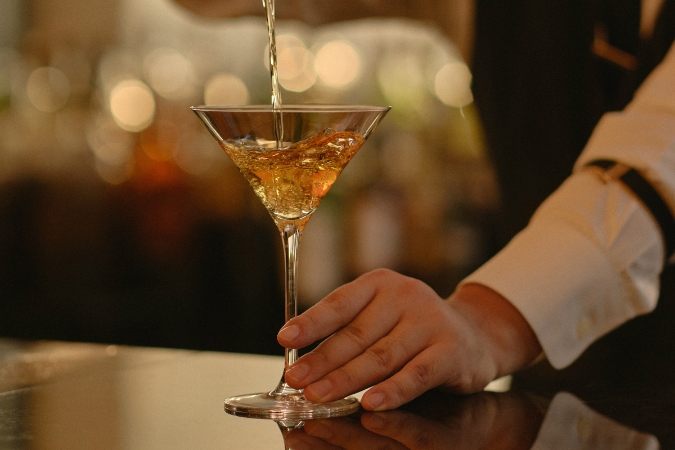
For decades, the hotel bar was a curious contradiction. Often an afterthought in venues where rooms and restaurants came first, they promised glamour but rarely delivered. They were the sort of places you smell before you see: old carpet, stale smoke baked into the curtains, an underpaid bartender who’d rather be anywhere else; a sad Martini in a warm glass; a businessman staring at a flickering TV on mute.
That was the reputation. For years, the hotel bar was where fun went to die – an uneasy balance between convenience and compromise. Nobody ever chose to drink there.
Fast-forward to today, however, and hotel bars are no longer holding pens for the lost and lonely. They’re the main event: award-winning venues, advertised with pride. They’re places with global reputations for greatness and bartenders who have become as famed as celebrity chefs. The hotel bar has gone from seedy to sexy, from background noise to cultural centrepiece.
So, how did the hotel bar transform itself from unloved support act to stadium headliner? And why – in an age when independent cocktail culture has never been stronger – are hotel bars not only surviving but thriving?
From afterthought to attraction
The modern story of the hotel bar begins, paradoxically, with decline. By the late 20th century, especially in the US and Europe, chain hotels had scrubbed personality from their offerings. Rooms were identical from Miami to Milan, menus the same laminated clichés. The bars followed suit: efficient, predictable, aggressively mediocre. Convenience over character. If you wanted romance, you didn’t head downstairs – you went out.
Yet in London, Paris and New York, a few establishments kept the flame alive. The American Bar at The Savoy in London, for example, maintained its reputation through decades of turbulence. In Paris, Bar Hemingway at The Ritz clung to its literary mystique. But these were exceptions. For most travellers, the hotel bar was not a destination; it was a last-gasp watering hole when nowhere else was open. That long winter ended when hotels realised the obvious: food and drink weren’t just add-ons; they were the soul of the stay.
With more than four decades of experience in hotel management and as general manager of one of Mayfair’s flagship establishments, the JW Marriott Grosvenor House London on Park Lane, Stuart Bowery is well placed to talk about how the hotel bar has evolved.
‘For much of the past few decades, aside from a handful of iconic hotels, bars were often overlooked and long regarded as convenient stopovers rather than destinations,’ Bowery notes. ‘Today, it’s a completely different story. The hotel bar has transformed from a place of simple convenience into a place of connection and a stage for craft and creativity.’
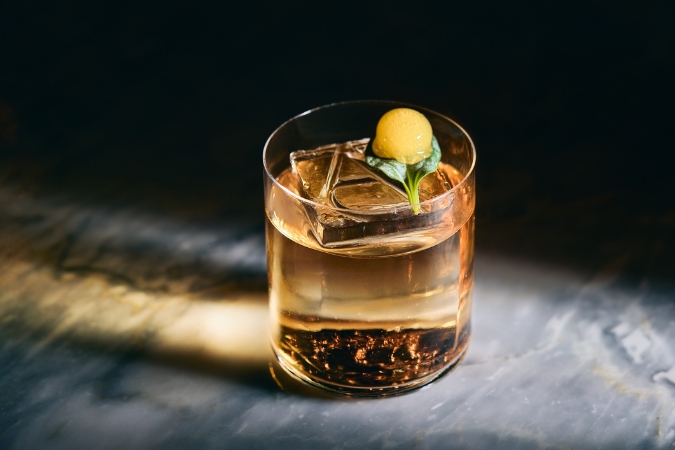
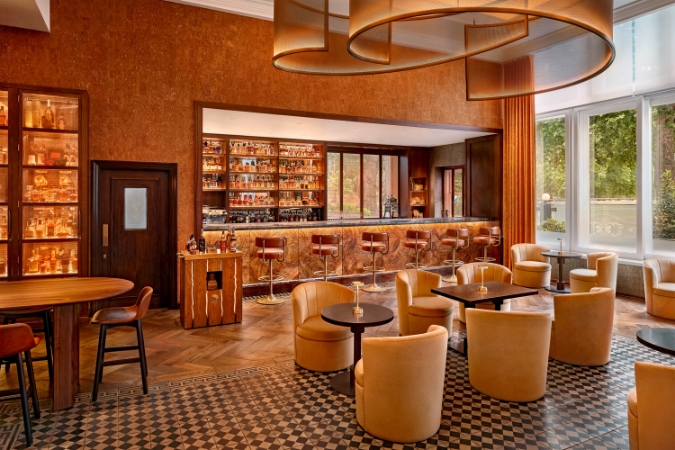
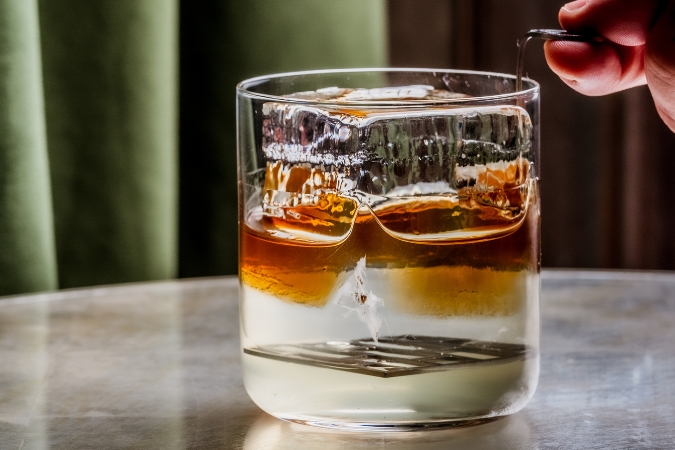
At Grosvenor House, the Bourbon Bar proves the point. Guests can summon a trolley for Old Fashioneds to their table – one of the world’s deepest bourbon collections wheeled right to you. This isn’t an afterthought; it’s theatre – a statement that the bar is now at the heart of what makes a hotel unforgettable.
Hotel-bar resurgence
The renaissance began in the early 2000s, when luxury hotels came to realise that food and beverages could be sold as a calling card. Michelin-starred chefs were brought in to lead hotel restaurants. In parallel, bartenders were given the freedom to innovate, creating cocktail programmes that rivalled, and often exceeded, the city’s leading independents.
And then came the cocktail revival. People cared again about how drinks were made. They wanted the classics done right and new ideas done better. Hotel bars had the money and space to deliver – and a clientele already on hand. Suddenly, those sad corners of carpet and smoke became playgrounds again, mimicking the pre-Prohibition-era American bars that hotels were so proud of in the early 1900s.
Suddenly, those sad corners of carpet and smoke became playgrounds again
Hamish Smith, then editor of The World’s 50 Best Bars, remembers the turning point. ‘Let me take you back to 2008,’ he says. ‘The Connaught bar [at The Connaught hotel in London] is reopening, and they have a choice: bring in an experienced hotel man, the kind of person you might have found at the Savoy or Dorchester bars, or go for somebody young, who represents the fresh face of what was at that time called “mixology”.
‘The man they choose is called Ago Perrone,’ says Smith of the young, up-and-coming Italian mixologist, who had been slowly building a reputation in London. ‘Reluctantly, Perrone agrees to the role. At the time, he did not want to be associated with hotel bars. Hotel bars were not cool. Globally. They might have had some history but they just weren’t cool.’
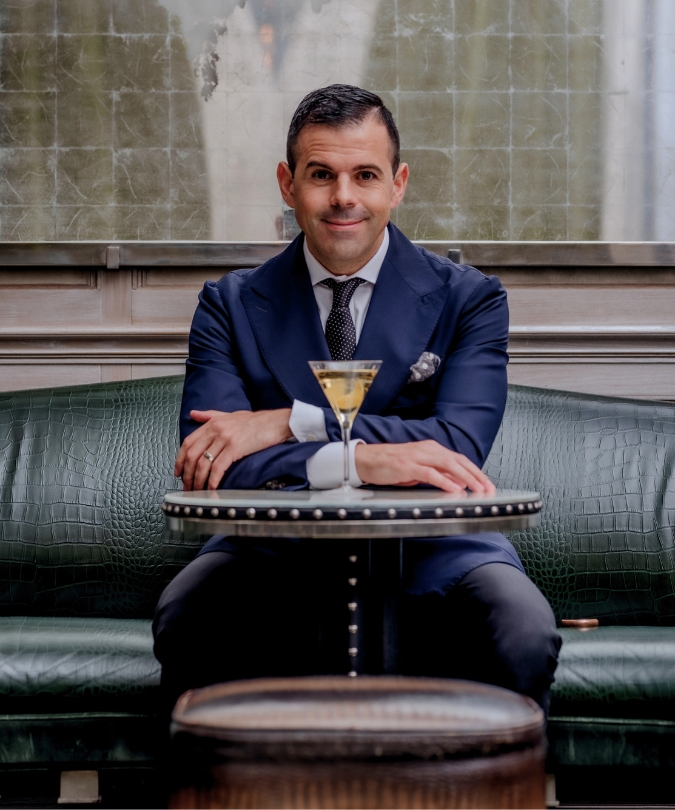
That choice was a spark of genius from the hotel management. Meanwhile, across town, Artesian at The Langham gave two young bartenders, Alex Kratena and Simone Caporale, free rein to experiment wildly. Alongside The Savoy’s resurgent American Bar, suddenly London’s hotels were running the world’s most serious cocktail operations – less waiting room, more destination – and very profitable ones.
Perrone himself recalls the gamble. ‘When I joined The Connaught in 2008, there were, in London, classic hotel bars that were not really frequented by the large population of cocktail lovers that we see today. Drinkers wouldn’t really think of going to a five-star hotel bar for a cocktail.’ He goes on to point out that ‘my generation of bartenders was inspired by the timelessness of places such as Dukes and The Lanesborough’, both classic hotels serving classic cocktails to a very high standard.
So, why choose to move to a hotel? Perrone says, ‘The hotel bar career was fascinating, the whole environment magical, and I was fond of the attentive service and care within the hotel world. However, it was also very challenging for a young, creative and excited bartender like me. London was becoming such a vibrant playground that the idea of fitting into such a structured environment scared me. The challenge was too enticing, though,’ he explains, ‘and I saw an opportunity to bring something new to the cocktail world with The Connaught Bar, together with Erik Lorincz [now of Kwãnt in Mayfair]. Our excitement and inspiration around mixology made us work relentlessly to create a classic yet modern hotel bar.
Service and style
A hotel bar is never just a bar. It’s an institution, a reflection of the address it belongs to. Step into the Orchid Bar at Tokyo’s Okura, the Beaufort Bar at The Savoy, or Bar Hemingway at The Ritz, and you feel it instantly: the weight of heritage paired with the freedom of a well-funded stage. The high-end hotel is a complex affair, and one that can provide an ecosystem in which a bar does not just survive, but thrive.
Training and service are part of the DNA. Jo Last, advocacy manager for Diageo’s World Class, the drink industry’s most respected cocktail competition, points out that hotel bartenders aren’t merely mixing drinks; they’re trained in the language of luxury. ‘Our World Class GB Bartender of the Year, Emanuele Mensah, comes from The Connaught,’ she says. ‘In general, hotels set high standards for guests, and this translates into the experience you have in their bars. Those who work in successful hotel bars are trained in giving personalised, luxury and high-standard experiences.’
And it is not just about service. Design has been central to this renaissance. Today’s hotel bars are not tucked away in anonymous corners; they occupy pride of place. Interiors are commissioned from top architects, and the lighting, furniture and acoustics are as carefully considered as the cocktails.
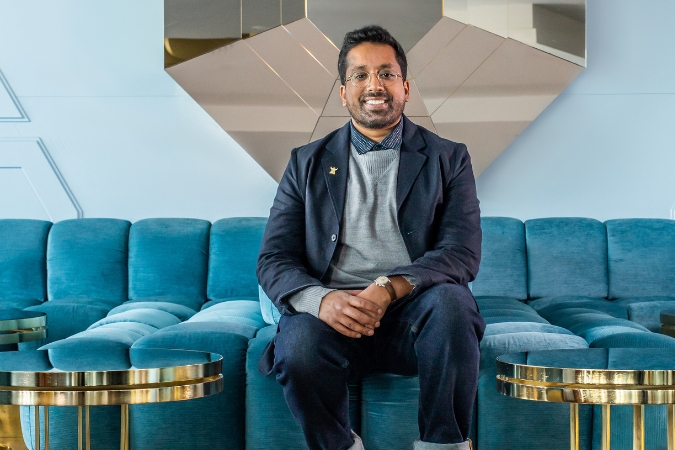
Ryan Chetiyawardana is an award-winning bartender and operator whose portfolio spans both standalone cocktail venues and hotel bars. For Chetiyawardana, design is as important as the drinks, and this is an approach he took to his new venture, Seed Library in the Nomad hotel, New York.
‘We always wanted to play to the glamour and timelessness of a great hotel bar, and especially the hospitality it allows you to create, but we also wanted to demonstrate that it could be a broader concept than the traditional spaces a guest might be used to,’ says Chetiyawardana. ‘Hotel bars in New York haven’t channelled the same accessibility that London has championed, but there’s a sense of marrying historic glamour with the buzzing modern energy the city has that really excited us for Seed Library New York.’
The hotel bar has reasserted itself, not just as a service point but as an institution – where a simple drink becomes an experience
Working with Jacu Strauss (who designed the bar at Chetiyawardana’s Dandelyan, now Lyaness, in London hotel Sea Containers House with Tom Dixon), Chetiyawardana goes on to say, ‘We channelled a sense of warmth and connection to nature into Seed Library New York, but giving specific moments to the room that celebrate the sense of sanctuary and escapism we want of a hotel bar in a big city. We wanted to bring the charm of an independent cocktail bar to a beautiful five-star setting.’
Heritage remains a cornerstone, too, especially in the grandes dames of the hotel world. Take Le Meurice in Paris, which first opened its doors in 1835. Its cocktail lounge, Bar 228, is a study in old-world glamour: wood-panelled walls, deep leather chairs, and lighting that flatters both the drinks and conversation. Here, design and history are inseparable; a Parisian salon where classic cocktails are served with a sense of continuity as much as craft.
‘Bar 228 is a true haven for our guests,’ says Pascal Mariani, the bar’s director. ‘It is a place where time seems to stand still, allowing them to savour the moment. Each guest is different, yet they all come together here, united by the spirit of the bar.Our success rests on four pillars: decor, music, service, and cocktails.’ And it is the perfect balance of these elements that makes Bar 228 one of the most iconic bars in Paris.
Looking ahead
The trajectory shows no sign of slowing. Even as independent cocktail culture thrives, the hotel bar continues to grow in prestige and relevance. Luxury hotel openings almost invariably announce their bar concepts with fanfare, often before discussing the design of the guest rooms. Accessibility is the key. As the cost of rooms rises, hotel bars can offer a taste of the experience at a fraction of the price. Anyone can spend an hour sipping a Martini at the bar in Claridge’s, thereby gaining an understanding of why the establishment is famed for hospitality.
Hamish Smith muses on the future. ‘Hotel bars don’t have to be museums to classic cocktails. Now, there is not a hotel group around the world that does not take its bar seriously. Hotels these days are better known for their bars than for their restaurants – that says it all.’
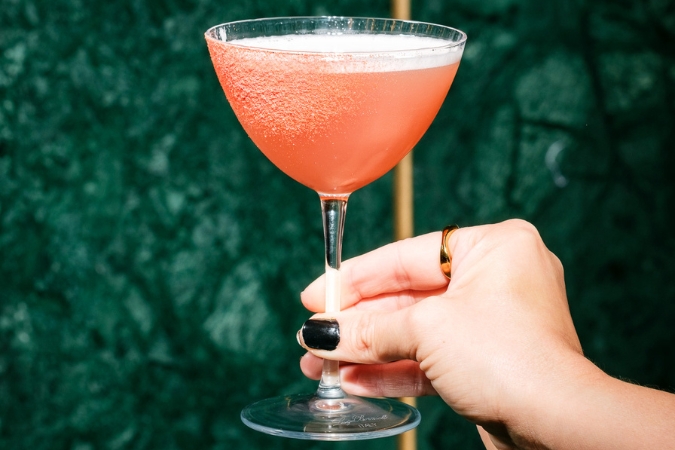
Holly Graham is an award-winning bartender, author of Cocktails of Asia and a bar owner in both Tokyo and Hong Kong; she agrees with Smith. ‘I love spur-of-the-moment fun in the bar. Hotel bars were devoid of this for some time, but places like Argo [in the Four Seasons Hotel, Hong Kong] and Origin [in the Shangri-La Hotel, Singapore] offer playful cocktails and cheeky hospitality. DarkSide [at the Rosewood, Hong Kong] has struck a brilliant balance of being incredibly elegant yet allowing guests to cut loose and sing along and dance to the nightly live music’.
Ultimately, the hotel bar has reasserted itself not just as a service point but as an institution. It is where tradition meets innovation, where global travellers meet city residents, and where a simple drink becomes an experience. The transformation from forgotten corner to cultural stage is complete, and you can enjoy luxury without having to pack a suitcase.
Five of the best hotel bars in 2026
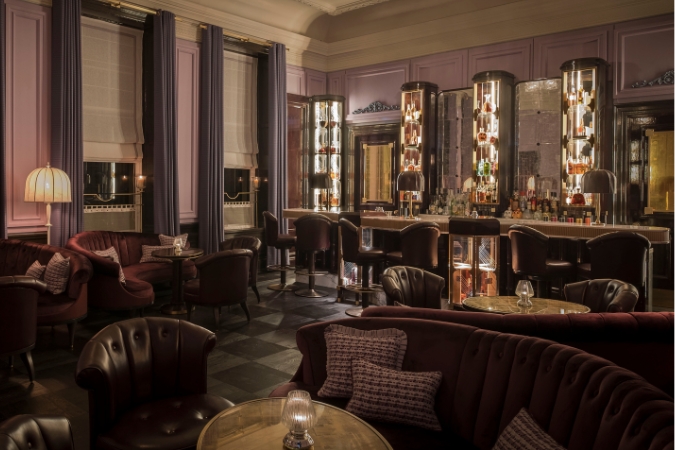
The American Bar
Gleneagles, Scotland
The American Bar at Gleneagles is every inch a classic hotel bar, but on the edge of the Scottish Highlands: mirrored walls, lacquered details, velvet banquettes, tuxedoed bartenders. Its award-winning cocktail menu offers subtle twists on classics, such as a Rob Roy made with bespoke whisky from the nearby Glenturret distillery. Embracing its surroundings, this is one place truly worth travelling for.
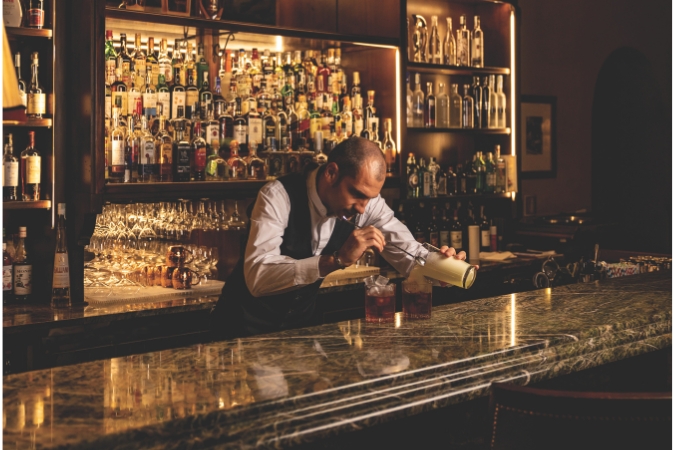
Bar Visconti
Castello di Casole Hotel, Tuscany
Bar Visconti is housed in the former family estate of Count Luchino Visconti di Modron, the famed Italian film director who would host lavish parties here for the likes of Sophia Loren and Burt Lancaster. Frescoed walls and marble details juxtapose with the sweeping terrace views across rolling Tuscan vineyards. Aperitivo is elevated here: Negronis (invented in nearby Florence) are made with local vermouth and Tuscan gin. Seasonal cocktails nod to the region’s produce, and the curated whisky selection rivals any to be found in Europe.
belmond.com/hotels/europe/italy/tuscany/belmond-castello-di-casole
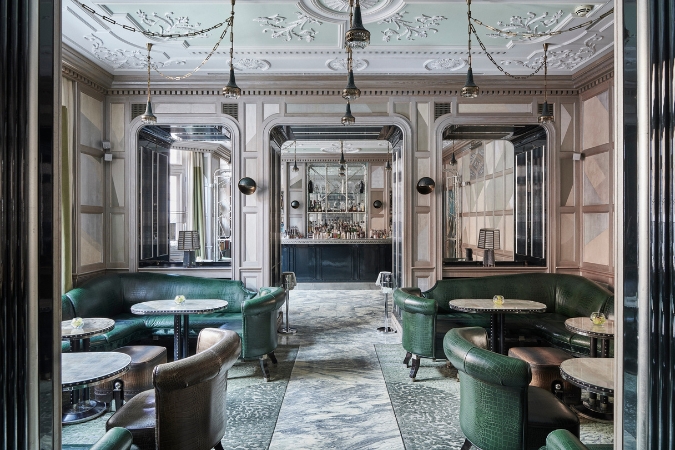
The Connaught Bar
The Connaught, London
More than a hotel bar, The Connaught Bar is a cultural landmark. Step inside and you enter a room that feels both timeless and contemporary: silver-leaf walls, Art Deco details and an atmosphere that hums with quiet glamour. Ago Perrone and his team turned this into the stage where hotel bartending became high art. Martinis arrive on a trolley and are poured from a great height. Service is intuitive and theatrical without ever tipping into fuss or gimmick. The Connaught didn’t just rescue the reputation of the hotel bar, it reshaped it, proving that such spaces could be innovative, desirable and iconic.
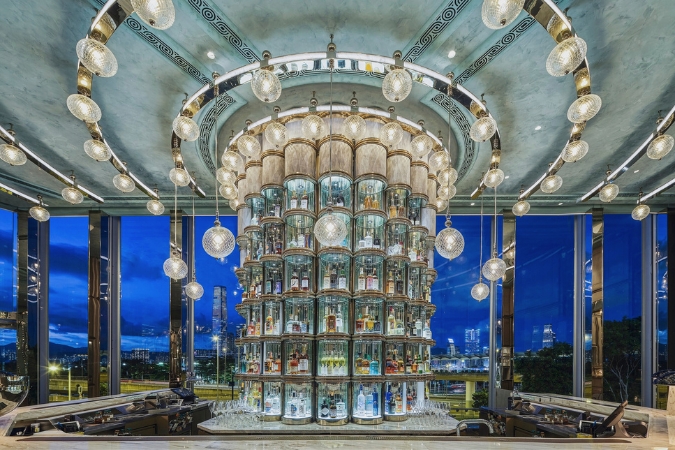
Argo
Four Seasons, Hong Kong
Set inside the Four Seasons, with sweeping views of Victoria Harbour, Argo embraces the classic side of a hotel bar, with an element of fun. Welcome drinks of Champagne are spiked with gummy bears, and the menu is as neon as the view of Hong Kong. Cerebral without being pretentious, ambitious yet playful, it is the perfect spot. Argo reminds you that this is a city of edges, where history and innovation constantly collide.
The Lounge
Aman Hotel, Tokyo
High above one of the most frenetic cities in the world, The Lounge at the Aman Tokyo is a study in contrasts, delivering stillness with unrivalled views of the metropolis below. The pared-back design is a blend of Japanese restraint and contemporary minimalism, with 30m-high washi paper walls that are backlit after dark. Elegant, understated cocktails are served in a space that is more about atmosphere than spectacle.